Kirjojen hintavertailu. Mukana 12 363 183 kirjaa ja 12 kauppaa.

Kirjahaku

Etsi kirjoja tekijän nimen, kirjan nimen tai ISBN:n perusteella.

22 kirjaa tekijältä Lee Roy Martin

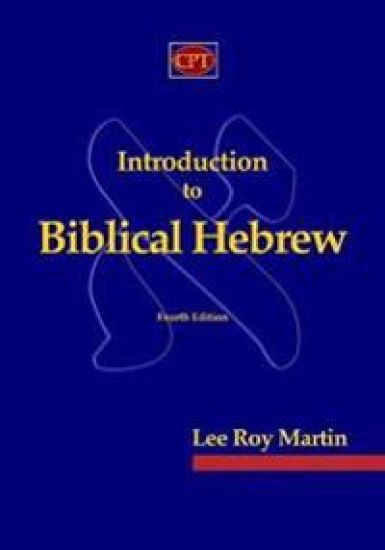
Introduction to Biblical Hebrew

Introduction to Biblical Hebrew

Lee Roy Martin

CPT Press
2009
nidottu
NOTE: A NEWER VERSION OF THIS BOOK IS AVAILABLE - ALSO ON AMAZON. This introductory textbook covers the basics of Hebrew grammar, then it leads the student through readings from the Old Testament. The readings review, apply, and supplement earlier material, and insure that the student can enjoy the Hebrew Bible once the course is finished. Written with the learning needs of the student in mind, grammatical rules are kept to a minimum, with more comprehensive lists in the appendices. Features not found in other beginning Hebrew grammars include: 1. A section on verbless clauses; 2. Complete declensions of the prepositions with pronominal suffixes; 3. English translations of verb conjugations; 4. Successive verb conjugations are compared in parallel columns; 5. Description of verb syntax that utilizes recent advances; 6. Appendices describing the Verb Stems, Syntax, Parsing, etc. Also available are a Workbook (ISBN 139780981965185) and an Answer Key (ISBN 9780981965161). A companion DVD, Learning Biblical Hebrew, is available on Amazon (Search UPC# 883629656311).
Children Of Abraham: Appreciating Israel's Heritage To The Church (Second Edition)

Children Of Abraham: Appreciating Israel's Heritage To The Church (Second Edition)

Lee Roy Martin

Createspace Independent Publishing Platform
2008
nidottu
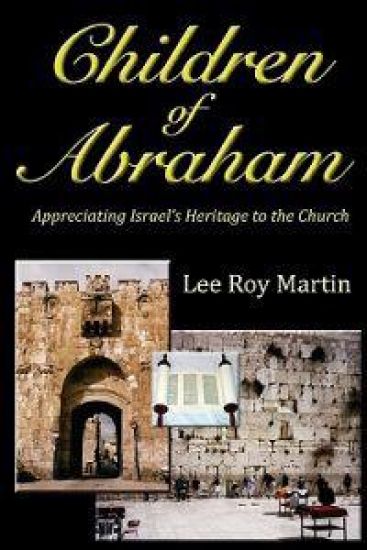
Children of Abraham is a survey of Jewish customs, rituals, symbols, traditions, and history. Both the pulpit and the pew have expressed an interest our Jewish heritage. Sometimes, however, popular books and sermons are not based upon accurate information. Many Christians (even pastors) have no idea where to find Jewish sources of study such as the Mishna, the Tosefta, the commentaries of Rashi, etc.This book will introduce you to the traditions of Judaism, and it will serve as a reference work. You may consult it for definitions of Hebrew words, for meanings of the names of God, for listings of the Jewish feasts, for the content of blessings and prayers, and for other resources.
The Book of Daniel: An Interactive Study Guide

The Book of Daniel: An Interactive Study Guide

Lee Roy Martin

Createspace Independent Publishing Platform
2018
nidottu
Through the study of the book of Daniel, we learn how to trust God in the midst of challenging times. The first half of Daniel contains stories about Daniel and his Hebrew friends, in which the kings of Babylon threaten to bring the faithful Jews to an end. In each case, however, God overrules the human rulers with amazing interventions that protect the Hebrews. The second half of Daniel contains visions of the end that unveil the deeper dimensions of God's present and future sovereign rule. The visions show that just as God ruled over the life and times of Daniel, God continues to rule over every earthly kingdom. Ultimately, God will bring all human kingdoms to an end, and He will establish His eternal kingdom with Jesus the Messiah as king. Daniel's visions assure us that God is in control and that we can trust in Him. The visions of the end give us vibrant hope so that we can fulfill our mission as faithful witnesses of Jesus Christ until He returns. Even in the face of difficult challenges and persecution, we can live faithfully in the light of the end. This study guide will lead you through an easy six-step process of inductive Bible study: 1. Reading for First Impressions, 2. Reading for Discovering the Facts, 3. Marking the Text, 4. Reading for Transformation, 5. Reading for Interpretation, and 6. Hearing and Obeying God's Word. Through these six steps, you will be guided into deeper discoveries that will enrich your relationship with God and strengthen your faith.
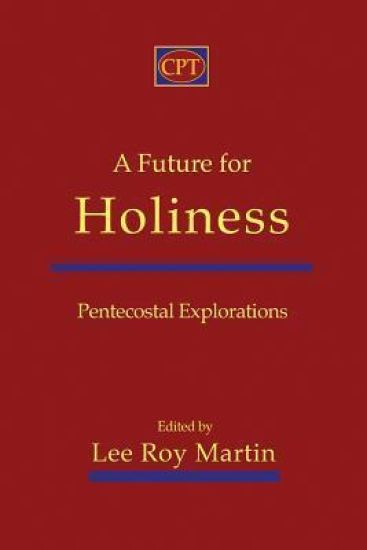
A Future for Holiness: Pentecostal Explorations
Early Pentecostalism emerged from the nineteenth-century holiness movement, and holiness (both in theology and practice) has been a significant, if at times contentious, feature of the Pentecostal movement throughout its brief history. This book is an attempt to stimulate conversation regarding fresh Pentecostal approaches to the theology of holiness. Twenty Pentecostal scholars identify both opportunities and challenges for the future of holiness in Pentecostalism from the perspectives of the various academic disciplines. The Contents are as follows: Introduction-Lee Roy Martin; 1. Wilderness: Holy Yahweh's Innate Habitat?-Narelle Melton; 2. The Acknowledgement of Holy Ground as Prerequisite to Israel's Advancement Under the Leadership of Joshua (Joshua 5.13-15)-Robert C. Crosby; 3. Beauty and Holiness in the Calling of Isaiah-Jacqueline Grey; 4. Holiness and the Path of Suffering: Lessons for Pentecostals from the Book of Hebrews-Faith McGhee; 5. Let the Holy Yet Be Holy: Holiness in the Apocalypse-Dan Morrison; 6. Have We Been Sanctified?: Renewing the Role of Experience in Interpreting the Biblical Text-Scott A. Ellington; 7. 'Not I, but Christ': Holiness, Conscience, & the (Im)Possibility of Community-Chris E.W. Green; 8. The Pentecostal Triple Way: An Ecumenical Model of the Pentecostal Via Salutis and Soteriological Experience-Monte Lee Rice; 9. Holiness and Economics: Towards Recovery of Eucharistic Being in a Market-shaped World-Daniela C. Augustine; 10. Liberating Holiness for the Oppressed and the Oppressors-Patrick Oden; 11. A Future for Holiness in Pentecostal Theology-Daniel Castelo; 12. Twenty-First Century Holiness: Living at the Intersection of Wesleyan Theology & Contemporary Pentecostal Values-Johnathan E. Alvarado; 13. Holiness, the Church, and Party Politics: Toward a Contemporary Practical Theology of Holiness-Antipas L. Harris; 14. Holiness and Undocumented Immigration: A Dramatic Challenge to my Church-Wilfredo Estrada Adorno; 15. The Practice of Holiness: Implications for a Pentecostal Moral Theology-Terry Johns; 16. Holiness as Play: A Developmental Perspective on Christian Formation-Stephen Parker; 17. From Fear-Based to Holiness-Based: Thoughts About the Work of the Holy Spirit in Youth Ministry-Joshua Ziefle; 18. A Future for Holiness in Pentecostal Practice-Marcia Clarke; A Concluding Parable: The Fire and the Fence-Rickie D. Moore.
Fasting: A Centre for Pentecostal Theology Short Introduction
In this short introduction, Old Testament scholar Lee Roy Martin offers the first scholarly monograph length study on fasting written by a Pentecostal. Beginning with the practice and function of fasting as reflected in the biblical text, Martin produces the most extensive examination of fasting texts to date. Martin next offers a brief survey of fasting within the broader Christian tradition, giving special attention is to the role of fasting in the teaching of John Wesley, the spiritual 'grandfather' of Pentecostalism, providing the most detailed study available of Wesley's views on fasting. This is followed by an examination of the role and practice of fasting in the first ten years of the early Pentecostal periodical literature, offering the most extensive analysis of the topic in this body of literature to date. The book concludes with the construction of a Pentecostal theology of fasting, including concrete advice for those who seek to put knowledge of fasting into practice.Breaking new ground at every turn, this introduction is destined to become the standard work on fasting for those within the Pentecostal tradition and beyond. By examining every biblical text devoted to fasting this study uncovers details of the biblical teaching on fasting that have often gone unnoticed. By hearing the testimonies of the Christian tradition, this monograph helps to reveal fasting practices based on traditions that have little to no basis in the biblical text. By excavating early Pentecostal views, Martin demonstrates the significance of fasting for the tradition. In his constructive chapter Martin's scholarly and pastoral skills combine to provide solid practical reflection and guidance for those interested in this often misunderstood practice.
Toward a Pentecostal Theology of Worship
A SECOND EDITION (2020), WITH 2 ADDED CHAPTERS IS NOW AVAILABLE. Walter Hollenweger, a recognized expert on the worldwide Pentecostal movement, has argued that Pentecostalism's greatest contribution to the larger Christian tradition has been in the area of worship. It is in the context of worship that people are saved, sanctified, baptized in the Spirit, healed, and filled with the hope of Christ's coming. Despite the importance of worship to the Pentecostal tradition, theologians in the movement have not yet developed a full-fledged theology of worship. In this multi-authored work, leading Pentecostal scholars come together to construct a contemporary biblical theological approach to worship. Seeking to go beyond discussions that focus on style and trends, these writers offer a distinctive theological vision for Pentecostal worship that appreciates the history, diversity, ethos, and global contexts of Pentecostalism. Written for pastors, students, and scholars, this work provides ample resources for those interested in examining the Pentecostal theology of worship. Contributors to this work include biblical scholars, systematicians, and practical theologians. The diversity of voices insures creativity of approaches and freshness of ideas. With the maturation of the Pentecostal-Charismatic movement comes a need for extended dialogue regarding a Pentecostal theology of worship. It is hoped that this volume with make a significant contribution to the dialogue.TABLE OF CONTENTS: Introduction-Lee Roy Martin; 1. Worship and the Torah-Jerome Boone; 2. The Book of Isaiah and Pentecostal Worship-Jacqueline Grey; 3. The Book of Psalms and Pentecostal Worship-Lee Roy Martin; 4. Toward a Pentecostal Theology of Anointed Cloths-John Christopher Thomas; 5. Worship in the Book of Revelation-Melissa L. Archer; 6. The Nature and Pattern of Biblical Worship-R. Hollis Gause; 7. Signs of Grace: Towards a Charismatic Theology of Worship-Frank D. Macchia; 8. Liturgy, Theosis, and the Renewal of the World-Daniela C. Augustine; 9. 'In Your Presence Is Fullness of Joy': Experiencing God as Trinity-Chris E.W. Green; 10. 'Singing Heavenly Music': R. Hollis Gause's Theology of Worship and Pentecostal Experience-Kimberly Ervin Alexander; 11. Pentecostal Worship and the Creation of Meaning-Johnathan E. Alvarado; 12. Taking the Risk: The Openness and Attentiveness of Latin American Pentecostal Worship-Wilmer Estrada-Carrasquillo; 13. An African American Contribution to the Theology of Worship: Considering Three Situations of Integrated African American Led Worship from Pre-Civil Right Times-Antipas L. Harris; 14. Betwixt and Between the Cross and the Eschaton: Pentecostal Worship in the Context of Ritual Play-Peter Althouse; 15. From 'Hallelujah ' to 'We Believe' and Back: Interrelating Pentecostal Worship and Doctrine-Daniel Castelo.
The Spirit of the Psalms: Rhetorical Analysis, Affectivity, and Pentecostal Spirituality
In this study of the book of Psalms, Lee Roy Martin advances a rhetorical approach to interpretation that appreciates the forms, the figurative language, and the affective dimension of the biblical text. He argues that the function of poetry is to evoke (and provoke) the passions and to form the affections. The study of the Psalms, therefore, can benefit from a hermeneutic that appreciates the affective component of the text and that takes full advantage of the passions that are brought to the text by the interpreter. The formation of the affections is explored in conjunction with the key Pentecostal affections of gratitude, compassion, courage, joy, and hope. In addition to rhetorical analysis, Martin incorporates early Pentecostal reception history (Wirkungsgeschichte) as a means of hearing from the generation that represents the theological heart of the Pentecostal tradition. Chapters 1-7 are studies of individual Psalms: 1 (a wisdom psalm), 63 (a song of trust), 91 (a song of trust), 105-106 (historical psalms), 107 (a thanksgiving psalm), 130 (a lament), and 150 (a hymn). Chapter 8 is a reception history of the Psalms in the Apostolic Faith periodical (1906-1915), and Chapter 9 constructs a Pentecostal theology of worship from the book of Psalms.
Judging the Judges: Pentecostal Theological Perspectives on the Book of Judges
This monograph makes available a number of cutting-edge academic studies by leading Pentecostal Old Testament scholar Lee Roy Martin. Building on his groundbreaking work, The Unheard Voice of God, Martin here offers seven additional explorations of significant themes in the book of Judges. These studies include those on 'The Relational God of Judges', 'God at Risk: Divine Vulnerability in Judges 10.6-16', 'Tongues of Angels, Words of Prophets: Divine Communication in the Book of Judges', 'Yahweh Conflicted: Unresolved Theological Tension in the Cycle of Judges', 'Power to Save ?: The Role of the Spirit of Yahweh in the Book of Judges', '"Where are all his wonders?" The Exodus Motif in the Book of Judges', and 'Judging the Judges: Searching for Value in these Problematic Characters'. Martin's constructive investigations contribute greatly to Pentecostal readings of the book of Judges as well as to the broader field of Judges studies. It is destined to be part of these conversations for years to come.
Introduction to Biblical Hebrew

Introduction to Biblical Hebrew

Lee Roy Martin

CPT Press
2018
pokkari
NEW 2018 EDITION This introductory textbook covers the basics of Hebrew grammar, then it leads the student through readings from the Old Testament. The readings review, apply, and supplement earlier material, and insure that the student can enjoy the Hebrew Bible once the course is finished. Written with the learning needs of the student in mind, grammatical rules are kept to a minimum, with more comprehensive lists in the appendices. Features not found in other beginning Hebrew grammars include: 1. A section on verbless clauses; 2. Complete declensions of the prepositions with pronominal suffixes; 3. English translations of verb conjugations; 4. Successive verb conjugations are compared in parallel columns; 5. Description of verb syntax that utilizes recent advances; 6. Appendices describing the Verb Stems, Syntax, Parsing, etc. Also available are a Workbook (ISBN 978-1-935931-76-8) and an Answer Key (ISBN 978-1-935931-75-1.Unlike other books that seem to be written for linguists and scholars, this one makes reading the Hebrew Bible much easier. Some have criticized it because the lessons do not conform to what is in other books. These differences are not "errors." In fact, they are intentional changes that make learning easier. For example, most grammars lay out the verb conjugations beginning with 3rd person singular ("he"). However, if you have ever studied Spanish, French, Latin, Greek, Italian, German, etc. the verb conjugations begin with 1st person ("I"). This Hebrew textbook follows the more common route of beginning with 1st person, so that your learning process is faster because it conforms to what you experienced in studying other languages. Beginning with 1st person is not an error; and, in fact, it is not unique. Jewish textbooks often begin the verb conjugations with 1st person (for example, Introduction to Hebrew, by Moshe Greenberg; The First Hebrew Primer, by Simon, Resnikoff, and Motzkin; and Biblical Hebrew, by Menahem Mansoor, who taught at the University of Wisconsin). Criticism about introducing sentences before discussing the sign of the definite object is also unfounded. The sign of the definite object is not used consistently throughout the Hebrew Bible. It is found only 25 times in the entire book of Proverbs and only 5 times in the book of Habakkuk. Sentences are often constructed without the sign of the DO. Furthermore, any complaint about "weak" verbs is incorrect, because they are treated thoroughly in lessons 13-18. I definitely would not begin with Lambdin, because he keeps the student using transliterations throughout the whole book. If you rely on transliterations, you will never learn to read the Hebrew Bible. Of course, if you wish to study advanced Hebrew, you will eventually need to use Gesenius, Jo on/Muraoka, Waltke/O'Connor and others.
Toward a Pentecostal Theology of Worship: Second Edition
Walter Hollenweger, a recognized expert on the worldwide Pentecostal movement, has argued that Pentecostalism's greatest contribution to the larger Christian tradition has been in the area of worship. It is in the context of worship that people are saved, sanctified, baptized in the Spirit, healed, and filled with the hope of Christ's coming. Despite the importance of worship to the Pentecostal tradition, theologians in the movement have not yet developed a full-fledged theology of worship. In this multi-authored work, leading Pentecostal scholars come together to construct a contemporary biblical theological approach to worship. Seeking to go beyond discussions that focus on style and trends, these writers offer a distinctive theological vision for Pentecostal worship that appreciates the history, diversity, ethos, and global contexts of Pentecostalism. Written for pastors, students, and scholars, this work provides ample resources for those interested in examining the Pentecostal theology of worship. Contributors to this work include biblical scholars, systematicians, and practical theologians. The diversity of voices insures creativity of approaches and freshness of ideas. This second edition includes two new chapters and a longer introduction to Pentecostal worship. Although not a complete theology of worship, this study provides a starting point for exploring important themes from a variety of perspectives.
The Book of Job

The Book of Job

Lee Roy Martin

CPT Press
2023
pokkari
This fresh translation of the book of Job from the Hebrew text stays as close as possible to the original language, while at the same time offering a readable English text. The book of Job is both challenging and inspiring. Job's experience of suffering is legendary, and it is an experience with which everyone can identify and sympathize. The biblical text is presented in its poetic form, so that the reader can observe the verse structures, figures of speech, and unique characteristics of this ancient masterpiece.Lee Roy Martin (DTh, University of South Africa) is Professor of Old Testament and Biblical Languages and James W. Hamilton Professor of Teaching Lay Involvement at the Pentecostal Theological Seminary in Cleveland, TN USA.