Kirjahaku
Etsi kirjoja tekijän nimen, kirjan nimen tai ISBN:n perusteella.
110 kirjaa tekijältä Lena Christ

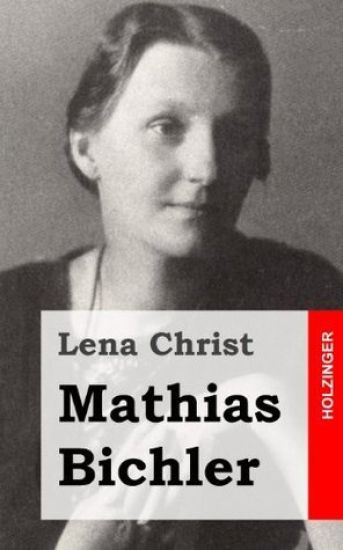
Lena Christ: Mathias Bichler Edition Holzinger. Taschenbuch Berliner Ausgabe, 2015, 4. Auflage Vollst ndiger, durchgesehener Neusatz mit einer Biographie der Autorin bearbeitet und eingerichtet von Michael Holzinger Erstdruck: M nchen (Albert Langen) 1914. Textgrundlage ist die Ausgabe: Lena Christ: Werke. M nchen: S ddeutscher Verlag, 1972. Herausgeber der Reihe: Michael Holzinger Reihengestaltung: Viktor Harvion Umschlaggestaltung unter Verwendung des Bildes: Fotografie um 1911 Gesetzt aus Minion Pro, 10 pt.

Lena Christ: Bauern. Bayerische Geschichten Edition Holzinger. Taschenbuch Berliner Ausgabe, 2015, 4. Auflage Vollst ndiger, durchgesehener Neusatz mit einer Biographie der Autorin bearbeitet und eingerichtet von Michael Holzinger Erstdruck: Leipzig (Paul List) 1919. Textgrundlage ist die Ausgabe: Lena Christ: Werke. M nchen: S ddeutscher Verlag, 1972. Herausgeber der Reihe: Michael Holzinger Reihengestaltung: Viktor Harvion Umschlaggestaltung unter Verwendung des Bildes: Fotografie um 1911 Gesetzt aus Minion Pro, 10 pt.


Die Raum- und Zeitkonstruktion im Musikvideo "Four Out of Five" bezogen auf das filmische Oeuvre Stanley Kubricks
Lena Christ
GRIN Verlag
2021
pokkari

An exploration into the cultural politics of repetition through the lens of the hip hop sample
Lena Christ
GRIN Verlag
2022
pokkari
Seminar paper from the year 2021 in the subject Communications - Miscellaneous, grade: 1,0, University of Mannheim, language: English, abstract: This paper deals with the cultural politics of repetition through the lens of the hip hop sample. The almost religious conviction that intellectual property is something sacred - some reified form of the genius mind to be protected by laws - permeates contemporary western culture to a degree that it appears to belong to a set of a priori facts of social life. We love to assign ideas to individuals and to conceive of breakthroughs as the predetermined triumph of progress. We worship Thomas Edison and Steve Jobs as the great prophets of technological transition and we lay the classical composers of the 19th century to rest in a designated place of honour, removed from the burial ground of the ordinary. Every single site in the public domain has become subject to claims of ownership, more so if it holds economic value or promises of prestige. To a culture that considers itself ever-evolving, repetition is an insult. And yet, our digital representations of the analogue world, accessible and malleable as they are, uncover the manifold mutual references and intertwining of ideas. In that vast digital space where all ideas come together, the myth of eternal novelty is debunked, its hubris becomes ever more apparent. Of course, culture wars have started much earlier. But the ongoing debate about the building blocks of creativity has gathered momentum with the divide between the ideal of linear development and the social reality of eternal recurrence widening in front of a global audience.