Kirjojen hintavertailu. Mukana 12 461 657 kirjaa ja 12 kauppaa.

Kirjahaku

Etsi kirjoja tekijän nimen, kirjan nimen tai ISBN:n perusteella.

5 kirjaa tekijältä Lene Østermark-Johansen

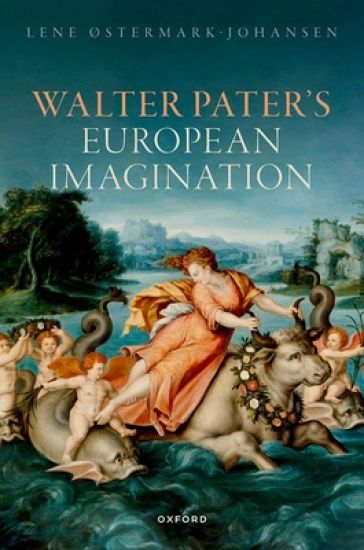
Walter Pater's European Imagination

Walter Pater's European Imagination

Lene Østermark-Johansen

Oxford University Press
2022
sidottu
Walter Pater's European Imagination addresses Pater's literary cosmopolitanism as the first in-depth study of his fiction in dialogue with European literature. Pater's short pieces of fiction, the so-called 'imaginary portraits', trace the development of the European self over a period of some two thousand years. They include elements of travelogue and art criticism, together with discourses on myth, history, and philosophy. Examining Pater's methods of composition, use of narrative voice, and construction of character, the book draws on all of Pater's oeuvre and includes discussions of a range of his unpublished manuscripts, essays, and reviews. It engages with Pater's dialogue with the visual portrait and problematises the oscillation between type and individual, the generic and the particular, which characterises both the visual and the literary portrait. Exploring Pater's involvement with nineteenth-century historiography and collective memory, the book positions Pater's fiction solidly within such nineteenth-century genres as the historical novel and the Bildungsroman, while also discussing the portraits as specimens of biographical writing. As the 'Ur-texts' from which generations of modernist life-writing developed, Pater's 'imaginary portraits' became pivotal for such modernist writers as Virginia Woolf and Harold Nicolson. Walter Pater's European Imagination explores such twentieth-century successors, together with French contemporaries like Sainte-Beuve and followers like Marcel Schwob.
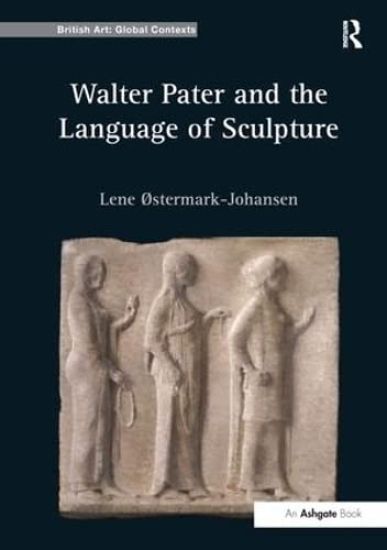
Walter Pater and the Language of Sculpture

Walter Pater and the Language of Sculpture

Lene Østermark-Johansen

Routledge
2016
nidottu
Walter Pater and the Language of Sculpture is the first monograph to discuss the Victorian critic Walter Pater's attitude to sculpture. It brings together Pater's aesthetic theories with his theories on language and writing, to demonstrate how his ideas of the visual and written language are closely interlinked. Going beyond Pater's views on sculpture as an art form, this study traces the notion of relief (rilievo) and hybrid form in Pater, and his view of the writer as sculptor, a carver in language. Alongside her treatment of rilievo as a pervasive trope, Lene Østermark-Johansen also employs the idea of rivalry (paragone) more broadly, examining Pater's concern with positioning himself as an art critic in the late Victorian art world. Situating Pater within centuries of European aesthetic theories as never before done, Walter Pater and the Language of Sculpture throws new light on the extraordinary complexity and coherence of Pater's writing: The critic is repositioned solidly within Victorian art and literature.
Sweetness and Strength

Sweetness and Strength

Lene Østermark-Johansen

Routledge
2019
sidottu
First published in 1998, this volume explores the reinvention of Michelangelo in the Victorian era. At the opening of the nineteenth century, Michelangelo’s reputation rested on the evidence of contemporary adulation recorded by Vasari and Condivi. Travel, photography, the shift of his drawings into public collections, and, in particular, the publication of his poems in their original form, transformed this situation. The complexity of his work commanded new attention and several biographies were published.As public curiosity and knowledge of the artist increased, so various groups began to ally themselves to aspects of Michelangelo’s persona. His Renaissance reputation as a towering genius, a man of great spiritual courage, who had journeyed through and for his art to the depths of despair, was important to the Pre-Raphaelites and other artists. His love for his own ‘Dark Lady’, Vittoria Colonna, aroused excited speculation among High Church advocates, who celebrated his friendship with the deeply religious woman-poet; and the emerging awareness that some half of his love poetry was dedicated to a younger man, Tommaso de’ Cavalieri, was of intense interest to the aestheticists, among them Oscar Wilde, Walter Pater and J.A. Symonds, who sought heroic figures from societies where masculinity was less rigorously defined.In this original and beautifully illustrated study, Lene Østermark-Johansen shows how the critical discussion of the artist’s genius and work became irretrievably bound up in contemporary debates about art, religion and gender and how the Romantic view of art and criticism as self-expression turned the focus from the work of art to the artist himself such that the two could never again be viewed in isolation.
Sweetness and Strength

Sweetness and Strength

Lene Østermark-Johansen

Routledge
2020
nidottu
First published in 1998, this volume explores the reinvention of Michelangelo in the Victorian era. At the opening of the nineteenth century, Michelangelo’s reputation rested on the evidence of contemporary adulation recorded by Vasari and Condivi. Travel, photography, the shift of his drawings into public collections, and, in particular, the publication of his poems in their original form, transformed this situation. The complexity of his work commanded new attention and several biographies were published.As public curiosity and knowledge of the artist increased, so various groups began to ally themselves to aspects of Michelangelo’s persona. His Renaissance reputation as a towering genius, a man of great spiritual courage, who had journeyed through and for his art to the depths of despair, was important to the Pre-Raphaelites and other artists. His love for his own ‘Dark Lady’, Vittoria Colonna, aroused excited speculation among High Church advocates, who celebrated his friendship with the deeply religious woman-poet; and the emerging awareness that some half of his love poetry was dedicated to a younger man, Tommaso de’ Cavalieri, was of intense interest to the aestheticists, among them Oscar Wilde, Walter Pater and J.A. Symonds, who sought heroic figures from societies where masculinity was less rigorously defined.In this original and beautifully illustrated study, Lene Østermark-Johansen shows how the critical discussion of the artist’s genius and work became irretrievably bound up in contemporary debates about art, religion and gender and how the Romantic view of art and criticism as self-expression turned the focus from the work of art to the artist himself such that the two could never again be viewed in isolation.
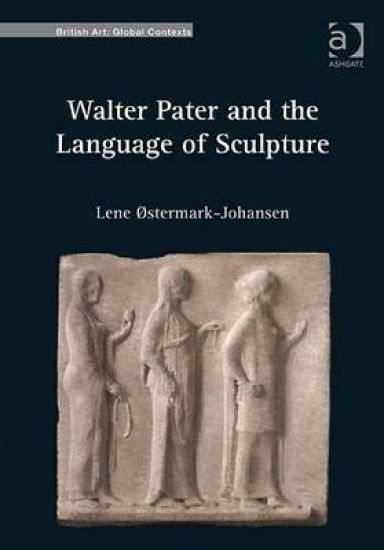
Walter Pater and the Language of Sculpture

Walter Pater and the Language of Sculpture

Lene Østermark-Johansen

Ashgate Publishing Limited
2011
sidottu
Walter Pater and the Language of Sculpture is the first monograph to discuss the Victorian critic Walter Pater's attitude to sculpture. It brings together Pater's aesthetic theories with his theories on language and writing, to demonstrate how his ideas of the visual and written language are closely interlinked. Going beyond Pater's views on sculpture as an art form, this study traces the notion of relief (rilievo) and hybrid form in Pater, and his view of the writer as sculptor, a carver in language. Alongside her treatment of rilievo as a pervasive trope, Lene Østermark-Johansen also employs the idea of rivalry (paragone) more broadly, examining Pater's concern with positioning himself as an art critic in the late Victorian art world. Situating Pater within centuries of European aesthetic theories as never before done, Walter Pater and the Language of Sculpture throws new light on the extraordinary complexity and coherence of Pater's writing: The critic is repositioned solidly within Victorian art and literature.