Kirjojen hintavertailu. Mukana 11 608 326 kirjaa ja 12 kauppaa.

Kirjahaku

Etsi kirjoja tekijän nimen, kirjan nimen tai ISBN:n perusteella.

15 kirjaa tekijältä Lenn E. Goodman

The Holy One of Israel

The Holy One of Israel

Lenn E. Goodman

Oxford University Press Inc
2020
sidottu
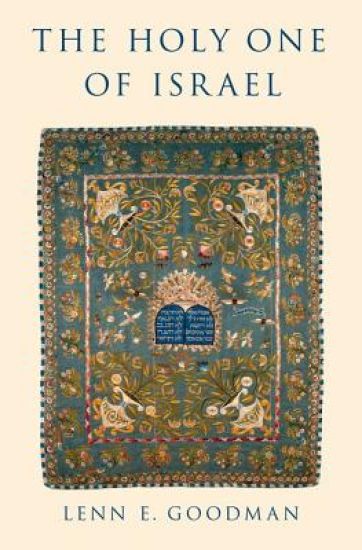
Holy, holy, holy! The Lord of hosts! The fill of all the earth is His glory. In these few ecstatic words, the prophet Isaiah captured the core of Jewish thinking about humanity, nature, and God. If the idea of holiness generally points toward God's transcendence, Isaiah brings it back down to earth, recognizing God's presence throughout the world. The Holy One of Israel is a philosophical exploration of that remarkable and distinctively Jewish idea: that God is everywhere, yet not in space. Lenn Goodman explores what can be meant by God's uniqueness, presence, and perfection. In a text richly resonant with the classic Jewish sources and in dialogue with the great philosophers, Goodman probes the ideas of revelation, natural law, the problem of evil, the challenges and limits of the idea of God's transcendence, and God's actions in and through nature, including human nature. This book is a must-read for anyone seriously interested in how our ideas about God can inform our lives and our thinking about individual and social responsibility and intellectual and artistic creativity and spiritual growth.
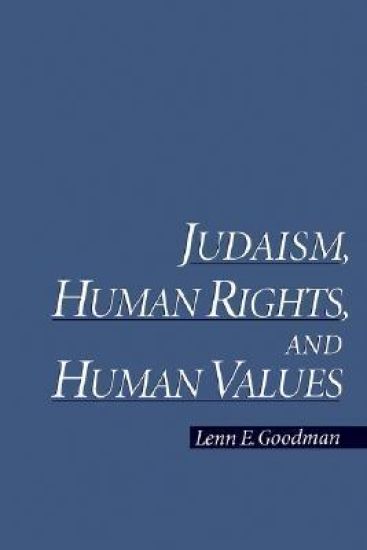
Judaism, Human Rights, and Human Values

Judaism, Human Rights, and Human Values

Lenn E. Goodman

Oxford University Press Inc
1999
sidottu
In this important addition to the field of Jewish ethics, Goodman argues forcefully that the Jewish tradition has a significant contribution to make to the general discourse on ethical issues. After refuting the notion that "human rights" is a purely modern notion, Goodman traces the idea of such rights to its key biblical sources. He goes on to consider the works of medieval thinkers like Saadiah Goan and Moses Maimonides and then applies these and other foundational texts to such contemporary social and political issues as capital punishment, suicide, welfare, pornography, abortion, and nationalism.
Islamic Humanism

Islamic Humanism

Lenn E. Goodman

Oxford University Press Inc
2003
sidottu
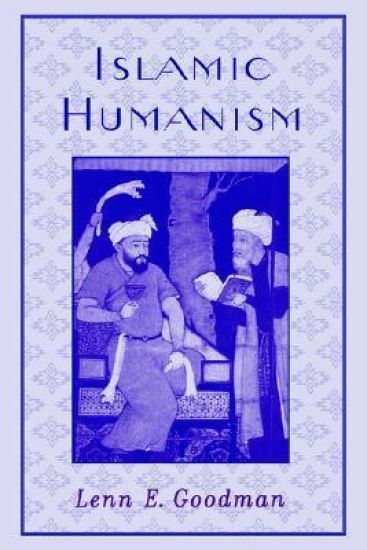
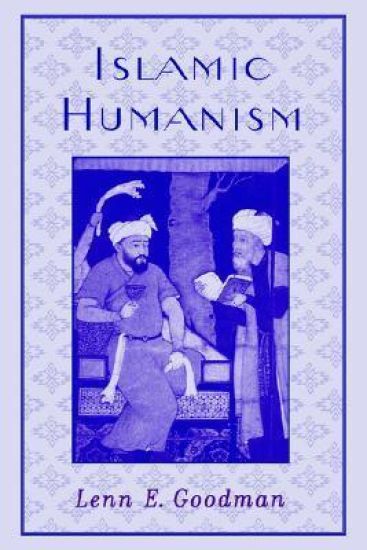
This book is an attempt to explain how, in the face of increasing religious authoritarianism in medieval Islamic civilization, some Muslim thinkers continued to pursue essentially humanistic, rational, and scientific discourses in the quest for knowledge, meaning, and values. Drawing on a wide range of Islamic writings, from love poetry to history to philosophical theology, Goodman shows that medieval Islam was open to individualism, occasional secularism, skepticism, even liberalism.
Islamic Humanism

Islamic Humanism

Lenn E. Goodman

Oxford University Press Inc
2005
nidottu
This book is an attempt to explain how, in the face of increasing religious authoritarianism in medieval Islamic civilization, some Muslim thinkers continued to pursue essentially humanistic, rational, and scientific discourses in the quest for knowledge, meaning, and values. Drawing on a wide range of Islamic writings, from love poetry to history to philosophical theology, Goodman shows that medieval Islam was open to individualism, occasional secularism, skepticism, even liberalism.
Love Thy Neighbour As Thyself

Love Thy Neighbour As Thyself

Lenn E. Goodman

Oxford University Press Inc
2008
sidottu
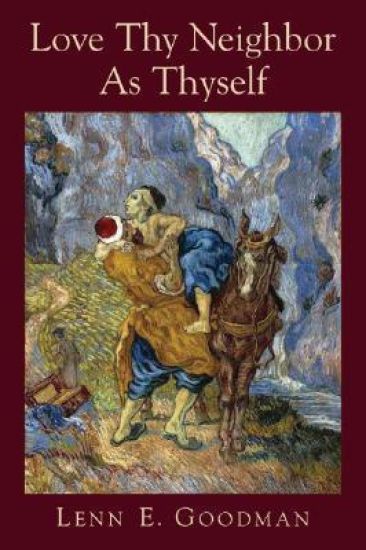
In this book, Lenn E. Goodman writes about the commandment to "love thy neighbor as thyself" from the standpoint of Judaism, a topic and perspective that have not often been joined before. Goodman addresses two big questions: What does that command ask of us? and what is its basis? Drawing extensively on Jewish sources, both biblical and rabbinic, he fleshes out the cultural context and historical shape taken on by this Levitical commandment. In so doing, he restores the richness of its material content to this core articulation of our moral obligations, which often threatens to sink into vacuity as a mere nostrum or rhetorical formula.Goodman argues against the notion that we have this obligation simply because God demands it -- a position that too readily makes ethics seem arbitrary, relativistic, dogmatic, authoritarian, contingent or just unpalatable. Rather he proposes that we learn much about how we ought to think about God from what we know about morals. He shows that natural reasoning and appeals to scripture, tradition, and revelation reinforce one another in ethical deliberation. For Goodman, ethics and theology are not worlds apart connected only by a kind of narrow one-way passage; the two realms of discourse can and should inform each other.Engaging the philosophers, including Aristotle, Spinoza, and Kant, and assembling three-thousand years worth of Jewish textual masterpieces, Goodman skillfully weaves his Gifford Lectures, which he delivered in 2005, into an indispensable work.
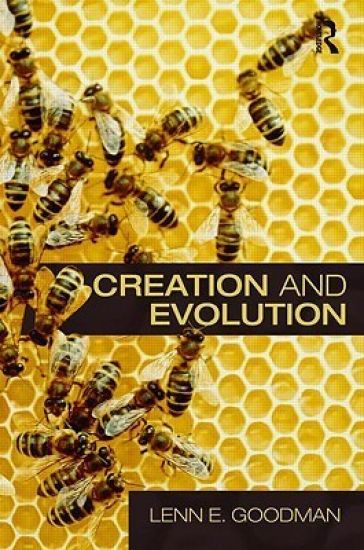
Creation and Evolution

Creation and Evolution

Lenn E. Goodman

Routledge
2010
sidottu
Can religion survive Darwinism? Do scientists entering the lab or heading for the field have to bracket, or reject outright, all religious commitments and convictions? Trenchantly laying out the evidence for natural selection and carefully following and underscoring the themes and theses of Genesis, L. E. Goodman traces the historical and conceptual backgrounds of today’s evolution controversies, revealing the deep complementarities of religion and the life sciences. Solidly researched and replete with scientific case studies, vignettes from intellectual history, and thoughtful argument, Creation and Evolution forthrightly exposes the strengths and weaknesses of today’s polarized battle camps. Religious and scientific fundamentalisms, Goodman shows, obscure the real biblical message and distort the deepest insights and richest findings of Darwinian science.
Creation and Evolution

Creation and Evolution

Lenn E. Goodman

Routledge
2010
nidottu
Can religion survive Darwinism? Do scientists entering the lab or heading for the field have to bracket, or reject outright, all religious commitments and convictions? Trenchantly laying out the evidence for natural selection and carefully following and underscoring the themes and theses of Genesis, L. E. Goodman traces the historical and conceptual backgrounds of today’s evolution controversies, revealing the deep complementarities of religion and the life sciences. Solidly researched and replete with scientific case studies, vignettes from intellectual history, and thoughtful argument, Creation and Evolution forthrightly exposes the strengths and weaknesses of today’s polarized battle camps. Religious and scientific fundamentalisms, Goodman shows, obscure the real biblical message and distort the deepest insights and richest findings of Darwinian science.
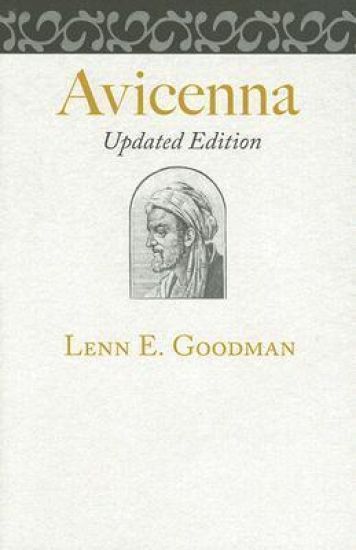
Avicenna

Avicenna

Lenn E. Goodman

Cornell University Press
2006
pokkari
In this updated edition of his classic work, Lenn E. Goodman provides a concise introduction to the life and thought of Abu Ali al-Husain ibn Abdallah ibn Sina, known as Avicenna, who was born in the year 980 C.E. near Bokhara in what is now Uzbekistan and died 1037 C.E. in Hamadan, now in Iran.
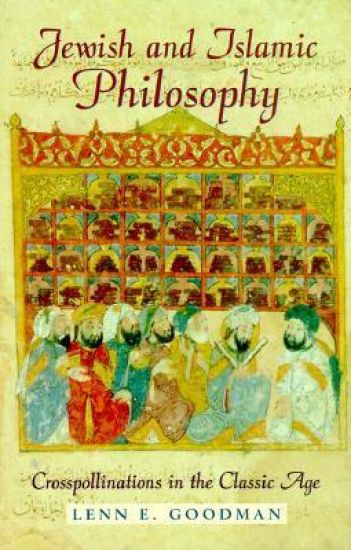
Jewish and Islamic Philosophy

Jewish and Islamic Philosophy

Lenn E. Goodman

Rutgers University Press
1999
sidottu
The Rhetoric of Midwifery offers new insights into understanding these questions within the context of our present-day medical system.As a point of departure, Mary M. Lay analyzes the public discussion over non-academically trained-or direct-entry-midwives within Minnesota. From 1991-1995, that state held public hearings about the possible licensing of traditional midwives. Lay focuses on these debates to examine the complex relationships of power, knowledge, and gender within the medical profession.Lay examines the hearings and provides a framework for appreciating the significance of these debates. She also details the history of midwifery, highlighting ongoing concerns that have surfaced ever since the profession was created, centuries ago.In the remaining chapters, she focuses on the key testimonies offered during the debates. Capturing the actual testimony of midwives, home-birth parents, nurses, physicians, and attorneys, The Rhetoric of Midwifery reveals how the modern medical profession seeks to claim authority about birth. Lay bolsters her argument by culling from such sources such as historical documents, an internet discussion group, and conversations with modern midwives
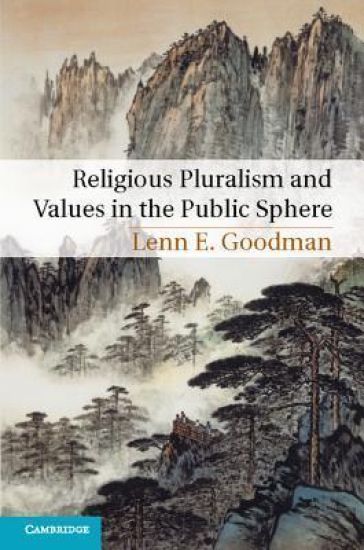
Religious Pluralism and Values in the Public Sphere

Religious Pluralism and Values in the Public Sphere

Lenn E. Goodman

Cambridge University Press
2014
sidottu
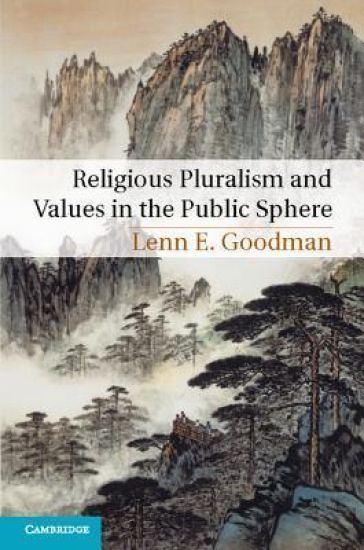
How can we, as people and communities with different religions and cultures, live together with integrity? Does tolerance require us to deny our deep differences or give up all claims to truth, to trade our received traditions for skepticism or relativism? Cultural philosopher Lenn E. Goodman argues that we can respect one another and learn from one another's ways without either sharing them or relinquishing our own. He argues that our commitments to our own ideals and norms need not mean dogmatism or intolerance. In this study, Goodman offers a trenchant critique of John Rawls's pervasive claim that religious and metaphysical voices must be silenced in the core political deliberations of a democracy. Inquiry, dialogue, and open debate remain the safeguards of public and personal sanity, and any of us, Goodman illustrates, can learn from one another's traditions and explorations without abandoning our own.
Religious Pluralism and Values in the Public Sphere

Religious Pluralism and Values in the Public Sphere

Lenn E. Goodman

Cambridge University Press
2014
pokkari
How can we, as people and communities with different religions and cultures, live together with integrity? Does tolerance require us to deny our deep differences or give up all claims to truth, to trade our received traditions for skepticism or relativism? Cultural philosopher Lenn E. Goodman argues that we can respect one another and learn from one another's ways without either sharing them or relinquishing our own. He argues that our commitments to our own ideals and norms need not mean dogmatism or intolerance. In this study, Goodman offers a trenchant critique of John Rawls's pervasive claim that religious and metaphysical voices must be silenced in the core political deliberations of a democracy. Inquiry, dialogue, and open debate remain the safeguards of public and personal sanity, and any of us, Goodman illustrates, can learn from one another's traditions and explorations without abandoning our own.
God and Truth

God and Truth

Lenn E. Goodman

Cambridge University Press
2026
nidottu
Is God a necessary being? Infinite yet simple? Creator of a world that seems equally able to explain itself? In this volume, prize-winning philosopher Lenn Goodman probes key religious questions against the backdrop of sacred texts and philosophical classics. In dialogue with a range of philosophers from Plato and Aristotle to Philo, Maimonides, Spinoza, Hume, and Kant, he examines the relationship between truth and the idea of God. Exploring the nexus between theism and logic, he probes ontological and design arguments, the anthropic principle, the problem of evil, the nature of justice and fairness, and the purpose and meaning of art. Goodman provocatively asks what science would look like if scientists allowed themselves to voice religious responses to their discoveries, as Einstein did. Finally, he probes the insights and examples of the morally virtuous, such as Moses, Albert Schweitzer, and Mahatma Gandhi.
God and Truth

God and Truth

Lenn E. Goodman

Cambridge University Press
2026
sidottu
Is God a necessary being? Infinite yet simple? Creator of a world that seems equally able to explain itself? In this volume, prize-winning philosopher Lenn Goodman probes key religious questions against the backdrop of sacred texts and philosophical classics. In dialogue with a range of philosophers from Plato and Aristotle to Philo, Maimonides, Spinoza, Hume, and Kant, he examines the relationship between truth and the idea of God. Exploring the nexus between theism and logic, he probes ontological and design arguments, the anthropic principle, the problem of evil, the nature of justice and fairness, and the purpose and meaning of art. Goodman provocatively asks what science would look like if scientists allowed themselves to voice religious responses to their discoveries, as Einstein did. Finally, he probes the insights and examples of the morally virtuous, such as Moses, Albert Schweitzer, and Mahatma Gandhi.
Judaism

Judaism

Lenn E. Goodman

Routledge
2016
sidottu
Judaism, as a religion and a way of life, has guided millions of lives and profoundly influenced its younger sisters, Christianity and Islam, as well as contributing major themes and norms to the liberal and humanistic traditions of the West. Not all Jews are religious, and not all of Judaism is philosophical; but at its core Judaism rests on a complex of values and ideas that address the abiding concerns of philosophy and perennial questions about the meaning and purpose of life, the nature of the universe, the roots and fruits of human responsibility, the character of justice, the worth of nature, and the dignity of persons. Judaism: A Contemporary Philosophical Investigation examines some of the central questions that such ideas raise, drawing on the ancient and more recent sources of Jewish thought, as viewed from a contemporary philosophical standpoint. This book is an ideal introduction for students of religion and philosophy who want to gain an understanding of the key themes and values of Judaism.
Judaism

Judaism

Lenn E. Goodman

Routledge
2016
nidottu
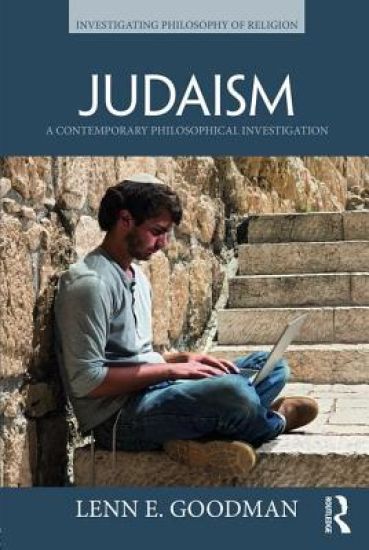
Judaism, as a religion and a way of life, has guided millions of lives and profoundly influenced its younger sisters, Christianity and Islam, as well as contributing major themes and norms to the liberal and humanistic traditions of the West. Not all Jews are religious, and not all of Judaism is philosophical; but at its core Judaism rests on a complex of values and ideas that address the abiding concerns of philosophy and perennial questions about the meaning and purpose of life, the nature of the universe, the roots and fruits of human responsibility, the character of justice, the worth of nature, and the dignity of persons. Judaism: A Contemporary Philosophical Investigation examines some of the central questions that such ideas raise, drawing on the ancient and more recent sources of Jewish thought, as viewed from a contemporary philosophical standpoint. This book is an ideal introduction for students of religion and philosophy who want to gain an understanding of the key themes and values of Judaism.