

Kirjahaku
Etsi kirjoja tekijän nimen, kirjan nimen tai ISBN:n perusteella.
21 kirjaa tekijältä Leon Breaux
This coming-of-age novel tells the story of a fatherless young boy's struggle to find his place in the world. Set in the 1980s and early 90s in Southern California, the novel is part hanging out, part road trip, and part alternate world. A supernatural entity called Jacob contacts young Eric during a lonely birthday party while he is depressed about his mother's sudden departure on a business trip. Since his mother and he have recently moved, Eric has no friends. He has only the babysitter, who he knows hates him. Jacob makes his wraithlike appearance and entertains Eric, mimicking the role of imaginary friend and taking up residence inside of Eric.The novel jumps forward several years with Eric now in middle school. He has made a friend, an older boy named Jones, a bit of a delinquent. Although dormant inside Eric for years, an incident with Jones brings Jacob back. The two boys use the entity to commit small crimes, since Jacob has the power to make victims forget the recent past. Eric wants to keep Jones as a friend, but he doesn't like committing the robberies. A young woman, older than Jones but still in high school, witnesses one of the robberies and somehow remembers enough to track the two down at school. She demands answers to what she has seen. Bernadette is popular, intelligent, and tough.This story develops from here, with Eric struggling to find meaning in what's happening, both with his friends and also with more metaphysical problems when difficult situations face him in the alternate world where he and his friends have become trapped. Readers of middle school age and below may need some parental guidance for plot situations and violent or sexual situations.
Of course even in the 1850s life had its pressures and stresses. John Smith has had enough, both of his loveless marriage and his kowtowing Managing Editor job for his father-in-law, industrialist and owner of the Bridgesport Sentinel. He decides to drop it all and take up light house duty.But maybe it's not his surroundings so much, he begins to find, as himself. An aspiring scholar, John has included Buddhist sutras among his studies. He uses these studies, and his own powers of reflection and discernment, to try to understand and overcome the impasse his life had reached. A shipwreck brings him a European scholar and man of the cloth Estabal Marak and a Tibetan lama Geshela Tsering. John now has the chance to encounter many of the concerns that had occupied his mind previously -- and then some.Sunyata, the Sanskrit word for the void, or emptiness, is a central idea in Buddhist thought. The novel offers a philosophical and practical exploration of sunyata through events and characters. Yidams, guiding deities, also enter into the story, important in John's development.The story features a young lady, Nancy Yates, whose relationship with John develops over time, as does his relationship with the old light house horse, Admiral. Other characters include a nameless cat, a cow named Daisy, and a retired seaman Captain Steinholtz.Set with details and characters of 1850s American coastal life, Sunyata offers a look back into a fascinating period of American history. The technology of the time is evident in the light house and in other aspects of everyday living. In the end, John's improved grasp on life allows something to happen, something wonderful, something likely not even possible for him before.
This novel relates the story of Mak Strife, who has left his home to embark on a journey to the Golden Mountain. On the summit of Golden Mountain lives the eternal Fem, the most beautiful, powerful, and wise woman in the world. Meeting Her will free Mak of all contradictory desires and give him perfect knowledge and peace forever. Many say the Fem does not exist. One of them is El, a woman Mak rescues from fearsome slave traders in the first chapter. Although he doesn't actually want to rescue her, his conscience gets the better of him. Right away he has reason to regret it when she ties him up in his sleep, believing him a slave trader.El is on a journey, too. A wandering warrioress and holy woman, she's a match for Mak when it comes down to a fight. The distant, mystical Mountain begins to beckon them both.Adventures ensue, but revealing specifics would spoil the plot.These adventures occur on multiple levels, including emotional and spiritual, as these two face a perilous, astonishing animistic world and also each other. As gods and demons stand revealed, El and Mak fight to retain their own truths yet somehow still come together as individuals. The story's ending offers a greater beginning than the start did.

"How can you end/ what's beginningless?" The nature of our illusions illuminatedHow do you negotiate things within yourself and the cultural influences around you? Tissue expresses all these tensions among individuals living in the world, as well as our internal struggles perfectly; as it provokes, enrages, humors and enlightens you by the clever assembly of the poems and pun-laden diction.The writer's distrust of society in general and that of his thoughts-cum-desires are illuminated in poems whose surface simplicity belies their profundity. "Place", "Soldier, sailor, teacher, jailer", "Suit", "Oops", etc. express suspicions of media representations, capitalist ideology and how nature is thrown out of balance in today's world; whereas "You lit it yourself", "Idea", "So smart", "My head", and so on surround the futility of entirely conquering one's head and urges. Then there are those like "Mine" which neatly combines both in highly resonant language.At the heart of it all, there is a feeling that there's no escape from these dilemmas as everything we perceive in an illusion or another, with words and thinking included. Thus poems such as "Solutionless" and "The problem with Buddhism" brilliantly illuminate the spirals we are helplessly subjected to wallow in, while forcing us to rethink our set ideals of reality. Estella Wong Dec 2012
Truths come in whispers in our illusory realityThis collection of verses again deals with the issues the poet is most concerned about, such as injustice in capitalist society, romantic feelings and sorting out stuff in the brain. The last is especially lucid in this collection as the poet meditates on the reasons for evil thoughts, knowledge versus ignorance (including our sense of self-identity), as well as the difficulty in letting go of the ideas in our heads. This feeds into the even more pervasive theme of everything we cling to being an illusion and it is therefore futile for us to try and escape from this nature of our human existence. Most of such inevitability and emptiness being wryly observed as a "carousel" that "goes round and round" and peppered with flashes of humour as with the poet's usual style, this collection is another thought-provoking product of his intelligence. As he asks, "You aren't given, you aren't giving;/ what's the sense in all this living" we are invited to join his meditations into the purpose of our beings; if there is meant to be some, of course. Estella Wong February 2013
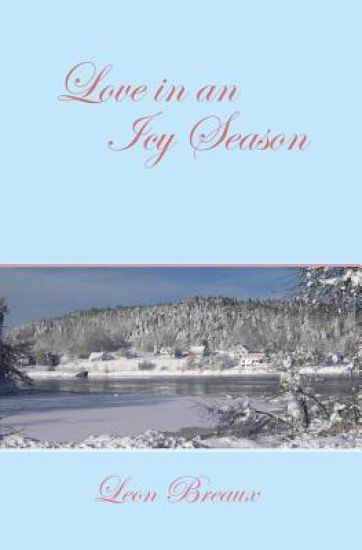
After a profound personal loss, Joe Fanner starts life anew far from home. He has simplified his existence and made living risk-free. His future lies out before him safely. He hasn't counted on Allison Barrows, though, a young poet suffering from a terrible loss herself. Despite their wounds, a kind of gravity draws them together in a small coastal town in the middle of winter. Will there be warmth, despite the winter? Can they both overcome their losses for the sake of future happiness? We will see....
This book's all black and white and doesn't have anything on it but the title and my name. Why? I'm not qute sure, except it may reflect the place where I wrote it and my stark ignorance. Or perhaps it's about precision and clarity. Or maybe extreme simplicity. One thing for sure, working in a Mainland Chinese environment, even for someone relatively well-acquainted with East Asia, sets you back on yourself. You really have to deeply question what's right and what's wrong and what (and who) you are. I suppose it's the sort of expereince where you can solidify your notions against the objective facts until it all blows over and you're safely home again, or you can internalize and attempt to understand from square one. Being the sort of creature I am, I took the latter path. More or less. Even the who is new here. Who knew?
This is Leon Breaux's third volume of poetry, written in the years following graduation from university, 1986-90. Themes have broadened to include work and home life.
This is Leon Breaux's fourth volume of poetry, written between 1990-92.
This fifth volume of Leon Breaux's poetry, written from 1992-3, has a sort of detached aesthetic and philosophical vibe, hence the name Art. More directly personal themes build in the next volume, Clear. You might call this volume relatively contemplative and cerebral. The language, while not sacrificing expression, has a more worked and careful quality serving a poetic aesthetic than perhaps other volumes by the poet, which may serve more for accurate expression and communication of felt passion.
Leon Breaux's sixth voume of poetry, following Art, and written from 1994-5. The time period of this volume coincides with many changes in the poet's life, mainly due to the transition from domestic security to the reassertion of a lone individual's role in society. In typical fashion, the poet holds little if anything back in placing upon the page his feelings, ideas, and judgments as honestly and accurately as possible. As a reader may find through consulting the Preface, there's not much here of prettiness and flowers. The title itself is ironic, though not meant that way at the time of its ascription.
The death of the poet's father caused a qualitative change. This volume communicates and expresses the earth and the sky of these changes. Twisted inside out and flipped upside down, life remains.
Done represents Leon Breaux's eighth volume of poetry and also his shortest at 32 pages. Written from 1996-97, it encompasses a time of profound personal loss and expresses honest feeling from that time. The poetry deals with these feelings with an active, fighting spirit. Also this volume confronts many unpleasant truths which do not go away and which the poet must deal with. In the end the volume serves as a poetic rejection of death, no matter the cost.
This volume, Christ, divides into four sections: Christ, Nature, Monkeyshines, and Christ Two. The poems serve as expressions of the poet's profound and humble acceptance of Christ. Many of them consist of direct appeals to and questions for God. Christ lives eternally outside of us, and we must allow Him within. Through this relationship we may seek His peace and increase our love and undertstanding . From initial acceptance in abject humility (Christ), to the application of new thinking to the natural world and processes (Nature), to the realization of humankind's foolishness (Moneyshines), to an improved and better relationship (Christ Two), these poems evidence a journey of the sacred heart.
This volume of poetry was written from 2002-03, following the volume Christ, making it Leon Breaux's ninth. After the previous volume, the author begins to encounter and express ways of looking at life not necessarily within the Christian worldview, although little explicitly non-Christian surfaces. The newness more takes the form of certain elements which the poet allows within the camp, elements which a more diligent watchman might stop and question. However, it's never the intention to systematize life or to segregate the real from acceptance and consideration unless critical and actual harm threaten. Perhaps other kinds of newness exist besides the usual.
This eleventh volume of Leon Breaux's poetry, written from 2004 to 2005, comes from a relaxed time of reflection after many hard changes of the years before. The poems deal with reconciling memories, acceptance of and integration with nature, social commentary in various themes, ambition, and other matters.

Two opposing energies or lives or nationalities or genders, ideas all, never oppose in logical precision but nevertheless move towards moderation unless we consider or implement complete destruction of one. Even heaven's inside earth which again lives inside heaven. I didn't make these mysteries, I only attempt to express them. Sometimes the job's sweet and sometimes it's dirty. I take responsibility for the entire worldchanging and humankind shattering force of unknown tiny black squiggles on white paper pages, useful as well for butt-wiping or firestarting. Pehaps you may enjoy an opportunity to moderate yourself to some degree.
This volume contains poems written from 2013 to 2016, during the author's return to the USA from Beijing, China to the Seattle area in Wasington state, and then the return to China after two years' in a public high school. The work explores the cultural differences, especially as regards secondary level education, as well as more general themes of shifting worldviews, propaganda, business, the use of data, and personal reflection.

This manuscript was rediscovered over thirty years after its original creation and now takes chronological position number two in Leon Breaux's volumes of poetry, after Twenty-Two Piles of Ten in Black and White and before Twyce. The book develops and continues themes from the previous work, as the poet moves into a working life outside of academics, and introduces broader, existential themes dealing with life in society in the 1980s in Southern California.