Kirjojen hintavertailu. Mukana 11 699 587 kirjaa ja 12 kauppaa.

Kirjahaku

Etsi kirjoja tekijän nimen, kirjan nimen tai ISBN:n perusteella.

11 kirjaa tekijältä Leonora Neville

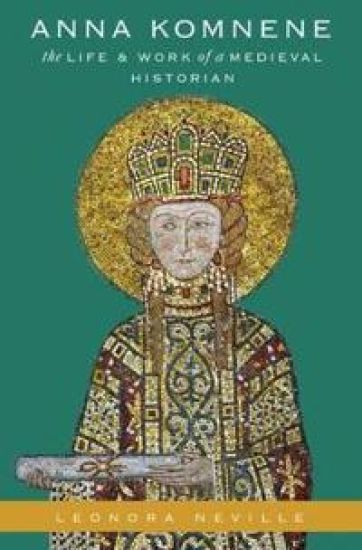
Anna Komnene

Anna Komnene

Leonora Neville

Oxford University Press Inc
2016
sidottu
Byzantine princess Anna Komnene is known for two things: plotting to murder her brother to usurp the throne, and writing the Alexiad, an epic history of her father Alexios I Komnenos (1081-1118) that is a key historical source for the era of the First Crusade. Anna Komnene: the Life and Work of a Medieval Historian investigates the relationship between Anna's self-presentation in the Alexiad and the story of her bloodthirsty ambition. It begins by asking why women did not write history in Anna's society, what cultural rules Anna broke by doing so, and how Anna tried to respond to those challenges in her writing. Many of the idiosyncrasies and surprises of Anna's Alexiad are driven by her efforts to be perceived as both a good historian and a good woman. These new interpretations of Anna's authorial persona then spark a thorough re-thinking of the standard story which defines Anna's life by the failure of her supposed political ambitions. The second half of this work reviews the medieval sources with fresh eyes and re-establishes Anna's primary identity as an author and intellectual rather than as a failed conspirator.
Anna Komnene

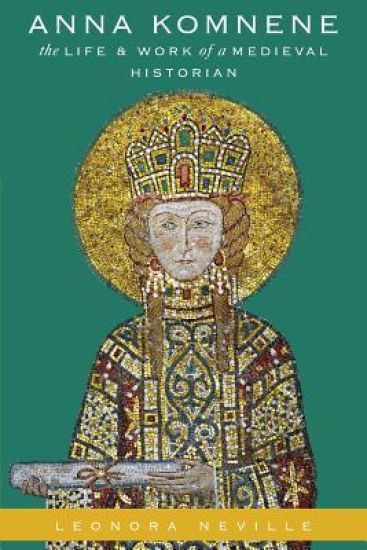
Anna Komnene

Leonora Neville

Oxford University Press Inc
2018
nidottu
Byzantine princess Anna Komnene is known for two things: plotting to murder her brother to usurp the throne, and writing the Alexiad, an epic history of her father Alexios I Komnenos (1081-1118) that is a key historical source for the era of the First Crusade. Anna Komnene: the Life and Work of a Medieval Historian investigates the relationship between Anna's self-presentation in the Alexiad and the story of her bloodthirsty ambition. It begins by asking why women did not write history in Anna's society, what cultural rules Anna broke by doing so, and how Anna tried to respond to those challenges in her writing. Many of the idiosyncrasies and surprises of Anna's Alexiad are driven by her efforts to be perceived as both a good historian and a good woman. These new interpretations of Anna's authorial persona then spark a thorough re-thinking of the standard story which defines Anna's life by the failure of her supposed political ambitions. The second half of this work reviews the medieval sources with fresh eyes and re-establishes Anna's primary identity as an author and intellectual rather than as a failed conspirator.
Authority in Byzantine Provincial Society, 950–1100

Authority in Byzantine Provincial Society, 950–1100

Leonora Neville

Cambridge University Press
2009
pokkari
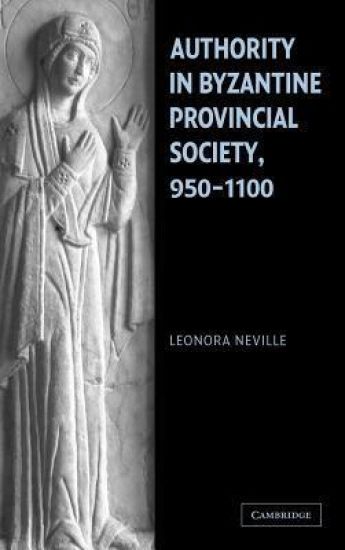
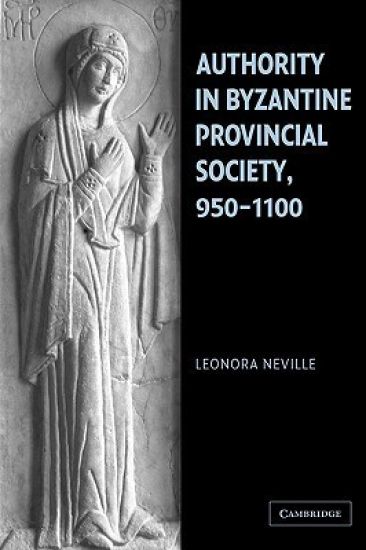
The imperial government over the central provinces of the Byzantine Empire c.950–1100 was both sovereign and apathetic, dealing effectively with a narrow set of objectives, chiefly collecting revenue and maintaining imperial sovereignty. Outside these spheres, action needed to be solicited from imperial officials, leaving vast opportunities for local people to act independently without legal stricture or fear of imperial involvement. In the absence of imperial intervention provincial households competed with each other for control over community decisions. The emperors exercised just enough strength at the right times to prevent the leaders of important households in the core provinces from becoming rulers themselves. Membership in a successful household, wealth, capacity for effective violence and access to the imperial court were key factors that allowed one to act with authority. This 2004 book examines in detail the mechanisms provincial households used to acquire and dispute authority.
Authority in Byzantine Provincial Society, 950–1100

Authority in Byzantine Provincial Society, 950–1100

Leonora Neville

Cambridge University Press
2004
sidottu
The imperial government over the central provinces of the Byzantine Empire was sovereign and, at the same time, apathetic, dealing effectively with a narrow set of objectives, chiefly collecting revenue and maintaining imperial sovereignty. Outside of these spheres, action needed to be solicited from imperial officials, leaving vast opportunities for local people to act independently without legal stricture or fear of imperial involvement. In the absence of imperial intervention provincial households competed with each other for control over community decisions. The emperors exercised just enough strength at the right times to prevent the leaders of important households in the core provinces from becoming rulers themselves. Membership in a successful household, wealth, capacity for effective violence and access to the imperial court were key factors that allowed one to act with authority. This book examines in detail the mechanisms provincial households used to acquire and dispute authority.
Sailing Away from Byzantium Toward East Roman History

Sailing Away from Byzantium Toward East Roman History

Leonora Neville

Cambridge University Press
2025
pokkari
Although the first thing one learns about the 'Byzantine Empire' is that it was really the eastern Roman empire, scholars have preferred to call it 'Byzantine' in a repudiation of the self-conception and emic vocabulary of the inhabitants of that polity. The terminology of 'Byzantium' artificially severs the 'medieval' eastern Roman empire from its 'classical' roots allowing for the fundamentally Eurocentric schematization of history into 'ancient,' 'medieval,' and 'Renaissance' periods. 'Byzantine' is not a benign term of art but has served a variety of political and historiographical agendas including maintaining nationalist visions of ethnic continuity, creating precedents for communism, enabling politics of nostalgia for Orthodox dominion, and constructing visions of western European superiority and masculinity that justify colonialism. By exploring these intellectual legacies of 'Byzantium,' and the benefits of conceptualizing Roman history as an unsevered whole, this Element exhorts scholars to let go of the 'Byzantine' misnomer.
Sailing Away from Byzantium Toward East Roman History

Sailing Away from Byzantium Toward East Roman History

Leonora Neville

Cambridge University Press
2025
sidottu
Although the first thing one learns about the 'Byzantine Empire' is that it was really the eastern Roman empire, scholars have preferred to call it 'Byzantine' in a repudiation of the self-conception and emic vocabulary of the inhabitants of that polity. The terminology of 'Byzantium' artificially severs the 'medieval' eastern Roman empire from its 'classical' roots allowing for the fundamentally Eurocentric schematization of history into 'ancient,' 'medieval,' and 'Renaissance' periods. 'Byzantine' is not a benign term of art but has served a variety of political and historiographical agendas including maintaining nationalist visions of ethnic continuity, creating precedents for communism, enabling politics of nostalgia for Orthodox dominion, and constructing visions of western European superiority and masculinity that justify colonialism. By exploring these intellectual legacies of 'Byzantium,' and the benefits of conceptualizing Roman history as an unsevered whole, this Element exhorts scholars to let go of the 'Byzantine' misnomer.
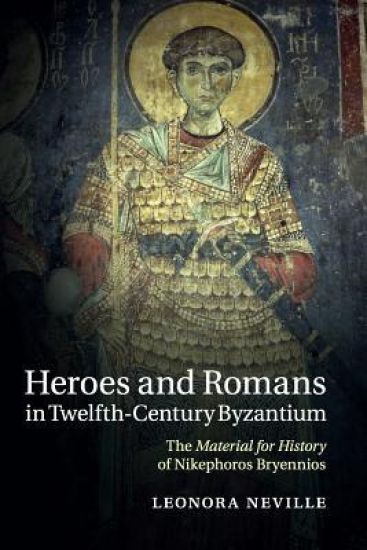
Heroes and Romans in Twelfth-Century Byzantium

Heroes and Romans in Twelfth-Century Byzantium

Leonora Neville

Cambridge University Press
2012
sidottu
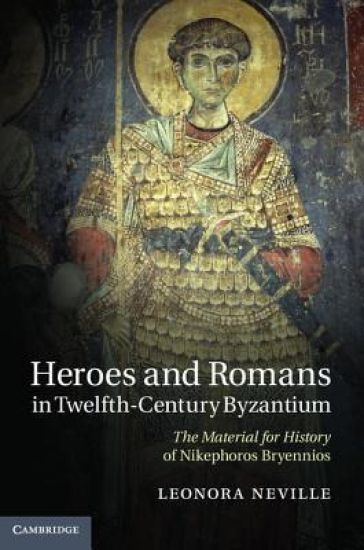
Nikephoros Bryennios' history of the Byzantine Empire in the 1070s is a story of civil war and aristocratic rebellion in the midst of the Turkish conquest of Anatolia. Commonly remembered as the passive and unambitious husband of Princess Anna Komnene (author of the Alexiad), Bryennios is revealed as a skilled author whose history draws on cultural memories of classical Roman honor and proper masculinity to evaluate the politicians of the 1070s and implicitly to exhort his twelfth-century contemporaries to honorable behavior. Bryennios' story valorizes the memory of his grandfather and other honorable, but failed, generals of the eleventh century while subtly portraying the victorious Alexios Komnenos as un-Roman. This reading of the Material for History sheds new light on twelfth-century Byzantine culture and politics, especially the contested accession of John Komnenos, the relationship between Bryennios' history and the Alexiad and the function of cultural memories of Roman honor in Byzantium.
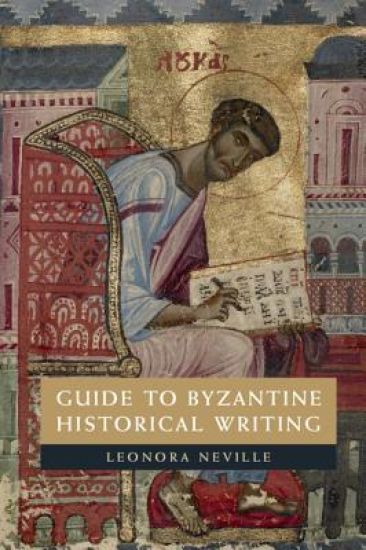
Guide to Byzantine Historical Writing

Guide to Byzantine Historical Writing

Leonora Neville

Cambridge University Press
2018
sidottu
This handy reference guide makes it easier to access and understand histories written in Greek between 600 and 1480 CE. Covering classicizing histories that continued ancient Greek traditions of historiography, sweeping, fast-paced 'chronicle' type histories, and dozens of idiosyncratic historical texts, it distills the results of complex, multi-lingual, specialist scholarship into clear explanations of the basic information needed to approach each medieval Greek history. It provides a sound basis for further research on each text by describing what we know about the time of composition, content covered by the history, authorship, extant manuscripts, previous editions and translations, and basic bibliography. Even-handed explanations of scholarly debates give readers the information they need to assess controversies independently. A comprehensive introduction orients students and non-specialists to the traditions and methods of Byzantine historical writing. It will prove an invaluable timesaver for Byzantinists and an essential entry point for classicists, western medievalists, and students.
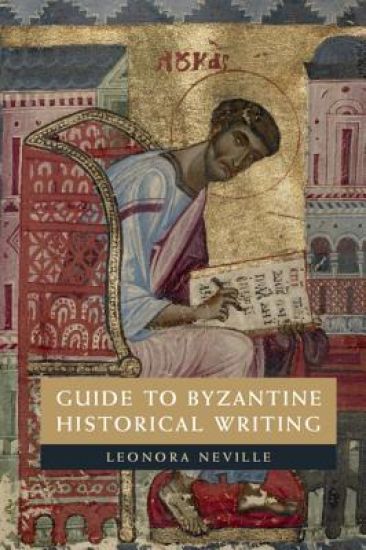
Guide to Byzantine Historical Writing

Guide to Byzantine Historical Writing

Leonora Neville

Cambridge University Press
2018
pokkari
This handy reference guide makes it easier to access and understand histories written in Greek between 600 and 1480 CE. Covering classicizing histories that continued ancient Greek traditions of historiography, sweeping, fast-paced 'chronicle' type histories, and dozens of idiosyncratic historical texts, it distills the results of complex, multi-lingual, specialist scholarship into clear explanations of the basic information needed to approach each medieval Greek history. It provides a sound basis for further research on each text by describing what we know about the time of composition, content covered by the history, authorship, extant manuscripts, previous editions and translations, and basic bibliography. Even-handed explanations of scholarly debates give readers the information they need to assess controversies independently. A comprehensive introduction orients students and non-specialists to the traditions and methods of Byzantine historical writing. It will prove an invaluable timesaver for Byzantinists and an essential entry point for classicists, western medievalists, and students.
Heroes and Romans in Twelfth-Century Byzantium

Heroes and Romans in Twelfth-Century Byzantium

Leonora Neville

Cambridge University Press
2016
pokkari
Nikephoros Bryennios' history of the Byzantine Empire in the 1070s is a story of civil war and aristocratic rebellion in the midst of the Turkish conquest of Anatolia. Commonly remembered as the passive and unambitious husband of Princess Anna Komnene (author of the Alexiad), Bryennios is revealed as a skilled author whose history draws on cultural memories of classical Roman honor and proper masculinity to evaluate the politicians of the 1070s and implicitly to exhort his twelfth-century contemporaries to honorable behavior. Bryennios' story valorizes the memory of his grandfather and other honorable, but failed, generals of the eleventh century while subtly portraying the victorious Alexios Komnenos as un-Roman. This reading of the Material for History sheds new light on twelfth-century Byzantine culture and politics, especially the contested accession of John Komnenos, the relationship between Bryennios' history and the Alexiad and the function of cultural memories of Roman honor in Byzantium.