Kirjojen hintavertailu. Mukana 11 244 527 kirjaa ja 12 kauppaa.

Kirjahaku

Etsi kirjoja tekijän nimen, kirjan nimen tai ISBN:n perusteella.

16 kirjaa tekijältä Les Roberts

The Strange Death of Father Candy

The Strange Death of Father Candy

Les Roberts

MINOTAUR BOOKS
2011
sidottu
Vietnam veteran Dominick Candiotti has been long estranged from his family. His late parents were close to the ruling mob clan in Youngstown, his sister was a bad-tempered and dissatisfied nag, and his middle brother was a corruptible police lieutenant. But in 1985, their oldest brother Richard Candiotti---beloved by every Italian Catholic in Youngstown as "Father Candy"---dies, and Dominick returns home for the funeral. Dominick is greatly disturbed by Richard's death, which has been ruled a suicide. Dissatisfied with this answer, he sets out to find the truth, revealing secrets and coming face-to-face with brutality and violence. Award-winning author Les Roberts pens a riveting and moving tale about walking the fragile tightrope between love and hatred.
Posthuman Buddhism and the Digital Self

Posthuman Buddhism and the Digital Self

Les Roberts

TAYLOR FRANCIS LTD
2023
sidottu
In Posthuman Buddhism and the Digital Self, Les Roberts extends his earlier work on spatial anthropology to consider questions of time, spaciousness and the phenomenology of self. Across the book’s four main chapters – which range from David Bowie’s long-standing interest in Buddhism, to street photography of 1980s Liverpool, to the ambient soundscapes of Derek Jarman’s Blue, or to the slow, contemplative cinema of Tsai Ming-Liang – Roberts lays the groundwork for the concept of ‘dwellspace’ as a means by which to unpick the shifting spatial, temporal and experiential modalities of everyday mediascapes. Understood as a particular disposition towards time, Roberts’s foray into dwellspace proceeds from a Pascalian reflection on the self/non-self in which being content in an empty room vies with the demands of having content in an empty room. Taking the idea of posthuman Buddhism as a heuristic lens, Roberts sets in motion a number of interrelated lines of enquiry that prompt renewed focus on questions of boredom, distraction and reverie and cast into sharper relief the psychosocial and creative affordances of ambience, spaciousness and slowness. The book argues that the colonisation of ‘empty time’ by 24/7 digital capitalism has gone hand-in-hand with the growth of the corporate mindfulness industry, and with it, the co-option, commodification and digitisation of dwellspace. Posthuman Buddhism is thus in part an exploration of the dialectics of dwellspace that orbits around a creative self-praxis rooted in the negation and dissolution of the self, one of the foundational cornerstones of Buddhist theory and practice.
Posthuman Buddhism and the Digital Self

Posthuman Buddhism and the Digital Self

Les Roberts

TAYLOR FRANCIS LTD
2024
nidottu
In Posthuman Buddhism and the Digital Self, Les Roberts extends his earlier work on spatial anthropology to consider questions of time, spaciousness and the phenomenology of self. Across the book’s four main chapters – which range from David Bowie’s long-standing interest in Buddhism, to street photography of 1980s Liverpool, to the ambient soundscapes of Derek Jarman’s Blue, or to the slow, contemplative cinema of Tsai Ming-Liang – Roberts lays the groundwork for the concept of ‘dwellspace’ as a means by which to unpick the shifting spatial, temporal and experiential modalities of everyday mediascapes. Understood as a particular disposition towards time, Roberts’s foray into dwellspace proceeds from a Pascalian reflection on the self/non-self in which being content in an empty room vies with the demands of having content in an empty room. Taking the idea of posthuman Buddhism as a heuristic lens, Roberts sets in motion a number of interrelated lines of enquiry that prompt renewed focus on questions of boredom, distraction and reverie and cast into sharper relief the psychosocial and creative affordances of ambience, spaciousness and slowness. The book argues that the colonisation of ‘empty time’ by 24/7 digital capitalism has gone hand-in-hand with the growth of the corporate mindfulness industry, and with it, the co-option, commodification and digitisation of dwellspace. Posthuman Buddhism is thus in part an exploration of the dialectics of dwellspace that orbits around a creative self-praxis rooted in the negation and dissolution of the self, one of the foundational cornerstones of Buddhist theory and practice.
Full Cleveland

Full Cleveland

Les Roberts

Gray Company Publishers
2005
nidottu
#2 in the Milan Jacovich mystery series ... Polyester leisure suit, white patent leather shoes, matching white belt--that 1970s fashion statement was once unkindly dubbed the "full Cleveland." And no one wears it with more flair and panache than Buddy Bustamente. Buddy ("he was medium-sized if you happened to be talking about Cape buffaloes") is the hulking flunky assigned by mob kingpin Victor Gaimari to shadow Cleveland private eye Milan Jacovich (it's pronounced MY-lan YOCK-ovich). Milan has been hired to find the perpetrator of a low-level scam who is selling local businessmen ads in a magazine that doesn't exist. But the modest amount of money involved hardly seems worth the string of bodies he soon turns up. And why does it interest a mobster like Victor and his sugar-addict bird dog, Buddy? Milan starts liking Buddy in spite of himself. But he's not easily fooled; Buddy is a recent ex-con, and Milan knows that behind the childlike fa ade and dubious fashion, he is potentially lethal.
Collision Bend: A Milan Jacovich Mystery

Collision Bend: A Milan Jacovich Mystery

Les Roberts

Gray Company Publishers
2005
nidottu
#7 in the Milan Jacovich mystery series . . . Private investigator Milan Jacovich (pronounced MY-lan YOCK-ovich) goes behind the scenes to uncover scandal, ambition, and intrigue at one of Cleveland's top TV stations as he hunts down the stalker and murderer of a beautiful local television anchor. Milan has just moved his offices to an old building on the banks of the Cuyahoga River in an area called the Flats. There, he receives a surprise visit from a former love interest, Mary Soderberg, who left him for her influential boss, TV executive Steve Cirini. One of their newscasters, the beautiful Virginia Carville, has been murdered, and Cirini, who was having an affair with her, is the chief suspect. Mary wants Milan to bail her cheating boyfriend out of the jam--for old times' sake. Milan doesn't like Cirini at all, but takes the case even though he's unsure of the man's innocence. Or is the culprit the obsessive station-manager Nicky Scandalios, the longtime anchorwoman Vivian Truscott, or a survivor of child abuse named Violet Grba? For that matter, could it be Milan's old flame Mary Soderberg herself? "Another fine entry in an outstanding series, Robert's latest is sure to be a hit with readers and reviewers alike." -- Booklist "Former television producer Roberts writes knowingly of the medium; newscaster sleeping with sales manager makes a timely metaphor for the ethics of broadcast journalism. Roberts affectionately weaves in the history and rich ethnic mix of Milan Jacovich's Cleveland turf." -- Publishers Weekly
King of the Holly Hop

King of the Holly Hop

Les Roberts

Gray Company Publishers
2009
nidottu
#14 in the Milan Jacovich mystery series ... "A real treat, whether this is the reader's first introduction to the Cleveland PI or one merely catching up with an old friend." -- Mysterious Reviews Going to your high school reunion is never fun. But this time, it's murder. When Cleveland private eye Milan Jacovich reluctantly attends the fortieth reunion of his St. Clair High School graduating class, he gets a rude surprise: one of his classmates is found shot dead and another quickly becomes the main suspect. The suspect, successful playwright Tommy Wiggins, draws Milan into the case--and puts him in a very awkward position. Investigating his former schoolmates is an uncomfortable task for Milan, as he soon discovers the dark secrets of people he only thought he knew. The deceased Dr. Phil Kohn, it turns out, was a cad who managed to make more than a few enemies during his abbreviated life. But did a forty-year-old grudge really lead to his death? Or was it something more recent--a jealous spouse, a shady business partner? Milan's hunt for the real killer leads him through the oddly intertwined worlds of Cleveland's medical community, organized crime, polite suburban society, and hard-core drug dealers. It's a tough investigation in which Milan could lose many friends--and, if he's not careful, his life. "Milan is back after a six-year hiatus and just as sharp as ever ... a must-read for any Cleveland mystery lover or displaced Clevelander. If you're new to the series, don't worry; the book stands wel alone even as it reminds fans of previous Milan adventures." -- About.com "A fresh and original mystery, highly recommended to those looking for a classic whodunit with new ideas." -- Small Press Bookwatch "Roberts writes exciting, well-paced mysteries, which is why his fans wanted more, but in this part of the country their appeal has a lot to do with the locale. When murder mysteries are set in places you know, they immediately become more compelling." -- News Journal "An enjoyable whodunit with a deep realistic look at Cleveland now and a nostalgic surreal look at the city in the 1960s though the distorted lens of memories." -- Midwest Book Review
The Cleveland Creep: A Milan Jacovich Mystery

The Cleveland Creep: A Milan Jacovich Mystery

Les Roberts

Gray Company Publishers
2012
nidottu
#15 in the Milan Jacovich mystery series ... "A fun and fast paced mystery thriller, highly recommended." -- Midwest Book Review A simple missing-person case gets complicated when Milan Jacovich (pronounced MY-lan YOCK-ovich) discovers that 28-year-old Earl Dacey left behind a strange collection of voyeuristic videos in his mother's West Side Cleveland house. Was Earl just a pervert shadowing Catholic schoolgirls in Northeast Ohio shopping malls with his hidden camera ... or had he become entangled with unsavory characters in the local adult film business? When Milan uncovers a possible link to organized crime, the FBI gets interested--and Milan's "well connected" friend Victor Gaimari gets angry. After a dead body turns up, the Cleveland Police take over, and Milan figures he's off the case. So why does crusty Lieutenant McHargue ask him to lend a hand? Still feeling the effects of a recent concussion and well aware of his aging body, Milan takes the advice of a colleague and hires an assistant. Kevin O'Bannion is young and eager to learn the P.I. business. An Army veteran with combat experience and a juvenile-crime record, he definitely won't shy away from a fight. But will he be able to control his volatile temper and help get the job done? Milan finds out soon enough--with his own life on the line.
The C.I.

The C.I.

Les Roberts

Down Out Books
2023
pokkari
Slovenian-American Jericho Paich finds himself under arrest by snarling Cleveland police cop Keenan Mayo and forced to be a non-paid confidential informant, setting up friends and strangers to be hauled in for illegal drug use. He turns for help to his mother's live-in lover, ex-marine officer Laird Janiver. The two have never gotten along, but Jerry has nowhere else to turn. Janiver, a studious African American major who recalls how to kill, decides to help. That brings the two men into contact with a cruelly efficient albino drug lord, the suicidal memory of a lovely young college girl at OSU, and a beautiful woman with what might be a very dangerous past.
An Only Child

An Only Child

Les Roberts

Down Out Books
2024
pokkari
Russell Reinhart, a well-known author of private eye novels, is released from the Illinois State Prison in Joliet after serving seven years for the involuntary manslaughter of his wife. He returns to Chicago, welcomed home by his top-flight attorney who tucked away all his millions so no one could get hold of them while he was incarcerated, and rented him an elegant apartment in the Near North neighborhood, half a block from Lake Michigan. Reinert was an only child, adopted when an infant, and now he has no one to whom he can turn. His release from prison is reported by the local papers, and he's contacted by a man he's never heard of named Cole Cabot. A few years earlier, Cabot had married Reinert's extra-curricular girlfriend, Aubrey, who has suddenly gone missing. Russ pleads he's no private eye but just writes fiction about them, but worries his ex-lover has disappeared, so agrees to take on the case. He learns Aubrey was also the mistress of one of the world's richest men in America, Gaylord Ogilvie, at the same time she was with him. Having investigative trouble, he is helped by the young son of a man who met while he was in prison, a huge, half-illiterate black man named Denver Tolliver, who saved his life behind bars several times. Denver was locked up for life after killing a police officer, but his college-student son is brilliant loyal, intelligent and wise. Butting heads with Ogilvie and his minions, Russ also falls heads-over-heels in love with Cassidy Hammond, who he met while taking a Michigan Avenue Beach run for the first time in seven years. His adjustment to new freedom makes life more difficult than he'd ever imagined. When he runs into danger that might turn permanent, he hadn't forgotten how Denver Tolliver had taught him to prison-fight, and he eventually learns he's not that much alone as he thought he was. The first words of this book are identical to the last words in the book, too: "I am an only child..."
Sierra Bravo

Sierra Bravo

Les Roberts

Down Out Books
2025
pokkari
Sierra Bravo is a brand-new Chief of Police in an upscale California beach town. The cops she works with adore her, but some of the rich and powerful have little use for her. A strange event-an eleven-year-old girl is brought into a men's washroom in a crowded movie theater-grabs her attention and sends her off into an investigation that turns into a fight against children being turned into sexual victims-for profit. A new romance with a school's vice principal runs into trouble, too, uncovering her own difficult childhood. Don't be surprised-female police chiefs are just as tough as their male counterparts.
Spatial Anthropology

Spatial Anthropology

Les Roberts

Rowman Littlefield
2018
sidottu
Spatial Anthropology draws together a number of interrelated strands of research focused on landscape, place and cultural memory in the north-west of England. At the core of the book lies an engagement with the methodological opportunities offered by new interdisciplinary frameworks of research and practice that have emerged in the wake of a putative ‘spatial turn’ in arts and humanities scholarship in recent years. The spatial methods explored in the book represent a consolidation of site-specific interventions enacted in landscapes located in the north-west and beyond. Utilising digital tools and geospatial technologies alongside ethnographic, performative and autoethnographic modes of spatio-cultural analysis, spatial anthropology is presented as a geographically immersive and critically reflexive set of practices designed to explore the embodied and increasingly multi-faceted spatialities of place, mobility and memory. From the radically placeless environment of a motorway traffic island, to the ‘affective archipelago’ of former cinema sites, or the ‘songlines’ and micro-geographies of musical memory, Spatial Anthropology offers a rich tapestry of landscapes, practices and spatial stories that speaks to both the particularities of place and locality as well as the more delocalised topographies of regional, national and global mobility.
Spatial Anthropology

Spatial Anthropology

Les Roberts

Rowman Littlefield International
2020
nidottu
Spatial Anthropology draws together a number of interrelated strands of research focused on landscape, place and cultural memory in the north-west of England. At the core of the book lies an engagement with the methodological opportunities offered by new interdisciplinary frameworks of research and practice that have emerged in the wake of a putative ‘spatial turn’ in arts and humanities scholarship in recent years. The spatial methods explored in the book represent a consolidation of site-specific interventions enacted in landscapes located in the north-west and beyond. Utilising digital tools and geospatial technologies alongside ethnographic, performative and autoethnographic modes of spatio-cultural analysis, spatial anthropology is presented as a geographically immersive and critically reflexive set of practices designed to explore the embodied and increasingly multi-faceted spatialities of place, mobility and memory. From the radically placeless environment of a motorway traffic island, to the ‘affective archipelago’ of former cinema sites, or the ‘songlines’ and micro-geographies of musical memory, Spatial Anthropology offers a rich tapestry of landscapes, practices and spatial stories that speaks to both the particularities of place and locality as well as the more delocalised topographies of regional, national and global mobility.
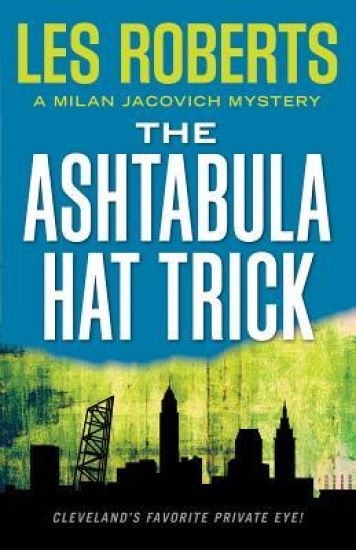
The Ashtabula Hat Trick

The Ashtabula Hat Trick

Les Roberts

Gray Company Publishers
2017
nidottu
#18 in the Milan Jacovich Mystery Series ... Residents of a small Ohio town don't take kindly to strangers. But they have no choice in the matter after a man's body is found in a local park, pants unzipped and stabbed through the heart--and a second man's body turns up days later, his head bashed in. Local law enforcement needs help with the town's first-ever murder investigation. Private investigator Milan Jacovich (MY-lan YOCK-ovitch) tags along when his main squeeze, Cleveland homicide detective Tobe Blaine, is dispatched to rural Ashtabula County to handle the case. Word travels fast in the small town, and the mixed-race couple receives a cold welcome. The motel manager doesn't like their looks, the coroner conveniently forgets key details, and patrons at the local watering hole flaunt their disrespect for Tobe's out-of-town badge and her skin color. Milan enlists his young assistant, Kevin "K.O." O'Bannion, to glean information from the town's teens, who tell tales of their parents' fervent devotion to their local pastor, an outspoken bigot. Did homophobia factor in the murders? Looming over the case is nearby Conneaut prison--privately run, overcrowded, and rumored to employ some questionable methods (as well as many local residents). Inside its walls, a powerful convict known as "The Prophet" just might have the information Tobe and Milan need to solve the case--if they can get him to talk. Queenstown might only be an hour's drive from Cleveland, but Milan, Tobe, and K.O. find themselves strangers in a strange land. They also soon find themselves neck-deep in serious trouble.
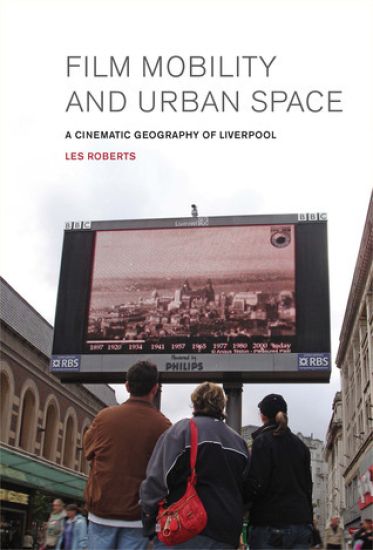
Film, Mobility and Urban Space

Film, Mobility and Urban Space

Les Roberts

Liverpool University Press
2012
sidottu
Drawing on multi-disciplinary debates surrounding the cultural production of place, space and memory in the post-industrial city, Film, Mobility and Urban Space explores the role of moving images in representations and perceptions of everyday urban landscapes. The arguments put forward in the book are based on a case study of Liverpool in the north west of England and draw from a unique spatial database of over 1700 archive films of the city from 1897 to the present day. Theoretically wide-ranging in scope, Les Roberts’s study combines critical spatial analysis, archival research and qualitative methods to navigate a city’s cinematic geographies as mapped across a broad spectrum of film genres, including amateur film, travelogues, newsreels, promotional films, documentaries and features. As the second most filmed city in the UK – and formerly second city of Empire – Liverpool boasts a rich industrial, architectural and maritime heritage that has positioned the city – which was European Capital of Culture in 2008 – at the forefront of current debates on regeneration, visuality and cultural memory. The tension between the city as spectacle and the city as archive, and the contradictions that underpin the growing ‘cinematization’ of postmodern urban space are at the core of the arguments developed throughout the book. Examining the contention that, as spatial practices, the production and consumption of urban cinematic geographies are, in their different ways, tied to shifting cultures and geographies of mobility, Film, Mobility and Urban Space maps the critical interplay between material and immaterial spaces of the city and re-evaluates the significance – and ‘place’ – of location in contemporary film practice and urban cultural theory.