Kirjojen hintavertailu. Mukana 11 717 486 kirjaa ja 12 kauppaa.

Kirjahaku

Etsi kirjoja tekijän nimen, kirjan nimen tai ISBN:n perusteella.

9 kirjaa tekijältä Leslie C. Allen

Psalms

Psalms

Leslie C. Allen

ZONDERVAN
2020
nidottu
A companion series to the acclaimed Word Biblical CommentaryFinding the great themes of the books of the Bible is essential to the study of God's Word and to the preaching and teaching of its truths. These themes and ideas are often like precious gems: they lie beneath the surface and can only be discovered with some difficulty. While commentaries are useful for helping readers understand the content of a verse or chapter, they are not usually designed to help the reader to trace important subjects systematically within a given book a Scripture.The Word Biblical Themes series helps readers discover the important themes of a book of the Bible. This series distills the theological essence of a given book of Scripture and serves it up in ways that enrich the preaching, teaching, worship, and discipleship of God's people. Volumes in this series:Are written by top biblical scholarsFeature authors who wrote on the same book of the Bible for the Word Biblical Commentary seriesDistill deep and focused study on a biblical book into the most important themes and practical applications of themGive readers an ability to see the "big picture" of a book of the Bible by understanding what topics and concerns were most important to the biblical writersHelp address pressing issues in the church today by showing readers see how the biblical writers approached similar issues in their dayAre ideal for sermon preparation and for other teaching in the church Word Biblical Themes are an ideal resource for any reader who has used and benefited from the Word Biblical Commentary series, and will help pastors, bible teachers, and students as they seek to understand and apply God’s word to their ministry and learning.
Psalms 101-150, Volume 21

Psalms 101-150, Volume 21

Leslie C. Allen

ZONDERVAN
2021
sidottu
The Word Biblical Commentary delivers the best in biblical scholarship, from the leading scholars of our day who share a commitment to Scripture as divine revelation. This series emphasizes a thorough analysis of textual, linguistic, structural, and theological evidence. The result is judicious and balanced insight into the meanings of the text in the framework of biblical theology. These widely acclaimed commentaries serve as exceptional resources for the professional theologian and instructor, the seminary or university student, the working minister, and everyone concerned with building theological understanding from a solid base of biblical scholarship.Overview of Commentary OrganizationIntroduction—covers issues pertaining to the whole book, including context, date, authorship, composition, interpretive issues, purpose, and theology.Each section of the commentary includes:Pericope Bibliography—a helpful resource containing the most important works that pertain to each particular pericope.Translation—the author’s own translation of the biblical text, reflecting the end result of exegesis and attending to Hebrew and Greek idiomatic usage of words, phrases, and tenses, yet in reasonably good English.Notes—the author’s notes to the translation that address any textual variants, grammatical forms, syntactical constructions, basic meanings of words, and problems of translation.Form/Structure/Setting—a discussion of redaction, genre, sources, and tradition as they concern the origin of the pericope, its canonical form, and its relation to the biblical and extra-biblical contexts in order to illuminate the structure and character of the pericope. Rhetorical or compositional features important to understanding the passage are also introduced here.Comment—verse-by-verse interpretation of the text and dialogue with other interpreters, engaging with current opinion and scholarly research.Explanation—brings together all the results of the discussion in previous sections to expose the meaning and intention of the text at several levels: (1) within the context of the book itself; (2) its meaning in the OT or NT; (3) its place in the entire canon; (4) theological relevance to broader OT or NT issues.General Bibliography—occurring at the end of each volume, this extensive bibliographycontains all sources used anywhere in the commentary.
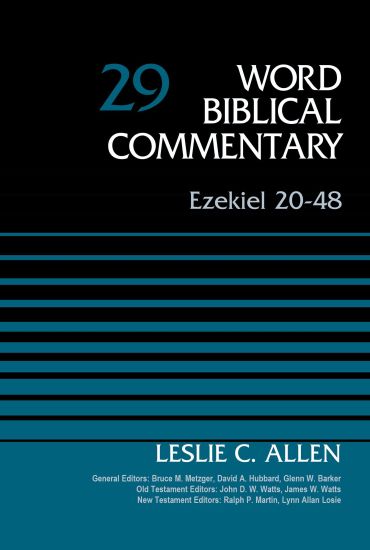
Ezekiel 20-48, Volume 29

Ezekiel 20-48, Volume 29

Leslie C. Allen

Zondervan
1975
sidottu
The Word Biblical Commentary delivers the best in biblical scholarship, from the leading scholars of our day who share a commitment to Scripture as divine revelation. This series emphasizes a thorough analysis of textual, linguistic, structural, and theological evidence. The result is judicious and balanced insight into the meanings of the text in the framework of biblical theology. These widely acclaimed commentaries serve as exceptional resources for the professional theologian and instructor, the seminary or university student, the working minister, and everyone concerned with building theological understanding from a solid base of biblical scholarship.Overview of Commentary OrganizationIntroduction—covers issues pertaining to the whole book, including context, date, authorship, composition, interpretive issues, purpose, and theology.Each section of the commentary includes:Pericope Bibliography—a helpful resource containing the most important works that pertain to each particular pericope.Translation—the author’s own translation of the biblical text, reflecting the end result of exegesis and attending to Hebrew and Greek idiomatic usage of words, phrases, and tenses, yet in reasonably good English.Notes—the author’s notes to the translation that address any textual variants, grammatical forms, syntactical constructions, basic meanings of words, and problems of translation.Form/Structure/Setting—a discussion of redaction, genre, sources, and tradition as they concern the origin of the pericope, its canonical form, and its relation to the biblical and extra-biblical contexts in order to illuminate the structure and character of the pericope. Rhetorical or compositional features important to understanding the passage are also introduced here.Comment—verse-by-verse interpretation of the text and dialogue with other interpreters, engaging with current opinion and scholarly research.Explanation—brings together all the results of the discussion in previous sections to expose the meaning and intention of the text at several levels: (1) within the context of the book itself; (2) its meaning in the OT or NT; (3) its place in the entire canon; (4) theological relevance to broader OT or NT issues.General Bibliography—occurring at the end of each volume, this extensive bibliographycontains all sources used anywhere in the commentary.
Ezekiel 1-19, Volume 28

Ezekiel 1-19, Volume 28

Leslie C. Allen

Zondervan
2015
sidottu
The Word Biblical Commentary delivers the best in biblical scholarship, from the leading scholars of our day who share a commitment to Scripture as divine revelation. This series emphasizes a thorough analysis of textual, linguistic, structural, and theological evidence. The result is judicious and balanced insight into the meanings of the text in the framework of biblical theology. These widely acclaimed commentaries serve as exceptional resources for the professional theologian and instructor, the seminary or university student, the working minister, and everyone concerned with building theological understanding from a solid base of biblical scholarship.Overview of Commentary OrganizationIntroduction—covers issues pertaining to the whole book, including context, date, authorship, composition, interpretive issues, purpose, and theology.Each section of the commentary includes:Pericope Bibliography—a helpful resource containing the most important works that pertain to each particular pericope.Translation—the author’s own translation of the biblical text, reflecting the end result of exegesis and attending to Hebrew and Greek idiomatic usage of words, phrases, and tenses, yet in reasonably good English.Notes—the author’s notes to the translation that address any textual variants, grammatical forms, syntactical constructions, basic meanings of words, and problems of translation.Form/Structure/Setting—a discussion of redaction, genre, sources, and tradition as they concern the origin of the pericope, its canonical form, and its relation to the biblical and extra-biblical contexts in order to illuminate the structure and character of the pericope. Rhetorical or compositional features important to understanding the passage are also introduced here.Comment—verse-by-verse interpretation of the text and dialogue with other interpreters, engaging with current opinion and scholarly research.Explanation—brings together all the results of the discussion in previous sections to expose the meaning and intention of the text at several levels: (1) within the context of the book itself; (2) its meaning in the OT or NT; (3) its place in the entire canon; (4) theological relevance to broader OT or NT issues.General Bibliography—occurring at the end of each volume, this extensive bibliographycontains all sources used anywhere in the commentary.
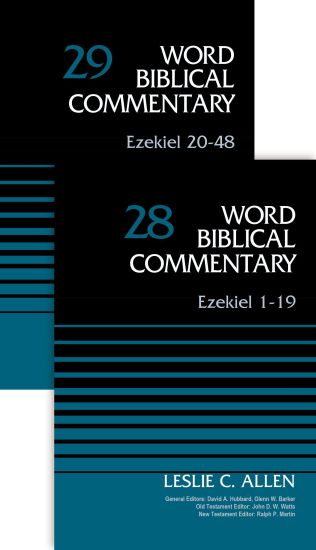
Ezekiel (2-Volume Set---28 and 29)

Ezekiel (2-Volume Set---28 and 29)

Leslie C. Allen

Zondervan Academic
2017
sidottu
The Word Biblical Commentary delivers the best in biblical scholarship, from the leading scholars of our day who share a commitment to Scripture as divine revelation. This series emphasizes a thorough analysis of textual, linguistic, structural, and theological evidence. The result is judicious and balanced insight into the meanings of the text in the framework of biblical theology. These widely acclaimed commentaries serve as exceptional resources for the professional theologian and instructor, the seminary or university student, the working minister, and everyone concerned with building theological understanding from a solid base of biblical scholarship. Overview of Commentary Organization Introduction—covers issues pertaining to the whole book, including context, date, authorship, composition, interpretive issues, purpose, and theology. Each section of the commentary includes: Pericope Bibliography—a helpful resource containing the most important works that pertain to each particular pericope. Translation—the author’s own translation of the biblical text, reflecting the end result of exegesis and attending to Hebrew and Greek idiomatic usage of words, phrases, and tenses, yet in reasonably good English. Notes—the author’s notes to the translation that address any textual variants, grammatical forms, syntactical constructions, basic meanings of words, and problems of translation. Form/Structure/Setting—a discussion of redaction, genre, sources, and tradition as they concern the origin of the pericope, its canonical form, and its relation to the biblical and extra-biblical contexts in order to illuminate the structure and character of the pericope. Rhetorical or compositional features important to understanding the passage are also introduced here. Comment—verse-by-verse interpretation of the text and dialogue with other interpreters, engaging with current opinion and scholarly research. Explanation—brings together all the results of the discussion in previous sections to expose the meaning and intention of the text at several levels: (1) within the context of the book itself; (2) its meaning in the OT or NT; (3) its place in the entire canon; (4) theological relevance to broader OT or NT issues. General Bibliography—occurring at the end of each volume, this extensive bibliographycontains all sources used anywhere in the commentary.
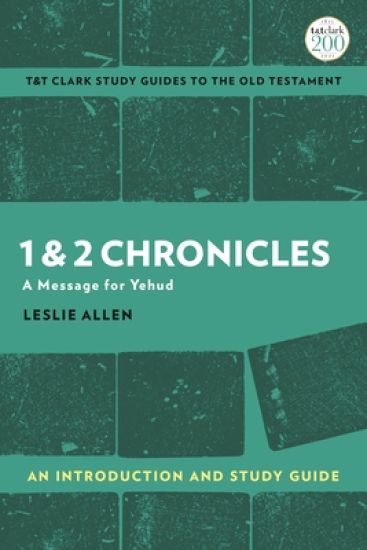
1 & 2 Chronicles: An Introduction and Study Guide
Leslie C. Allen introduces students to the 1 & 2 Chronicles in the Old Testament, incorporating insights from over two decades of previous scholarship while grounding his analysis in earlier key works. “A Message for Yehud” sums up what has been judged to be a fundamental motivation underlying the whole book, a conviction that the obligation to “seek the Lord” in the light of the Torah and prophetic texts must be laid on the hearts of the community of Yehud in the fourth century BCE. To this end, using Samuel-Kings as a basis, Chronicles reviewed pre-exilic royal history for positive and negative clues as to how the generation for which it was written might achieve this spiritual ideal. In the book, Allen shows how this program was communicated all through the book by literary and rhetorical means.
1 & 2 Chronicles: An Introduction and Study Guide
Leslie C. Allen introduces students to the 1 & 2 Chronicles in the Old Testament, incorporating insights from over two decades of previous scholarship while grounding his analysis in earlier key works. “A Message for Yehud” sums up what has been judged to be a fundamental motivation underlying the whole book, a conviction that the obligation to “seek the Lord” in the light of the Torah and prophetic texts must be laid on the hearts of the community of Yehud in the fourth century BCE. To this end, using Samuel-Kings as a basis, Chronicles reviewed pre-exilic royal history for positive and negative clues as to how the generation for which it was written might achieve this spiritual ideal. In the book, Allen shows how this program was communicated all through the book by literary and rhetorical means.
Jeremiah

Jeremiah

Leslie C. Allen

Westminster/John Knox Press,U.S.
2008
sidottu
This book of Jeremiah offers a remarkable range of literature, including prose, poetry, homilies, oracles, and proverbs. This commentary understands the book as a work of religious literature, to be examined in its final form and yet with careful attention to the historical contexts of writing and development through which the present text took shape. Jeremiah proclaimed a message of coming judgment, because of the people's unfaithful worship, and yet also emphasized the call to know Yahweh and to live as God's faithful people. Through it all, Allen identifies a tragectory of grace, in which the proclamations of doom can be understood within the context of promises for a renewed future.The Old Testament Library provides fresh and authoritative treatments of important aspects of Old Testament study through commentaries and general surveys. The contributors are scholars of international standing.
The Preacher's Commentary - Vol. 10: 1 and   2 Chronicles

The Preacher's Commentary - Vol. 10: 1 and 2 Chronicles

Leslie C. Allen

Thomas Nelson Publishers
2004
nidottu
Written BY Preachers and Teachers FOR Preachers and TeachersCombining fresh insights with readable exposition and relatable examples, The Preacher's Commentary will help you minister to others and see their lives transformed through the power of God's Word. Whether preacher, teacher, or Bible study leader--if you're a communicator, The Preacher's Commentary will help you share God's Word more effectively with others.This volume on 1 & 2 Chronicles reflects an excellence in biblical scholarship with clear explanations on Hebrew, Israelite culture, and Old Testament theology.Each volume is written by one of today's top scholars, and includes:Innovative ideas for preaching and teaching God's WordVibrant paragraph-by-paragraph expositionImpelling real-life illustrationsInsightful and relevant contemporary applicationAn introduction, which reveals the author's approachA full outline of the biblical book being coveredScripture passages (using the New King James Version) and explanations The Preacher's Commentary offers pastors, teachers, and Bible study leaders clear and compelling insights into the Bible that will equip them to understand, apply, and teach the truth in God's Word.