

Kirjahaku
Etsi kirjoja tekijän nimen, kirjan nimen tai ISBN:n perusteella.
7 kirjaa tekijältä Leslie Ritchie

We think we know what's best and that we should be in control of our lives ... what happens to us, life circumstances, the safety and well-being of loved ones, and anything else we think ought to be different. But 1) that's impossible, and 2) we would make a mess of things. What we want and what is best are rarely the same things. When we feel out of control we feel trapped ... stuck, with no hope. So we struggle and try our hardest to change things. God created us, God knows us, God loves us, God is all-knowing, and God has the power to do what will benefit us now and for eternity. Yielding to Him isn't slavery as some would think ... it is freedom Freedom from the problems we have because we don't know everything and freedom from being powerless to do anything about them. God has already righted every wrong that we would need to worry about, and He's given us the instructions we need to navigate this journey through life the best way possible. Relax ... He's got this.
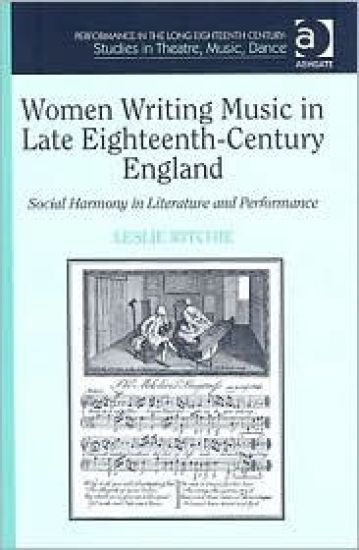
Women Writing Music in Late Eighteenth-Century England
Leslie Ritchie
Ashgate Publishing Limited
2008
sidottu
Combining new musicology trends, formal musical analysis, and literary feminist recovery work, Leslie Ritchie examines rare poetic, didactic, fictional, and musical texts written by women in late eighteenth-century Britain. She finds instances of and resistance to contemporary perceptions of music as a form of social control in works by Maria Barthélemon, Harriett Abrams, Mary Worgan, Susanna Rowson, Hannah Cowley, and Amelia Opie, among others. Relating women's musical compositions and writings about music to theories of music's function in the formation of female subjectivities during the latter half of the eighteenth century, Ritchie draws on the work of cultural theorists and cultural historians, as well as feminist scholars who have explored the connection between femininity and performance. Whether crafting works consonant with societal ideals of charitable, natural, and national order, or re-imagining their participation in these musical aids to social harmony, women contributed significantly to the formation of British cultural identity. Ritchie's interdisciplinary book will interest scholars working in a range of fields, including gender studies, musicology, eighteenth-century British literature, and cultural studies.

What happens when an actor owns shares in the stage on which he performs and the newspapers that review his performances? Celebrity that lasts over 240 years. From 1741, David Garrick dominated the London theatre world as the progenitor of a new 'natural' style of acting. From 1747 to 1776, he was a part-owner and manager of Drury Lane, controlling most aspects of the theatre's life. In a spectacular foreshadowing of today's media convergences, he also owned shares in papers including the St James's Chronicle and the Public Advertiser, which advertised and reviewed Drury Lane's theatrical productions. This book explores the nearly inconceivable level of cultural power generated by Garrick's entrepreneurial manufacture and mediation of his own celebrity. Using new technologies and extensive archival research, this book uncovers fresh material concerning Garrick's ownership and manipulation of the media, offering timely reflections for theatre history and media studies.

What happens when an actor owns shares in the stage on which he performs and the newspapers that review his performances? Celebrity that lasts over 240 years. From 1741, David Garrick dominated the London theatre world as the progenitor of a new 'natural' style of acting. From 1747 to 1776, he was a part-owner and manager of Drury Lane, controlling most aspects of the theatre's life. In a spectacular foreshadowing of today's media convergences, he also owned shares in papers including the St James's Chronicle and the Public Advertiser, which advertised and reviewed Drury Lane's theatrical productions. This book explores the nearly inconceivable level of cultural power generated by Garrick's entrepreneurial manufacture and mediation of his own celebrity. Using new technologies and extensive archival research, this book uncovers fresh material concerning Garrick's ownership and manipulation of the media, offering timely reflections for theatre history and media studies.
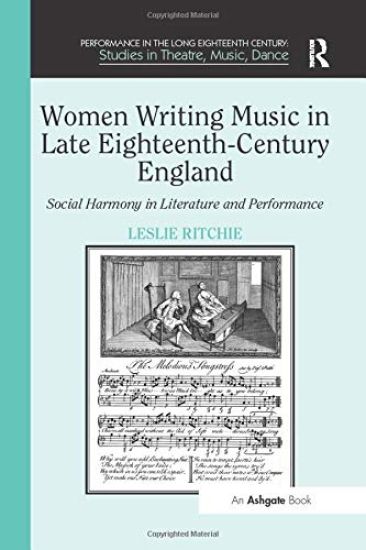
Combining new musicology trends, formal musical analysis, and literary feminist recovery work, Leslie Ritchie examines rare poetic, didactic, fictional, and musical texts written by women in late eighteenth-century Britain. She finds instances of and resistance to contemporary perceptions of music as a form of social control in works by Maria Barthélemon, Harriett Abrams, Mary Worgan, Susanna Rowson, Hannah Cowley, and Amelia Opie, among others. Relating women's musical compositions and writings about music to theories of music's function in the formation of female subjectivities during the latter half of the eighteenth century, Ritchie draws on the work of cultural theorists and cultural historians, as well as feminist scholars who have explored the connection between femininity and performance. Whether crafting works consonant with societal ideals of charitable, natural, and national order, or re-imagining their participation in these musical aids to social harmony, women contributed significantly to the formation of British cultural identity. Ritchie's interdisciplinary book will interest scholars working in a range of fields, including gender studies, musicology, eighteenth-century British literature, and cultural studies.

God is always with us ... ready to help us ... waiting for us to turn to Him. He won't force His way into our hearts ... we have to invite Him. " Therefore the Lord waits and longs to be gracious to you, and therefore He waits on high to have compassion on you. For the LORD is a God of justice; blessed are all those who long for Him." (Isaiah 30:18 AMP) God wants to guide us, give us hope, be our joy, bless us with peace, give us strength, show His power, protect us, and provide rest for us. Know God, strengthen your faith in Him, trust Him, and praise Him. He truly is all of that