Kirjojen hintavertailu. Mukana 12 390 323 kirjaa ja 12 kauppaa.

Kirjahaku

Etsi kirjoja tekijän nimen, kirjan nimen tai ISBN:n perusteella.

6 kirjaa tekijältä Leslie Smith

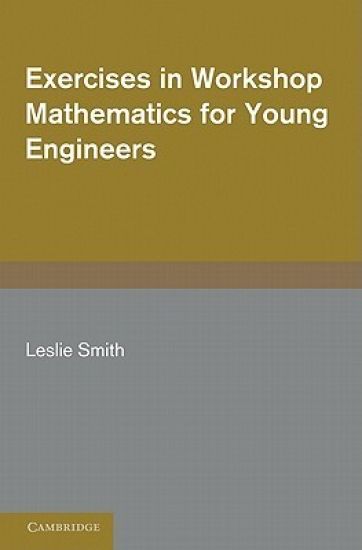
Exercises in Workshop Mathematics for Young Engineers

Exercises in Workshop Mathematics for Young Engineers

Leslie Smith

Cambridge University Press
2011
pokkari
Originally published in 1954, the purpose of this book was to provide a set of practical exercises for young engineers wishing to apply mathematical principles to problems confronting them in the workshop. The text was designed primarily for use in the Technical Secondary School, the County College, and the Works Training School. It will be of value to anyone with an interest in the development of engineering and educational practice.
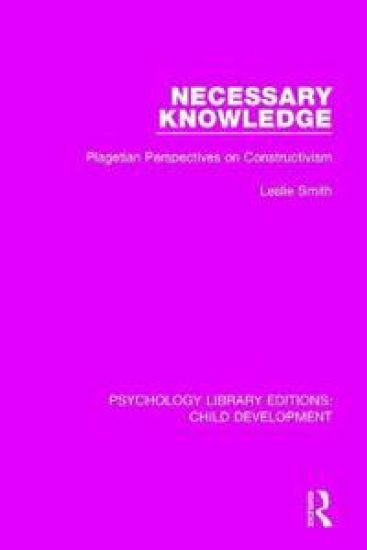
Necessary Knowledge

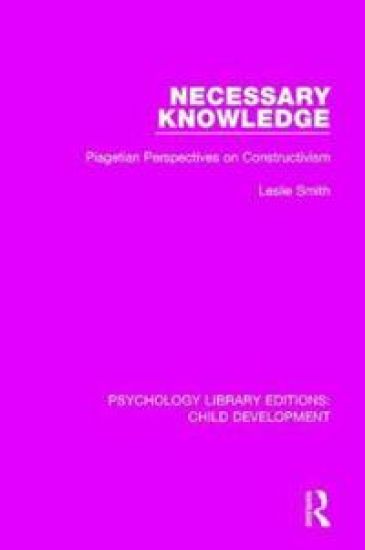
Necessary Knowledge

Leslie Smith

Routledge
2017
sidottu
Originally published in 1993, this monograph addresses a central problem in Piaget’s work, which is the temporal construction of necessary knowledge. The main argument is that both normative and empirical issues are relevant to a minimally adequate account of the development of modal understanding. This central argument embodies three main claims. One claim is philosophical. Although the concepts of knowledge and necessity are problematic, there is sufficient agreement about their core elements due to the fundamental difference between truth-value and modality. Any account of human rationality has to respect this distinction. The second claim is that this normative distinction is not always respected in psychological research on the origins of knowledge where emphasis is placed on the procedures and methods used to gain good empirical evidence. An account of the initial acquisition of knowledge is not thereby an account of its legitimation in the human mind. The third claim relates to epistemology. Intellectual development is a process in which available knowledge is used in the construction of better knowledge. The monograph identifies features of a modal model of intellectual construction, whereby some form of necessary knowledge is always used. Intellectual development occurs as the reduction of modal errors through the differentiation and coordination of available forms of modal understanding. Piaget’s work continues to provide distinctive and intelligible answers to a substantive and outstanding problem.
Necessary Knowledge

Necessary Knowledge

Leslie Smith

Routledge
2019
nidottu
Originally published in 1993, this monograph addresses a central problem in Piaget’s work, which is the temporal construction of necessary knowledge. The main argument is that both normative and empirical issues are relevant to a minimally adequate account of the development of modal understanding. This central argument embodies three main claims. One claim is philosophical. Although the concepts of knowledge and necessity are problematic, there is sufficient agreement about their core elements due to the fundamental difference between truth-value and modality. Any account of human rationality has to respect this distinction. The second claim is that this normative distinction is not always respected in psychological research on the origins of knowledge where emphasis is placed on the procedures and methods used to gain good empirical evidence. An account of the initial acquisition of knowledge is not thereby an account of its legitimation in the human mind. The third claim relates to epistemology. Intellectual development is a process in which available knowledge is used in the construction of better knowledge. The monograph identifies features of a modal model of intellectual construction, whereby some form of necessary knowledge is always used. Intellectual development occurs as the reduction of modal errors through the differentiation and coordination of available forms of modal understanding. Piaget’s work continues to provide distinctive and intelligible answers to a substantive and outstanding problem.
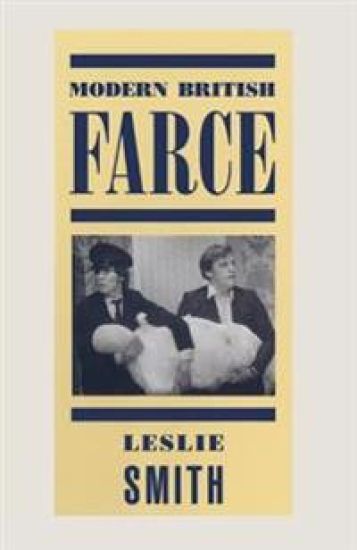
Modern British Farce

Modern British Farce

Leslie Smith

Palgrave Macmillan
1989
nidottu
A study of the popular modern dramatists and the continuity of the farce tradition from Pinero to Travers, the Whitehall team and Orton which examines and questions some of the common assumptions about its nature. Farce techniques are shown to be increasingly used in serious drama.