Kirjojen hintavertailu. Mukana 11 342 296 kirjaa ja 12 kauppaa.

Kirjahaku

Etsi kirjoja tekijän nimen, kirjan nimen tai ISBN:n perusteella.

8 kirjaa tekijältä Lester D. Langley

The Americas in the Age of Revolution

The Americas in the Age of Revolution

Lester D. Langley

Yale University Press
1998
pokkari
This magisterial work is a comparative history of three important revolutions in the Americas: the American Revolution in 1776, the 1791 slave revolt in the French colony that became Haiti, and the prolonged Spanish-American struggle for independence that ended a half century later. Lester Langley describes the movements and events that led to these wars of independence, explaining why revolution took one form in one place and a different form in another.Langley examines the political and social tensions reverberating throughout British, French, and Spanish America, pointing out the characteristics that distinguished each upheaval from the others: the impact of place or location on the course of revolution; the dynamics of race and color as well as class; the relation between leaders and followers; the strength of counterrevolutionary movements; and, especially, the way that militarization of society during war affected the new governments in the postrevolutionary era. Langley argues that an understanding of the legacy of the revolutionary age sheds tremendous light on the political condition of the Americas today: virtually every modern political issue—the relationship of the state to the individual, the effectiveness of government, the liberal promise for progress, and the persistence of color as a critical dynamic in social policy—was central to the earlier period.
The Americas in the Modern Age

The Americas in the Modern Age

Lester D. Langley

Yale University Press
2005
pokkari
In this wide-ranging book, historian Lester D. Langley offers a fresh interpretation of the history of the modern Western hemisphere since the mid-nineteenth century. He evaluates the dynamics of hemispheric history, commencing with the articulation of the “two Americas” (Theodore Roosevelt’s America and the contrasting America described by Cuban revolutionary, essayist, and poet José Martí) and culminating with recent controversial efforts to forge a united hemisphere. Tracing the interactions and influences among the nations of South, Central, and North America, including Canada, Langley departs from other accounts of the past 150 years. He argues that the seedtime for today’s Americas was not the Cold War but the late nineteenth and early twentieth centuries. He also contends that it is not what the countries and people of the Americas have in common that binds them; instead, their cultural, political, and economic conflicts tie them together. Comprehensive and balanced, this history of the nations of the Americas offers new insights into both the past and the future of inter-American relations.
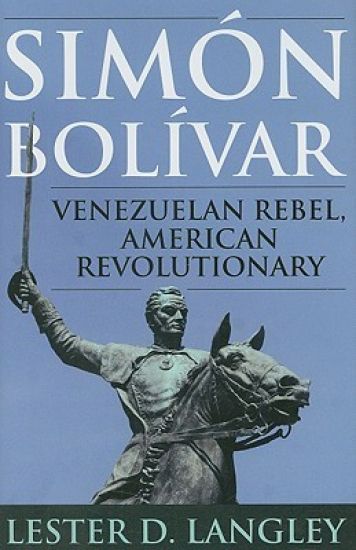
Simón Bolívar

Simón Bolívar

Lester D. Langley

Rowman Littlefield Publishers
2009
sidottu
This compelling biography offers a unique perspective on the life and career of one of Latin America's most famous—and most adulated—historical figures. Departing from the conventional, narrow treatment of Bolívar's role in the Spanish-American wars of independence (1810–1825), leading historian Lester D. Langley frames this remarkable figure as the quintessential Venezuelan rebel, who by circumstance and sheer will rose to be the continent's most noted revolutionary and liberator. In the process, he became both a unifying and a divisive presence whose symbolic influence remains powerful even today. Twice Bolívar gained power, twice he confronted a formidable counterrevolution, twice he was compelled to flee. His ultimate tactic of using slave and mixed-race troops aroused both the admiration and fear of U.S. leaders and became a topic of heated discussion in the critical debates of 1817 and 1818 over U.S. policy toward the Spanish-American wars as well as the arguments over the admission of Missouri as a state in 1820–1821 and the U.S. decision to participate in the ill-fated Congress of Panama. Although he earned the sobriquet of the "George Washington" of South America, Bolívar in victory became more conservative and critical of the democratic tide of the era. Unlike Washington, Bolívar was forced into exile, the victim of his own ambitions and the fears of others. In his tragic end, he symbolized the glorious warrior so consumed by his own ambition and hatreds that he was destroyed. In death, he became a cult figure whose life and meaning casts a long shadow over modern Venezuelan history. As the author convincingly explains, he remains the most relevant figure of the revolutionary age in the Americas.
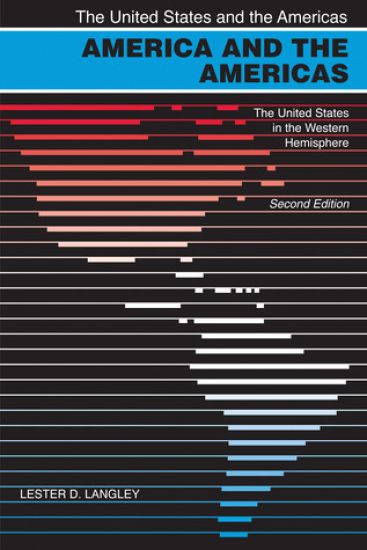
America and the Americas

America and the Americas

Lester D. Langley

University of Georgia Press
2010
sidottu
In this completely revised and updated edition of America and the Americas, Lester D. Langley covers the long period from the colonial era into the twenty-first century, providing an interpretive introduction to the history of U.S. relations with Latin America, the Caribbean, and Canada. Langley draws on the other books in the series to provide a more richly detailed and informed account of the role and place of the United States in the hemisphere. In the process, he explains how the United States, in appropriating the values and symbolism identified with “America,” has attained a special place in the minds and estimation of other hemispheric peoples.Discussing the formal structures and diplomatic postures underlying U.S. policy making, Langley examines the political, economic, and cultural currents that often have frustrated inter-American progress and accord. Most important, the greater attention given to U.S. relations with Canada in this edition provides a broader and deeper understanding of the often controversial role of the nation in the hemisphere and, particularly, in North America.Commencing with the French-British struggle for supremacy in North America in the French and Indian War, Langley frames the story of the American experience in the Western Hemisphere through four distinct eras. In the first era, from the 1760s to the 1860s, the fundamental character of U.S. policy in the hemisphere and American values about other nations and peoples of the Americas took form. In the second era, from the 1870s to the 1930s, the United States fashioned a continental and then a Caribbean empire. From the mid-1930s to the early 1960s, the paramount issues of the inter-American experience related to the global crisis. In the final part of the book, Langley details the efforts of the United States to carry out its political and economic agenda in the hemisphere from the early 1960s to the onset of the twenty-first century, only to be frustrated by governments determined to follow an independent course. Over more than 250 years of encounter, however, the peoples of the Americas have created human bonds and cultural exchanges that stand in sharp contrast to the formal and often conflictive hemisphere crafted by governments.
America and the Americas

America and the Americas

Lester D. Langley

University of Georgia Press
2010
pokkari
In this completely revised and updated edition of America and the Americas, Lester D. Langley covers the long period from the colonial era into the twenty-first century, providing an interpretive introduction to the history of U.S. relations with Latin America, the Caribbean, and Canada. Langley draws on the other books in the series to provide a more richly detailed and informed account of the role and place of the United States in the hemisphere. In the process, he explains how the United States, in appropriating the values and symbolism identified with “America,” has attained a special place in the minds and estimation of other hemispheric peoples.Discussing the formal structures and diplomatic postures underlying U.S. policy making, Langley examines the political, economic, and cultural currents that often have frustrated inter-American progress and accord. Most important, the greater attention given to U.S. relations with Canada in this edition provides a broader and deeper understanding of the often controversial role of the nation in the hemisphere and, particularly, in North America.Commencing with the French-British struggle for supremacy in North America in the French and Indian War, Langley frames the story of the American experience in the Western Hemisphere through four distinct eras. In the first era, from the 1760s to the 1860s, the fundamental character of U.S. policy in the hemisphere and American values about other nations and peoples of the Americas took form. In the second era, from the 1870s to the 1930s, the United States fashioned a continental and then a Caribbean empire. From the mid-1930s to the early 1960s, the paramount issues of the inter-American experience related to the global crisis. In the final part of the book, Langley details the efforts of the United States to carry out its political and economic agenda in the hemisphere from the early 1960s to the onset of the twenty-first century, only to be frustrated by governments determined to follow an independent course. Over more than 250 years of encounter, however, the peoples of the Americas have created human bonds and cultural exchanges that stand in sharp contrast to the formal and often conflictive hemisphere crafted by governments.
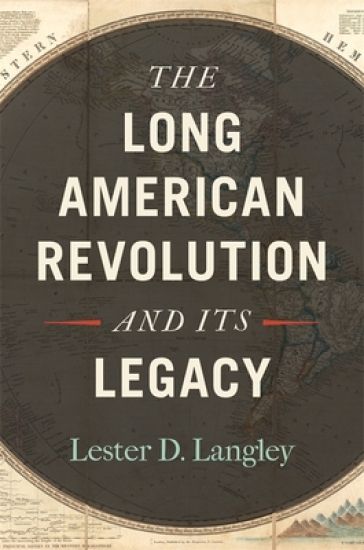
The Long American Revolution and Its Legacy

The Long American Revolution and Its Legacy

Lester D. Langley

University of Georgia Press
2019
pokkari
This book brings together Lester D. Langley’s personal and professional link to the long American Revolution in a narrative that spans more than 150 years and places the Revolution in multiple contexts—from the local to the transatlantic and hemispheric and from racial and gendered to political, social, economic, and cultural perspectives. It offers a reminder that we are an old republic but a young nation and shows how an awareness of that dynamic is critical to understanding our current political, cultural, and social malaise. The United States of America is still a work in progress.A descendant on his father’s side from a long line of Kentuckians, Langley grew up torn between a father who embodied the idea of the Revolution’s poor white male driven by economic self-interest and racial prejudices and a devoted and pious mother who saw life and history as a morality play. The author’s intellectual and professional “encounter” with the American Revolution came in the 1960s as a young historian specializing in U.S. foreign relations and Latin American history, an era when the U.S. encounter with the revolution in Cuba and with the civil rights movement at home served as a reminder of the lasting and troublesome legacy of a long American Revolution.In a sweeping account that incorporates both the traditional, iconic literature on the Revolution and more recent works in U.S., Canadian, Latin American, Caribbean, and Atlantic world history, Langley addresses fundamental questions about the Revolution’s meaning, continuing relevance, and far-reaching legacy.
The Long American Revolution and Its Legacy

The Long American Revolution and Its Legacy

Lester D. Langley

University of Georgia Press
2019
sidottu
This book brings together Lester D. Langley’s personal and professional link to the long American Revolution in a narrative that spans more than 150 years and places the Revolution in multiple contexts—from the local to the transatlantic and hemispheric and from racial and gendered to political, social, economic, and cultural perspectives. It offers a reminder that we are an old republic but a young nation and shows how an awareness of that dynamic is critical to understanding our current political, cultural, and social malaise. The United States of America is still a work in progress.A descendant on his father’s side from a long line of Kentuckians, Langley grew up torn between a father who embodied the idea of the Revolution’s poor white male driven by economic self-interest and racial prejudices and a devoted and pious mother who saw life and history as a morality play. The author’s intellectual and professional “encounter” with the American Revolution came in the 1960s as a young historian specializing in U.S. foreign relations and Latin American history, an era when the U.S. encounter with the revolution in Cuba and with the civil rights movement at home served as a reminder of the lasting and troublesome legacy of a long American Revolution.In a sweeping account that incorporates both the traditional, iconic literature on the Revolution and more recent works in U.S., Canadian, Latin American, Caribbean, and Atlantic world history, Langley addresses fundamental questions about the Revolution’s meaning, continuing relevance, and far-reaching legacy.
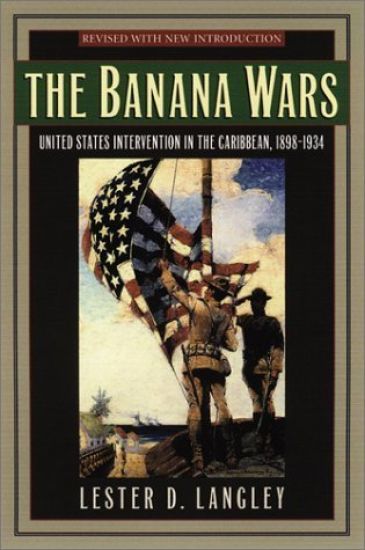
The Banana Wars

The Banana Wars

Lester D. Langley

Rowman Littlefield
2001
nidottu
The Banana Wars: United States Intervention in the Caribbean, 1898-1934 offers a sweeping panorama of America's tropical empire in the age spanned by the two Roosevelts and a detailed narrative of U.S. military intervention in the Caribbean and Mexico. In this new edition, Professor Langley provides an updated introduction, placing the scholarship in current historical context. From the perspective of the Americans involved, the empire carved out by the banana warriors was a domain of bickering Latin American politicians, warring tropical countries, and lawless societies that the American military had been dispatched to police and tutor. Beginning with the Cuban experience, Langley examines the motives and consequences of two military occupations and the impact of those interventions on a professedly antimilitaristic American government and on its colonial agents in the Caribbean, the American military. The result of the Cuban experience, Langley argues, was reinforcement of the view that the American people did not readily accept prolonged military occupation of Caribbean countries. In Nicaragua and Mexico, from 1909 to 1915, where economic and diplomatic pressures failed to bring the results desired in Washington, the American military became the political arbiters; in Hispaniola, bluejackets and marines took on the task of civilizing the tropics. In the late 1920s, with an imperial force largely of marines, the American military waged its last banana war in Nicaragua against a guerrilla leader named Augusto C. Sandino. Langley not only narrates the history of America's tropical empire, but fleshes out the personalities of this imperial era, including Leonard Wood and Fred Funston, U.S. Army, who left their mark on Cuba and Vera Cruz; William F. Fullam and William Banks Caperton, U.S. Navy, who carried out their missions imbued with old-school beliefs about their role as policemen in disorderly places; Smedley Butler and L.W.T. Waller, Sr., U.S.M.C., who left the most lasting imprint of A