Kirjojen hintavertailu. Mukana 11 342 296 kirjaa ja 12 kauppaa.

Kirjahaku

Etsi kirjoja tekijän nimen, kirjan nimen tai ISBN:n perusteella.

3 kirjaa tekijältä Lester Faigley

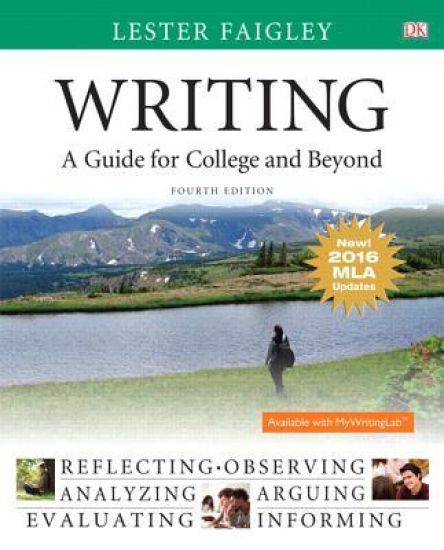
Writing

Writing

Lester Faigley

Pearson
2016
nidottu
For courses in English Composition. This version of Writing: A Guide for College and Beyond has been updated to reflect the 8th Edition of the MLA Handbook (April 2016)* Revealing the writing process through interactive learningWriting: A Guide for College and Beyond presents writing, reading, and research processes dynamically, using a variety of visuals to illustrate how readers interact with texts and how writers compose. One of the first textbook authors to focus on multimedia composing, Lester Faigley employs his own advice to engage readers in every step of the writing process--for everyday life--and pulls back the curtain on how writers work. In the 4th Edition, individuals can also practice and explore what they’ve learned chapter-by-chapter with interactive MyWritingLab tools, assignments, and projects. * The 8th Edition introduces sweeping changes to the philosophy and details of MLA works cited entries. Responding to the “increasing mobility of texts,” MLA now encourages writers to focus on the process of crafting the citation, beginning with the same questions for any source. These changes, then, align with current best practices in the teaching of writing which privilege inquiry and critical thinking over rote recall and rule-following.
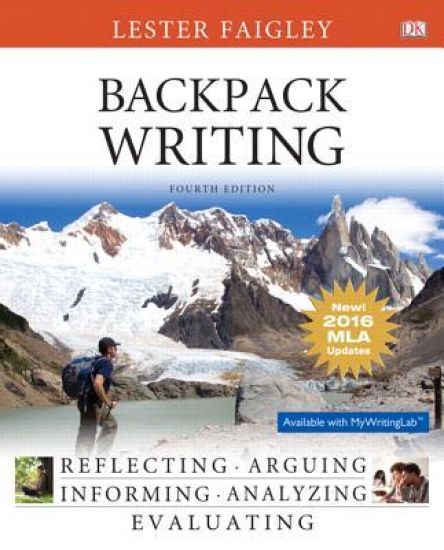
Backpack Writing, MLA Update Edition
For college courses in Composition and Rhetoric. This version of Backpack Writing has been updated to reflect the 8th Edition of the MLA Handbook (April 2016)* Revealing the writing process through interactive learningBackpack Writing, 4th Edition presents writing, reading, and research processes dynamically, using a variety of visuals to illustrate how readers interact with texts and how writers compose. One of the first textbook authors to focus on multimedia composing, Lester Faigley employs his own advice to engage individuals in every step of the writing process--for everyday life--and pulls back the curtain on how writers work. Backpack Writing gives individuals the support they need to succeed in their careers. * The 8th Edition introduces sweeping changes to the philosophy and details of MLA works cited entries. Responding to the “increasing mobility of texts,” MLA now encourages writers to focus on the process of crafting the citation, beginning with the same questions for any source. These changes, then, align with current best practices in the teaching of writing which privilege inquiry and critical thinking over rote recall and rule-following.
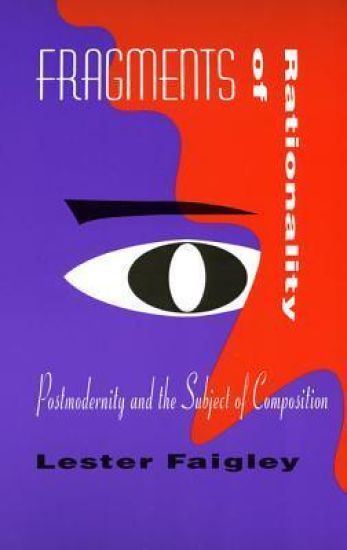
Fragments of Rationality

Fragments of Rationality

Lester Faigley

University of Pittsburgh Press
1992
nidottu
An assessment of the study and teaching of writing against the larger theoretical, political and technological upheavals of the past 30 years, ""Fragments of Rationality"" asks why composition studies has been less affected by postmodern theory than other humanities and social science disciplines. For Lester Faigley, the very conservativism of composition teaching - which has resisted the challenges of postmodern thought - makes it a revealing object of study. Composition at first seemed ready to accommodate postmodern ideas, but by the late 1980s, writing teachers were beginning to question many of the traditional presumptions underlying their approach to the task. This crisis in theory has come just as the tenacious back-to-basics movement, a heightened emphasis on education for economic productivity, cuts in funding for public education, and the increasing gap between the haves and the have-nots in US society have forced teachers to consider the role of literacy instruction in reproducing social inequality. Drawing on the insights of Foucault, Lyotard and other postmodern analysts, Faigley addresses the theoretical debate about the ""self"" the student writer is asked to occupy, the ""modernist"" goal of producing a rational, coherent student subject, and the writing instructor's unconscious imposition of elite values and expectations in evaluating student work. He explores how networked computer technologies in writing classrooms are destabilising texts and subjects, and he asks what this loss of authority will mean for teachers of literacy. Faigley concludes by arguing that the electronically mediated culture in which we live has not brought an end to meaning, history, or subjectivity, but it does require thinking through the politics of location. In postmodern theory he finds ways of describing how subjects encounter boundaries in negotiating across competing discourses, and how awareness of those boundaries can be introduced into classroom practice.