Kirjojen hintavertailu. Mukana 11 342 296 kirjaa ja 12 kauppaa.

Kirjahaku

Etsi kirjoja tekijän nimen, kirjan nimen tai ISBN:n perusteella.

4 kirjaa tekijältä Li Ou

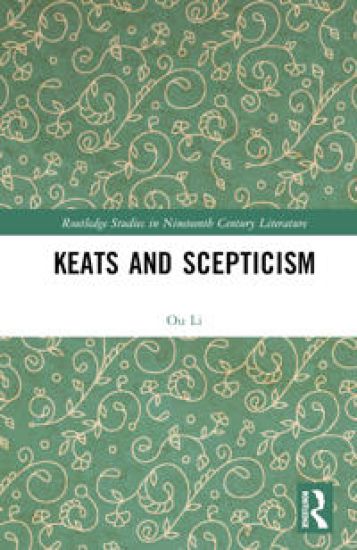
Keats and Scepticism

Keats and Scepticism

Li Ou

TAYLOR FRANCIS LTD
2023
sidottu
Keats and Scepticism explores Keats’s affinity with the philosophical tradition of scepticism and reads Keats’s poetry anew in the light of this affinity. It suggests Keats’s links with the origin of scepticism in ancient Greece as recorded in Sextus Empiricus’s Outlines of Scepticism. It also discusses Keats’s connections with Montaigne, the most important Renaissance inheritor of Pyrrhonian scepticism; Voltaire, the Enlightenment philosophe whose sceptical ideas made an indelible impact on Keats; and Hume, the most thoroughgoing sceptic after antiquity. Other than Keats’s affinitive ideas with these sceptical thinkers, this book is particularly interested in Keats’s experiments with the peculiar language, forms, modes, and genres of poetry to convey the non-dogmatic philosophy. In this light, it re-reads Isabella, ‘La Belle Dame sans Merci’, the 1819 odes, the two Hyperions, King Stephen, and Lamia, all of which reveal Keats’s self-reflexive and radical sceptical poetics in challenging poetic dogmas and conventions. This book is for Keats lovers, students, teachers, scholars, or non-academic readers who are interested in Romanticism, nineteenth-century studies, or poetry and philosophy in general. This original, accessible interdisciplinary study aims to offer the reader a fresh perspective to read Keats and appreciate the quintessential Keatsian poetics.
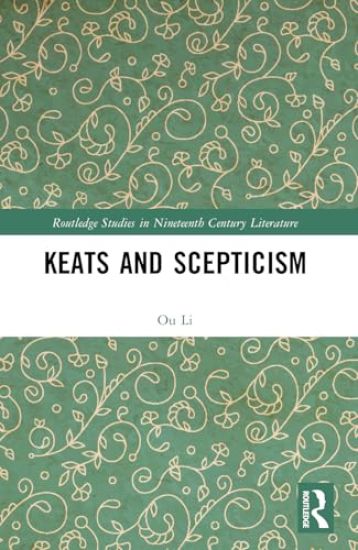
Keats and Scepticism

Keats and Scepticism

Li Ou

TAYLOR FRANCIS LTD
2024
nidottu
Keats and Scepticism explores Keats’s affinity with the philosophical tradition of scepticism and reads Keats’s poetry anew in the light of this affinity. It suggests Keats’s links with the origin of scepticism in ancient Greece as recorded in Sextus Empiricus’s Outlines of Scepticism. It also discusses Keats’s connections with Montaigne, the most important Renaissance inheritor of Pyrrhonian scepticism; Voltaire, the Enlightenment philosophe whose sceptical ideas made an indelible impact on Keats; and Hume, the most thoroughgoing sceptic after antiquity. Other than Keats’s affinitive ideas with these sceptical thinkers, this book is particularly interested in Keats’s experiments with the peculiar language, forms, modes, and genres of poetry to convey the non-dogmatic philosophy. In this light, it re-reads Isabella, ‘La Belle Dame sans Merci’, the 1819 odes, the two Hyperions, King Stephen, and Lamia, all of which reveal Keats’s self-reflexive and radical sceptical poetics in challenging poetic dogmas and conventions. This book is for Keats lovers, students, teachers, scholars, or non-academic readers who are interested in Romanticism, nineteenth-century studies, or poetry and philosophy in general. This original, accessible interdisciplinary study aims to offer the reader a fresh perspective to read Keats and appreciate the quintessential Keatsian poetics.
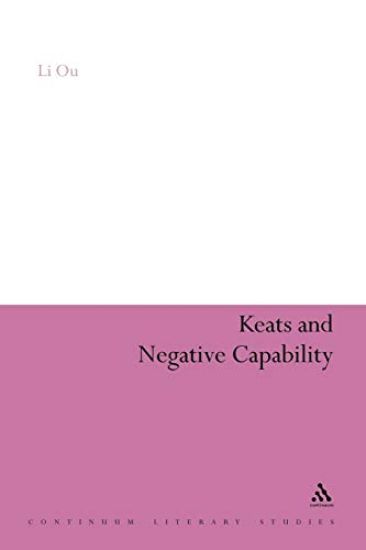
Keats and Negative Capability

Keats and Negative Capability

Li Ou

CONTINUUM PUBLISHING CORPORATION
2009
sidottu
Offers a clear analysis of this key concept in literary studies and aesthetics, which is essential to the study of Romanticism and English poetic tradition in general. 'Negative capability', the term John Keats used only once in a letter to his brothers, is a well-known but surprisingly unexplored concept in literary criticism and aesthetics. This book is the first book-length study of this central concept in seventy years. As well as clarifying the meaning of the term and giving an anatomy of its key components, the book gives a full account of the history of this idea. It traces the narrative of how the phrase first became known and gradually gained currency, and explores its primary sources in earlier writers, principally Shakespeare and William Hazlitt, and its chief Modernist successors, W. B. Yeats and T. S. Eliot. Meanwhile, the term is also applied to Keats' own poetry, which manifests the evolution of the idea in Keats' poetic practice. Many of the comparative readings of the relevant texts, including "King Lear", illuminate the interconnections between these major writers. The book is an original and significant piece of scholarship on this celebrated concept.
Keats and Negative Capability

Keats and Negative Capability

Li Ou

Continuum Publishing Corporation
2011
nidottu
"Negative capability", the term John Keats used only once in a letter to his brothers, is a well-known but surprisingly unexplored concept in literary criticism and aesthetics. This book is the first book-length study of this central concept in seventy years. As well as clarifying the meaning of the term and giving an anatomy of its key components, the book gives a full account of the history of this idea. It traces the narrative of how the phrase first became known and gradually gained currency, and explores its primary sources in earlier writers, principally Shakespeare and William Hazlitt, and its chief Modernist successors, W. B. Yeats and T. S. Eliot. Meanwhile, the term is also applied to Keats's own poetry, which manifests the evolution of the idea in Keats's poetic practice. Many of the comparative readings of the relevant texts, including King Lear, illuminate the interconnections between these major writers. The book is an original and significant piece of scholarship on this celebrated concept.