On March 13, 2013, at 7:06 pm (Central European Time), white smoke was spotted rising from the chimney of the Sistine Chapel where the conclave was being held. It could only mean one thing -- a new pope had been chosen to lead the Catholic Church. Although many did not know the name of Jorge Mario Bergoglio, the Cardinal from Argentina, as he was not predicted to be the new pope by any of the analysts or even administrators of the church, the world quickly began to praise him for his extremely humble attitude and straightforward manner. News headlines exploded with information about the first non-European and first Jesuit pope in the history of the church, and Latin Americans rejoiced at finally having significant representation in the church hierarchy.This biography will follow Bergoglio's ancestors as they travel by ship from Italy to Buenos Aires, explore Jorge's career as priest, bishop, and later cardinal, delve deep into his beliefs and opinions about the world and the state of the church, as well as attempt to predict how this man from humble beginnings will help shape the Catholic Church in the future.LifeCaps is an imprint of BookCaps(TM) Study Guides. With each book, a lesser known or sometimes forgotten life is recapped. We publish a wide array of topics (from baseball and music to literature and philosophy), so check our growing catalogue regularly to see our newest books.
She was the 17 year-old daughter of noted philosophers William Godwin and Mary Wollstonecraft; he was a 22-year-old trapped in an unhappy marriage. Their love was forbidden...that didn't matter. They inspired each other and became one of the most memorable literary couples of all time.For a short time in the late 1810s and early 1820s, they were the epicenter of an expatriate colony of artists inhabiting villas and sleepy coastal towns in Italy. In the way they pursued their love and lived their lives-independent even when united in matrimony-Percy and Mary were far ahead of their time.Read about their life and marriage in this book.
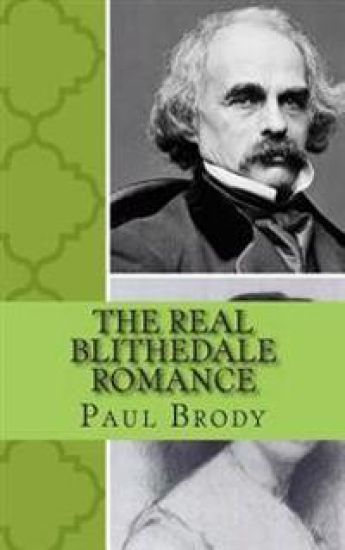
Rising from relative obscurity, Nathaniel Hawthorne became one of the most celebrate and original authors of his generation. Along the way, he crossed paths with a young woman of equally remarkable talents. Others may have considered Sophia Peabody an invalid destined for a spinster's life, but Hawthorne saw someone special.This is the story of their relationship.LifeCaps is an imprint of BookCaps(TM) Study Guides. With each book, a lesser known or sometimes forgotten life is recapped. We publish a wide array of topics (from baseball and music to literature and philosophy), so check our growing catalogue regularly to see our newest books.
Charles Bukowski didn't write about high society or the life most people will never live; he wrote about the ordinary man--the ones you are more likely to see living next to you than glamorized on TV. He wrote what he knew and he wrote it well. Bukowski knew Los Angeles-women-the drudgery of work-and drinking...lots of drinking This biography takes you inside the life and times of Bukowski, and helps you understand how he composed some of the greatest fiction and poetry of the past 50 years.
Cesario Estrada Chavez, more commonly known as Cesar Chavez, was a highly influential activist worker who created a union for farm workers all across the United States. Many organizations and activists before him had attempted to unionize the farm workers in California, but Cesar Chavez was the first to succeed. For his efforts and accomplishments, he is celebrated as a great advocate for equality and non-violence, especially among the Latin American population, where his name is often mentioned in reverence and his famous motto "Si Se Puede" (which roughly translates to "it is possible") is still used to inspire hope. Cesar Chavez's legacy remains in the form of monuments, buildings, and streets dedicated to the activist hero, as well as a national holiday on March 31, his birthday. In modern day, his nonviolent efforts and goals are often compared to other famous peaceful activists such as Gandhi.This book is an informal look into his life and legacy.
★★★ In the shadow of every great man is a greater woman ★★★T.E. Lawrence is often credited with bringing diplomacy to the Middle East; in the shadows of every great man you will often find an even greater woman. In Lawrence's case, that woman's name was Gertrude Bell. In a time when women didn't go to school, Bell did; in a time when women didn't join the army, Bell secured a job at the Army Intelligence Headquarters in Cairo; she spoke Arabic, Persian, French and German. She knew the Middle Eastern terrain and culture better than almost any Westerner of her time. In a male driven world, Bell managed to become one of the greatest policy makers the world has ever known; without her, the Middle East might very well be a much different place, and her influence in the territory gave her the nickname "Queen of the Desert." This biography tells the extraordinary story of one of the most adventurous and fascinating women you will ever encounter.
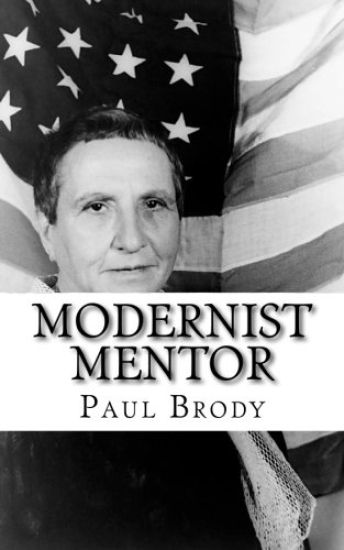
Gertrude Stein came from unassuming beginnings in Pennsylvania to become a central figure in the birth and development of Modern Art. She was friends with many of the leading painters and writers of multiple generations, as well as being on the sidelines of several of the 20th century's most profound events, namely both world wars. Her writing evolved from juvenilia to dense, repetitive, experimental, prose, and then finally to an autobiographical phase near the end of her life. She waited many years for the mainstream of society to recognize her genius, but when they did, her fame was almost unmatched.This biography looks at the life, times and career of Gertrude Stein.
Just for a moment try to put every shopping trip you've ever made out of your head. Imagine a different world. Imagine that all the goods for sale are locked away in cabinets and to handle them, or even to examine them closely, you need to ask a shop assistant to open it up for you. Imagine that within seconds of entering a store a floorwalker approaches you and asks if you're planning to buy something - then, when you say "I'm just looking," rudely tells you to leave. Imagine any attempt to return faulty or unsuitable goods being met with ridicule, obstruction or a flat refusal to help you.Until the late 19th century people didn't have to imagine that; it was reality. For anyone alive today a visit to the average store back then would convince you that they didn't really want to sell you anything. The idea of customer service was an alien one. Stores sold things. If you wanted to buy them, fine. If you didn't they weren't really interested. Browsing was strongly discouraged and impulse buys were almost unheard of. Shopping was something you did when you had to. It certainly wasn't something anyone enjoyed.Then, in the late 1880s, one man came along and changed all that. His name was Harry Gordon Selfridge and this is the story of his life.
Dalton Trumbo was the highest paid screenwriter in Hollywood when he was investigated as a Communist during America's Red Scare of the 1940s. He was ultimately sent to jail and placed on an industry blacklist that would make him unhirable. His exile lasted 13 years during which time he was forced to write screenplays under assumed names. While on the Hollywood blacklist Trumbo's writing won two Academy Awards, Oscars the public would never know about.This book tells the incredible, and often forgotten, life of Dalton Trumbo.
Pel Pel Pel It was a familiar chant, a chant which had been screamed from the terraces for nearly thirty years. It was October 1977 and the final game of Pel 's hugely successful career had just finished. As Pel looked around the stadium, tears were streaming down his face, his emotions running wild. But what an amazing journey it had been. It was all a far cry from the scene that Pel was born into, some thirty-seven years earlier. This book looks into that incredible career, and also Pel 's post-playing career.
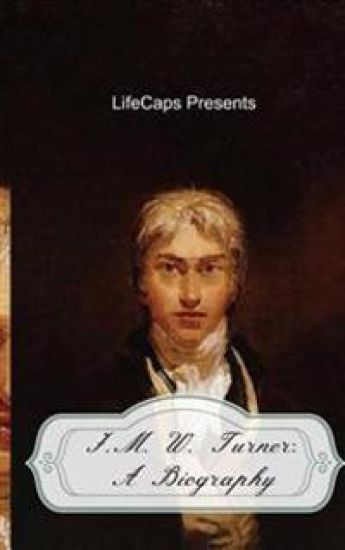
In 2005 the British Broadcasting Corporation sponsored a program to find the greatest painting in Britain. Any painting hanging in a British art gallery was eligible to become The Greatest Painting in Britain, whether it was created by an Englishman or not. After every work of art in the country was evaluated a short list of finalists by British, Italian, Dutch, Belgian and French artists was announced. There were heavy hitters like Still Life: Vase with Fifteen Sunflowers by Vincent Van Gogh. Also on the list was one of the most original works in the Western World's art canon - The Arnolfini Portrait by Netherlands painter Jan van Eyck in 1434, perpetrated with oils on three panels of oak boards.In the end the vote was not all that close. The winner was The Fighting T m raire Tugged to Her Last Berth to Be Broken Up, 1838 painted by a contemporary and bitter rival of Constable, Joseph William Mallord Turner.Turner was secretive and prolific in his paintings and did more than any other artist to elevate landscape painting to the lofty status of historical painting that was universally held to be the highest form of Western painting. Turner knew his rightful place among the Old Masters; 150 years after his death the people of England agreed with him.This book tells his incredible story.
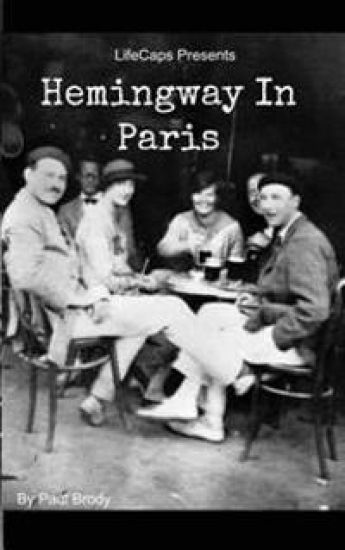
In 20th century American literature, few individuals stand as tall as Ernest Hemingway. He singlehandedly defined Modernist fiction with his short, simple, declarative writing style. His years in Paris during the 1920s were his "apprenticeship," when he made the transition from newspaper writer to bona fide fiction writer and from an unknown to a celebrity. He also rubbed elbows with some of the most important intellectuals, artists and writers of his generation. While his first marriage did not survive Paris, some of his best and most representative fiction emerged from the experience.This is the story of some of Hemingway's most important years.
The story of music in the United States of America is a long and colorful one. With so many different nationalities blending together to form a single nation they've all added their own musical traditions to the mix, and the results have been remarkable. Probably the biggest single contribution has come from the African-American community. Rhythms developed from traditional African music have evolved into several new genres and influenced many more. From jazz to the blues, from hip-hop to hard rock, almost everything in popular music has its roots in the churches and music clubs of the American South. One of the most talented and determined performers of the 20th century, without a doubt, was James Brown.Born into appalling poverty in the rural south, the man who'd later be known as Soul Brother #1 showed musical ability at an early age. Unfortunately it looked like it would be squandered when he turned to a life of street crime, ending up sentenced to a lengthy prison term at the age of sixteen. A chance meeting and a willingness to work hard earned him a second chance - and he made the most of it.
In 1925, British explorer Percy Fawcett vanished deep in the Amazon rainforest-leaving behind one of history's greatest unsolved mysteries.Fawcett's life was nothing short of extraordinary. Born into a family of adventurers, he grew up surrounded by tales of uncharted lands and untold treasures. In 1906, he launched his first expedition to South America-and for the next two decades, he would return again and again, driven by a relentless belief: that a lost, ancient city-what he called "Z"-lay hidden in the heart of the Amazon.This book explores the remarkable life of Percy Fawcett, from his early expeditions to the moment he vanished without a trace. Drawing on historical records, journals, and the enduring legends that followed, it offers a gripping account of exploration, obsession, and one man's quest for the unknown.Was there really a lost city in the jungle? And what happened to Fawcett on that final expedition? The truth may still lie buried in the Amazon...
Maria Altmann and her husband fled their homeland when the Nazi regime came to Austria and threatened their lives. They left their loved ones, their property, and everything that was in it--including their family's artwork.Altmann eventually settled in the United States, but did not forget the past that was stolen from her. Several dozens of years later, Altmann had her day in court, and changed everything. Because of her will to reclaim what rightfully belonged to her family, museums worldwide were forced to give back artwork that had been stolen and looted.This book paints a new picture of how Holocaust survivors rebuilt and reclaimed the lives that were taken from them.
In 1823, Hugh Glass did the unthinkable: he wrestled a grizzly bear...and won. But that is only the beginning of the remarkable tale--Glass, badly mauled with a broken leg, was 200 miles from help. Determined, he set his own leg and made the long journey first by crawling, then by floating down a river.Following the freak encounter with the bear, Glass became a legend. He's considered one of the greatest American hunters, and knew the frontier like few people before or after him. This book tells the incredible stories that made up his life.