Kirjojen hintavertailu. Mukana 11 627 220 kirjaa ja 12 kauppaa.

Kirjahaku

Etsi kirjoja tekijän nimen, kirjan nimen tai ISBN:n perusteella.

2 kirjaa tekijältä Lin Josephson

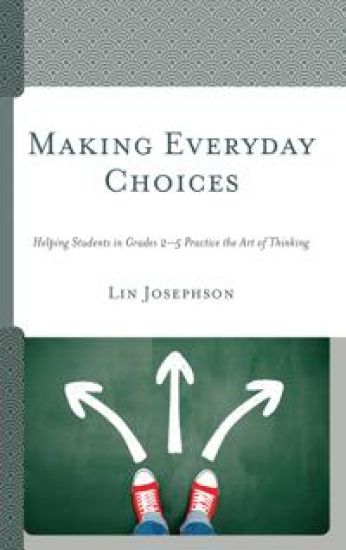
Making Everyday Choices

Making Everyday Choices

Lin Josephson

Rowman Littlefield
2018
sidottu
This book will serve as a “Think Button” for any educator who has ever heard a student say, “I can’t think” or “I can’t decide!” Fifty prompts or thinking conduits are the catalysts that will give students a chance to practice thinking. The prompts (many with option answers) are formatted as brief stories, exercises, poems, and activities and are designed so kids can use the same thinking skill sets that are essential in making everyday decisions. Whether the prompts pose silly questions, “Would you rather bathe a gorilla or take an elephant for a walk?” or practical ones, “What’s the best way to express your opinion?” they are all crafted to spur children to think hard and sensibly so they can make levelheaded decisions and defend their thinking in a stress-free think forum environment. The intention is for students to take the essence of something they’ve learned from a prompt and adapt it, stretch it, and use it to help solve a problem or make a tough decision. Every prompt comes with guidance, explanations, and suggestions so educators can clarify why certain options or decisions are better than others, and respond to thinking choices and decisions students may have made.
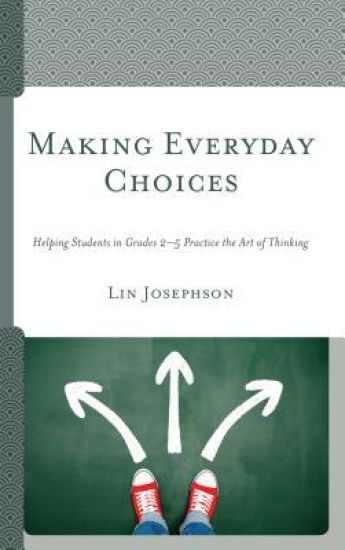
Making Everyday Choices

Making Everyday Choices

Lin Josephson

Rowman Littlefield
2018
nidottu
This book will serve as a “Think Button” for any educator who has ever heard a student say, “I can’t think” or “I can’t decide!” Fifty prompts or thinking conduits are the catalysts that will give students a chance to practice thinking. The prompts (many with option answers) are formatted as brief stories, exercises, poems, and activities and are designed so kids can use the same thinking skill sets that are essential in making everyday decisions. Whether the prompts pose silly questions, “Would you rather bathe a gorilla or take an elephant for a walk?” or practical ones, “What’s the best way to express your opinion?” they are all crafted to spur children to think hard and sensibly so they can make levelheaded decisions and defend their thinking in a stress-free think forum environment. The intention is for students to take the essence of something they’ve learned from a prompt and adapt it, stretch it, and use it to help solve a problem or make a tough decision. Every prompt comes with guidance, explanations, and suggestions so educators can clarify why certain options or decisions are better than others, and respond to thinking choices and decisions students may have made.