Kirjojen hintavertailu. Mukana 11 342 296 kirjaa ja 12 kauppaa.

Kirjahaku

Etsi kirjoja tekijän nimen, kirjan nimen tai ISBN:n perusteella.

9 kirjaa tekijältä Lin Lin

Venture Capital Law in China

Venture Capital Law in China

Lin Lin

Cambridge University Press
2021
sidottu
China's venture capital market is not just the world's largest and fastest developing market, it also has the unique distinction of being engineered through heavy governmental intervention. This book breaks new ground by examining and testing established legal theories regarding the law of venture capital through the lens of the Chinese venture capital market. Using a hand-collected dataset of venture capital agreements, interviews with practitioners, and Chinese court judgements, it provides a comprehensive and insightful analysis of the Chinese venture capital market from the legal perspective. Topics covered include the roles of law and governmental intervention in developing the market, the state of investor protection, unique contractual developments and exits of venture capital investments. By providing an in-depth comparative analysis against the American venture capital market, it provides critical context and makes the Chinese venture market accessible. It is an invaluable resource for venture capital scholars, policymakers and practitioners.

Venture Capital Law in China

Venture Capital Law in China

Lin Lin

Cambridge University Press
2022
pokkari
China's venture capital market is not just the world's largest and fastest developing market, it also has the unique distinction of being engineered through heavy governmental intervention. This book breaks new ground by examining and testing established legal theories regarding the law of venture capital through the lens of the Chinese venture capital market. Using a hand-collected dataset of venture capital agreements, interviews with practitioners, and Chinese court judgements, it provides a comprehensive and insightful analysis of the Chinese venture capital market from the legal perspective. Topics covered include the roles of law and governmental intervention in developing the market, the state of investor protection, unique contractual developments and exits of venture capital investments. By providing an in-depth comparative analysis against the American venture capital market, it provides critical context and makes the Chinese venture market accessible. It is an invaluable resource for venture capital scholars, policymakers and practitioners.

The Limited Partnership in China

The Limited Partnership in China

Lin Lin

Springer-Verlag Berlin and Heidelberg GmbH Co. K
2026
sidottu
This book provides an in-depth legal examination of limited partnership in the context of China’s venture capital and private equity market. It aims to provide an authoritative and timely evaluation of the Chinese partnership law and limited partnership regime and will be a valuable tool for practitioners who need a readily available source of information on Chinese partnership law and those who wish to understand how the Chinese partnership regime operates and functions. The book explains the essential characteristics of Chinese partnership law and Chinese limited partnership, highlighting difficult and developing areas by examining relevant legislation and recent cases. In addition to Chinese authorities, it also covers legislation and cases from overseas jurisdictions, such as the UK and the US. New developments such as the amendments to the PRC Partnership Enterprise Law 2007, new legislation and regulations on foreign partnerships and private equity funds are also covered. The book explains the essential areas of Chinese limited partnership such as management and control, duties and liabilities of partners, remedies for limited partners, dissolution, liquidation and taxation. Based on thorough comparative and empirical studies, the book examines existing and potential legal problems under the current law and offers key proposals for practitioners and lawmakers. The empirical problems identified in the book may also guide subsequent discussion and legislation on the limited partnership model and the ongoing debate on new business vehicles. ?
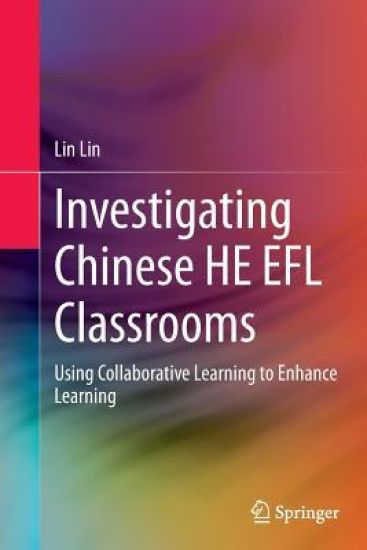
Investigating Chinese HE EFL Classrooms

Investigating Chinese HE EFL Classrooms

Lin Lin

Springer-Verlag Berlin and Heidelberg GmbH Co. K
2014
sidottu
?This book presents a study on corpus-driven distribution as the main method of prediction, concentrating on individual semantic features to predict the senses of non-defined words by using corpora and tools, such as the Chinese Gigaword Corpus, HowNet, Chinese Wordnet, and XianDai HanYu CiDian (Xian Han). With the help of these corpora, the study determines the collocation clusters of four target words: chi1 “eat,” wan2 “play,” huan4 “change” and shao1 “burn” through character and concept similarities. The results of this sense prediction study demonstrate that it was able to use off-line tasks to test some participants’ intuition, which supports the theory that different clusters can represent different senses when pursuing a corpus-based, computational approach.
Investigating Chinese HE EFL Classrooms

Investigating Chinese HE EFL Classrooms

Lin Lin

Springer-Verlag Berlin and Heidelberg GmbH Co. K
2016
nidottu
?This book presents a study on corpus-driven distribution as the main method of prediction, concentrating on individual semantic features to predict the senses of non-defined words by using corpora and tools, such as the Chinese Gigaword Corpus, HowNet, Chinese Wordnet, and XianDai HanYu CiDian (Xian Han). With the help of these corpora, the study determines the collocation clusters of four target words: chi1 “eat,” wan2 “play,” huan4 “change” and shao1 “burn” through character and concept similarities. The results of this sense prediction study demonstrate that it was able to use off-line tasks to test some participants’ intuition, which supports the theory that different clusters can represent different senses when pursuing a corpus-based, computational approach.
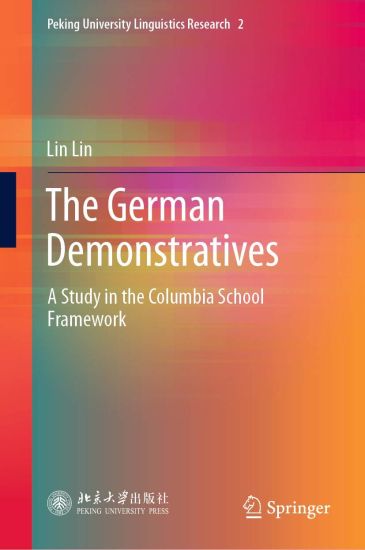
The German Demonstratives

The German Demonstratives

Lin Lin

Springer Verlag, Singapore
2019
sidottu
This book explores, analyzes, and compares the use of German and Chinese demonstratives. Discourse and textual uses of the forms are considered, as well as their locative and temporal uses. The author observes that in both languages the demonstratives can be used to refer to referents. However, she departs from the common assumption that proximal demonstratives refer to entities or places close to the speaker, while non-proximal demonstratives refer to entities or places far from the speaker. Having analyzed a representative sampling consisting of a German text and a Chinese text, the author argues that both German and Chinese proximal demonstratives can signal the meaning of HIGH DEIXIS in a system of DEIXIS in the Columbia School of linguistics framework, whereas their non-proximal demonstratives can signal the meaning of LOW DEIXIS. In addition, Chinese demonstratives can be used under more circumstances than German demonstratives due to the lackof articles in Chinese. The author also argues that Cognitive Linguistic analysis is more helpful for new language learners, whereas the Columbia School of linguistics may be better suited to advanced learners who wish to know more about the intrinsic differences between words with similar meanings and uses.This book aims to help German learners better understand the German reference system. Readers with a Chinese language background will definitely benefit more from the book, as well as Chinese learners with a German language background. For pure linguistic enthusiasts and multi-linguals, the book offers an extensive introduction to the Columbia School of linguistics, and can open a new horizon for learning a new language comparatively.
The German Demonstratives

The German Demonstratives

Lin Lin

Springer Verlag, Singapore
2021
nidottu
This book explores, analyzes, and compares the use of German and Chinese demonstratives. Discourse and textual uses of the forms are considered, as well as their locative and temporal uses. The author observes that in both languages the demonstratives can be used to refer to referents. However, she departs from the common assumption that proximal demonstratives refer to entities or places close to the speaker, while non-proximal demonstratives refer to entities or places far from the speaker. Having analyzed a representative sampling consisting of a German text and a Chinese text, the author argues that both German and Chinese proximal demonstratives can signal the meaning of HIGH DEIXIS in a system of DEIXIS in the Columbia School of linguistics framework, whereas their non-proximal demonstratives can signal the meaning of LOW DEIXIS. In addition, Chinese demonstratives can be used under more circumstances than German demonstratives due to the lackof articles in Chinese. The author also argues that Cognitive Linguistic analysis is more helpful for new language learners, whereas the Columbia School of linguistics may be better suited to advanced learners who wish to know more about the intrinsic differences between words with similar meanings and uses.This book aims to help German learners better understand the German reference system. Readers with a Chinese language background will definitely benefit more from the book, as well as Chinese learners with a German language background. For pure linguistic enthusiasts and multi-linguals, the book offers an extensive introduction to the Columbia School of linguistics, and can open a new horizon for learning a new language comparatively.