Kirjojen hintavertailu. Mukana 11 717 486 kirjaa ja 12 kauppaa.

Kirjahaku

Etsi kirjoja tekijän nimen, kirjan nimen tai ISBN:n perusteella.

12 kirjaa tekijältä Lionel Trilling

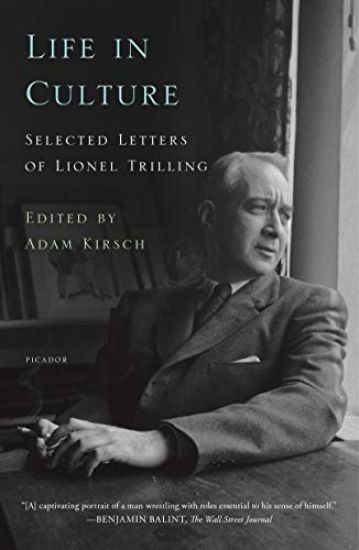
Life in Culture: Selected Letters of Lionel Trilling
A great critic's quarrels with himself and others, as revealed in his correspondence In the mid-twentieth century, Lionel Trilling was America's most respected literary critic. His powerful and subtle essays inspired readers to think about how literature shapes our politics, our culture, and our selves. His 1950 collection, The Liberal Imagination, sold more than 100,000 copies, epitomizing a time that has been called the age of criticism. To his New York intellectual peers, Trilling could seem reserved and circumspect. But in his selected letters, Trilling is revealed in all his variousness and complexity. We witness his ardent courtship of Diana Trilling, who would become an eminent intellectual in her own right; his alternately affectionate and contentious rapport with former students such as Allen Ginsberg and Norman Podhoretz; the complicated politics of Partisan Review and other fabled magazines of the period; and Trilling's relationships with other leading writers of the period, including Saul Bellow, Edmund Wilson, and Norman Mailer. In Life in Culture, edited by Adam Kirsch, Trilling's letters add up to an intimate portrait of a great critic, and of America's intellectual journey from the political passions of the 1930s to the cultural conflicts of the 1960s and beyond.
The Journey Abandoned

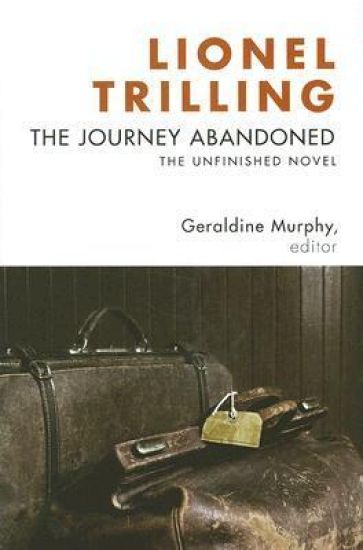
The Journey Abandoned

Lionel Trilling

Columbia University Press
2008
sidottu
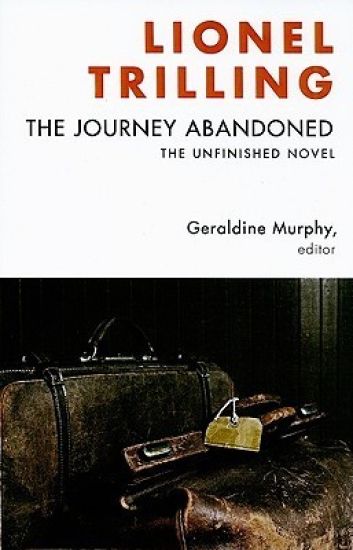
In 1947, Lionel Trilling, the prominent literary critic, published a novel entitled The Middle of the Journey. While conducting research in the archives at Columbia University, Geraldine Murphy discovered a second novel-a clean, well-crafted "third" of a book that Trilling described as having "point, immediacy, warmth under control, drama, and even size." The Journey Abandoned was supposed to be a novel about the anomalies of heroic action in a conformist age. Instead, published here for the first time, it is a highly personal portrait of the life of letters in America. Jorris Buxton, the narrative's larger-than-life focus, is an elderly poet and novelist turned distinguished mathematical physicist. Modeled on the romantic poet Walter Savage Landor, Buxton is destined to embroil himself in a principled but somewhat absurd conflict, just as the aged Landor had, and through his folly complicate the lives of his admirers. These memorable characters include Garda Thorne, a beautiful short-story writer (and Buxton's former mistress); Harold Outram, the director of an influential private foundation and a compromised man of letters; Philip Dyas, the headmaster of a private school; the Hollowells, a wealthy, progressive couple; Marion Cathcart, a young woman of Outram's household; and Vincent Hammell, an untried literary man from the Midwest and Buxton's newly appointed biographer. Hammell is the central consciousness of the novel. A young man from the provinces, he is drawn from Trilling's own experience yet also indebted to the nineteenth-century bildungsroman, the literary form Trilling admired as a critic and emulated, in these pages, as a novelist. In her introduction, Murphy considers how The Journey Abandoned (which is her title) relates to the critical ideas Trilling articulated in his famous essay collection, The Liberal Imagination. She speculates that Henry James came to displace Landor as the model for Jorris Buxton, a development that may have both inspired and inhibited the writing of this novel.
The Journey Abandoned

The Journey Abandoned

Lionel Trilling

Columbia University Press
2009
pokkari
In 1947, Lionel Trilling, the prominent literary critic, published a novel entitled The Middle of the Journey. While conducting research in the archives at Columbia University, Geraldine Murphy discovered a second novel-a clean, well-crafted "third" of a book that Trilling described as having "point, immediacy, warmth under control, drama, and even size." The Journey Abandoned was supposed to be a novel about the anomalies of heroic action in a conformist age. Instead, published here for the first time, it is a highly personal portrait of the life of letters in America. Jorris Buxton, the narrative's larger-than-life focus, is an elderly poet and novelist turned distinguished mathematical physicist. Modeled on the romantic poet Walter Savage Landor, Buxton is destined to embroil himself in a principled but somewhat absurd conflict, just as the aged Landor had, and through his folly complicate the lives of his admirers. These memorable characters include Garda Thorne, a beautiful short-story writer (and Buxton's former mistress); Harold Outram, the director of an influential private foundation and a compromised man of letters; Philip Dyas, the headmaster of a private school; the Hollowells, a wealthy, progressive couple; Marion Cathcart, a young woman of Outram's household; and Vincent Hammell, an untried literary man from the Midwest and Buxton's newly appointed biographer. Hammell is the central consciousness of the novel. A young man from the provinces, he is drawn from Trilling's own experience yet also indebted to the nineteenth-century bildungsroman, the literary form Trilling admired as a critic and emulated, in these pages, as a novelist. In her introduction, Murphy considers how The Journey Abandoned (which is her title) relates to the critical ideas Trilling articulated in his famous essay collection, The Liberal Imagination. She speculates that Henry James came to displace Landor as the model for Jorris Buxton, a development that may have both inspired and inhibited the writing of this novel.
Sincerity and Authenticity

Sincerity and Authenticity

Lionel Trilling

Harvard University Press
1973
nidottu
“Now and then,” writes Lionel Trilling, “it is possible to observe the moral life in process of revising itself.” In this new book he is concerned with such a mutation: the process by which the arduous enterprise of sincerity, of being true to one’s self, came to occupy a place of supreme importance in the moral life—and the further shift which finds that place now usurped by the darker and still more strenuous modern ideal of authenticity. Instances range over the whole of Western literature and thought, from Shakespeare to Hegel to Sartre, from Robespierre to R. D. Laing, suggesting the contradictions and ironies to which the ideals of sincerity and authenticity give rise, most especially in contemporary life.Lucid, and brilliantly framed, its view of cultural history will give Sincerity and Authenticity an important place among the works of this distinguished critic.
The Moral Obligation To Be Intelligent

The Moral Obligation To Be Intelligent

Lionel Trilling

Northwestern University Press
2009
nidottu
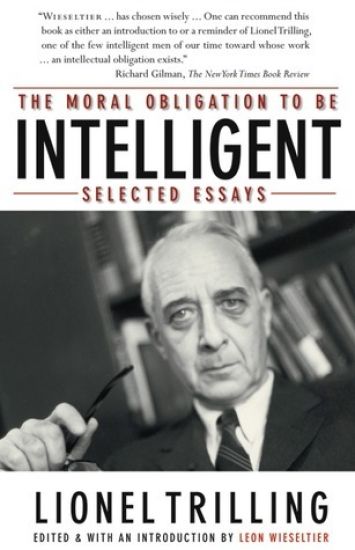
A landmark reissue of a great teacher's finest work.Lionel Trilling was, during his lifetime, generally acknowledged to be one of the finest essayists in the English language, the heir of Hazlitt and the peer of Orwell. Since his death in 1974, his work has been discussed and hotly debated, yet today, when writers and critics claim to be "for" or "against" his interpretations, they can hardly be well acquainted with them, for his work has been largely out of print for years.With this re-publication of Trilling's finest essays, Leon Wieseltier offers readers of many new generations a rich overview of Trilling's achievement. The essays collected here include justly celebrated masterpieces--on Mansfield Park and on "Why We Read Jane Austen"; on Twain, Dos Passos, Hemingway, Isaac Babel; on Keats, Wordsworth, Eliot, Frost; on "Art and Neurosis"; and the famous Preface to Trilling's book The Liberal Imagination.This exhilarating work has much to teach readers who may have been encouraged to adopt simpler systems of meaning, or were taught to exchange the ideals of reason and individuality for those of enthusiasm and the false romance of group identity. Trilling's remarkable essays show a critic who was philosophically motivated and textually responsible, alive to history but not in thrall to it, exercised by art but not worshipful of it, consecrated to ideas but suspicious of theory.
E.M. Forster

E.M. Forster

Lionel Trilling

New Directions Publishing Corporation
1971
nidottu
“The modern novel in its most cogent and permanent form”––this has been the achievement of E. M. Forster; his masterpiece, A Passage to India, belongs with perhaps three or four other works in English at the pinnacle of literary craftsmanship in this century. Yet for many years Forster’s genius was virtually unrecognized in America. Not until 1943, when Lionel Trilling’s authoritative and discerning study was first published, did Forster find his way to a broad American audience. In this 1964 revision of the first paperbook edition, Mr. Trilling added a preface and brought the bibliography up to date. His book performs two services: it is a critical-biographical introduction to the master novelist and his works; it is in itself a primary document in the development of, contemporary American criticism. Here is criticism functioning at its best, deftly, surely, wittily, within a framework of the ideas which are basic to literary thought today.
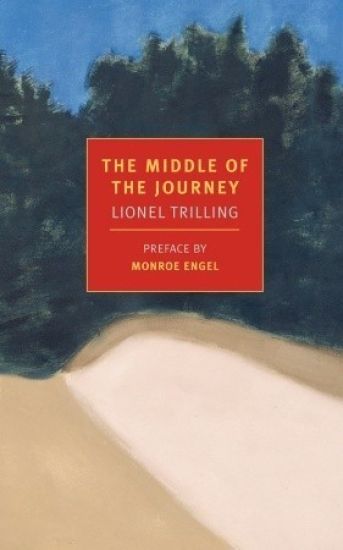
The Middle Of The Journey

The Middle Of The Journey

Lionel Trilling

NYRB Classics
2002
nidottu
Published in 1947, as the cold war was heating up, Lionel Trilling's only novel was a prophetic reckoning with the bitter ideological disputes that were to come to a head in the McCarthy era. The Middle of the Journey revolves around a political turncoat and the anger his action awakens among a group of intellectuals summering in Connecticut. The story, however, is less concerned with the rights and wrongs of left and right than with an absence of integrity at the very heart of the debate. Certainly the hero, John Laskell, staging a slow recovery from the death of his lover and a near-fatal illness of his own, comes to suspect that the conflicts and commitments involved are little more than a distraction from the real responsibilities, and terrors, of the common world. A detailed, sometimes slyly humorous, picture of the manners and mores of the intelligentsia, as well as a work of surprising tenderness and ultimately tragic import, The Middle of the Journey is a novel of ideas whose quiet resonance has only grown with time. This is a deeply troubling examination of America by one of its greatest critics.
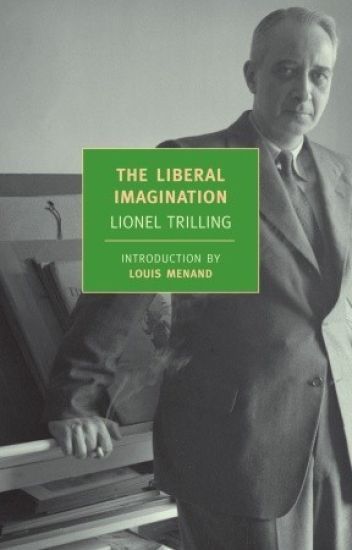
The Liberal Imagination

The Liberal Imagination

Lionel Trilling

NYRB Classics
2008
nidottu
The Liberal Imagination is one of the most admired and influential works of criticism of the last century, a work that is not only a masterpiece of literary criticism but an important statement about politics and society. Published in 1950, one of the chillier moments of the Cold War, Trilling's essays examine the promise -and limits-of liberalism, challenging the complacency of a naive liberal belief in rationality, progress, and the panaceas of economics and other social sciences, and asserting in their stead the irreducible complexity of human motivation and the tragic inevitability of tragedy. Only the imagination, Trilling argues, can give us access and insight into these realms and only the imagination can ground a reflective and considered, rather than programmatic and dogmatic, liberalism. Writing with acute intelligence about classics like Huckleberry Finn and the novels of Henry James and F.Scott Fitzgerald, but also on such varied matters as the Kinsey Report and money in the American imagination, Trilling presents a model of the critic as both part of and apart from his society, a defender of the reflective life that, in our ever more rationalized world, seems ever more necessary-and ever more remote.