Kirjojen hintavertailu. Mukana 11 627 362 kirjaa ja 12 kauppaa.

Kirjahaku

Etsi kirjoja tekijän nimen, kirjan nimen tai ISBN:n perusteella.

2 kirjaa tekijältä Lippmann Walter

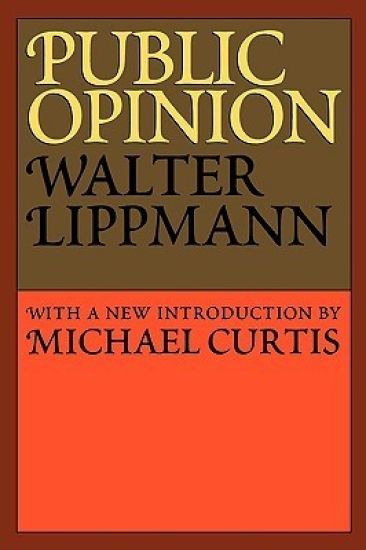
Public Opinion

Public Opinion

Lippmann Walter

Transaction Publishers
1997
nidottu
In what is widely considered the most influential book ever written by Walter Lippmann, the late journalist and social critic provides a fundamental treatise on the nature of human information and communication. As Michael Curtis indicates in his introduction to this edition, Public Opinion qualifies as a classic by virtue of its systematic brilliance and literary grace.The work is divided into eight parts, covering such varied issues as stereotypes, image making, and organized intelligence. The study begins with an analysis of "the world outside and the pictures hi our heads," a leitmotif that starts with issues of censorship and privacy, speed, words, and clarity, and ends with a careful survey of the modern newspaper. The work is a showcase for Lippmann's vast erudition. He easily integrated the historical, psychological, and philosophical literature of his day, and in every instance showed how relevant intellectual formations were to the ordinary operations of everyday life.The field of public opinion research has produced much since this 1922 classic, but no work is more compelling in its argument or lasting in its impact. Lippmann's conclusions are as meaningful in a world of television and computers as in the earlier period when newspapers were dominant. Public Opinion is of enduring significance for communications scholars, historians,- sociologists, and political scientists.
A Preface To Politics

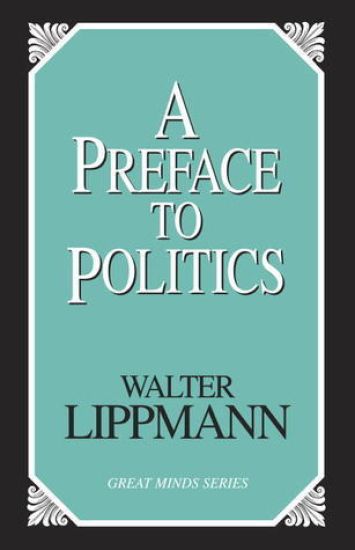
A Preface To Politics

Lippmann Walter

Prometheus Books
2005
pokkari
"A Preface to Politics" (1913) was the first book of political commentary published by Walter Lippmann, one of the most widely read and influential journalists of the 20th century. Shortly after its publication, Lippmann co-founded "The New Republic" magazine, in which he regularly published the kind of astute political analysis that he debuted in "A Preface to Politics". He later served in the administration of Woodrow Wilson and had a decisive influence on the formulation of Wilson's famous Fourteen Points. But his greatest influence came from the popular syndicated column called "Today and Tomorrow", which he wrote for thirty years. At its height 250 newspapers across the nation carried Lippmann's column, and eventually it won two Pulitzer Prizes. A prevailing theme throughout the essays in "A Preface to Politics" is that successful politicians are those who know how to tap into public needs and give voice to the concerns of the common man. The inherent logic and intellectual respectability of any particular policy are less important, Lippmann says, than its ability to arouse the emotions and express the deep feelings of a constituency. He points to Theodore Roosevelt as the prime example in his day of a politician who understood how to rally the public behind a cause. He also comments extensively on socialism, which was a rising political force in the beginning of the 20th century. Though he felt some sympathy with the socialist cause in this early work, he also astutely points out its many weaknesses. Later in his career, Lippmann turned completely away from socialism. A book of both historical interest and of enduring insights into the political process, "A Preface to Politics" will enhance the bookshelves of journalists, political scientists, historians, and all who value good writing.