Kirjojen hintavertailu. Mukana 11 342 296 kirjaa ja 12 kauppaa.

Kirjahaku

Etsi kirjoja tekijän nimen, kirjan nimen tai ISBN:n perusteella.

3 kirjaa tekijältä Lisa A. Freeman

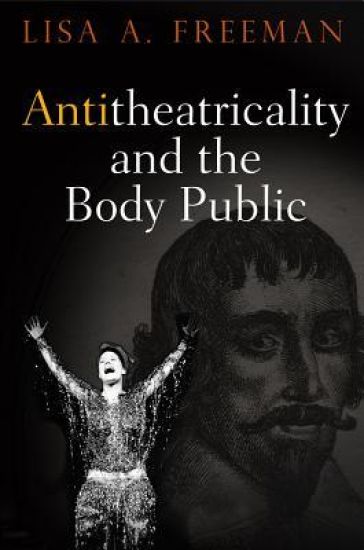
Antitheatricality and the Body Public

Antitheatricality and the Body Public

Lisa A. Freeman

University of Pennsylvania Press
2019
pokkari
Situating the theater as a site of broad cultural movements and conflicts, Lisa A. Freeman asserts that antitheatrical incidents from the English Renaissance to present-day America provide us with occasions to trace major struggles over the nature and balance of power and political authority. In studies of William Prynne's Histrio-mastix (1633), Jeremy Collier's A Short View of the Immorality and Profaneness of the English Stage (1698), John Home's Douglas (1757), the burning of the theater at Richmond (1811), and the U.S. Supreme Court's decision in National Endowment for the Arts v. Finley (1998) Freeman engages in a careful examination of the political, religious, philosophical, literary, and dramatic contexts in which challenges to theatricality unfold. In so doing, she demonstrates that however differently "the public" might be defined in each epoch, what lies at the heart of antitheatrical disputes is a struggle over the character of the body politic that governs a nation and the bodies public that could be said to represent that nation. By situating antitheatrical incidents as rich and interpretable cultural performances, Freeman seeks to account fully for the significance of these particular historical conflicts. She delineates when, why, and how anxieties about representation manifest themselves, and traces the actual politics that govern such ostensibly aesthetic and moral debates even today.
Character's Theater

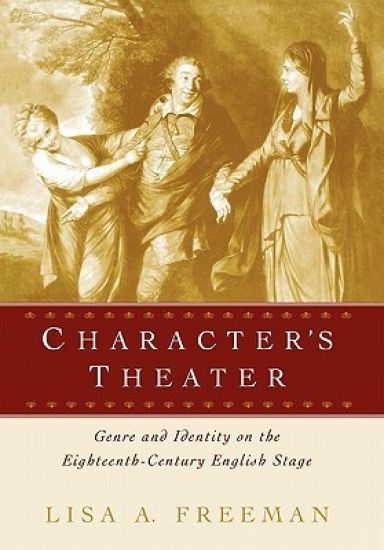
Character's Theater

Lisa A. Freeman

University of Pennsylvania Press
2001
sidottu
If the whole world acted the player, how did the player act the world? In Character's Theater, Lisa A. Freeman uses this question to test recent critical discussion of eighteenth-century literature and culture. Much current work, she observes, focuses on the concept of theatricality as both the governing metaphor of social life and a primary filter of psychic perception. Hume's "theater of the mind," Adam Smith's "impartial spectator," and Diderot's "tableaux" are all invoked by theorists to describe a process whereby the private individual comes to internalize theatrical logic and apprehend the self as other. To them theatricality is a critical mechanism of modern subjectivity but one that needs to be concealed if the subject's stability is to be maintained. Finding that much of this discussion about the "Age of the Spectator" has been conducted without reference to the play texts or actual theatrical practice, Freeman turns to drama and discovers a dynamic model of identity based on eighteenth-century conceptualizations of character. In contrast to the novel, which cultivated psychological tensions between private interiority and public show, dramatic characters in the eighteenth century experienced no private thoughts. The theater of the eighteenth century was not a theater of absorption but rather a theater of interaction, where what was monitored was not the depth of character, as in the novel, but the arc of a genre over the course of a series of discontinuous acts. In a genre-by-genre analysis of plays about plays, tragedy, comedies of manners, humours, and intrigue, and sentimental comedy, Freeman offers an interpretive account of eighteenth-century drama and its cultural work and demonstrates that by deploying an alternative model of identity, theater marked a site of resistance to the rise of the subject and to the ideological conformity enforced through that identity formation.
Antitheatricality and the Body Public

Antitheatricality and the Body Public

Lisa A. Freeman

University of Pennsylvania Press
2017
sidottu
Situating the theater as a site of broad cultural movements and conflicts, Lisa A. Freeman asserts that antitheatrical incidents from the English Renaissance to present-day America provide us with occasions to trace major struggles over the nature and balance of power and political authority. In studies of William Prynne's Histrio-mastix (1633), Jeremy Collier's A Short View of the Immorality and Profaneness of the English Stage (1698), John Home's Douglas (1757), the burning of the theater at Richmond (1811), and the U.S. Supreme Court's decision in National Endowment for the Arts v. Finley (1998) Freeman engages in a careful examination of the political, religious, philosophical, literary, and dramatic contexts in which challenges to theatricality unfold. In so doing, she demonstrates that however differently "the public" might be defined in each epoch, what lies at the heart of antitheatrical disputes is a struggle over the character of the body politic that governs a nation and the bodies public that could be said to represent that nation. By situating antitheatrical incidents as rich and interpretable cultural performances, Freeman seeks to account fully for the significance of these particular historical conflicts. She delineates when, why, and how anxieties about representation manifest themselves, and traces the actual politics that govern such ostensibly aesthetic and moral debates even today.