Kirjojen hintavertailu. Mukana 12 251 704 kirjaa ja 12 kauppaa.

Kirjahaku

Etsi kirjoja tekijän nimen, kirjan nimen tai ISBN:n perusteella.

5 kirjaa tekijältä Lisa Kaborycha

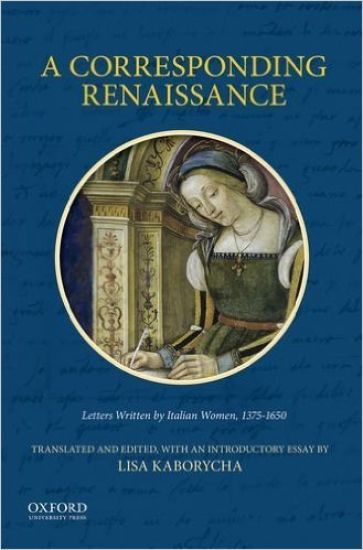
A Corresponding Renaissance

A Corresponding Renaissance

Lisa Kaborycha

Oxford University Press Inc
2015
nidottu
Women's vibrant presence in the Italian Renaissance has long been overlooked, with attention focused mainly on the artistic and intellectual achievements of their male counterparts. During this period, however, Italian women excelled especially as writers, and nowhere were they more expressive than in their letters. In A Corresponding Renaissance: Letters Written by Italian Women, 1375-1650 Lisa Kaborycha considers the lives and cultural contributions revealed by these women in their own words, through their correspondence. By turns highly personal, didactic, or devotional, these letters expose the daily realities of women's lives, their feelings, ideas, and reactions to the complex world in which they lived. Through their letters women emerge not merely as bystanders, but as true cultural protagonists in the Italian Renaissance. A Corresponding Renaissance is divided into eight thematic chapters, featuring fifty-five letters that are newly translated into English-many for the first time ever. Each of the letters is annotated and includes a brief biographical introduction and bibliographic references. The women come from all walks of life -- saints, poets, courtesans and countesses -- and from every geographic area of Italy; chronologically they span the entire Renaissance, with the majority representing the sixteenth century. Approximately one third of the selections are well-known letters, such as those of Catherine of Siena, Veronica Franco, and Isabella d'Este; the rest are lesser known, previously un-translated, or otherwise inaccessible.
A Short History of Renaissance Italy

A Short History of Renaissance Italy

Lisa Kaborycha

TAYLOR FRANCIS LTD
2023
sidottu
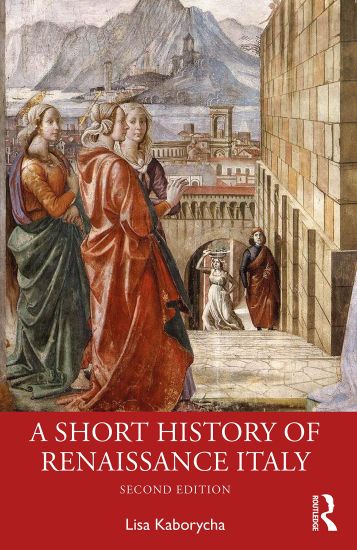
From Giotto’s artistic revolution at the dawn of the fourteenth century to the scientific discoveries of Galileo in the early seventeenth, this book explores the cultural developments of one of the most remarkable and vibrant periods of history—the Italian Renaissance. What makes the period all the more amazing is that this flowering of the visual arts, literature, and philosophy occurred against a turbulent backdrop of civic factionalism, foreign invasions, war, and pestilence.The fifteen chapters move briskly from the Fall of the Roman Empire in the West through the growth of the Italian city-states, where, in the crucible of pandemic disease and social unrest, a new approach to learning known as humanism was forged, political and religious certainties challenged. Traversing the entire Italian Peninsula— Florence, Rome, Milan, Venice, Naples and Sicily—this book examines the rich regional diversity of Renaissance cultural experience and considers men’s and women’s lives, their changing social attitudes and beliefs across three centuries. This second edition has been updated throughout; it now contains dozens of color images and timelines, as well as links to the author's new companion book of primary sources, Voices from the Italian Renaissance.Readers will need no preliminary background on the subject matter, as the story is told in a lively, readable narrative. Interdisciplinary in nature, its characters are merchants, bankers, artists, saints, soldiers of fortune, poets, popes, and courtesans. With brief literary excerpts, first-hand accounts, maps, and illustrations that help bring the era to life, this is an ideal text for students in a college survey course, as well as for the interested general reader or traveler to Italy who is curious to learn more about the extraordinary heritage of the Renaissance.
A Short History of Renaissance Italy

A Short History of Renaissance Italy

Lisa Kaborycha

TAYLOR FRANCIS LTD
2023
nidottu
From Giotto’s artistic revolution at the dawn of the fourteenth century to the scientific discoveries of Galileo in the early seventeenth, this book explores the cultural developments of one of the most remarkable and vibrant periods of history—the Italian Renaissance. What makes the period all the more amazing is that this flowering of the visual arts, literature, and philosophy occurred against a turbulent backdrop of civic factionalism, foreign invasions, war, and pestilence.The fifteen chapters move briskly from the Fall of the Roman Empire in the West through the growth of the Italian city-states, where, in the crucible of pandemic disease and social unrest, a new approach to learning known as humanism was forged, political and religious certainties challenged. Traversing the entire Italian Peninsula— Florence, Rome, Milan, Venice, Naples and Sicily—this book examines the rich regional diversity of Renaissance cultural experience and considers men’s and women’s lives, their changing social attitudes and beliefs across three centuries. This second edition has been updated throughout; it now contains dozens of color images and timelines, as well as links to the author's new companion book of primary sources, Voices from the Italian Renaissance.Readers will need no preliminary background on the subject matter, as the story is told in a lively, readable narrative. Interdisciplinary in nature, its characters are merchants, bankers, artists, saints, soldiers of fortune, poets, popes, and courtesans. With brief literary excerpts, first-hand accounts, maps, and illustrations that help bring the era to life, this is an ideal text for students in a college survey course, as well as for the interested general reader or traveler to Italy who is curious to learn more about the extraordinary heritage of the Renaissance.
Voices from the Italian Renaissance

Voices from the Italian Renaissance

Lisa Kaborycha

TAYLOR FRANCIS LTD
2024
sidottu
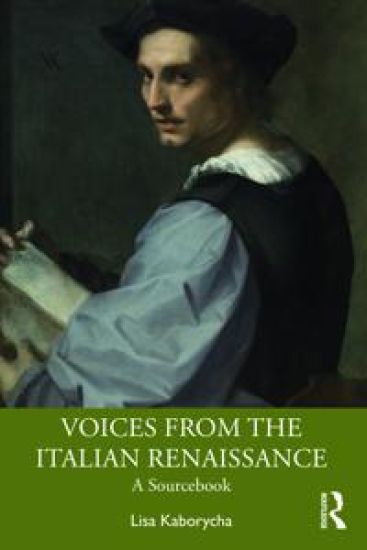
The Italian Renaissance was a period of intense cultural transformations when the ancient world was being rediscovered and a New World had been literally discovered. Between the thirteenth and the seventeenth centuries, traditional beliefs were being challenged as people across the Italian Peninsula explored new ways of thinking about religion, politics, and society and introduced startling innovations in the arts.This book contains more than hundred selections of primary sources—the historian’s raw material in the form of memoirs, letters, treatises, sermons, stories, poems, drawings, paintings, and sculpture. Here are eyewitness accounts of cold-blooded murders, lavish court pageants, the Sack of Rome, and the Black Death; first views of Michelangelo’s Sistine frescoes and glimpses of the surface of the moon through Galileo’s telescope. These sources bring the reader into direct contact with the creators of the great Renaissance works of art, literature, philosophy, and science, as well as lesser-known people, who in their own words express emotions of love, loss, and spiritual yearning.Selected to accompany and supplement A Short History of Renaissance Italy, the primary sources in this book make it an ideal course reader for students of history or art history. Yet this volume can be equally read well on its own; each selection is clearly introduced, annotated, and provided with references for further reading. These sources reach out to an audience beyond the classroom—the general reader, or the traveler to Italy—anyone curious to learn more about the Italian Renaissance will find themselves swept into conversation with these vibrant voices from the past.
Voices from the Italian Renaissance

Voices from the Italian Renaissance

Lisa Kaborycha

TAYLOR FRANCIS LTD
2024
nidottu
The Italian Renaissance was a period of intense cultural transformations when the ancient world was being rediscovered and a New World had been literally discovered. Between the thirteenth and the seventeenth centuries, traditional beliefs were being challenged as people across the Italian Peninsula explored new ways of thinking about religion, politics, and society and introduced startling innovations in the arts.This book contains more than hundred selections of primary sources—the historian’s raw material in the form of memoirs, letters, treatises, sermons, stories, poems, drawings, paintings, and sculpture. Here are eyewitness accounts of cold-blooded murders, lavish court pageants, the Sack of Rome, and the Black Death; first views of Michelangelo’s Sistine frescoes and glimpses of the surface of the moon through Galileo’s telescope. These sources bring the reader into direct contact with the creators of the great Renaissance works of art, literature, philosophy, and science, as well as lesser-known people, who in their own words express emotions of love, loss, and spiritual yearning.Selected to accompany and supplement A Short History of Renaissance Italy, the primary sources in this book make it an ideal course reader for students of history or art history. Yet this volume can be equally read well on its own; each selection is clearly introduced, annotated, and provided with references for further reading. These sources reach out to an audience beyond the classroom—the general reader, or the traveler to Italy—anyone curious to learn more about the Italian Renaissance will find themselves swept into conversation with these vibrant voices from the past.