Kirjojen hintavertailu. Mukana 11 244 527 kirjaa ja 12 kauppaa.

Kirjahaku

Etsi kirjoja tekijän nimen, kirjan nimen tai ISBN:n perusteella.

8 kirjaa tekijältä Lisa M. Bitel

Landscape with Two Saints

Landscape with Two Saints

Lisa M. Bitel

Oxford University Press Inc
2009
sidottu
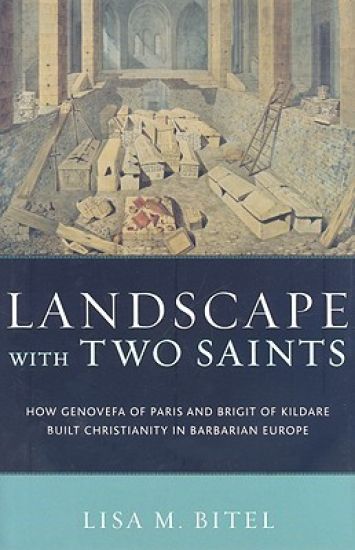
At a time when Europeans still longed to be Roman and were just learning to be Christian, two extraordinary holy women-Genovefa of Paris (ca. 420-502) and Brigit of Kildare (ca. 450-524)-began to roam their homelands. One of these saints raised an apostolic church in the imperial city that would become Paris. The other scavenged fragments of that dwindling empire for the foundations of a grand Roman basilica built deep in barbarian territory. Both brought Christianity and romanitas (Roman-ness) to their people. By examining the ruins of their cities and churches, the workings of their cults, and the many generations of their devotees, Lisa Bitel shows how Brigit and Genovefa helped northern Europeans map new religion onto familiar landscapes. Landscape with Two Saints tells the twin stories of these charismatic women but also explains how ordinary people lived through religious change at the very beginning of the Middle Ages. Tales of ancient conversions on distant landscapes have much to teach us about lived and built religion, why people choose new beliefs, and how they act out those beliefs in meaningful ways. The combined history of Brigit and Genovefa explains not just how a couple of legendary peripatetic women could become targets of devotion, but how and where Europeans became Christian, and what it meant to them on a daily basis. The story of these two saintly cults-not just in the pages of manuscripts, but on the streets of cities, in the stones of cemeteries, and in the walls of churches-also demonstrates the pervasive influence of gender and ethnicity, as well as regional culture and material environment, on the whole process of religious change. Bitel contends that in the building blocks of their churches and the tracks they once traveled, Genovefa and Brigit show us what the written words of missionaries and theologians never can: the active participation of converts in the history of their own conversion.
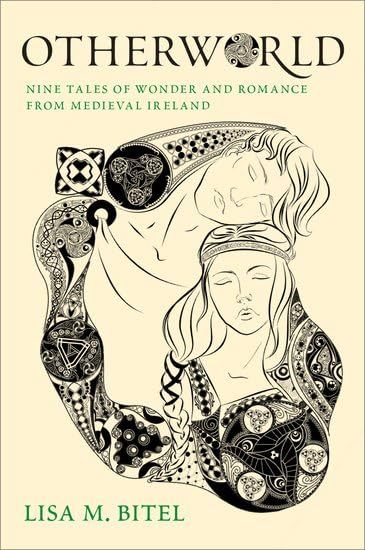
Otherworld

Otherworld

Lisa M. Bitel

OXFORD UNIVERSITY PRESS INC
2025
sidottu
Nine tales of early Irish literature beautifully retold in a modern, evocative style A mysterious woman appears nightly at the bedside of a prince and sings to him until he falls sick with love for her. A determined hero tracks his beloved through several incarnations, struggling to win her back. A young warrior seeks a woman who turns into a swan. These are the plots of little-known, anonymous tales composed over a thousand years ago in the monastic libraries of Ireland. In poetry and prose, they tell us what happens when human and supernatural lovers cross the boundaries between our world and the Otherworld (síd). Set in a lost time of heroes, demi-gods, warrior queens, and other folk of the Irish Otherworld (áes síde), these stories inspired some of the earliest fairy tales of France and England. What is more, they are sexier, funnier, and bloodier than better-known medieval myths and romances. In Otherworld, historian and novelist Lisa M. Bitel offers lively retellings of these Irish original myths using her expertise in Irish history and literature to guide modern readers. She traces themes and characters that link the nine magical tales, explains customs and locations, and brings out the humor. Like all storytellers--whether medieval or modern, performers or scribes--Bitel interprets the originals as she leads her readers over the boundary of reality to the Otherworld. Drawings especially created for the book by Saba Joshaghani accompany these astonishing tales.
Women in Early Medieval Europe, 400–1100

Women in Early Medieval Europe, 400–1100

Lisa M. Bitel

Cambridge University Press
2002
sidottu
This is a history of the early European middle ages through the eyes of women, combining the rich literature of women's history with original research in the context of mainstream history and traditional chronology. The book begins at the end of the Roman empire and ends with the start of the long eleventh century, when women and men set out to test the old frontiers of Europe. The book recreates the lives of ordinary women but also tells personal stories of individuals. Each chapter also questions an assumption of medieval historiography, and uses the few documents produced by women themselves, along with archaeological evidence, art, and the written records of medieval men, to tell of women, their experiences and ideas, and their relations with men. It covers the continent and its exotic edges, such as Iceland, Ireland, and Iberia; looking at women Christian and non-Christian alike.
Women in Early Medieval Europe, 400–1100

Women in Early Medieval Europe, 400–1100

Lisa M. Bitel

Cambridge University Press
2002
pokkari
This is a history of the early European middle ages through the eyes of women, combining the rich literature of women’s history with original research in the context of mainstream history and traditional chronology. The book begins at the end of the Roman empire and ends with the start of the long eleventh century, when women and men set out to test the old frontiers of Europe. The book recreates the lives of ordinary women but also tells personal stories of individuals. Each chapter also questions an assumption of medieval historiography, and uses the few documents produced by women themselves, along with archaeological evidence, art, and the written records of medieval men, to tell of women, their experiences and ideas, and their relations with men. It covers the continent and its exotic edges, such as Iceland, Ireland, and Iberia; looking at women Christian and non-Christian alike.
Our Lady of the Rock

Our Lady of the Rock

Lisa M. Bitel

Cornell University Press
2015
sidottu
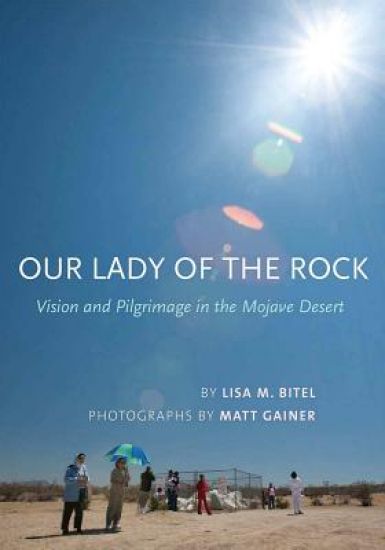
For more than twenty years, Maria Paula Acuña has claimed to see the Virgin Mary, once a month, at a place called Our Lady of the Rock in the Mojave Desert of California. Hundreds of men, women, and children follow her into the desert to watch her see what they cannot. While she sees and speaks with the Virgin, onlookers search the skies for signs from heaven, snapping photographs of the sun and sky. Not all of them are convinced that Maria Paula can see the Virgin, yet at each vision event they watch for subtle clues to Mary's presence, such as the unexpected scent of roses or a cloud in the shape of an angel. The visionary depends on her audience to witness and authenticate her visions, while observers rely on Maria Paula and the Virgin to create a sacred space and moment where they, too, can experience firsthand one of the oldest and most fundamental promises of Christianity: direct contact with the divine. Together, visionary and witnesses negotiate and enact their monthly liturgy of revelations. Our Lady of the Rock, which features text by Lisa M. Bitel and more than sixty photographs by Matt Gainer, shows readers what happens in the Mojave Desert each month and tells us how two thousand years of Christian revelatory tradition prepared Maria Paula and her followers to meet in the desert. Based on six years of observation and interviews, chapters analyze the rituals, iconographies, and physical environment of Our Lady of the Rock. Bitel and Gainer also provide vivid portraits of the pilgrims—who they are, where they come from, and how they practice the traditional Christian discernment of spirits and visions. Our Lady of the Rock follows three pilgrims as they return home with relics and proofs of visions where, out of Maria Paula's sight, they too have learned to see the Virgin. The book also documents the public response from the Catholic Church and popular news media to Maria Paula and other contemporary visionaries. Throughout, Our Lady of the Rock locates Maria Paula and her followers in the context of recent demographic and cultural shifts in the American Southwest, the astonishing increase in reported apparitions and miracles from around the world, the latest developments in communications and visual technologies, and the never-ending debate among academics, faith leaders, scientists, and citizen observers about sight, perception, reason, and belief.
Our Lady of the Rock

Our Lady of the Rock

Lisa M. Bitel

Cornell University Press
2015
pokkari
For more than twenty years, Maria Paula Acuña has claimed to see the Virgin Mary, once a month, at a place called Our Lady of the Rock in the Mojave Desert of California. Hundreds of men, women, and children follow her into the desert to watch her see what they cannot. While she sees and speaks with the Virgin, onlookers search the skies for signs from heaven, snapping photographs of the sun and sky. Not all of them are convinced that Maria Paula can see the Virgin, yet at each vision event they watch for subtle clues to Mary's presence, such as the unexpected scent of roses or a cloud in the shape of an angel. The visionary depends on her audience to witness and authenticate her visions, while observers rely on Maria Paula and the Virgin to create a sacred space and moment where they, too, can experience firsthand one of the oldest and most fundamental promises of Christianity: direct contact with the divine. Together, visionary and witnesses negotiate and enact their monthly liturgy of revelations. Our Lady of the Rock, which features text by Lisa M. Bitel and more than sixty photographs by Matt Gainer, shows readers what happens in the Mojave Desert each month and tells us how two thousand years of Christian revelatory tradition prepared Maria Paula and her followers to meet in the desert. Based on six years of observation and interviews, chapters analyze the rituals, iconographies, and physical environment of Our Lady of the Rock. Bitel and Gainer also provide vivid portraits of the pilgrims—who they are, where they come from, and how they practice the traditional Christian discernment of spirits and visions. Our Lady of the Rock follows three pilgrims as they return home with relics and proofs of visions where, out of Maria Paula's sight, they too have learned to see the Virgin. The book also documents the public response from the Catholic Church and popular news media to Maria Paula and other contemporary visionaries. Throughout, Our Lady of the Rock locates Maria Paula and her followers in the context of recent demographic and cultural shifts in the American Southwest, the astonishing increase in reported apparitions and miracles from around the world, the latest developments in communications and visual technologies, and the never-ending debate among academics, faith leaders, scientists, and citizen observers about sight, perception, reason, and belief.
Isle of the Saints

Isle of the Saints

Lisa M. Bitel

Cornell University Press
1994
pokkari
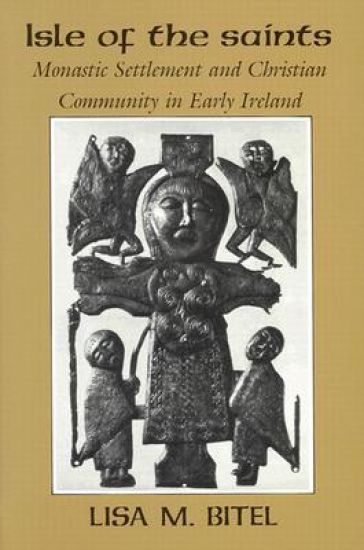
Isle of the Saints recreates the harsh yet richly spiritual world of medieval Irish monks on the Christian frontier of barbarian Europe. Lisa Bitel draws on accounts of saints' lives written between 800 and 1200 to explain, from the monks' own perspective, the social networks that bound them to one another and to their secular neighbors.
Land of Women

Land of Women

Lisa M. Bitel

Cornell University Press
1998
pokkari
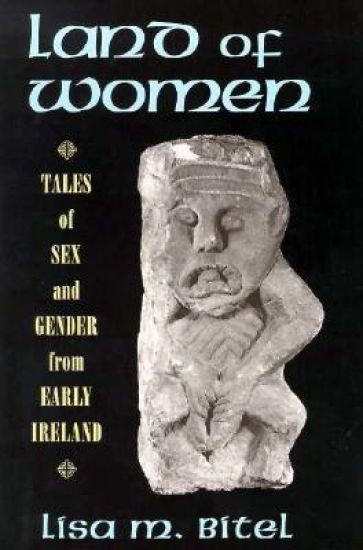
"This book disperses the shadows in an obscure but important landscape. Lisa Bitel addresses both the history of women in early Ireland and the history of myth, legend, and superstition which surrounded them. It is a powerful and exact book and an invaluable addition to our expanding sense of Ireland through the eyes of Irish women."—Eavan Boland, author of In a Time of Violence: Poems"It is refreshing to read in a book by a woman on medieval women that not all clerics hated women and that not all men were oversexed villains consciously bent on exploiting women. [Bitel] challenges not only the medieval Irish male construct of female behavior, but she is also courageous enough to question constructs of medieval women invented by modern Irish medieval historians."—Times Higher Education Supplement