Kirjojen hintavertailu. Mukana 11 244 527 kirjaa ja 12 kauppaa.

Kirjahaku

Etsi kirjoja tekijän nimen, kirjan nimen tai ISBN:n perusteella.

5 kirjaa tekijältä Lisa Nakamura

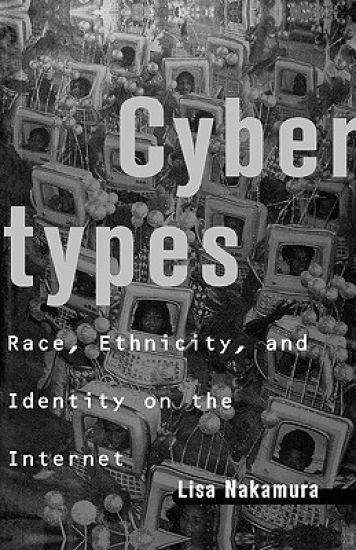
Cybertypes

Cybertypes

Lisa Nakamura

Routledge
2002
sidottu
First published in 2002. In Cybertypes, Lisa Nakamura turn sour assumption that the Net is color-blind on its head. Examining all facets of everyday web-life, she shows that racial and ethnic stereotypes, or 'cybertypes' are hardwired into our online interactions: Identity tourists masquerade in chat rooms as Asian_Geisha or Alatiniolover. Web directories sharply delimit racial categories. Anonymous computer users are assumed to be white. Lively, provocative, Cybertypes takes up computer relationship between race, ethnicity and technology and offers a candid and nuanced understanding of identity in the information age.
Cybertypes

Cybertypes

Lisa Nakamura

Routledge
2002
nidottu
First published in 2002. In Cybertypes, Lisa Nakamura turn sour assumption that the Net is color-blind on its head. Examining all facets of everyday web-life, she shows that racial and ethnic stereotypes, or 'cybertypes' are hardwired into our online interactions: Identity tourists masquerade in chat rooms as Asian_Geisha or Alatiniolover. Web directories sharply delimit racial categories. Anonymous computer users are assumed to be white. Lively, provocative, Cybertypes takes up computer relationship between race, ethnicity and technology and offers a candid and nuanced understanding of identity in the information age.
Digitizing Race

Digitizing Race

Lisa Nakamura

University of Minnesota Press
2007
nidottu
In the nineties, neoliberalism simultaneously provided the context for the Internet’s rapid uptake in the United States and discouraged public conversations about racial politics. At the same time many scholars lauded the widespread use of text-driven interfaces as a solution to the problem of racial intolerance. Today’s online world is witnessing text-driven interfaces such as e-mail and instant messaging giving way to far more visually intensive and commercially driven media forms that not only reveal but showcase people’s racial, ethnic, and gender identity. Lisa Nakamura, a leading scholar in the examination of race in digital media, uses case studies of popular yet rarely examined uses of the Internet such as pregnancy Web sites, instant messaging, and online petitions and quizzes to look at the emergence of race-, ethnic-, and gender-identified visual cultures. While popular media such as Hollywood cinema continue to depict nonwhite nonmales as passive audiences or consumers of digital media rather than as producers, Nakamura argues the contrary-with examples ranging from Jennifer Lopez music videos; films including the Matrix trilogy, Gattaca, and Minority Report; and online joke sites-that users of color and women use the Internet to vigorously articulate their own types of virtual community, avatar bodies, and racial politics. Lisa Nakamura is associate professor of speech communication and Asian American studies at the University of Illinois, Urbana-Champaign. She is the author of Cybertypes: Race, Ethnicity, and Identity on the Internet and coeditor, with Beth Kolko and Gilbert Rodman, of Race in Cyberspace.
The Inattention Economy

The Inattention Economy

Lisa Nakamura

UNIVERSITY OF MINNESOTA PRESS
2026
sidottu
Revealing the unheralded contributions of women of color to the foundation and development of the digital economy The Inattention Economy challenges the widespread myth that the internet was born from the labor of a handful of white male entrepreneurs, recovering the uncredited and unpaid contributions of women of color. Focusing on three key inflection points in computing - the microchip era of the 1960s and '70s, the rise of social media in the 2000s, and A.I.-fueled virtual reality in the 2020s - Lisa Nakamura illuminates these women's instrumental roles in building new technologies and making them coherent to users. From the Navajo women who manufactured the first semiconductor circuits in New Mexico to Tila Tequila, the queer Vietnamese American refugee who became the first true internet influencer in the MySpace age, to Black virtual reality creators, Nakamura highlights how women's gendered and racialized identities have uniquely positioned them to mediate the development and proliferation of new technologies. She exposes how these women have been structurally excluded from racial capitalism's benefits while their labor is considered as exploitable and inexhaustible as that of machines. Confronting this injustice, she focuses our attention on their work, which undergirds and makes possible the platforms ingrained in our daily lives. Arguing for both recognition and material compensation for these women's labor, The Inattention Economy is a powerful counterhistory of Silicon Valley and a persuasive call to imagine a different kind of internet. Retail e-book files for this title are screen-reader friendly with images accompanied by short alt text and/or extended descriptions.
The Inattention Economy

The Inattention Economy

Lisa Nakamura

UNIVERSITY OF MINNESOTA PRESS
2026
nidottu
Revealing the unheralded contributions of women of color to the foundation and development of the digital economy The Inattention Economy challenges the widespread myth that the internet was born from the labor of a handful of white male entrepreneurs, recovering the uncredited and unpaid contributions of women of color. Focusing on three key inflection points in computing - the microchip era of the 1960s and '70s, the rise of social media in the 2000s, and A.I.-fueled virtual reality in the 2020s - Lisa Nakamura illuminates these women's instrumental roles in building new technologies and making them coherent to users. From the Navajo women who manufactured the first semiconductor circuits in New Mexico to Tila Tequila, the queer Vietnamese American refugee who became the first true internet influencer in the MySpace age, to Black virtual reality creators, Nakamura highlights how women's gendered and racialized identities have uniquely positioned them to mediate the development and proliferation of new technologies. She exposes how these women have been structurally excluded from racial capitalism's benefits while their labor is considered as exploitable and inexhaustible as that of machines. Confronting this injustice, she focuses our attention on their work, which undergirds and makes possible the platforms ingrained in our daily lives. Arguing for both recognition and material compensation for these women's labor, The Inattention Economy is a powerful counterhistory of Silicon Valley and a persuasive call to imagine a different kind of internet. Retail e-book files for this title are screen-reader friendly with images accompanied by short alt text and/or extended descriptions.