Kirjojen hintavertailu. Mukana 11 518 949 kirjaa ja 12 kauppaa.

Kirjahaku

Etsi kirjoja tekijän nimen, kirjan nimen tai ISBN:n perusteella.

6 kirjaa tekijältä Liz Stanley

Reintroducing Olive Schreiner

Reintroducing Olive Schreiner

Liz Stanley

TAYLOR FRANCIS LTD
2022
sidottu
This book explores the thought of Olive Schreiner, the internationally famous writer, feminist theorist, social critic, opponent of imperialism and nationalism, and analyst of violence and war, best known for her novels and short stories, articles and critical commentaries, and her feminist treatise, Women and Labour. Expounding her groundbreaking ideas and analyses to a new generation of sociologists, it presents Schreiner as one of the first proponents of an intersectional analysis, in her treatment of the great questions of the age – on labour, women and race – as mutually reinforcing and also bound together with capitalism, imperialism and war in society. Through an analysis of her use of different genres of writing in representing the complexities of social life and oppressions, the author reveals a combination of social theory with practical substantive examples and analysis at the core of Schreiner’s intellectual and moral project – an approach that put her at odds with her contemporaries but shows her to be a forerunner of present-day sociological thinking. An examination of the significance for sociology of the work of a figure, the importance of whose thought is only now being recognised, Reintroducing Olive Schreiner will appeal to scholars of sociology and social theory with interests in the history of the discipline, intersectionality and methods of research and analysis.
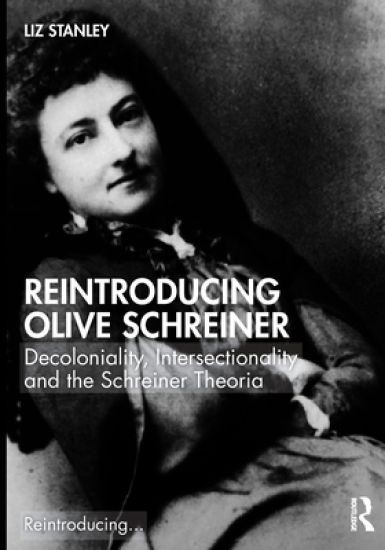
Reintroducing Olive Schreiner

Reintroducing Olive Schreiner

Liz Stanley

TAYLOR FRANCIS LTD
2022
nidottu
This book explores the thought of Olive Schreiner, the internationally famous writer, feminist theorist, social critic, opponent of imperialism and nationalism, and analyst of violence and war, best known for her novels and short stories, articles and critical commentaries, and her feminist treatise, Women and Labour. Expounding her groundbreaking ideas and analyses to a new generation of sociologists, it presents Schreiner as one of the first proponents of an intersectional analysis, in her treatment of the great questions of the age – on labour, women and race – as mutually reinforcing and also bound together with capitalism, imperialism and war in society. Through an analysis of her use of different genres of writing in representing the complexities of social life and oppressions, the author reveals a combination of social theory with practical substantive examples and analysis at the core of Schreiner’s intellectual and moral project – an approach that put her at odds with her contemporaries but shows her to be a forerunner of present-day sociological thinking. An examination of the significance for sociology of the work of a figure, the importance of whose thought is only now being recognised, Reintroducing Olive Schreiner will appeal to scholars of sociology and social theory with interests in the history of the discipline, intersectionality and methods of research and analysis.

Sex Surveyed, 1949-1994

Sex Surveyed, 1949-1994

Liz Stanley

Taylor Francis Ltd
1995
sidottu
First published in 1995. This book provides the only feminist overview of the development of both the mainstream and the feminist variant of the survey as a means of investigating sexual attitude and behaviour. Illuminating reading for the general reader, essential for students on Sexuality, Methodology, Women’s Studies a d British Modern Social History courses and key text for all Sociologists.
Sex Surveyed, 1949-1994

Sex Surveyed, 1949-1994

Liz Stanley

Taylor Francis Ltd
1995
nidottu
First published in 1995. This book provides the only feminist overview of the development of both the mainstream and the feminist variant of the survey as a means of investigating sexual attitude and behaviour. Illuminating reading for the general reader, essential for students on Sexuality, Methodology, Women’s Studies a d British Modern Social History courses and key text for all Sociologists.
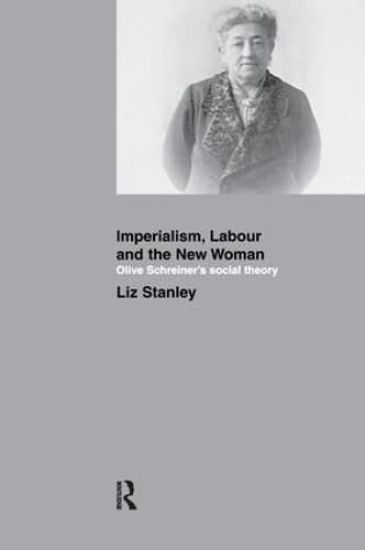
Imperialism, Labour and the New Woman
Olive Schreiner (1855-1920) was the best-known feminist theorist and writer of her time. Her writings spanned a number of conventionally separate genres (including the novel, short story, allegory, political essay, polemic and theoretical treatise), which she crafted to produce a highly distinctive feminist and analytical 'voice'. A feminist who was contemporaneously an internationally-renowned social commentator, Schreiner's developing political analysis was - and still is - highly original. She developed a materially-based socialist and feminist analysis of 'labour' which led her to theorise social and economic change, divisions of labour in society and between women and men, capitalism and imperialism, around innovative ideas about how -- and by whom -- economic and social value was produced. She combined with this a keen attention to inter-personal relations, between women as literally or politically sisters, between 'respectable' and sexually outcast women, between feminist women and the 'New Men', and within the family. Distinctively, Schreiner's writings on economic and political life in South Africa criticised the policies and practice of Rhodes in the Cape Colony and British imperialism in southern Africa more widely. She opposed the South African War of 1899-1902, promoted federation rather than union as the form the South African state should take and insisted on equal political rights for all. Schreiner steadfastly opposed the development of apartheid segregationist policies and provided a radical analysis of the relationship between 'race' and capital.Imperialism, Labour and the New Woman is based on primary archive research, making particular use of Schreiner's unpublished letters and other major manuscript sources to provide a major reconceptualisation of the scope and importance of her writings and innovative and experimental ideas about genre and form. It offers a major rethinking of Schreiner's political writings on South Africa, and it emphasises the distinctiveness of Schreiner's contribution as the major feminist theorist of her age and that which followed. The book will appeal particularly to readers interested in the development of social theory, in influential feminist ideas and writing of the fin de sicle period, in the contemporary critique of capitalism and imperialism, and in 'the age of imperialism' in Southern Africa, as well as to Women's Studies scholars across the academic disciplines.
Imperialism, Labour and the New Woman

Imperialism, Labour and the New Woman

Liz Stanley

Sociology Press
2002
nidottu
Olive Schreiner (1855-1920) was the best-known feminist theorist and writer of her time. Her writings spanned a number of conventionally separate genres (including the novel, short story, allegory, political essay, polemic and theoretical treatise), which she crafted to produce a highly distinctive feminist and analytical 'voice'. A feminist who was contemporaneously an internationally-renowned social commentator, Schreiner's developing political analysis was - and still is - highly original. She developed a materially-based socialist and feminist analysis of 'labour' which led her to theorise social and economic change, divisions of labour in society and between women and men, capitalism and imperialism, around innovative ideas about how -- and by whom -- economic and social value was produced. She combined with this a keen attention to inter-personal relations, between women as literally or politically sisters, between 'respectable' and sexually outcast women, between feminist women and the 'New Men', and within the family. Distinctively, Schreiner's writings on economic and political life in South Africa criticised the policies and practice of Rhodes in the Cape Colony and British imperialism in southern Africa more widely. She opposed the South African War of 1899-1902, promoted federation rather than union as the form the South African state should take and insisted on equal political rights for all. Schreiner steadfastly opposed the development of apartheid segregationist policies and provided a radical analysis of the relationship between 'race' and capital.Imperialism, Labour and the New Woman is based on primary archive research, making particular use of Schreiner's unpublished letters and other major manuscript sources to provide a major reconceptualisation of the scope and importance of her writings and innovative and experimental ideas about genre and form. It offers a major rethinking of Schreiner's political writings on South Africa, and it emphasises the distinctiveness of Schreiner's contribution as the major feminist theorist of her age and that which followed. The book will appeal particularly to readers interested in the development of social theory, in influential feminist ideas and writing of the fin de sicle period, in the contemporary critique of capitalism and imperialism, and in 'the age of imperialism' in Southern Africa, as well as to Women's Studies scholars across the academic disciplines.