Kirjojen hintavertailu. Mukana 12 390 323 kirjaa ja 12 kauppaa.

Kirjahaku

Etsi kirjoja tekijän nimen, kirjan nimen tai ISBN:n perusteella.

6 kirjaa tekijältä Liz Tomlin

Staging Class Conflict in the UK

Staging Class Conflict in the UK

Liz Tomlin

Cambridge University Press
2025
pokkari
This Element focuses on the frequent staging of the most precarious fraction of the working class in the context of a theatre industry, academy and audiences that are dominated by the cultural fraction of the middle class. It interrogates the staging of an abjectified figure as a means of challenging the stigmatisation of the poor in political discourse, defined here as an ideological imaginary of moral and cultural deficit. The Element argues that in seeking to subvert such an imaginary, theatre that stages the abjectified subject may risk consolidating two further imaginaries of working class deficit that have been confected in political discourse from the 1990s to the 2020s. In conclusion, the Element reflects on the political potential of theatre that rather seeks to eradicate class descriptors, conflicts and hierarchies altogether. This title is also available as Open Access on Cambridge Core.
Staging Class Conflict in the UK

Staging Class Conflict in the UK

Liz Tomlin

Cambridge University Press
2025
sidottu
This Element focuses on the frequent staging of the most precarious fraction of the working class in the context of a theatre industry, academy and audiences that are dominated by the cultural fraction of the middle class. It interrogates the staging of an abjectified figure as a means of challenging the stigmatisation of the poor in political discourse, defined here as an ideological imaginary of moral and cultural deficit. The Element argues that in seeking to subvert such an imaginary, theatre that stages the abjectified subject may risk consolidating two further imaginaries of working class deficit that have been confected in political discourse from the 1990s to the 2020s. In conclusion, the Element reflects on the political potential of theatre that rather seeks to eradicate class descriptors, conflicts and hierarchies altogether. This title is also available as Open Access on Cambridge Core.
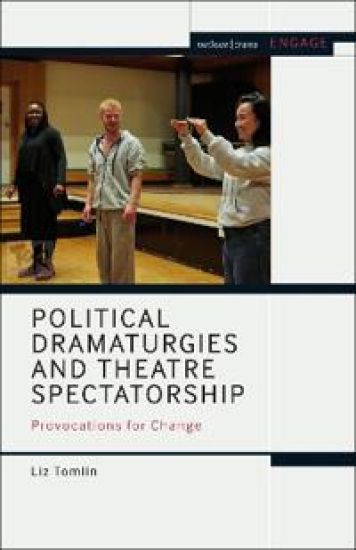
Political Dramaturgies and Theatre Spectatorship
What do we mean when we describe theatre as political today? How might theatre-makers’ provocations for change need to be differently designed when addressing the precarious spectator-subject of twenty- first century neoliberalism? In this important study Liz Tomlin interrogates the influential theories of Jacques Rancière to propose a new framework of analysis through which contemporary political dramaturgies can be investigated. Drawing, in particular, on Ernesto Laclau and Chantal Mouffe, Lilie Chouliaraki and Judith Butler, Tomlin argues that the capacities of the contemporary and future spectator to be ‘effected’ or ‘affected’ by politically-engaged theatre need to be urgently re-evaluated.Central to this study is Tomlin’s theorized figuration of the neoliberal spectator-subject as precarious, individualized and ironic, with a reduced capacity for empathy, agency and the ability to imagine better futures. This, in turn, leads to a predilection for a response to injustice that is driven by a concern for the feelings of the subject-self, rather than concern for the suffering other. These characteristics are argued to shape even those spectator-subjects towards the left of the political spectrum, thus necessitating a careful reconsideration of new and long-standing dramaturgies of political provocation.Dramaturgies examined include the ironic invitations of Made in China and Martin Crimp, the exploration of affect in Kieran Hurley’s Heads Up, the new sincerity that characterizes the work of Andy Smith, the turn to the staging of the spectators’ ‘other’ in Developing Artists’ Queens of Syria and Chris Thorpe and Rachel Chavkin’s Confirmation, and the community activism of Common Wealth’s The Deal Versus the People.
British Theatre Companies: 1995-2014
This series of three volumes provides a groundbreaking study of the work of many of the most innovative and important British theatre companies from 1965 to 2014. Each volume provides a survey of the political and cultural context, an extensive survey of the variety of theatre companies from the period, and detailed case studies of six of the most important companies. Volume Three, 1995-2014, charts the expansion of the sector in the era of Lottery funding and traces the resistant influences of earlier movements in the emergence of new companies and an independent theatre ecology that seeks to reconfigure the mainstream.Leading academics provide case studies of six of the most important companies, including:* Mind the Gap, by Dave Calvert (University of Huddersfield, UK)* Blast Theory, by Maria Chatzichristodoulou (University of Hull, UK)* Suspect Culture, by Clare Wallace (Charles University, Prague, Czech Republic)* Punchdrunk, by Josephine Machon (Middlesex University, UK)* Kneehigh, by Duška Radosavljevic (University of Kent, UK)* Stans Cafe, by Marissia Fragkou (Canterbury Christ Church University, UK)
British Theatre Companies: 1995-2014
This series of three volumes provides a groundbreaking study of the work of many of the most innovative and important British theatre companies from 1965 to 2014. Each volume provides a survey of the political and cultural context, an extensive survey of the variety of theatre companies from the period, and detailed case studies of six of the most important companies. Volume Three, 1995-2014, charts the expansion of the sector in the era of Lottery funding and traces the resistant influences of earlier movements in the emergence of new companies and an independent theatre ecology that seeks to reconfigure the mainstream.Leading academics provide case studies of six of the most important companies, including:* Mind the Gap, by Dave Calvert (University of Huddersfield, UK)* Blast Theory, by Maria Chatzichristodoulou (University of Hull, UK)* Suspect Culture, by Clare Wallace (Charles University, Prague, Czech Republic)* Punchdrunk, by Josephine Machon (Middlesex University, UK)* Kneehigh, by Duška Radosavljevic (University of Kent, UK)* Stan's Cafe, by Marissia Fragkou (Canterbury Christ Church University, UK)
Political Dramaturgies and Theatre Spectatorship
What do we mean when we describe theatre as political today? How might theatre-makers’ provocations for change need to be differently designed when addressing the precarious spectator-subject of twenty- first century neoliberalism? In this important study Liz Tomlin interrogates the influential theories of Jacques Rancière to propose a new framework of analysis through which contemporary political dramaturgies can be investigated. Drawing, in particular, on Ernesto Laclau and Chantal Mouffe, Lilie Chouliaraki and Judith Butler, Tomlin argues that the capacities of the contemporary and future spectator to be ‘effected’ or ‘affected’ by politically-engaged theatre need to be urgently re-evaluated.Central to this study is Tomlin’s theorized figuration of the neoliberal spectator-subject as precarious, individualized and ironic, with a reduced capacity for empathy, agency and the ability to imagine better futures. This, in turn, leads to a predilection for a response to injustice that is driven by a concern for the feelings of the subject-self, rather than concern for the suffering other. These characteristics are argued to shape even those spectator-subjects towards the left of the political spectrum, thus necessitating a careful reconsideration of new and long-standing dramaturgies of political provocation.Dramaturgies examined include the ironic invitations of Made in China and Martin Crimp, the exploration of affect in Kieran Hurley’s Heads Up, the new sincerity that characterizes the work of Andy Smith, the turn to the staging of the spectators’ ‘other’ in Developing Artists’ Queens of Syria and Chris Thorpe and Rachel Chavkin’s Confirmation, and the community activism of Common Wealth’s The Deal Versus the People.