Kirjojen hintavertailu. Mukana 11 699 587 kirjaa ja 12 kauppaa.

Kirjahaku

Etsi kirjoja tekijän nimen, kirjan nimen tai ISBN:n perusteella.

6 kirjaa tekijältä Llewelyn Morgan

Horace

Horace

Llewelyn Morgan

Oxford University Press
2023
nidottu
Very Short Introductions: Brilliant, Sharp, Inspiring Horace was one of the greatest poets during the reign of Augustus and is seen as a mark of cultural sophistication since this time. This Very Short Introduction examines how Horace's poetry has exerted enormous influence but argues that it is best understood within the traditions of ancient literature. Llewellyn Morgan guides the reader through the dizzying vagaries of Horace's biography, which reflects the political and social instability of the period. His poetry, and the life he artfully constructs and presents to us in it, engages both with the greatest crisis that Rome had ever faced, and its resolution by the first Emperor. Horace is Rome's laureate, and through him we experience the anxieties and triumphs of his age. For posterity, Horace has served for a model of the good life, a promoter of enlightened retirement, but has also exemplified poetic artistry, and is the most creative manipulator of the Latin language, even among his remarkable contemporaries. ABOUT THE SERIES: The Very Short Introductions series from Oxford University Press contains hundreds of titles in almost every subject area. These pocket-sized books are the perfect way to get ahead in a new subject quickly. Our expert authors combine facts, analysis, perspective, new ideas, and enthusiasm to make interesting and challenging topics highly readable.
Ovid

Ovid

Llewelyn Morgan

Oxford University Press
2020
nidottu
"Vivam" is the very last word of Ovid's masterpiece, the Metamorphoses: "I shall live." If we're still reading it two millennia after Ovid's death, this is by definition a remarkably accurate prophecy. Ovid was not the only ancient author with aspirations to be read for eternity, but no poet of the Greco-Roman world has had a deeper or more lasting impact on subsequent literature and art than he can claim. In the present day no Greek or Roman poet is as accessible, to artists, writers, or the general reader: Ovid's voice remains a compellingly contemporary one, as modern as it seemed to his contemporaries in Augustan Rome. But Ovid was also a man of his time, his own story fatally entwined with that of the first emperor Augustus, and the poetry he wrote channels in its own way the cultural and political upheavals of the contemporary city, its public life, sexual mores, religion, and urban landscape, while also exploiting the superbly rich store of poetic convention that Greek literature and his Roman predecessors had bequeathed to him. This Very Short Introduction explains Ovid's background, social and literary, and introduces his poetry, on love, metamorphosis, Roman festivals, and his own exile, a restlessly innovative oeuvre driven by the irrepressible ingenium or wit for which he was famous. Llewelyn Morgan also explores Ovid's immense influence on later literature and art, spanning from Shakespeare to Bernini. Throughout, Ovid's poetry is revealed as enduringly scintillating, his personal story compelling, and the issues his life and poetry raise of continuing relevance and interest. ABOUT THE SERIES: The Very Short Introductions series from Oxford University Press contains hundreds of titles in almost every subject area. These pocket-sized books are the perfect way to get ahead in a new subject quickly. Our expert authors combine facts, analysis, perspective, new ideas, and enthusiasm to make interesting and challenging topics highly readable.
Musa Pedestris

Musa Pedestris

Llewelyn Morgan

Oxford University Press
2010
sidottu
A characteristic of Greek and Latin poetry (sometimes an intimidating one) is the variety of metrical shapes it can adopt. Llewelyn Morgan offers an accessible account of some of the most common of these metres in Roman poetry, and explains how the poets can exploit them to support, supplement, or indeed drive the meaning of the poems they carry. Metre is revealed as an aspect of Roman poetry which is every bit as creative as its word play, and new insights are given to a range of Roman poems, from reassessments of familiar poems by Catullus and Horace to explanations of the remarkable artistry underlying less mainstream works by Martial, Statius, and Lucilius.
Patterns of Redemption in Virgil's Georgics

Patterns of Redemption in Virgil's Georgics

Llewelyn Morgan

Cambridge University Press
2011
pokkari
At the time of this book's first publication in 1999, orthodoxy interpreted the Georgics as a statement of profound ambivalence towards Octavian and his claim to be Rome's saviour after the catastrophe of the civil wars. This book takes issue with the model of the subtly subversive poet. It argues that in the turbulent political circumstances which obtained at the time of the poem's composition, Virgil's preoccupation with violent conflict has a highly optimistic import. Octavian's brutal conduct in the civil wars is subjected to a searching analysis, but is ultimately vindicated, refigured as a paradoxically constructive violence analogous to blood sacrifice or Romulus' fratricide of Remus. The vindication of Octavian also has strictly literary implications for Virgil. The close of the poem sees Virgil asserting his mastery of the Homeric mode of poetry and the providential world-view it was thought to embody.
Patterns of Redemption in Virgil's Georgics

Patterns of Redemption in Virgil's Georgics

Llewelyn Morgan

Cambridge University Press
1999
sidottu
At the time of this book's first publication in 1999, orthodoxy interpreted the Georgics as a statement of profound ambivalence towards Octavian and his claim to be Rome's saviour after the catastrophe of the civil wars. This book takes issue with the model of the subtly subversive poet. It argues that in the turbulent political circumstances which obtained at the time of the poem's composition, Virgil's preoccupation with violent conflict has a highly optimistic import. Octavian's brutal conduct in the civil wars is subjected to a searching analysis, but is ultimately vindicated, refigured as a paradoxically constructive violence analogous to blood sacrifice or Romulus' fratricide of Remus. The vindication of Octavian also has strictly literary implications for Virgil. The close of the poem sees Virgil asserting his mastery of the Homeric mode of poetry and the providential world-view it was thought to embody.
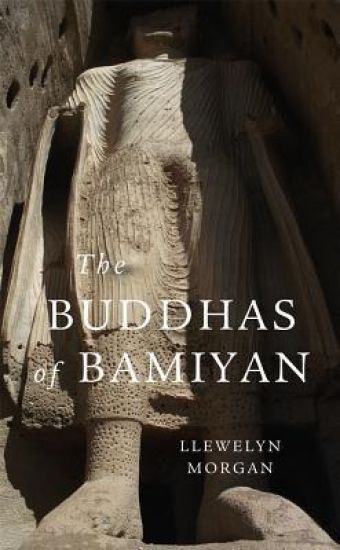
The Buddhas of Bamiyan

The Buddhas of Bamiyan

Llewelyn Morgan

HARVARD UNIVERSITY PRESS
2015
nidottu
For 1,400 years, two colossal figures of the Buddha overlooked the fertile Bamiyan Valley on the Silk Road in Afghanistan. Witness to a melting pot of passing monks, merchants, and armies, the Buddhas embodied the intersection of East and West, and their destruction by the Taliban in 2001 provoked international outrage. Llewelyn Morgan excavates the layers of meaning these vanished wonders hold for a fractured Afghanistan. Carved in the sixth and seventh centuries, the Buddhas represented a confluence of religious and artistic traditions from India, China, Central Asia, and Iran, and even an echo of Greek influence brought by Alexander the Great's armies. By the time Genghis Khan destroyed the town of Bamiyan six centuries later, Islam had replaced Buddhism as the local religion, and the Buddhas were celebrated as wonders of the Islamic world. Not until the nineteenth century did these figures come to the attention of Westerners. That is also the historical moment when the ground was laid for many of Afghanistan's current problems, including the rise of the Taliban and the oppression of the Hazara people of Bamiyan. In a strange twist, the Hazaras--descendants of the conquering Mongol hordes who stormed Bamiyan in the thirteenth century--had come to venerate the Buddhas that once dominated their valley as symbols of their very different religious identity. Incorporating the voices of the holy men, adventurers, and hostages throughout history who set eyes on the Bamiyan Buddhas, Morgan tells the history of this region of paradox and heartache.