Kirjojen hintavertailu. Mukana 11 342 296 kirjaa ja 12 kauppaa.

Kirjahaku

Etsi kirjoja tekijän nimen, kirjan nimen tai ISBN:n perusteella.

15 kirjaa tekijältä Lloyd Clark

Battle Zone Normandy: Operation Epsom

Battle Zone Normandy: Operation Epsom

Lloyd Clark

The History Press Ltd
2004
sidottu
Despite Monty's claims after the war that his intention was to 'fix', or hold, the enemy armour in the east while the Americans swept round from the west, Epsom was clearly designed for the British to achieve the decisive breakthrough in Normandy. An advance of six miles was made and Hill 112 was briefly captured. A company of 2nd Battalion, The Argyll & Sutherland Highlanders rushed a stone bridge at Tourmeauville, capturing it intact. For much of Epsom this bridge was the only crossing point over the Odon, and thus a considerable bottleneck. The threat of counter-attacks from the newly-arrived II SS Panzer Corps persuaded the British to withdraw from the east bank of the Odon. Hill 112 and Caen remained in German hands.
Battle Zone Normandy: Orne Bridgehead

Battle Zone Normandy: Orne Bridgehead

Lloyd Clark

The History Press Ltd
2004
sidottu
6th British Airborne Division's attacks on 'Pegasus' Bridge and the Merville Battery are remembered as two of the most remarkable actions which took place in Normandy on 6 June 1944. The division fought for far longer than just one day, however, achieving a great deal of success by securing the Allied left flank and creating a firm base from which a breakout into the French interior could be launched. The strengths, weaknesses and sheer drama of airborne warfare are all encapsulated in the opening week of the division's operations in Normandy as its lightly armed but highly trained and motivated troops sought to overcome a more heavily armed enemy desperate to unhinge the invasion.Starting with an examination of 6th Airborne Division, its plan and the German opposition, Lloyd Clark provides an overview of British operations east of the River Orne from the initial landings in the early hours of 6 June to the capture of Breville seven days later. The battlefield tours which follow include the famous and dramatic assaults on 'Pegasus' Bridge and the Merville Battery, but also the lesser known struggle to secure the British southern flank around Le Bas de Ranville, Longueval and St.Honorine on 6-7 June and the Battle of Breville on 12 June.
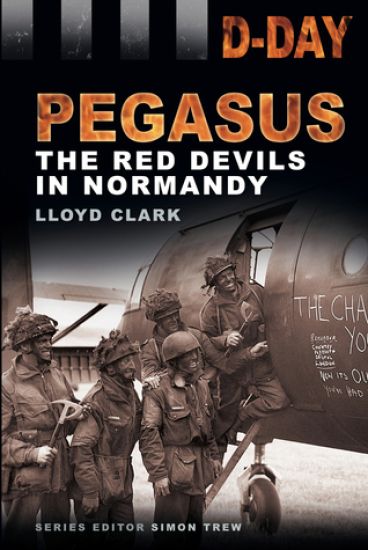
D-Day: Pegasus

D-Day: Pegasus

Lloyd Clark

The History Press Ltd
2012
nidottu
The strengths, weaknesses and sheer drama of airborne warfare are all encapsulated in 6th Airborne Division’s attacks on Pegasus Bridge and the Merville Battery in Normandy. The lightly armed but highly trained and motivated airborne troops sought to overcome a more heavily armed enemy desperate to unhinge the D-Day invasion. Starting with an examination of 6th Airborne Division, its plan and the German opposition, Lloyd Clark provides an overview of British operations east of the River Orne from the initial landings in the early hours of 6 June 1944 to the capture of Breville, seven days later. The battlefield tours that follow include not only the famous and dramatic assaults on Pegasus Bridge and the Merville Battery, but also the lesser known struggles to secure the British southern flank on 6-7 June and the Battle of Breville on 12 June. Packed with colour and detailed maps, these are the must-have guide for any armchair historian or battlefield tourist.
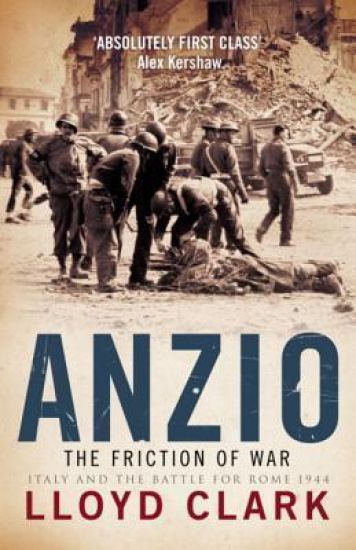
Anzio: The Friction of War

Anzio: The Friction of War

Lloyd Clark

Headline Review
2007
pokkari
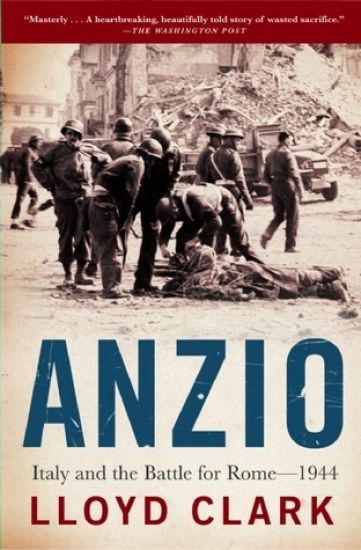
This is the story of the Anglo-American amphibious assault and subsequent battle on the Italian west coast at Anzio which was launched in January 1944 in a bold attempt to outflank the formidable German defences known as the 'Gustav Line'. ANZIO - THE FRICTION OF WAR outlines the strategic background to the offensive before detailing the landing, the development of an Allied defensive position, the battles in and around the perimeter, the stalemate, the breakout and the capture of Rome on 4 June 1944. While assessing the events at Anzio with the eye of an experienced military historian, Lloyd Clark also examines in detail the human response to the battle from high command to foot soldier. He also emphasises the German story - the first time this has ever been done.
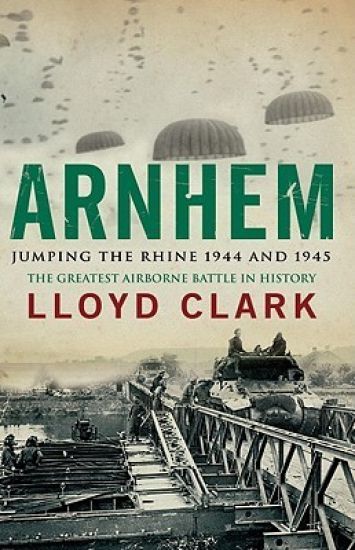
Arnhem: Jumping the Rhine 1944 & 1945

Arnhem: Jumping the Rhine 1944 & 1945

Lloyd Clark

Headline Review
2009
pokkari
An insightful and gripping account of the largest airborne operation in history. In September 1944, the river Rhine was a serious barrier to the advancing Allied armies in the West who were intent on charging Berlin and ending the war. Field Marshal Bernard Montgomery decided to utilise the First Allied Airborne Army consisting of British, American and Polish troops. Codenamed Operation Market Garden, 40,000 paratroopers were dropped behind enemy lines while ground forces linked to relieve them. But, due to bad weather and German resistance, the operation failed. In March 1945, asecond attempt was planned: Operation Varsity Plunder. This time the plan worked. Despite extremely heavy fighting, they cracked the German line.
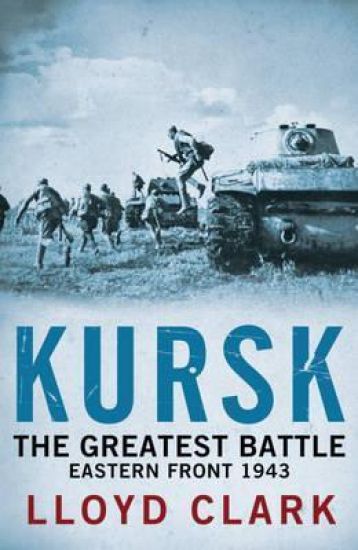
Kursk: The Greatest Battle

Kursk: The Greatest Battle

Lloyd Clark

Headline Review
2012
pokkari
5th July 1943: the greatest land battle of all time began around the town of Kursk in Russia. This epic confrontation between German and Soviet forces was one of the most important military engagements in history and epitomised 'total war'.It was also one of the most bloody, characterised by hideous excess and outrageous atrocities. The battle concluded with Germany having incurred nearly three million dead and the Soviet Union a staggering ten million. It was a monumental and decisive encounter of breathtaking intensity which became a turning point, not only on the Eastern Front, but in the Second World War as a whole. Using the very latest available archival material including the testimonies of veterans and providing strategic perspective alongside personal stories of front line fighting, Lloyd Clark has written a lucid, enthralling and heart-stopping account of this incredible battle.
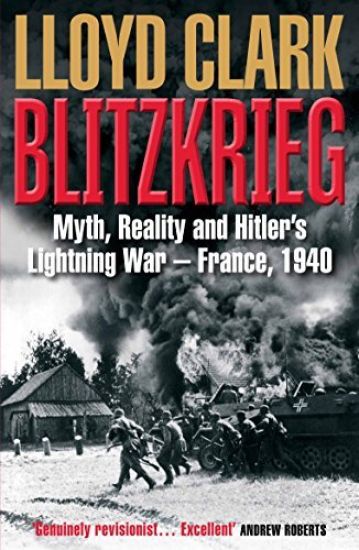
Blitzkrieg

Blitzkrieg

Lloyd Clark

Black Cat
2017
nidottu
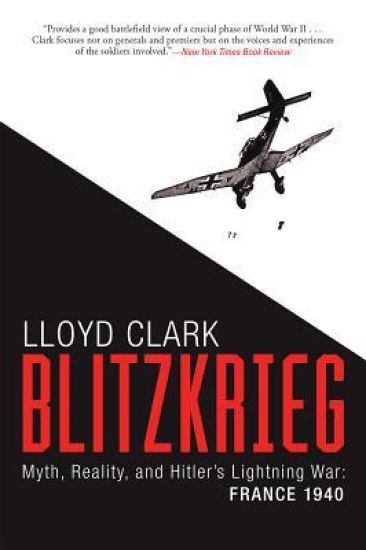
In the spring of 1940, Nazi Germany launched a military offensive in France and the Low Countries that married superb intelligence, the latest military thinking, and new technology. In just six weeks the Nazis outflanked the large French army, sewed chaos, and took Paris, achieving what the Germans had failed to accomplish in all four years of the First World War. The Fall of France was a stunning victory. It altered the balance of power in Europe in one stroke and convinced the entire world that the Nazi war machine was unstoppable. But as Lloyd Clark, a leading British military historian and academic, argues in Blitzkrieg, much of our understanding of this victory, and blitzkrieg itself, is based on myth. The tactic was not really new, and far from being a forgone victory, Hitler's invasion was incredibly risky and could easily have failed had the Allies been even slightly less inept or the Germans less fortunate. And while speed and mechanization were essential, ninety percent of Germany's ground forces were still reliant on horses, bicycles, and their own feet for transportation. Their surprise victory proved the apex of their achievement; far from being undefeatable, Clark argues, the campaign revealed Germany's vulnerabilities, lessons not learned by Hitler as he began to plan for the invasion of the Soviet Union. A definitive history of the events of 1940, Blitzkrieg is Lloyd Clark at his best.
Anzio

Anzio

Lloyd Clark

Grove Press / Atlantic Monthly Press
2007
nidottu
A noted military historian furnishes a gripping, in-depth account of the Allies' bloody assault on Anzio, in western Italy, during World War II, describing the long, difficult, and fierce campaign that eventually led to the successful capture of Rome and evaluating the costly mistakes that cost thousands of lives. Reprint.
The Battle of the Tanks

The Battle of the Tanks

Lloyd Clark

Black Cat
2012
nidottu
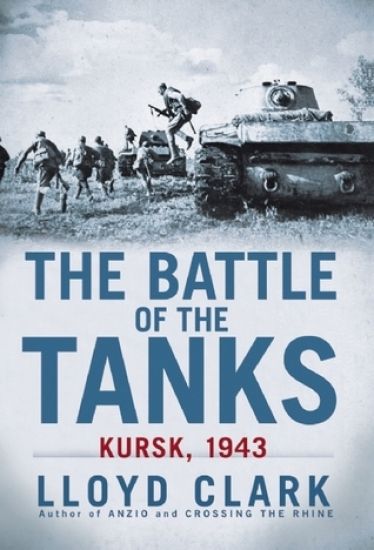
On July 5, 1943, the greatest land battle in history began when Nazi and Red Army forces clashed near the town of Kursk, on the western border of the Soviet Union. Code named "Operation Citadel," the German offensive would cut through the bulge in the eastern front that had been created following Germany's retreat at the battle of Stalingrad. But the Soviets, well-informed about Germany's plans through their network of spies, had months to prepare. Two million men supported by 6,000 tanks, 35,000 guns, and 5,000 aircraft convened in Kursk for an epic confrontation that was one of the most important military engagements in history, the epitome of "total war." It was also one of the most bloody, and despite suffering seven times more casualties, the Soviets won a decisive victory that became a turning point in the war. With unprecedented access to the journals and testimonials of the officers, soldiers, political leaders, and citizens who lived through it, The Battle of the Tanks is the definitive account of an epic showdown that changed the course of history.
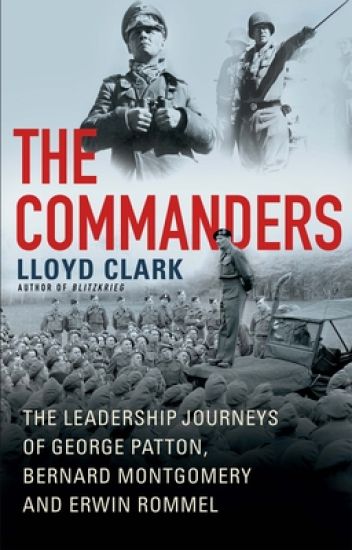
The Commanders

The Commanders

Lloyd Clark

GROVE PRESS / ATLANTIC MONTHLY PRESS
2022
sidottu
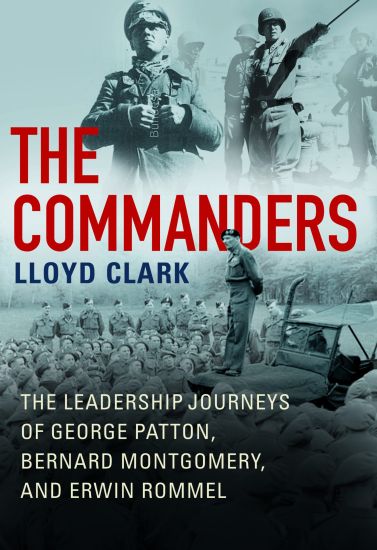
From an acclaimed military historian, the interlocking lives of three of the most important and consequential generals in World War IIBorn in the two decades prior to World War I, George Patton, Bernard Montgomery, and Erwin Rommel became among the most recognized and successful military leaders of the 20th century. However, as acclaimed military historian Lloyd Clark reveals in his penetrating and insightful braided chronicle of their lives, they charted very different, often interrupted, paths to their ultimate leadership positions commanding hundreds of thousands of troops during World War II and celebrated as heroes in the United States, Britain, and Germany.Patton was born into a military family and from an early age felt he was destined for glory; following a disjointed childhood, Montgomery found purpose and direction in a military academy; Rommel's father was a former officer, so his pursuit of a military career was logical. Having ascended to the middle ranks, each faced battle for the first time in World War I, a searing experience that greatly influenced their future approach to war and leadership. When war broke out again in 1939, Montgomery and Rommel were immediately engaged, while Patton chafed until the U.S. joined the Allies in 1942 and the three men, by then generals, collided in North Africa in 1943, and then again, climactically, in France after D-Day in 1944.Weaving letters, diary extracts, official reports, and other documents into his original narrative, recounting dramatic battles as they developed on the ground and at headquarters, Clark also explores the controversies that swirled around Patton, Montgomery, and Rommel throughout their careers, sometimes threatening to derail them. Ultimately, however, their unique abilities to bridge the space between leader and led cemented their legendary reputations.
The Commanders

The Commanders

Lloyd Clark

GROVE PRESS / ATLANTIC MONTHLY PRESS
2023
nidottu
From an acclaimed military historian, the interlocking lives of three of the most important and consequential generals in World War IIBorn in the two decades prior to World War I, George Patton, Bernard Montgomery, and Erwin Rommel became among the most recognized and successful military leaders of the 20th century. However, as acclaimed military historian Lloyd Clark reveals in his penetrating and insightful braided chronicle of their lives, they charted very different, often interrupted, paths to their ultimate leadership positions commanding hundreds of thousands of troops during World War II and celebrated as heroes in the United States, Britain, and Germany.Patton was born into a military family and from an early age felt he was destined for glory; following a disjointed childhood, Montgomery found purpose and direction in a military academy; Rommel's father was a former officer, so his pursuit of a military career was logical. Having ascended to the middle ranks, each faced battle for the first time in World War I, a searing experience that greatly influenced their future approach to war and leadership. When war broke out again in 1939, Montgomery and Rommel were immediately engaged, while Patton chafed until the U.S. joined the Allies in 1942 and the three men, by then generals, collided in North Africa in 1943, and then again, climactically, in France after D-Day in 1944.Weaving letters, diary extracts, official reports, and other documents into his original narrative, recounting dramatic battles as they developed on the ground and at headquarters, Clark also explores the controversies that swirled around Patton, Montgomery, and Rommel throughout their careers, sometimes threatening to derail them. Ultimately, however, their unique abilities to bridge the space between leader and led cemented their legendary reputations.
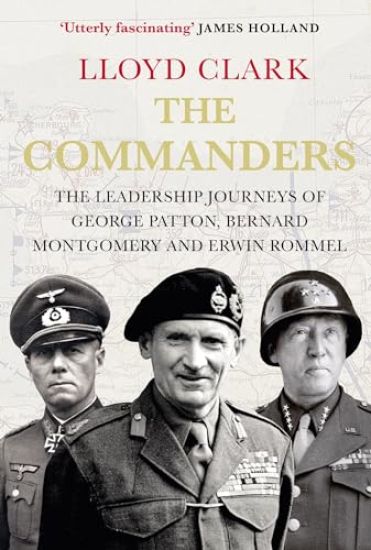
The Commanders

The Commanders

Lloyd Clark

Atlantic Books
2023
nidottu
'Utterly fascinating.' James Holland'First-class... The intense rivalry of Monty and Patton is one of the great stories of the war, and has never been told better.' Andrew RobertsBorn in the two decades prior to World War I, George Patton, Bernard Montgomery and Erwin Rommel became among the most recognized and successful military leaders of the twentieth century. However, as acclaimed military historian Lloyd Clark reveals in his penetrating and insightful chronicle of their lives, they charted very different, often interrupted, paths to their ultimate leadership positions commanding hundreds of thousands of troops during World War II.Each faced battle for the first time in World War I, a searing experience that greatly influenced their future approach to war and leadership. When war broke out again in 1939, Montgomery and Rommel were immediately engaged, while Patton chafed until the US joined the Allies in 1942 and the three men, by then generals, collided in North Africa in 1943, and then again, climactically, in France after D-Day in 1944.Weaving letters, diary extracts, official reports and other documents into his original narrative, recounting dramatic battles as they developed on the ground and at headquarters, Clark also explores the controversies that swirled around Patton, Montgomery and Rommel throughout their careers, sometimes threatening to derail them. Ultimately, however, their unique abilities to bridge the space between leader and led cemented their legendary reputations.
Blitzkrieg

Blitzkrieg

Lloyd Clark

Atlantic Books
2017
nidottu
The German campaign in France during the summer of 1940 was pivotal to Hitler's ambitions and fundamentally affected the course of the Second World War. Having squabbled about fighting methods right up to the start of the campaign, the German forces provided the Führer with a swift, efficient and decisive military victory over the Allied forces.In achieving in just six weeks what their fathers had failed to accomplish during the four years of the First World War, Germany altered the balance of power in Europe at a stroke. Yet, as Lloyd Clark shows in this enthralling new book, it was far from a foregone conclusion. Blitzkrieg tells the story of the campaign, while highlighting the key technologies, decisions and events that led to German success, and details the mistakes, good fortune and chronic weaknesses in their planning process and approach to war fighting. There are also compelling portraits of the officers who played key roles, including Heinz Guderian, Erwin Rommel, Kurt Student, Charles de Gaulle and Bernard Montgomery.Clark argues that far from being undefeatable, the France 1940 campaign revealed Germany and its armed forces to be highly vulnerable - a fact dismissed by Hitler as he began to plan for his invasion of the Soviet Union - and offers a gripping reassessment of the myths that have built up around one of the Second World War's greatest military victories.