Kirjojen hintavertailu. Mukana 11 699 587 kirjaa ja 12 kauppaa.

Kirjahaku

Etsi kirjoja tekijän nimen, kirjan nimen tai ISBN:n perusteella.

7 kirjaa tekijältä Lois Presser

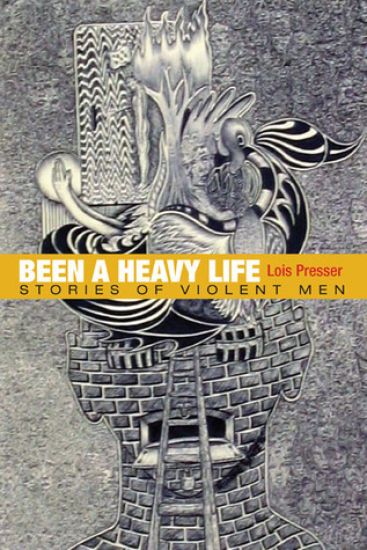
Been a Heavy Life

Been a Heavy Life

Lois Presser

University of Illinois Press
2008
nidottu
In this groundbreaking work, Lois Presser investigates the life stories of men who have perpetrated violence. She applies insights from across the academy to in-depth interviews with men who shared their accounts of how they became the people we most fear--those who rape, murder, assault, and rob, often repeatedly. Been a Heavy Life provides the discipline of criminology with two crucial frameworks: one for critically evaluating the construction of offenders’ own stories, and one for grasping the cultural meta-narratives that legitimize violence. For social scientists generally, this book offers a vivid demonstration of just how dynamic and contingent self-narratives are.
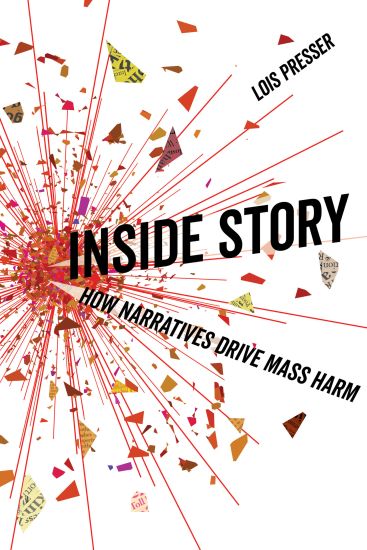
Inside Story

Inside Story

Lois Presser

University of California Press
2018
sidottu
Stories have persuasive powers: they can influence how a person thinks and acts. Inside Story explores the capacity of stories to direct our thinking, heighten our emotions, and thereby motivate people to do harm to others and to tolerate harm done by others. From terrorist violence to “mere” complacency with institutionalized harm, the book weds case study to cross-disciplinary theory. It builds upon timely work in the field of narrative criminology and provides a thorough analysis of how stories can promote or inhibit harmful action. By offering a sociological analysis of the emotional yet intersubjective experience of dangerous stories, the book fleshes out the perplexing mechanics of cultural influence on crime and other forms of harm.
Inside Story

Inside Story

Lois Presser

University of California Press
2018
pokkari
Stories have persuasive powers: they can influence how a person thinks and acts. Inside Story explores the capacity of stories to direct our thinking, heighten our emotions, and thereby motivate people to do harm to others and to tolerate harm done by others. From terrorist violence to “mere” complacency with institutionalized harm, the book weds case study to cross-disciplinary theory. It builds upon timely work in the field of narrative criminology and provides a thorough analysis of how stories can promote or inhibit harmful action. By offering a sociological analysis of the emotional yet intersubjective experience of dangerous stories, the book fleshes out the perplexing mechanics of cultural influence on crime and other forms of harm.
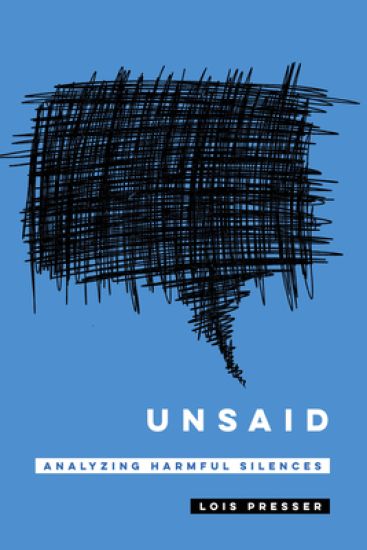
Unsaid

Unsaid

Lois Presser

University of California Press
2022
sidottu
Harm takes shape in and through what is suppressed, left out, or taken for granted. This book is a guide to understanding and uncovering what is left unsaid—whether concealed or silenced, presupposed or excluded. Drawing on a variety of real-world examples, narrative criminologist Lois Presser outlines how to determine what or who is excluded from textual materials. With strategies that can be added to the tool kits of social researchers and activists alike, Unsaid provides a richly layered approach to analyzing and dismantling the power structures that both create and arise from what goes without saying.
Unsaid

Unsaid

Lois Presser

University of California Press
2022
pokkari
Harm takes shape in and through what is suppressed, left out, or taken for granted. This book is a guide to understanding and uncovering what is left unsaid—whether concealed or silenced, presupposed or excluded. Drawing on a variety of real-world examples, narrative criminologist Lois Presser outlines how to determine what or who is excluded from textual materials. With strategies that can be added to the tool kits of social researchers and activists alike, Unsaid provides a richly layered approach to analyzing and dismantling the power structures that both create and arise from what goes without saying.
Why We Harm

Why We Harm

Lois Presser

Rutgers University Press
2013
nidottu
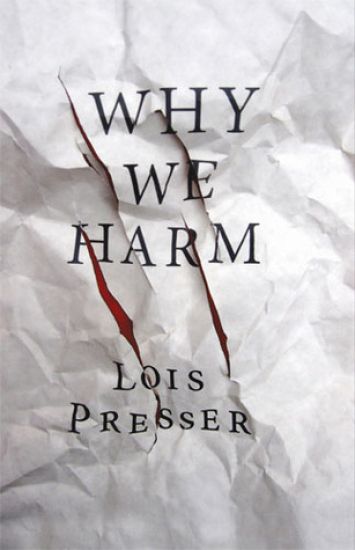
2014 Choice Outstanding Academic Title Criminologists are primarily concerned with the analysis of actions that violate existing laws. But a growing number have begun analyzing crimes as actions that inflict harm, regardless of the applicability of legal sanctions. Even as they question standard definitions of crime as law-breaking, scholars of crime have few theoretical frameworks with which to understand the etiology of harmful action. In Why We Harm, Lois Presser scrutinizes accounts of acts as diverse as genocide, environmental degradation, war, torture, terrorism, homicide, rape, and meat-eating in order to develop an original theoretical framework with which to consider harmful actions and their causes. In doing so, this timely book presents a general theory of harm, revealing the commonalities between actions that impose suffering and cause destruction. Harm is built on stories in which the targets of harm are reduced to one-dimensional characters—sometimes a dangerous foe, sometimes much more benign, but still a projection of our own concerns and interests. In our stories of harm, we are licensed to do the harmful deed and, at the same time, are powerless to act differently. Chapter by chapter, Presser examines statements made by perpetrators of a wide variety of harmful actions. Appearing vastly different from one another at first glance, Presser identifies the logics they share that motivate, legitimize, and sustain them. From that point, she maps out strategies for reducing harm.
Why We Harm

Why We Harm

Lois Presser

Rutgers University Press
2013
sidottu
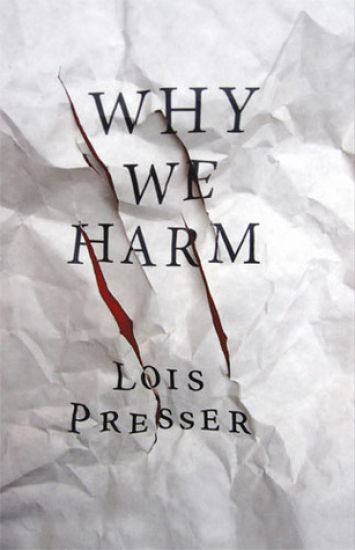
2014 Choice Outstanding Academic Title Criminologists are primarily concerned with the analysis of actions that violate existing laws. But a growing number have begun analyzing crimes as actions that inflict harm, regardless of the applicability of legal sanctions. Even as they question standard definitions of crime as law-breaking, scholars of crime have few theoretical frameworks with which to understand the etiology of harmful action. In Why We Harm, Lois Presser scrutinizes accounts of acts as diverse as genocide, environmental degradation, war, torture, terrorism, homicide, rape, and meat-eating in order to develop an original theoretical framework with which to consider harmful actions and their causes. In doing so, this timely book presents a general theory of harm, revealing the commonalities between actions that impose suffering and cause destruction. Harm is built on stories in which the targets of harm are reduced to one-dimensional characters—sometimes a dangerous foe, sometimes much more benign, but still a projection of our own concerns and interests. In our stories of harm, we are licensed to do the harmful deed and, at the same time, are powerless to act differently. Chapter by chapter, Presser examines statements made by perpetrators of a wide variety of harmful actions. Appearing vastly different from one another at first glance, Presser identifies the logics they share that motivate, legitimize, and sustain them. From that point, she maps out strategies for reducing harm.