Kirjojen hintavertailu. Mukana 11 244 527 kirjaa ja 12 kauppaa.

Kirjahaku

Etsi kirjoja tekijän nimen, kirjan nimen tai ISBN:n perusteella.

6 kirjaa tekijältä Lorett Treese

Valley Forge

Valley Forge

Lorett Treese

Pennsylvania State University Press
1995
sidottu
More than four million people a year visit Valley Forge, one of America's most celebrated historic sites. Here, amid the rolling hills of southeastern Pennsylvania, visitors can pass through the house which served as Washington's Headquarters during the famous winter encampment of 1777–1778. Others picnic and jog in the huge park, complete with monuments, recreated log huts, and modern visitor center, all built to pay tribute to the Valley Forge story. In this lively book, Lorett Treese shows how Valley Forge evolved into the tourist mecca that it is today. In the process, she uses Valley Forge as a means for understanding how Americans view their own past. Treese explores the origins of popular images associated with Valley Forge, such as George Washington kneeling in the snow to seek divine assistance. She places Valley Forge in the context of the historic preservation movement as the site became Pennsylvania's first state park in 1893. She studies its "Era of Monuments" and the movement to "restore" Valley Forge in the spirit of Rockefeller's enormously popular colonial Williamsburg. Treese describes a Valley Forge fraught with controversy over the appropriate appearance and use of a place so revered. One such controversy, the "hot dog war," a brief but intense battle over concession stands, was spawned by Americans' changing perceptions of how a national park was to be used. The volatile Vietnam era prompted the state park commission to establish its "Subcommittee on Sex, Hippies, and Whiskey Swillers" to investigate park regulation infractions. Even today, people differ over exactly what happened at Valley Forge during the winter of 1777–1778. The modern visitor sees the remains of over a century of commemoration, competition, and contention. The result, Treese shows, is a historic site that may reveal more about succeeding history than about Washington's army. This book will give its readers a new way to look at Valley Forge—and all historic sites.
Valley Forge

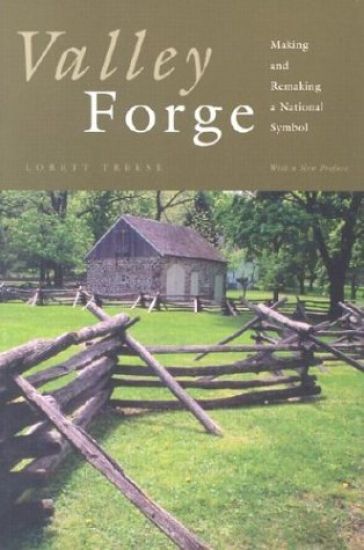
Valley Forge

Lorett Treese

Pennsylvania State University Press
1995
pokkari
More than four million people a year visit Valley Forge, one of America's most celebrated historic sites. Here, amid the rolling hills of southeastern Pennsylvania, visitors can pass through the house which served as Washington's Headquarters during the famous winter encampment of 1777–1778. Others picnic and jog in the huge park, complete with monuments, recreated log huts, and modern visitor center, all built to pay tribute to the Valley Forge story. In this lively book, Lorett Treese shows how Valley Forge evolved into the tourist mecca that it is today. In the process, she uses Valley Forge as a means for understanding how Americans view their own past. Treese explores the origins of popular images associated with Valley Forge, such as George Washington kneeling in the snow to seek divine assistance. She places Valley Forge in the context of the historic preservation movement as the site became Pennsylvania's first state park in 1893. She studies its "Era of Monuments" and the movement to "restore" Valley Forge in the spirit of Rockefeller's enormously popular colonial Williamsburg. Treese describes a Valley Forge fraught with controversy over the appropriate appearance and use of a place so revered. One such controversy, the "hot dog war," a brief but intense battle over concession stands, was spawned by Americans' changing perceptions of how a national park was to be used. The volatile Vietnam era prompted the state park commission to establish its "Subcommittee on Sex, Hippies, and Whiskey Swillers" to investigate park regulation infractions. Even today, people differ over exactly what happened at Valley Forge during the winter of 1777–1778. The modern visitor sees the remains of over a century of commemoration, competition, and contention. The result, Treese shows, is a historic site that may reveal more about succeeding history than about Washington's army. This book will give its readers a new way to look at Valley Forge—and all historic sites.
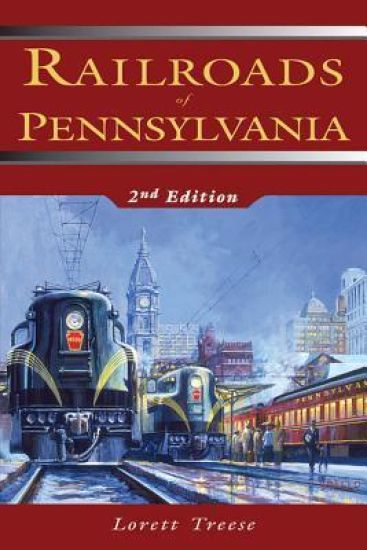
Railroads of Pennsylvania

Railroads of Pennsylvania

Lorett Treese

Stackpole Books
2012
nidottu
"Informative and very satisfying to read." --Library Journal"For those of you who cannot get enough of railroad history, this book will brighten your day." --LivesteamCompletely revised and updated edition of this best-sellerRegional histories of the great railroads and relics of rail cultureRail stories of the people and events that shaped historyRails-to-Trails paths, tourist attractions, and other traveler informationIncludes 10 maps for easy reference
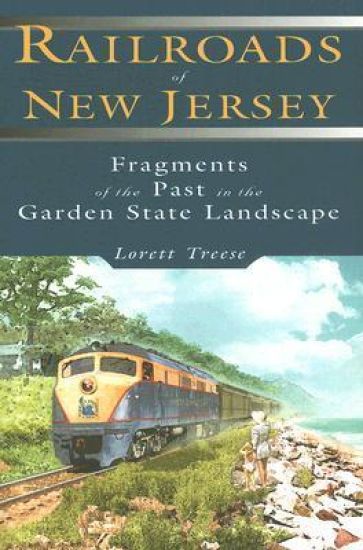
Railroads of New Jersey

Railroads of New Jersey

Lorett Treese

Stackpole Books
2006
pokkari
Dividing the state into regions, the author recounts the stories of the people and events that shaped the state's railroad history, explores the major phases of the industry's development, and identifies the state's rail-culture relics - steam and diesel locomotives, routes, bridges, stations, and landmarks, as well as tourist railroad lines and Rails to Trails paths.
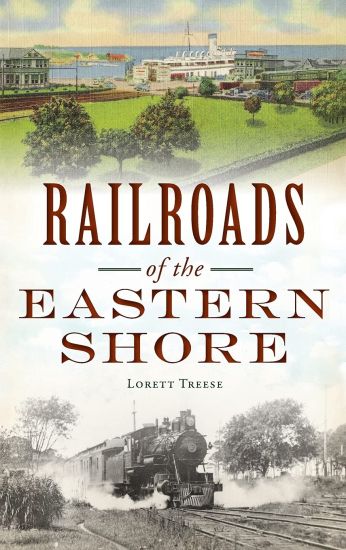
Railroads of the Eastern Shore

Railroads of the Eastern Shore

Lorett Treese

History PR
2021
sidottu
The history of the Delmarva Peninsula is inextricably entwined with the story of its railroads. The earliest railroads were short, locally funded lines. The dream to connect Norfolk directly to Eastern Seaboard cities farther north was first realized by the New York, Philadelphia & Norfolk Railroad in the 1880s. The line ran north-south along the peninsula to Cape Charles City, Virginia, where freight cars were loaded onto barges for the trip across the Chesapeake Bay. This line was eventually absorbed by the giant Pennsylvania Railroad, and the ferry service was eclipsed when the Chesapeake Bay Bridge-Tunnel was completed in 1964. For more than a century, though, railroads played a critical role in the development of the Eastern Shore. Regional historian Lorett Treese tells this story.