Kirjojen hintavertailu. Mukana 12 284 415 kirjaa ja 12 kauppaa.

Kirjahaku

Etsi kirjoja tekijän nimen, kirjan nimen tai ISBN:n perusteella.

6 kirjaa tekijältä Lorna Hardwick

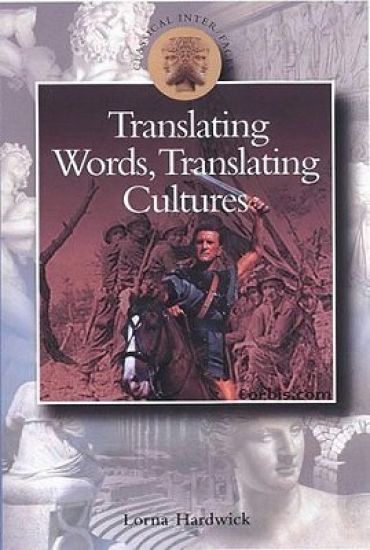
Translating Words, Translating Cultures

Translating Words, Translating Cultures

Lorna Hardwick

Bristol Classical Press
2000
pokkari
Never have there been so many different types of translations of Greek and Latin literature into English. Most people experience Homer and Greek tragedy for the first time through translations. New versions of Vergil and Ovid have become best sellers. This book examines the literary and cultural environment underlying the various kinds of translation - from 'faithful' and 'equivalent' through 'imitation' to 'adaptation' and 'version' - discussing the extent to which translations have been regarded as creative work in their own right and their impact in the work of modern writers such as Harrison, Heaney, Hughes and Walcott. Key themes include the challenge presented by translations to conventional interpretations of the classical canon; the implications of translating across genres - for example in the staging of epic; and the role of translations in twentieth-century conflicts. Lorna Hardwick suggests that translations from Greek and Latin literature are catalysts in the refiguring of both poetic and political awareness and that in transplanting myths and metaphors into disparate cultures, translations energise new senses of cultural identity.

Reception Studies: Volume 49

Reception Studies: Volume 49

Lorna Hardwick

Cambridge University Press
2025
pokkari
The texts, images and events of the ancient world have been used both as sources of authority and exploitation in politics, culture and society and as icons of resistance and contest. How classical culture is transplanted into new contexts, how texts are translated and performed and how Greek and Roman values are perceived and used continues to be a force in current debates. The main concepts and explanatory frameworks used in the field are introduced through chapters on reception within antiquity and case studies of more recent receptions from Africa, the Caribbean, Europe and the USA. This revised second edition will be of use to all those interested in the relationship between the arts, culture and society as well as to students and teachers of classical subjects and of literature, drama, film and comparative cultural studies.
Rupert Brooke, Charles Sorley, Isaac Rosenberg, and Wilfred Owen

Rupert Brooke, Charles Sorley, Isaac Rosenberg, and Wilfred Owen

Lorna Hardwick; Stephen Harrison; Elizabeth Vandiver

Oxford University Press
2024
sidottu
Rupert Brooke, Wilfred Owen, Isaac Rosenberg, and Charles Sorley all died in the First Word War. They came from diverse social, educational, and cultural backgrounds, but for all of the writers, engagement with Greek and Roman antiquity was decisive in shaping their war poetry. The world views and cultural hinterlands of Brooke and Sorley were framed by the Greek and Latin texts they had studied at school, whereas for Owen, who struggled with Latin, classical texts were a part of his aspirational literary imagination. Rosenberg's education was limited but he encountered some Greek and Roman literature through translations, and through mediations in English literature. The various ways in which the poets engaged with classical literature are analysed in the commentaries, which are designed to be accessible to classicists and to users from other subject areas. The extensive range of connections made by the poets and by subsequent readers is explained in the Introduction to the volume. The commentaries illuminate relationships between the poems and attitudes to the war at the time, in the immediate post-war years, and subsequently. They also probe how individual poems reveal various facets of the poetry of unease, the poetry of survival, and the poetics of war and ecology. References to the accompanying online Oxford Classical Receptions Commentaries will enable readers to follow up their special interests. This volume differs from the shorter volume Greek and Roman Antiquity in First World War Poetry: Making Connections in that it covers the whole output of the four poets, and not just their war poems.
Greek and Roman Antiquity in First World War Poetry

Greek and Roman Antiquity in First World War Poetry

Lorna Hardwick; Stephen Harrison; Elizabeth Vandiver

Oxford University Press
2024
sidottu
Rupert Brooke, Wilfred Owen, Isaac Rosenberg, and Charles Sorley all died in the First Word War. They came from diverse social, educational, and cultural backgrounds, but for all of the writers, engagement with Greek and Roman antiquity was decisive in shaping their war poetry. The world views and cultural hinterlands of Brooke and Sorley were framed by the Greek and Latin texts they had studied at school, whereas for Owen, who struggled with Latin, classical texts were a part of his aspirational literary imagination. Rosenberg's education was limited but he encountered some Greek and Roman literature through translations, and through mediations in English literature. The various ways in which the poets engaged with classical literature are analysed in the commentaries, which are designed to be accessible to classicists and to users from other subject areas. The extensive range of connections made by the poets and by subsequent readers is explained in the Introduction to the volume. The commentaries illuminate relationships between the poems and attitudes to the war at the time, in the immediate post-war years, and subsequently. They also probe how individual poems reveal various facets of the poetry of unease, the poetry of survival, and the poetics of war and ecology.
Greek and Roman Antiquity in First World War Poetry

Greek and Roman Antiquity in First World War Poetry

Lorna Hardwick; Stephen Harrison; Elizabeth Vandiver

Oxford University Press
2024
nidottu
Rupert Brooke, Wilfred Owen, Isaac Rosenberg, and Charles Sorley all died in the First Word War. They came from diverse social, educational, and cultural backgrounds, but for all of the writers, engagement with Greek and Roman antiquity was decisive in shaping their war poetry. The world views and cultural hinterlands of Brooke and Sorley were framed by the Greek and Latin texts they had studied at school, whereas for Owen, who struggled with Latin, classical texts were a part of his aspirational literary imagination. Rosenberg's education was limited but he encountered some Greek and Roman literature through translations, and through mediations in English literature. The various ways in which the poets engaged with classical literature are analysed in the commentaries, which are designed to be accessible to classicists and to users from other subject areas. The extensive range of connections made by the poets and by subsequent readers is explained in the Introduction to the volume. The commentaries illuminate relationships between the poems and attitudes to the war at the time, in the immediate post-war years, and subsequently. They also probe how individual poems reveal various facets of the poetry of unease, the poetry of survival, and the poetics of war and ecology.
Remaking the Classics

Remaking the Classics

Lorna Hardwick; Stephen Harrison; Ruth Hazel; Leanne Hunnings; Sheila Murnaghan; Deborah Roberts; Chris Stray; Elizabeth Vandiver; Amanda Wrigley

Bristol Classical Press
2007
sidottu
This important collection of essays both contributes to the expanding field of classical reception studies and seeks to extend it. Focusing on nineteenth- and twentieth-century Britain, it looks at a range of different genres (epic, novel, lyric, tragedy, political pamphlet). Within the published texts considered, the usual range of genres dealt with elsewhere is extended by chapters on books for children, and those in which childhood and memories of childhood are informed by antiquity; and also by a multi-genre case study of a highly unusual subject, Spartacus. "Remaking the Classics" also goes beyond books to dramatic performance, and beyond the theatre to radio - a medium of enormous power and influence from the 1920s to the 1960s, whose role in the reception of classics is largely unexplored. The variety of genres and of media considered in the book is balanced both by the focus on Britain in a specific time period, and by an overlap of subject-matter between chapters: the three chapters on twentieth-century drama, for example, range from performance strategies to post-colonial contexts. The book thus combines the consolidation of a field with an attempt to push it in new and exciting directions.