Kirjojen hintavertailu. Mukana 11 717 486 kirjaa ja 12 kauppaa.

Kirjahaku

Etsi kirjoja tekijän nimen, kirjan nimen tai ISBN:n perusteella.

8 kirjaa tekijältä Lorna Hutson

Thomas Nashe in Context

Thomas Nashe in Context

Lorna Hutson

Clarendon Press
1989
sidottu
Challenging the tendency to disparage Nashe's writing as the product of an eccentric sensibility and to explain his texts in journalistic terms more appropriate to modern commercial publishing, this work provides an entirely new interpretation of the economic context of sixteenth-century literature. Lorna Hutson reveals hitherto overlooked links between humanist approaches to the literary text and the transformation of the English economy through humanist-inspired policies of ethical and social reform; from this context, Nashe's textual prodigality emerges as an assault upon the contemporary impoverishment of literary activity caused by the political over-valuing of the printed word. Generic precedents turn out to be festive; each of Nashe's apparently unstructured pamphlets derives shaping energy from traditions of popular-festive mockery. The pamphlets bring an older conception of seasonal prosperity into subversive dialogue with the newer discourse of provident individualism. For Nashe, stylistic experiment is shown to mean more than a choice of style; it is, rather, the expression of an intricate, socially engaged imagination.
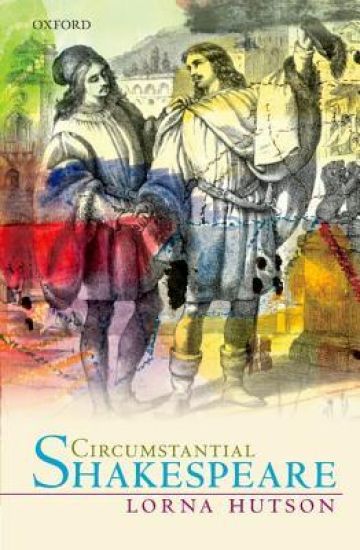
Circumstantial Shakespeare

Circumstantial Shakespeare

Lorna Hutson

Oxford University Press
2018
nidottu
Shakespeare's characters are thought to be his greatest achievement--imaginatively autonomous, possessed of depth and individuality, while his plots are said to be second-hand and careless of details of time and place. This view has survived the assaults of various literary theories and has even, surprisingly, been revitalized by the recent emphasis on the collaborative nature of early modern theatre. But belief in the autonomous imaginative life of Shakespeare's characters depends on another unexamined myth: the myth that Shakespeare rejected neoclassicism, playing freely with theatrical time and place. Circumstantial Shakespeare explodes these venerable critical commonplaces. Drawing on sixteenth-century rhetorical pedagogy, it reveals the importance of topics of circumstance (of Time, Place, and Motive, etc.) in the conjuring of compelling narratives and vivid mental images. 'Circumstances' -- which we now think of as incalculable contingencies -- were originally topics of forensic inquiry into human intention or passion. In drawing on the Roman forensic tradition of circumstantial proof, Shakespeare did not ignore time and place. His brilliant innovation was to use the topics of circumstance to imply offstage actions, times and places in terms of the motives and desires we attribute to the characters. His plays thus create both their own vivid and coherent dramatic worlds and a sense of the unconscious feelings of characters inhabiting them. Circumstantial Shakespeare offers new readings of Romeo and Juliet, King Lear, Lucrece, Two Gentlemen of Verona and Macbeth, as well as new interpretations of Sackville and Norton's Gorboduc and Beaumont and Fletcher's The Maid's Tragedy. It engages with eighteenth-century Shakespeare criticism, contemporary Shakespeare criticism, semiotics of theatre, Roman forensic rhetoric, humanist pedagogy, the prehistory of modern probability, psychoanalytic criticism and sixteenth-century constitutional thought.
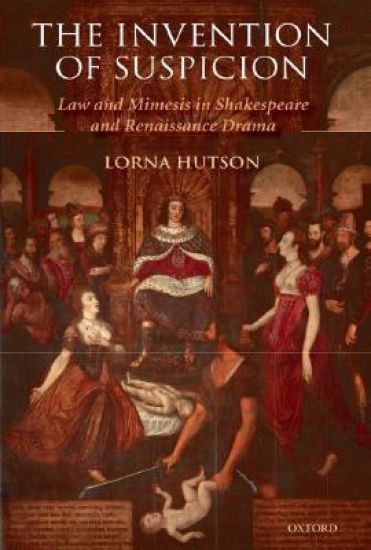
The Invention of Suspicion

The Invention of Suspicion

Lorna Hutson

Oxford University Press
2007
sidottu
The Invention of Suspicion argues that the English justice system underwent changes in the sixteenth century that, because of the system's participatory nature, had a widespread effect and a decisive impact on the development of English Renaissance drama. These changes gradually made evidence evaluation a popular skill: justices of peace and juries were increasingly required to weigh up the probabilities of competing narratives of facts. At precisely the same time, English dramatists were absorbing, from Latin legal rhetoric and from Latin comedy, poetic strategies that enabled them to make their plays more persuasively realistic, more 'probable'. The result of this enormously rich conjunction of popular legal culture and ancient forensic rhetoric was a drama in which dramatis personae habitually gather evidence and 'invent' arguments of suspicion and conjecture about one another, thus prompting us, as readers and audience, to reconstruct this 'evidence' as stories of characters' private histories and inner lives. In this drama, people act in uncertainty, inferring one another's motives and testing evidence for their conclusions. As well as offering an overarching account of how changes in juridical epistemology relate to post-Reformation drama, this book examines comic dramatic writing associated with the Inns of Court in the overlooked decades of the 1560s and 70s. It argues that these experiments constituted an influential sub-genre, assimilating the structures of Roman comedy to current civic and political concerns with the administration of justice. This sub-genre's impact may be seen in Shakespeare's early experiments in revenge tragedy, history play and romance comedy, in Titus Andronicus, Henry VI and The Comedy of Errors , as well as Jonson's Every Man in his Humour, Bartholomew Fair and The Alchemist. The book ranges from mid-fifteenth century drama, through sixteenth century interludes to the drama of the 1590s and 1600s. It draws on recent research by legal historians, and on a range of legal-historical sources in print and manuscript.
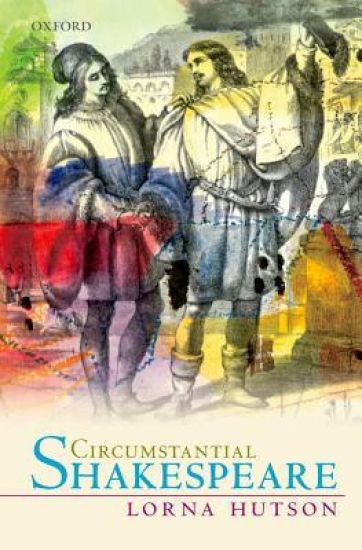
Circumstantial Shakespeare

Circumstantial Shakespeare

Lorna Hutson

Oxford University Press
2015
sidottu
Shakespeare's characters are thought to be his greatest achievement--imaginatively autonomous, possessed of depth and individuality, while his plots are said to be second-hand and careless of details of time and place. . This view has survived the assaults of various literary theories and has even, surprisingly, been revitalized by the recent emphasis on the collaborative nature of early modern theatre. But belief in the autonomous imaginative life of Shakespeare's characters depends on another unexamined myth: the myth that Shakespeare rejected neoclassicism, playing freely with theatrical time and place. Circumstantial Shakespeare explodes these venerable critical commonplaces. Drawing on sixteenth-century rhetorical pedagogy, it reveals the importance of topics of circumstance (of Time, Place and Motive, etc.) in the conjuring of compelling narratives and vivid mental images. 'Circumstances'--which we now think of as incalculable contingencies--were originally topics of forensic inquiry into human intention or passion. In drawing on the Roman forensic tradition of circumstantial proof, Shakespeare did not ignore time and place. His brilliant innovation was to use the topics of circumstance to imply offstage actions, times and places in terms of the motives and desires we attribute to the characters. His plays thus create both their own vivid and coherent dramatic worlds and a sense of the unconscious feelings of characters inhabiting them. Circumstantial Shakespeare offers new readings of Romeo and Juliet, King Lear, Lucrece, Two Gentlemen of Verona and Macbeth, as well as new interpretations of Sackville and Norton's Gorboduc and Beaumont and Fletcher's The Maid's Tragedy. It engages with eighteenth-century Shakespeare criticism, contemporary Shakespeare criticism, semiotics of theatre, Roman forensic rhetoric, humanist pedagogy, the prehistory of modern probability, psychoanalytic criticism and sixteenth-century constitutional thought.
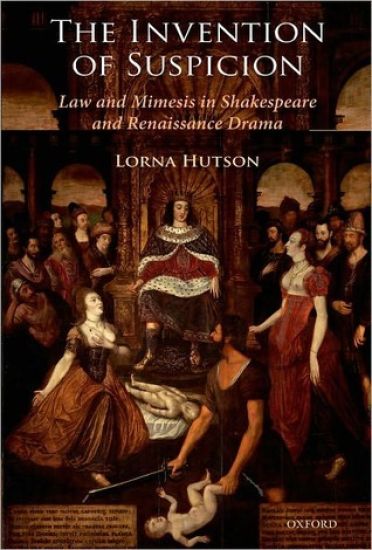
The Invention of Suspicion

The Invention of Suspicion

Lorna Hutson

Oxford University Press
2011
nidottu
The Invention of Suspicion argues that the English justice system underwent changes in the sixteenth century that, because of the system's participatory nature, had a widespread effect and a decisive impact on the development of English Renaissance drama. These changes gradually made evidence evaluation a popular skill: justices of peace and juries were increasingly required to weigh up the probabilities of competing narratives of facts. At precisely the same time, English dramatists were absorbing, from Latin legal rhetoric and from Latin comedy, poetic strategies that enabled them to make their plays more persuasively realistic, more 'probable'. The result of this enormously rich conjunction of popular legal culture and ancient forensic rhetoric was a drama in which dramatis personae habitually gather evidence and 'invent' arguments of suspicion and conjecture about one another, thus prompting us, as readers and audience, to reconstruct this 'evidence' as stories of characters' private histories and inner lives. In this drama, people act in uncertainty, inferring one another's motives and testing evidence for their conclusions. As well as offering an overarching account of how changes in juridical epistemology relate to post-Reformation drama, this book examines comic dramatic writing associated with the Inns of Court in the overlooked decades of the 1560s and 70s. It argues that these experiments constituted an influential sub-genre, assimilating the structures of Roman comedy to current civic and political concerns with the administration of justice. This sub-genre's impact may be seen in Shakespeare's early experiments in revenge tragedy, history play and romance comedy, in Titus Andronicus, Henry VI and The Comedy of Errors, as well as Jonson's Every Man in his Humour, Bartholomew Fair and The Alchemist. The book ranges from mid-fifteenth century drama, through sixteenth century interludes to the drama of the 1590s and 1600s. It draws on recent research by legal historians, and on a range of legal-historical sources in print and manuscript.
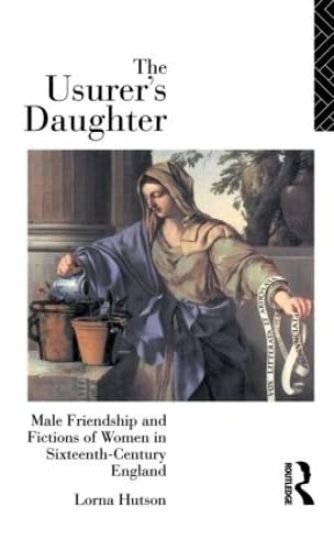
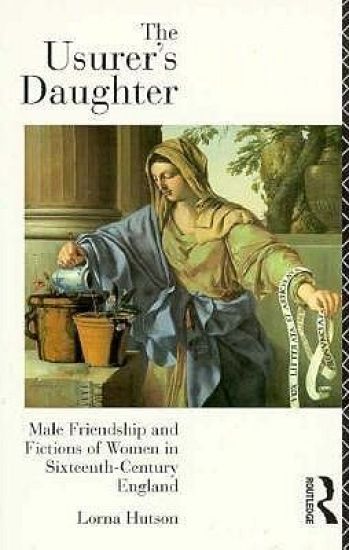
The Usurer's Daughter

The Usurer's Daughter

Lorna Hutson

Routledge
1994
sidottu
In a bold and brilliantly persuasive series of moves, Lorna Hutson draws upon new historicist and feminist theories to examine closely Renaissance literature and the cultural impact of the humanist project.The Usurer's Daughter: * provides startling new readings of Shakespeare * takes an entirely new approach to classical scholarship * focuses attention on the central importance of the history of the representation of women * illuminates how social relations between men were textualised during the early modern period.
The Usurer's Daughter

The Usurer's Daughter

Lorna Hutson

Routledge
1997
nidottu
In a bold and brilliantly persuasive series of moves, Lorna Hutson draws upon new historicist and feminist theories to examine closely Renaissance literature and the cultural impact of the humanist project.The Usurer's Daughter: * provides startling new readings of Shakespeare * takes an entirely new approach to classical scholarship * focuses attention on the central importance of the history of the representation of women * illuminates how social relations between men were textualised during the early modern period.
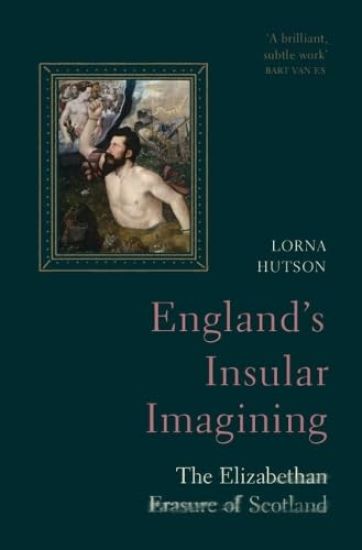
England's Insular Imagining

England's Insular Imagining

Lorna Hutson

Cambridge University Press
2023
sidottu
How have the English conceived of Scotland? Lorna Hutson's book is an essential intervention in the contested narrative of British nationhood. It argues that England deployed a mythical 'British History' in pursuing dominion over its northern neighbour: initially through waging war, and then striving to make the very idea of Scotland vanish in new figurations of sea-sovereignty. The author explores English attempts at conquest in the 1540s, revealing how justifications of overlordship mutated into literary, legal and cartographic ploys to erase Scotland-as-kingdom. Maps, treatises and military propaganda are no less imaginative in their eradicative strategies than river poetry, chorography, allegory, epic, tragedies, history plays and masques. Hutson shows how Spenser's Faerie Queene, Shakespeare's Henry V and King Lear, Plowden's theory of the King's Two Bodies, Camden's Britannia, and the race-making in Jonson's Masque of Blackness are all implicated in England's jurisdictional claim and refusal to acknowledge Scotland as sovereign nation.