Kirjojen hintavertailu. Mukana 11 244 527 kirjaa ja 12 kauppaa.

Kirjahaku

Etsi kirjoja tekijän nimen, kirjan nimen tai ISBN:n perusteella.

4 kirjaa tekijältä Lory Mitchell Wingate

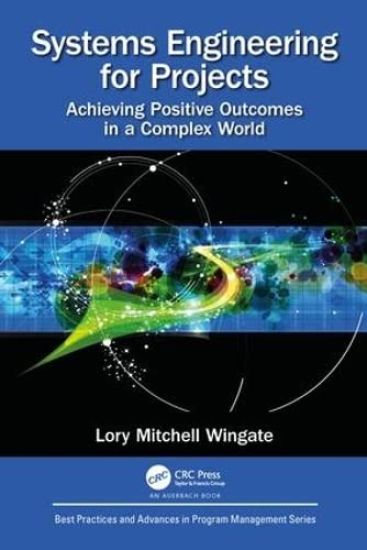
Systems Engineering for Projects

Systems Engineering for Projects

Lory Mitchell Wingate

CRC Press Inc
2018
sidottu
Systems engineering has been applied to some of the most important projects of our time, including those that have helped humanity explore the world and the universe, expand our technical abilities, and enhance the quality of human life.Without formal training in systems engineering, the discipline is often difficult to understand and apply, and its use within projects is often confusing. Systems Engineering for Projects: Achieving Positive Outcomes in a Complex World provides an approach that utilizes a combination of the most effective processes from both project management and systems engineering disciplines in a simplified and straightforward manner. The processes described in the book are lightweight, flexible, and tailorable. They provide the shortest path to success in projects across the entire project life cycle, from research to operations, and from simple to the most complex. The book also addresses how this methodology can be used in a continually adapting and changing world, as projects span disciplines and become even more interconnected across all areas of human existence.Each chapter includes diagrams, templates, summary lists, a case study, and a thought-provoking question and answer section that assists readers in immediate application of the material to their own projects. The book is a project manager’s resource for understanding how to directly apply essential processes to projects in a way that increases the probability of achieving success. It is a comprehensive, go-to manual on the application of systems engineering processes to projects of all types and complexity.
Systems Engineering for Projects

Systems Engineering for Projects

Lory Mitchell Wingate

TAYLOR FRANCIS LTD
2023
nidottu
Systems engineering has been applied to some of the most important projects of our time, including those that have helped humanity explore the world and the universe, expand our technical abilities, and enhance the quality of human life.Without formal training in systems engineering, the discipline is often difficult to understand and apply, and its use within projects is often confusing. Systems Engineering for Projects: Achieving Positive Outcomes in a Complex World provides an approach that utilizes a combination of the most effective processes from both project management and systems engineering disciplines in a simplified and straightforward manner. The processes described in the book are lightweight, flexible, and tailorable. They provide the shortest path to success in projects across the entire project life cycle, from research to operations, and from simple to the most complex. The book also addresses how this methodology can be used in a continually adapting and changing world, as projects span disciplines and become even more interconnected across all areas of human existence.Each chapter includes diagrams, templates, summary lists, a case study, and a thought-provoking question and answer section that assists readers in immediate application of the material to their own projects. The book is a project manager’s resource for understanding how to directly apply essential processes to projects in a way that increases the probability of achieving success. It is a comprehensive, go-to manual on the application of systems engineering processes to projects of all types and complexity.
Project Management for Research and Development

Project Management for Research and Development

Lory Mitchell Wingate

TAYLOR FRANCIS LTD
2025
sidottu
Research and development (R&D) activities do not fit the traditional project model. They may seem difficult to manage because of their inherent ambiguity, the need for creative exploration, and often the lack of having defined milestones and outcomes. However, project management methods, along with systems engineering as a complementary discipline, provide the ability to categorize R&D activities, bound them, and then assess progress along a defined course of action. They also provide information about status and progress, visibility into opportunities and challenges that might otherwise be missed, allowing timely course corrections.Project Management for Research and Development: Guiding Innovation for Positive R&D Outcomes, Second Edition, provides methods for optimizing results in R&D by using structured processes that come from project management and are intertwined with the key complementary discipline of systems engineering. It provides processes, tools, and techniques to assess and manage creative activities in an optimal way. The core of the book is a flexible framework, which lifts the burden off organizations that do not want to invest heavily in implementing a significant number of often conflicting processes. It is a lightweight, flexible structure to help organizations and individuals meet their most important goals, no matter how complicated or complex these goals may be.Each chapter in the book includes Apply Now exercises, which allow immediate application of fundamental concepts, summarizes key points of concepts and terms, and provides templates to apply the ideas from each chapter to a real-life situation. The book also features unique and creative case studies to demonstrate the application of project management to various R&D projects.
Project Management for Research and Development

Project Management for Research and Development

Lory Mitchell Wingate

TAYLOR FRANCIS LTD
2025
nidottu
Research and development (R&D) activities do not fit the traditional project model. They may seem difficult to manage because of their inherent ambiguity, the need for creative exploration, and often the lack of having defined milestones and outcomes. However, project management methods, along with systems engineering as a complementary discipline, provide the ability to categorize R&D activities, bound them, and then assess progress along a defined course of action. They also provide information about status and progress, visibility into opportunities and challenges that might otherwise be missed, allowing timely course corrections.Project Management for Research and Development: Guiding Innovation for Positive R&D Outcomes, Second Edition, provides methods for optimizing results in R&D by using structured processes that come from project management and are intertwined with the key complementary discipline of systems engineering. It provides processes, tools, and techniques to assess and manage creative activities in an optimal way. The core of the book is a flexible framework, which lifts the burden off organizations that do not want to invest heavily in implementing a significant number of often conflicting processes. It is a lightweight, flexible structure to help organizations and individuals meet their most important goals, no matter how complicated or complex these goals may be.Each chapter in the book includes Apply Now exercises, which allow immediate application of fundamental concepts, summarizes key points of concepts and terms, and provides templates to apply the ideas from each chapter to a real-life situation. The book also features unique and creative case studies to demonstrate the application of project management to various R&D projects.