Kirjojen hintavertailu. Mukana 11 244 527 kirjaa ja 12 kauppaa.

Kirjahaku

Etsi kirjoja tekijän nimen, kirjan nimen tai ISBN:n perusteella.

2 kirjaa tekijältä Louis F. Groarke

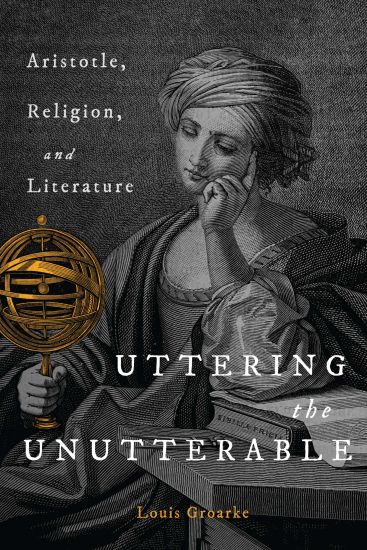
Uttering the Unutterable

Uttering the Unutterable

Louis F. Groarke

MCGILL-QUEEN'S UNIVERSITY PRESS
2023
sidottu
Literature utters the unutterable, not through logic, not through science, not through argument, but through a pitch of eloquence so pronounced the conscientious reader cannot fail to pay attention.Louis Groarke argues that literature is an honorific term we use to describe texts that are so overpowering they lift us to an encounter with an ineffable ultimate that is beyond logical or scientific explanation. In Uttering the Unutterable he proposes a wisdom epistemology that identifies an experience of transcendence as the defining criterion of literature. Offering four mutually reinforcing definitions of literature in line with Aristotle’s theory of four causes, Groarke compares the experience of reading to Aristotle’s account of philosophical contemplation and maintains that literature has inevitable ethical content. Moving beyond the Aristotelianism of the late Chicago School, Groarke presents a new synthesis that breaks through essentialist stereotypes and contends that literature, like religion, points to an ineffable transcendental, to something beyond what we can adequately explain, prove, systematize, quantify, or enclose in a theory.Uttering the Unutterable explores how Aristotelian philosophy provides the most complete and compelling account of literature for philosophers, literary critics, and theorists.
Aristotle, Oedipus, and Greek Religion

Aristotle, Oedipus, and Greek Religion

Louis F. Groarke

University of Ottawa Press
2025
nidottu
Aristotle, Oedipus, and Greek Religion explores an important religious side to ancient Aristotelianism that has an impact on contemporary philosophical debates. _x000D_ _x000D_ Louis F. Groarke shows how an exegetical perspective open to and respectful of Greek Pagan religion allows readers to discover a remarkably different Aristotle than the one to which we have grown accustomed. _x000D_ _x000D_ To begin with, one must discover what Aristotle (and his school) taught, not by examining isolated passages, but by getting a sense of his philosophy as a whole. One has to make sense of the circumstantial evidence and carefully piece together a coherent technical case for the overall argument._x000D_ _x000D_ In each chapter, Groarke considers another aspect of Aristotelian thought; this is in opposition to mainstream opinion which often describes Aristotle as a secret atheist, an agnostic, or as something akin to a modern-day positivist or a reductionist._x000D_ _x000D_ The author goes on to show that Aristotle valued religious practice on a personal and social level, that his metaphysics are marked by intimations of the divine, that he provides an epistemological space for both science and religion, that his account of Greek tragedy has an inalienable moral and religious side, and that his account of the origins of cognition is not so far removed from religious scripture. _x000D_ _x000D_ Aristotle, Oedipus, and Greek Religion is an analysis of universal themes from the viewpoint of an enormously influential ancient thinker, and an adventure into the history of ideas.