Kirjojen hintavertailu. Mukana 11 518 949 kirjaa ja 12 kauppaa.

Kirjahaku

Etsi kirjoja tekijän nimen, kirjan nimen tai ISBN:n perusteella.

9 kirjaa tekijältä Louis P. Masur

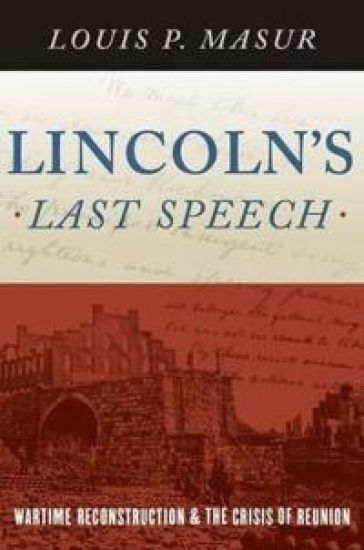
Lincoln's Last Speech

Lincoln's Last Speech

Louis P. Masur

Oxford University Press Inc
2015
sidottu
On April 11, 1865, Abraham Lincoln gave his final speech to thousands gathered in the rain outside the executive mansion in Washington, D.C. Coming two days after Robert E. Lee's surrender at Appomattox, and a week after the fall of Richmond, the crowd expected a victory oration. Instead, they heard the President's ideas about how best to proceed in returning the seceded states to "proper practical relation " with the national government and how to advance the status of freedmen in a nation soon to be without slavery. After Lincoln's endorsement of limited black suffrage, one listener had heard enough. Walking away, John Wilkes Booth remarked, "That is the last speech he will ever make. " Three days later, he made good on his threat. Significant in part because it was his last, Lincoln's April 11th speech is also particularly important for providing us with the president's final public thoughts on the problem of reconstruction, a process, as he said that night, "fraught with difficulty. " In Lincoln's Last Speech, renowned historian and author Louis P. Masur uses the occasion of this speech to trace the debate over reconstruction policies--which, he shows, began not with war's end, but with the war's beginning. Masur reveals how, from the start of the war, restoring the union was foremost on Lincoln's mind, and between 1861 and 1865 he pressed multiple plans of action. Even as battles raged, and the odds of victory continued to shift, the aftermath of war was never far from the thoughts of northern statesmen. Masur traces the evolution of Lincoln's ideas and the debate over reconstruction during the war, from the Proclamation of Amnesty and Reconstruction on December 8, 1863 to the Wade-Davis bill pushed through Congress by radical Republicans in July 2 1864, and Lincoln's resulting pocket veto. In addition to political reconstruction, Masur examines the questions around social reconstruction, the plight of the freedmen and the debate over the place of blacks in American society. And he considers the implications of Lincoln's speech after April 1865, when Andrew Johnson assumed office and the battles over reconstruction ensued. Filling an important gap in the Lincoln literature, Lincoln's Last Speech illuminates the disputed question of reconstruction, from the earliest days of the Civil War up through the president's final address, and allows us to retrace the path that brought him and the nation to reunion.
Lincoln's Last Speech

Lincoln's Last Speech

Louis P. Masur

Oxford University Press Inc
2017
nidottu
What did Abraham Lincoln envision when he talked about "reconstruction?" Assassinated in 1865, the president did not have a chance to begin the work of reconciling the North and South, nor to oversee Reconstruction as an official postwar strategy. Yet his final speech, given to thousands gathered in the rain outside the White House on April 11, 1865, gives a clear indication of what Lincoln's postwar policy might have looked like-one that differed starkly from what would emerge in the tumultuous decade that followed. In Lincoln's Last Speech, renowned historian and author Louis P. Masur offers insight into this critical address and its vision of a reconstructed United States. Coming two days after Robert E. Lee's surrender at Appomattox and a week after the fall of Richmond, Lincoln's speech was expected to be a victory oration. Instead, he looked to the future, discussing how best to restore the seceded states to the national government, and even endorsing limited black suffrage. Delving into the language and arguments of Lincoln's last address, Masur traces the theme of reconstruction as it developed throughout his presidency, starting with the very earliest days of the war. Masur illuminates the evolution of Lincoln's thinking and the national debate around reconstruction, touching on key moments such as the Proclamation of Amnesty and Reconstruction on December 8, 1863, and Lincoln's pocket veto of the Wade-Davis bill in July 1864. He also examines social reconstruction, including the plight of freedmen and the debate over the place of blacks in society; and considers the implications of Lincoln's speech after April 1865, when Andrew Johnson assumed office and the ground was laid for the most radical phases of the postwar policy. A nuanced study of Lincoln's views on national reconciliation, this work gives us a better understanding of the failures that occurred with postwar Reconstruction and the eventual path that brought the country to reunion.
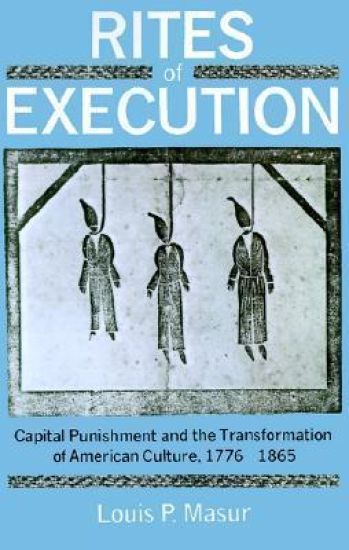
Rites of Execution

Rites of Execution

Louis P. Masur

Oxford University Press Inc
1991
nidottu
Louis Masur's handsomely written account describes how, in the 1830s, public hangings were abandoned in favour of executions in the seclusion of prison yards. Masur sees attitudes toward state killing from the Revolution to the Civil War as reflecting the nation's social thinking.
The U.S. Civil War

The U.S. Civil War

Louis P. Masur

Oxford University Press Inc
2020
nidottu
More than one hundred and fifty years after the first shots were fired on Fort Sumter, the Civil War still captures the American imagination, and its reverberations can still be felt throughout America's social and political landscape. Louis P. Masur's The U.S. Civil War: A Very Short Introduction offers a masterful and eminently readable overview of the war's multiple causes and catastrophic effects. Masur begins by examining the complex origins of the war, focusing on the pulsating tensions over states rights and slavery. The book then proceeds to cover, year by year, the major political, social, and military events, highlighting two important themes: how the war shifted from a limited conflict to restore the Union to an all-out war that would fundamentally transform Southern society, and the process by which the war ultimately became a battle to abolish slavery. Masur explains how the war turned what had been a loose collection of fiercely independent states into a nation, remaking its political, cultural, and social institutions. But he also focuses on the soldiers themselves, both Union and Confederate, whose stories constitute nothing less than America's Iliad. In the final chapter Masur considers the aftermath of the South's surrender at Appomattox and the clash over the policies of reconstruction that continued to divide President and Congress, conservatives and radicals, Southerners and Northerners for years to come. In 1873, Mark Twain and Charles Dudley wrote that the war had "wrought so profoundly upon the entire national character that the influence cannot be measured short of two or three generations." This concise history of the entire Civil War era offers an invaluable introduction to the dramatic events whose effects are still felt today.
A Journey North

A Journey North

Louis P. Masur

OXFORD UNIVERSITY PRESS INC
2025
sidottu
A storied friendship between two of America's founders--one that endured for fifty years--and the roadtrip that forged it. Between May 21 and June 6, 1791, Thomas Jefferson and James Madison went on a trip together through Upstate New York and parts of New England on horseback. This "northern journey" came at a moment of tension for the new nation, one in whose founding these Virginians and political allies had played key roles. The Constitution was ratified and President Washington was in his first term of office. Whether the country could overcome regional and political differences and remain unified, however, was still very much in question. Hence why some observers at the time wondered whether this excursion into Federalist New England by the two most prominent southern Democratic-Republicans, both future presidents, had an ulterior motive. Madison, maintained that the journey was for "health, recreation, and curiosity." He and Jefferson needed a break from their public responsibilities, so off they set. Along the way, they took notes on the ravages of the Hessian Fly, an insect that had been devastating wheat crops. While in Vermont, they focused on the sugar maple tree, which many hoped might offer a domestic alternative to slave-grown sugar cane imports. An encounter with a free Black farmer at Fort George resulted in a journal entry that illuminates their attitudes toward slavery and race. A meeting with members of the Unkechaug tribe on Long Island led to a vocabulary project that preoccupied Jefferson for decades, and which remains relevant today. The Northern Journey was also about friendship. Madison later recalled that the trip made Jefferson and him "immediate companions," solidifying a bond with almost no peer in the annals of American history, one that thrived for fifty years. Jefferson declared at the end of his life, that his friendship with Madison had been "a source of constant happiness" to him. This book reveals the moment when it took hold.
The Sum of Our Dreams

The Sum of Our Dreams

Louis P. Masur

OXFORD UNIVERSITY PRESS INC
2025
nidottu
In The Sum of Our Dreams, Louis P. Masur offers a sweeping yet compact history of America from its beginnings to the current moment. For general readers seeking an accessible, single-volume account, one that challenges but does not overwhelm, and which distills and connects the major events and figures in the country's past in a single narrative, here is that book. Evoking Barack Obama's belief that America remains the "sum of its dreams," Masur locates the origin of those dreams-of freedom, equality, and opportunity-and traces their progress chronologically, illuminating the nation's struggle over time to articulate and fulfill their promise. Moving from the Colonial Era, to the Revolutionary Period, the Early Republic, and through the Civil War, Masur turns his attention to Reconstruction, the Gilded Age, the Progressive Age, World War One, the Great Depression, World War Two, the Cold War, Civil Rights, Vietnam, and Watergate, and then laying out clearly and concisely what underlies the divisiveness that has characterized American civic life over the last forty years-and now more than ever. Above all, however, Masur lets the story of American tell itself. Inspired by James Baldwin's observation that "American history is longer, larger, more beautiful and more terrible than anything anyone has ever said about it," he expands our notion of that history while identifying its individual threads. The Sum of Our Dreams will be the new go-to single volume for anyone wanting a foundational understanding of the nation's past, and its present.
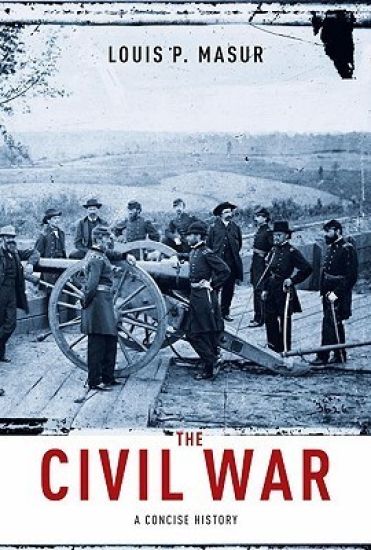
The Civil War

The Civil War

Louis P. Masur

Oxford University Press Inc
2011
sidottu
One hundred and fifty years after the first shots were fired on Fort Sumter, the Civil War still captivates the American imagination, and its reverberations continue to be felt throughout the nation's social and political landscape. Louis P. Masur's The Civil War: A Concise History is a masterful and eminently readable overview of the war's multiple causes and catastrophic effects. Masur begins by examining the complex origins of the war, focusing on the pulsating tensions over states rights and slavery. He then proceeds to cover, year by year, the major political, social, and military events, highlighting two important themes: how the war shifted from a conflict over restoring the Union to an all-out war that would transform Southern society, and the process by which the war ultimately became a battle to abolish slavery. Masur explains how the war turned what had been a loose collection of fiercely independent states into a nation with new political, cultural, and social institutions. But he also focuses on the soldiers themselves, both Union and Confederate, whose stories constitute nothing less than the American Iliad. In the final chapter Masur considers the aftermath of the South's surrender at Appomattox and the clash over the policies of reconstruction that would divide President and Congress, conservatives and radicals, Southerners and Northerners, for years to come. In 1873, Mark Twain and Charles Dudley wrote that the war had "wrought so profoundly upon the entire national character that the influence cannot be measured short of two or three generations." From the vantage of the war's sesquicentennial, this concise history of the Civil War era offers an invaluable introduction to the dramatic events whose effects resonate even today.
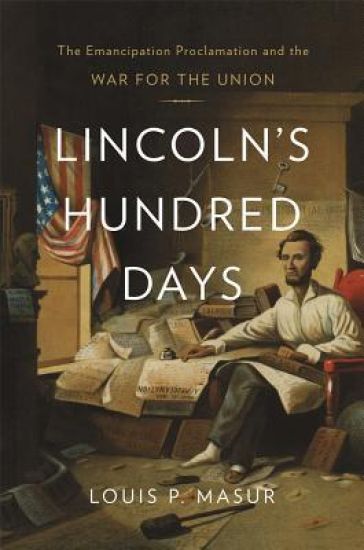
Lincoln’s Hundred Days

Lincoln’s Hundred Days

Louis P. Masur

The Belknap Press
2014
nidottu
"The time has come now," Abraham Lincoln told his cabinet as he presented the preliminary draft of a "Proclamation of Emancipation." Lincoln's effort to end slavery has been controversial from its inception-when it was denounced by some as an unconstitutional usurpation and by others as an inadequate half-measure-up to the present, as historians have discounted its import and impact. At the sesquicentennial of the Emancipation Proclamation, Louis Masur seeks to restore the document's reputation by exploring its evolution.Lincoln's Hundred Days is the first book to tell the full story of the critical period between September 22, 1862, when Lincoln issued his preliminary Proclamation, and January 1, 1863, when he signed the final, significantly altered, decree. In those tumultuous hundred days, as battlefield deaths mounted, debate raged. Masur commands vast primary sources to portray the daily struggles and enormous consequences of the president's efforts as Lincoln led a nation through war and toward emancipation. With his deadline looming, Lincoln hesitated and calculated, frustrating friends and foes alike, as he reckoned with the anxieties and expectations of millions. We hear these concerns, from poets, cabinet members and foreign officials, from enlisted men on the front and free blacks as well as slaves.Masur presents a fresh portrait of Lincoln as a complex figure who worried about, listened to, debated, prayed for, and even joked with his country, and then followed his conviction in directing America toward a terrifying and thrilling unknown.
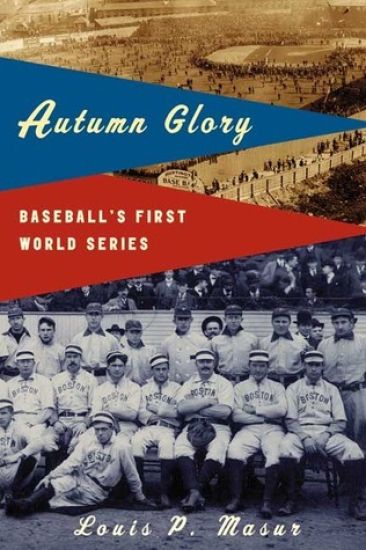
Autumn Glory

Autumn Glory

Louis P. Masur

Farrar, Strauss Giroux-3pl
2004
pokkari
A suspenseful account of the glorious days a century ago when our national madness beganA post-season series of games to establish supremacy in the major leagues was not inevitable in the baseball world. But in 1903 the owner of the Pittsburgh Pirates (in the well-established National League) challenged the Boston Americans (in the upstart American League) to a play-off, which he was sure his team would win. They didn't--and that wasn't the only surprise during what became the first World Series. In" Autumn Glory," Louis P. Masur tells the riveting story of two agonizing weeks in which the stars blew it, unknown players stole the show, hysterical fans got into the act, and umpires had to hold on for dear life.Before and even during the 1903 season, it had seemed that baseball might succumb to the forces that had been splintering the sport for decades: owners' greed, players' rowdyism, fans' unrest. Yet baseball prevailed, and Masur tells the equally dramatic story of how it did so, in a country preoccupied with labor strife and big-business ruthlessness, and anxious about the welfare of those crowding into cities such as Pittsburgh and Boston (which in themselves offered competing versions of the American dream). His colorful history of how the first World Series consolidated baseball's hold on the American imagination makes us see what one sportswriter meant when he wrote at the time, Baseball is the melting pot at a boil, the most democratic sport in the world. All in all, Masur believes, it still is.