Kirjojen hintavertailu. Mukana 11 342 296 kirjaa ja 12 kauppaa.

Kirjahaku

Etsi kirjoja tekijän nimen, kirjan nimen tai ISBN:n perusteella.

7 kirjaa tekijältä Louis Theodore

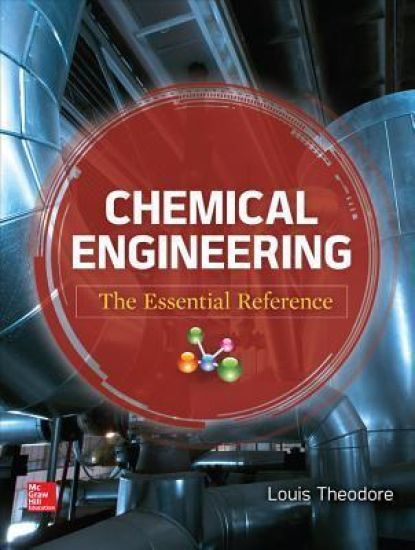
Chemical Engineering

Chemical Engineering

Louis Theodore

McGraw-Hill Professional
2013
sidottu
Publisher's Note: Products purchased from Third Party sellers are not guaranteed by the publisher for quality, authenticity, or access to any online entitlements included with the product.A practical, concise guide to chemical engineering principles and applicationsChemical Engineering: The Essential Reference is the condensed but authoritative chemical engineering reference, boiled down to principles and hands-on skills needed to solve real-world problems. Emphasizing a pragmatic approach, the book delivers critical content in a convenient format and presents on-the-job topics of importance to the chemical engineer of tomorrow—OM&I (operation, maintenance, and inspection) procedures, nanotechnology, how to purchase equipment, legal considerations, the need for a second language and for oral and written communication skills, and ABET (Accreditation Board for Engineering and Technology) topics for practicing engineers. This is an indispensable resource for anyone working as a chemical engineer or planning to enter the field. Praise for Chemical Engineering: The Essential Reference:“Current and relevant...over a dozen topics not normally addressed...invaluable to my work as a consultant and educator.” —Kumar Ganesan, Professor and Department Head, Department of Environmental Engineering,Montana Tech of the University of Montana“A much-needed and unique book, tough not to like...loaded with numerous illustrative examples...a book that looks to the future and, for that reason alone, will be of great interest to practicing engineers.” —Anthony Buonicore, Principal, Buonicore PartnersCoverage includes: Basic calculations and key tablesProcess variablesNumerical methods and optimizationOral and written communicationSecond language(s)Chemical engineering processesStoichiometryThermodynamicsFluid flowHeat transferMass transfer operationsMembrane technologyChemical reactorsProcess controlProcess designBiochemical technologyMedical applicationsLegal considerationsPurchasing equipmentOperation, maintenance, and inspection (OM&I) proceduresEnergy managementWater managementNanotechnologyProject managementEnvironment managementHealth, safety, and accident managementProbability and statisticsEconomics and financeEthicsOpen-ended problems
Air Pollution Control Equipment Calculations

Air Pollution Control Equipment Calculations

Louis Theodore

John Wiley Sons Inc
2008
sidottu
Unique problem-and-solution approach for quickly mastering a broad range of calculations This book's problem-and-solution approach enables readers to quickly grasp the fundamentals of air pollution control equipment and essential applications. Moreover, the author sets forth solid principles for the design and selection of air pollution control equipment as well as for its efficient operation and maintenance. Readers gain a deep understanding of both the equipment itself and the many factors affecting performance. Following two introductory chapters, the book dedicates four chapters to examining control equipment for gaseous pollutants, including adsorption, absorption, and incineration equipment. The remaining six chapters deal with equipment for managing airborne particulate pollutants, including gravity settlers, cyclones, electrostatic precipitators, scrubbers, and baghouses. The appendix contains discussions of hybrid systems, the SI system (including conversion constants), and a cost-equipment model. Each chapter offers a short introduction to the control device discussed. Next, progressively more difficult problems with accompanying solutions enable readers to build their knowledge as they advance through the chapter. Problems reflect the most recent developments in pollution control and include a variety of performance equations and operation and maintenance calculations. Each problem includes a statement of the problem, the data used to solve the problem, and a detailed solution. Readers may further hone their skills by visiting the text's Web site for additional problems and solutions. This publication serves both as a textbook for engineering students and as a reference for engineers and technicians who need to ensure that air pollution control equipment operates efficiently and enables their facility to meet all air pollution control standards and regulations.
Heat Transfer Applications for the Practicing Engineer
This book serves as a training tool for individuals in industry and academia involved with heat transfer applications. Although the literature is inundated with texts emphasizing theory and theoretical derivations, the goal of this book is to present the subject of heat transfer from a strictly pragmatic point of view. The book is divided into four Parts: Introduction, Principles, Equipment Design Procedures and Applications, and ABET-related Topics. The first Part provides a series of chapters concerned with introductory topics that are required when solving most engineering problems, including those in heat transfer. The second Part of the book is concerned with heat transfer principles. Topics that receive treatment include Steady-state Heat Conduction, Unsteady-state Heat Conduction, Forced Convection, Free Convection, Radiation, Boiling and Condensation, and Cryogenics. Part three (considered the heart of the book) addresses heat transfer equipment design procedures and applications. In addition to providing a detailed treatment of the various types of heat exchangers, this part also examines the impact of entropy calculations on exchanger design, and operation, maintenance and inspection (OM&I), plus refractory and insulation effects. The concluding Part of the text examines ABET (Accreditation Board for Engineering and Technology) related topics of concern, including economies and finance, numerical methods, open-ended problems, ethics, environmental management, and safety and accident management.
Chemical Reactor Analysis and Applications for the Practicing Engineer
This books format follows an applications-oriented text and serves as a training tool for individuals in education and industry involved directly, or indirectly, with chemical reactors. It addresses both technical and calculational problems in this field. While this text can be complimented with texts on chemical kinetics and/or reactor design, it also stands alone as a self-teaching aid. The first part serves as an introduction to the subject title and contains chapters dealing with history, process variables, basic operations, kinetic principles, and conversion variables. The second part of the book addresses traditional reactor analysis; chapter topics include batch, CSTRs, tubular flow reactors, plus a comparison of these classes of reactors. Part 3 keys on reactor applications that include non-ideal reactors: thermal effects, interpretation of kinetic data, and reactor design. The book concludes with other reactor topics; chapter titles include catalysis, catalytic reactors, other reactions and reactors, and ABET-related topics. An extensive Appendix is also included
Nanotechnology

Nanotechnology

Louis Theodore

John Wiley Sons Inc
2006
sidottu
A practical workbook that bridges the gap between theory and practice in the nanotechnology field Because nanosized particles possess unique properties, nanotechnology is rapidly becoming a major interest in engineering and science. Nanotechnology: Basic Calculations for Engineers and Scientists-a logical follow-up to the author's previous text, Nanotechnology: Environmental Implications and Solutions-presents a practical overview of nanotechnology in a unique workbook format. The author has developed nearly 300 problems that provide a clear understanding of this growing field in four distinct areas of study: * Chemistry fundamentals and principles * Particle technology * Applications * Environmental concerns These problems have been carefully chosen to address the most important basic concepts, issues, and applications within each area, including such topics as patent evaluation, toxicology, particle dynamics, ventilation, risk assessment, and manufacturing. An introduction to quantum mechanics is also included in the Appendix. These stand-alone problems follow an orderly and logical progression designed to develop the reader's technical understanding. "This is certain to become the pacesetter in the field, a text to benefit both students of all technical disciplines and practicing engineers and researchers." -Dr. Howard Beim, Professor of Chemistry, U.S. Merchant Marine Academy "Dr. Theodore has covered most of the important nanotechnology subject matter in this ...work through simple, easy-to-follow problems." -John McKenna, President and CEO, ETS, Inc.
Environmental Risk Analysis

Environmental Risk Analysis

Louis Theodore

Productivity Press
2015
sidottu
A Training Tool for the Environmental Risk ProfessionalEnvironmental Risk Analysis: Probability Distribution Calculations defines the role that probability distributions play in risk analysis, and gives direction on how to measure and compare the magnitude of risk more efficiently. Designed for the practicing environmental engineer and scientist, this book clearly explains the key fundamentals, principles, and applications of probability distributions in environmental risk analysis. Based on years of research and the author’s own experience, the book provides nearly 200 illustrative examples utilizing probability distributions, as well as numerous solved problems that involve applications in the manufacturing, chemical, refining, power/utilities, travel/aerospace, pharmaceutical, anti-terrorism/military, and nanotechnology industries. It offers an in-depth discussion of the Weibull distribution, which describes failure rate as a function of time. It also details the author’s recent efforts to improve on Weibull’s work, and covers other continuous probability distributions that can apply to risk assessment/analysis. The book addresses environmental risk calculations that involve both discrete and continuous probability distributions. It focuses on discrete distributions that include binomial, multinomial, hypergeometric, and Poisson; and continuous distributions that include normal, lognormal, exponential, Weibull, F, and chi-square distribution. Includes a complete overview of environmental risk and covers environmental risk-related topicsPresents a simplified approach to the industrial application of environmental risk analysis and probability distributionsOffers a practical understanding of environmental risk analysis calculations involving probability distributions Environmental Risk Analysis: Probability Distribution Calculations provides a working knowledge of the principles and applications needed to solve real-world problems relevant to environmental risk analysis and probability distributions. This book serves as a valuable resource for practicing professionals in environmental science and engineering.
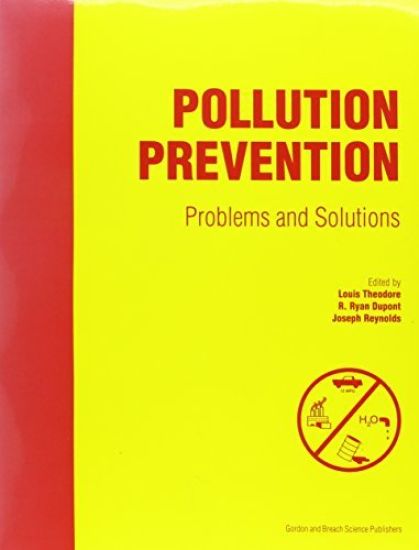
Pollution Prevention

Pollution Prevention

Louis Theodore

Taylor Francis Ltd
1994
nidottu
Engineering and science professionals have studied the management of hazardous and toxic wastes extensively, and it is clear that the principal option of the future will be waste minimization, or pollution prevention. At present, however, few practicing professionals have a working understanding of this approach, educators are just starting to teach course material in this field, and students are only beginning to receive the training necessary to implement pollution prevention in their future work environment. An applications-oriented workbook of more than 100 exercises, Pollution Prevention: Problems and Solutions covers a variety of topics closely relevant to this field. The workbook is the result of a National Science Foundation College Faculty Workshop designed to generate new ideas and innovative educative approaches in the emerging, interdisciplinary field of pollution prevention. Contents include a pollution prevention overview in addition to problems and solutions organized into the categories of basic concepts, pollution prevention principles, regulations, source reduction, recycling, treatment, chemical plant/domestic applications, case studies, and ethics. Readership: Academics and students of undergraduate or graduate courses on waste management, as well as decision makers and practising professionals in the pollution prevention industry.