Kirjojen hintavertailu. Mukana 11 699 587 kirjaa ja 12 kauppaa.

Kirjahaku

Etsi kirjoja tekijän nimen, kirjan nimen tai ISBN:n perusteella.

3 kirjaa tekijältä Louis W. Pauly

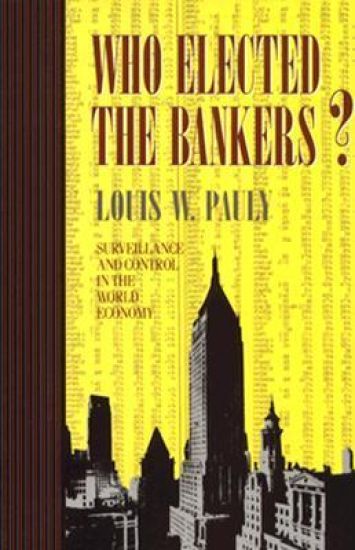
Who Elected the Bankers?

Who Elected the Bankers?

Louis W. Pauly

Cornell University Press
1997
sidottu
A former banker and staff member of the International Monetary Fund, Louis W. Pauly explains why people are deeply concerned about the emergence of a global economy and the increasingly integrated capital markets at its heart. In nations as diverse as France, Canada, Russia, and Mexico, the lives of citizens are disrupted when national policy falls out of line with the expectations of international financiers. Such dilemmas, ever more conspicuous around the world, arise from the disjuncture between a rapidly changing international economic system and a political order still constituted by sovereign states. The evolution of global capital markets inspires an understandable fear among people that the governing authorities accountable to them are losing the power to make substantive decisions affecting their own material prospects and those of their children. Pauly points out that today's capital markets resulted from decisions taken over many years by sovereign states, and particularly by the leading industrial democracies, who simultaneously crafted the instrument of multilateral economic surveillance. The effort to build adequate political foundations for global capital markets spans the twentieth century and links the histories of such institutions as the League of Nations, the International Monetary Fund, the European Union, and the Group of Seven.
Who Elected the Bankers?

Who Elected the Bankers?

Louis W. Pauly

Cornell University Press
1998
pokkari
A former banker and staff member of the International Monetary Fund, Louis W. Pauly explains why people are deeply concerned about the emergence of a global economy and the increasingly integrated capital markets at its heart. In nations as diverse as France, Canada, Russia, and Mexico, the lives of citizens are disrupted when national policy falls out of line with the expectations of international financiers. Such dilemmas, ever more conspicuous around the world, arise from the disjuncture between a rapidly changing international economic system and a political order still constituted by sovereign states. The evolution of global capital markets inspires an understandable fear among people that the governing authorities accountable to them are losing the power to make substantive decisions affecting their own material prospects and those of their children. Pauly points out that today's capital markets resulted from decisions taken over many years by sovereign states, and particularly by the leading industrial democracies, who simultaneously crafted the instrument of multilateral economic surveillance. The effort to build adequate political foundations for global capital markets spans the twentieth century and links the histories of such institutions as the League of Nations, the International Monetary Fund, the European Union, and the Group of Seven.
Insuring States in an Uncertain World

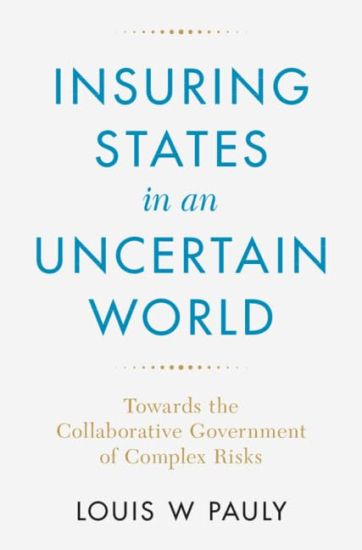
Insuring States in an Uncertain World

Louis W. Pauly

Cambridge University Press
2025
sidottu
Of the sectors comprising international capital markets, insurance and reinsurance have attracted relatively little attention from students of politics. New social conventions and financial instruments arising from the invention of probabilistic calculation and the discovery of risk began to spread around the world five centuries ago. Today, states and firms are harnessing the logic of insurance to address an expansive array of risks confronting their societies. In Insuring States in an Uncertain World, Louis Pauly examines the history and politics of pragmatic experiments aimed at governing complex global risks. His fascinating and accessible narrative explores the promise and the challenges of multi-faceted insurance arrangements in arenas ranging from nuclear energy production and international financial intermediation to those focused on environmental change, infectious diseases, and disruptive new technologies. At a time when the foundations of global order are under mounting stress, Pauly makes the case for limited and effective political innovation.