Little Men, or Life at Plumfield with Jo's Boys, is a novel by American author Louisa May Alcott, first published in 1871. The novel reprises characters from Little Women and is considered by some the second book in an unofficial Little Women trilogy, which is completed with Alcott's 1886 novel Jo's Boys, and How They Turned Out: A Sequel to "Little Men". It tells the story of Jo Bhaer and the children at Plumfield Estate School. It was inspired by the death of Alcott's brother-in-law, which reveals itself in one of the last chapters, when a beloved character from Little Women passes away. It has been adapted to a 1934 film, a 1940 film, a 1998 film, a television series, and a Japanese animated television serie
Little Men, or Life at Plumfield with Jo's Boys, is a novel by American author Louisa May Alcott, first published in 1871. The novel reprises characters from Little Women and is considered by some the second book in an unofficial Little Women trilogy, which is completed with Alcott's 1886 novel Jo's Boys, and How They Turned Out: A Sequel to "Little Men". It tells the story of Jo Bhaer and the children at Plumfield Estate School. It was inspired by the death of Alcott's brother-in-law, which reveals itself in one of the last chapters, when a beloved character from Little Women passes away. It has been adapted to a 1934 film, a 1940 film, a 1998 film, a television series, and a Japanese animated The book recounts six months in the life of the students at Plumfield, a school run by Professor Friedrich and Mrs. Josephine Bhaer. The idea of the school is first suggested at the very end of part two of "Little Women", when Jo inherited the estate from her Aunt March. The story begins with the arrival of Nat Blake, a shy young orphan who used to earn a living playing the violin. We are introduced to the majority of the characters through his eyes. There are ten boys at the school already; Nat, and later his friend Dan, join them, and soon after Nan arrives as companion for Daisy, the only girl. Jo's sons Rob and Teddy are younger than the others and are not counted among the pupils, nor are the two girls, Daisy and Nancy. The school is not run on conventional lines. All the children have their own gardens and their own pets, and are encouraged to experiment with running businesses. Pillow fights are permitted on Saturdays, subject to a time limit. Children are treated as individuals, with a strong emphasis on gently molding their characters. Daisy Brooke, Meg's daughter, is at the school with her twin brother Demi, but is somewhat isolated with no other girls her age, until Nan's arrival. Nan is even more of a tomboy than Jo was as a child, while Daisy is interested mainly in dolls and in her own mini kitchen, purchased by Jo's brother-in-law, Laurie. The other new student, Dan, is introduced by Nat. Dan originally decides the other boys are "molly-coddles" and leads them in experiments with fighting, drinking, smoking, swearing and playing cards, which results in his being temporarily removed from the school. He returns eventually with an injured foot, and redeems himself by standing up for Nat when Nat is falsely accused of theft by the other boys. He also becomes curator of the school's natural history museum. Personal relationships are central to the school, and diversity is celebrated. Daisy is deeply attached to her twin brother, to shy Nat, and to tomboy Nan. Nan and Tommy are also close and intend to marry when they grow up. Dan, already friends with Nat, is unexpectedly drawn to the pious Demi and the toddler Teddy. While Franz, Emil, Daisy and John are all related to the Bhaers, they are not treated with favouritism and are encouraged to overcome their faults just the same as the other pupils.
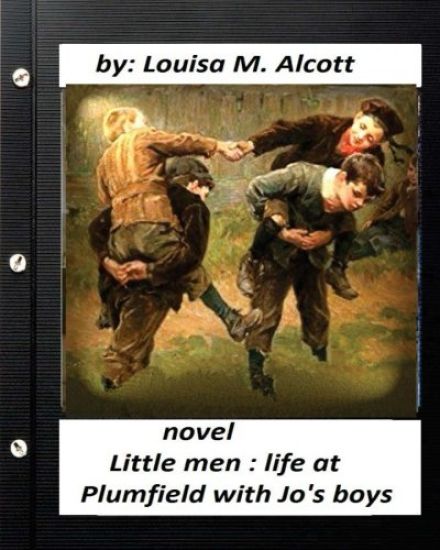
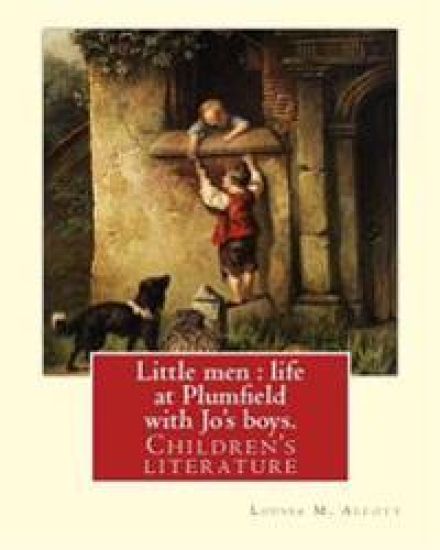
Little Men, or Life at Plumfield with Jo's Boys, is a novel by American author Louisa May Alcott, first published in 1871. The novel reprises characters from Little Women and is considered by some the second book in an unofficial Little Women trilogy, which is completed with Alcott's 1886 novel Jo's Boys, and How They Turned Out: A Sequel to "Little Men". It tells the story of Jo Bhaer and the children at Plumfield Estate School. It was inspired by the death of Alcott's brother-in-law, which reveals itself in one of the last chapters, when a beloved character from Little Women passes away. It has been adapted to a 1934 film, a 1940 film, a 1998 film, a television series, and a Japanese animated television series.The book recounts six months in the life of the students at Plumfield, a school run by Professor Friedrich and Mrs. Josephine Bhaer. The idea of the school is first suggested at the very end of part two of "Little Women", when Jo inherited the estate from her Aunt March. The story begins with the arrival of Nat Blake, a shy young orphan who used to earn a living playing the violin. We are introduced to the majority of the characters through his eyes. There are ten boys at the school already; Nat, and later his friend Dan, join them, and soon after Nan arrives as companion for Daisy, the only girl. Jo's sons Rob and Teddy are younger than the others and are not counted among the pupils, nor are the two girls, Daisy and Nancy. The school is not run on conventional lines. All the children have their own gardens and their own pets, and are encouraged to experiment with running businesses. Pillow fights are permitted on Saturdays, subject to a time limit. Children are treated as individuals, with a strong emphasis on gently molding their characters. Daisy Brooke, Meg's daughter, is at the school with her twin brother Demi, but is somewhat isolated with no other girls her age, until Nan's arrival. Nan is even more of a tomboy than Jo was as a child, while Daisy is interested mainly in dolls and in her own mini kitchen, purchased by Jo's brother-in-law, Laurie. The other new student, Dan, is introduced by Nat. Dan originally decides the other boys are "molly-coddles" and leads them in experiments with fighting, drinking, smoking, swearing and playing cards, which results in his being temporarily removed from the school. He returns eventually with an injured foot, and redeems himself by standing up for Nat when Nat is falsely accused of theft by the other boys. He also becomes curator of the school's natural history museum. Personal relationships are central to the school, and diversity is celebrated. Daisy is deeply attached to her twin brother, to shy Nat, and to tomboy Nan. Nan and Tommy are also close and intend to marry when they grow up. Dan, already friends with Nat, is unexpectedly drawn to the pious Demi and the toddler Teddy. While Franz, Emil, Daisy and John are all related to the Bhaers, they are not treated with favouritism and are encouraged to overcome their faults just the same as the other pupils.
Rose in Bloom, by Louisa May Alcott, depicts the story of a nineteenth-century girl, Rose Campbell, finding her way in society. It is Alcott's sequel to Eight Cousins.The story begins when Rose returns home from a long trip to Europe. Everyone has changed. As a joke, Rose lines up her seven cousins to take a long look at them, just as they did with her when they first met. The youngest, Jamie, accidentally mentions that the aunts want Rose to marry one of her cousins to keep her fortune in the family. Rose is very indignant, for she has decided ideas about what her future holds. From the beginning, she declares that she can manage her property well on her own and that she will focus on philanthropic work. Charlie has already decided she is marked out for him, with the approval of his mother. Phebe also comes home no longer the servant that Rose "adopted" but as a young lady with a cultured singing ability. Rose challenges anyone who would look down on "her Phebe", and she is readily accepted as part of the Campbell clan until Archie falls in love with her: the family feel that Archie would be marrying beneath himself. Phebe's pride and debt to the family make her wish to prove herself before she will accept Archie; so she leaves the Campbells' home and sets off to make a name for herself as a singer, to try to earn the respect of her adopted family. After some time at home, Rose has her "coming out" into society, much to her Uncle Alec's chagrin. She promises to try high society for only three months. During that time, her cousin Charlie falls in love with her and tries in various ways to woo her. Rose begins to give in to his charm, but he derails the budding romance by coming to her house, late one night, very drunk. This ruins all her respect for him and she sees how unprincipled he really is. After the three months are up, Rose begins to focus on her philanthropic projects and convinces Charlie to try to refrain from alcohol and other frivolous things, in order to win her love and respect. She tries to help Charlie overcome his bad habits with the help of her uncle, but fails. Charlie does all he can to win her heart, but in the end he succumbs, hindered by his own weak will and his constant need for acceptance by his friends. Being spoilt by his mother meant he never learned to say "no", even to himself, and his lack of discipline proves fatal: Charlie's life ends tragically in an alcohol-induced accident on the eve of his voyage to see his father and restore his good character. Although Rose never was in love with Charlie, she did have hope that he would return a better man and that they might see what relationship could develop. Several months after Charlie's death, Rose finds out that another cousin, Mac, is now in love with her. At first, never thought of him as anything but "the worm", she refuses his love; but she does declare the deepest respect for him. This gives Mac hope, and he goes to medical school, willing to work and wait for her. She finds his devotion touching, and she begins to see him clearly for the first time, realizing that Mac is the "hero" she has been looking for. He is exactly suited to her tastes and has become a man in the noblest sense of the word. He also settles a joke with her by publishing a small book of poetry to wide critical success, earning her respect even more deeply. It is his absence that shows her how much she cares for him. While Rose is discovering her heart, Steve and a minor character, Kitty, engage to marry. This creates a new sensation in the family, and Kitty begins to look to Rose for sisterly guidance. Rose encourages her to improve her silly mind, and Kitty is a very willing pupil. Rose continues to wait for Mac's return but reaches a crisis when Uncle Alec becomes very sick while visiting Mac;...
Little Men, or Life at Plumfield with Jo's Boys, is a novel by American author Louisa May Alcott, first published in 1871. The novel reprises characters from Little Women and is considered by some the second book in an unofficial Little Women trilogy, which is completed with Alcott's 1886 novel Jo's Boys, and How They Turned Out: A Sequel to "Little Men". It tells the story of Jo Bhaer and the children at Plumfield Estate School. It was inspired by the death of Alcott's brother-in-law, which reveals itself in one of the last chapters, when a beloved character from Little Women passes away. It has been adapted to a 1934 film, a 1940 film, a 1998 film, a television series, and a Japanese animated television series. Plot details edit] The book recounts six months in the life of the students at Plumfield, a school run by Professor Friedrich and Mrs. Josephine Bhaer. The idea of the school is first suggested at the very end of part two of "Little Women", when Jo inherited the estate from her Aunt March. The story begins with the arrival of Nat Blake, a shy young orphan who used to earn a living playing the violin. We are introduced to the majority of the characters through his eyes. There are ten boys at the school already; Nat, and later his friend Dan, join them, and soon after Nan arrives as companion for Daisy, the only girl. Jo's sons Rob and Teddy are younger than the others and are not counted among the pupils, nor are the two girls, Daisy and Nancy. The school is not run on conventional lines. All the children have their own gardens and their own pets, and are encouraged to experiment with running businesses. Pillow fights are permitted on Saturdays, subject to a time limit. Children are treated as individuals, with a strong emphasis on gently molding their characters. Daisy Brooke, Meg's daughter, is at the school with her twin brother Demi, but is somewhat isolated with no other girls her age, until Nan's arrival. Nan is even more of a tomboy than Jo was as a child, while Daisy is interested mainly in dolls and in her own mini kitchen, purchased by Jo's brother-in-law, Laurie. The other new student, Dan, is introduced by Nat. Dan originally decides the other boys are "molly-coddles" and leads them in experiments with fighting, drinking, smoking, swearing and playing cards, which results in his being temporarily removed from the school. He returns eventually with an injured foot, and redeems himself by standing up for Nat when Nat is falsely accused of theft by the other boys. He also becomes curator of the school's natural history museum. Personal relationships are central to the school, and diversity is celebrated. Daisy is deeply attached to her twin brother, to shy Nat, and to tomboy Nan. Nan and Tommy are also close and intend to marry when they grow up. Dan, already friends with Nat, is unexpectedly drawn to the pious Demi and the toddler Teddy. While Franz, Emil, Daisy and John are all related to the Bhaers, they are not treated with favouritism and are encouraged to overcome their faults just the same as the other pupils... Louisa May Alcott( November 29, 1832 - March 6, 1888) was an American novelist and poet best known as the author of the novel Little Women (1868) and its sequels Little Men (1871) and Jo's Boys (1886).Raised by her transcendentalist parents, Abigail May and Amos Bronson Alcott in New England, she grew up among many of the well-known intellectuals of the day such as Ralph Waldo Emerson, Nathaniel Hawthorne, and Henry David Thoreau.
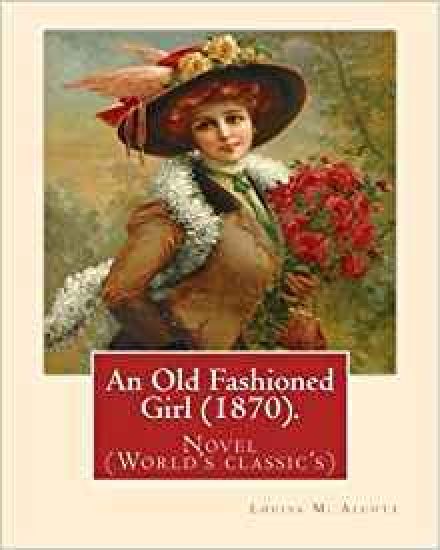
An Old-Fashioned Girl is a novel by Louisa May Alcott. It was first serialised in the Merry's Museum magazine between July and August in 1869 and consisted of only six chapters. For the finished product, however, Alcott continued the story from the chapter "Six Years Afterwards" and so it ended up with nineteen chapters in all. The book revolves around Polly Milton, the old-fashioned girl who titles the story. Polly visits her wealthy friend Fanny Shaw in the city and is overwhelmed by the fashionable and urban life they live but also left out because of her "countrified" manners and outdated clothes. The novel was the basis of a 1949 musical film starring Gloria Jean as Polly.Polly Milton, a 14-year-old country girl, visits her cousin Fanny Shaw and her wealthy family in the city for the first time. Poor Polly is overwhelmed by the splendor at the Shaws' and their urbanized, fashionable lifestyles, expensive clothes and other habits she has never been exposed to, and, for the most part, dislikes. Fanny's friends reject her because of her different behavior and simple clothing, and Fan herself can't help considering her unusual sometimes. However, Polly's warmth, support and kindness eventually win the hearts of all the family members, and her old-fashioned ways teach them a lesson.Six years later, Polly comes back to the city to become a music teacher and struggles with profession issues and internal emotions. Later in the book, Polly finds out that the prosperous Shaws are on the brink of bankruptcy, and she guides them to the realization that a wholesome family life is the only thing they will ever need, not money or decoration..... Louisa May Alcott (November 29, 1832 - March 6, 1888) was an American novelist and poet best known as the author of the novel Little Women (1868) and its sequels Little Men (1871) and Jo's Boys (1886). Raised by her transcendentalist parents, Abigail May and Amos Bronson Alcott in New England, she also grew up among many of the well-known intellectuals of the day such as Ralph Waldo Emerson, Nathaniel Hawthorne, and Henry David Thoreau. Alcott's family suffered financial difficulties, and while she worked to help support the family from an early age, she also sought an outlet in writing. She began to receive critical success for her writing in the 1860s. Early in her career, she sometimes used the pen name A. M. Barnard, under which she wrote novels for young adults. Published in 1868, Little Women is set in the Alcott family home, Hillside, later called the Wayside, in Concord, Massachusetts and is loosely based on Alcott's childhood experiences with her three sisters. The novel was very well received and is still a popular children's novel today, filmed several times. Alcott was an abolitionist and a feminist and remained unmarried throughout her life. She died in Boston on March 6, 1888. Henry James called her "The novelist of children... the Thackeray, the Trollope, of the nursery and the schoolroom."....
A collection of stories and memories from Louisa May Alcott..... Louisa May Alcott (November 29, 1832 - March 6, 1888) was an American novelist and poet best known as the author of the novel Little Women (1868) and its sequels Little Men (1871) and Jo's Boys (1886). Raised by her transcendentalist parents, Abigail May and Amos Bronson Alcott in New England, she also grew up among many of the well-known intellectuals of the day such as Ralph Waldo Emerson, Nathaniel Hawthorne, and Henry David Thoreau. Alcott's family suffered financial difficulties, and while she worked to help support the family from an early age, she also sought an outlet in writing. She began to receive critical success for her writing in the 1860s. Early in her career, she sometimes used the pen name A. M. Barnard, under which she wrote novels for young adults. Published in 1868, Little Women is set in the Alcott family home, Hillside, later called the Wayside, in Concord, Massachusetts and is loosely based on Alcott's childhood experiences with her three sisters. The novel was very well received and is still a popular children's novel today, filmed several times. Alcott was an abolitionist and a feminist and remained unmarried throughout her life. She died in Boston on March 6, 1888. Henry James called her "The novelist of children... the Thackeray, the Trollope, of the nursery and the schoolroom." Louisa May Alcott was born on November 29, 1832, in Germantown, which is now part of Philadelphia, Pennsylvania, on her father's 33rd birthday. She was the daughter of transcendentalist and educator Amos Bronson Alcott and social worker Abby May and the second of four daughters: Anna Bronson Alcott was the eldest; Elizabeth Sewall Alcott and Abigail May Alcott were the two youngest. The family moved to Boston in 1834, where Alcott's father established an experimental school and joined the Transcendental Club with Ralph Waldo Emerson and Henry David Thoreau. Bronson Alcott's opinions on education and tough views on child-rearing shaped young Alcott's mind with a desire to achieve perfection, a goal of the transcendentalists.His attitudes towards Alcott's wild and independent behavior, and his inability to provide for his family, created conflict between Bronson Alcott and his wife and daughters. In 1840, after several setbacks with the school, the Alcott family moved to a cottage on 2 acres (8,100 m2) of land, situated along the Sudbury River in Concord, Massachusetts. The three years they spent at the rented Hosmer Cottage were described as idyllic. By 1843, the Alcott family moved, along with six other members of the Consociate Family, to the Utopian Fruitlands community for a brief interval in 1843-1844. After the collapse of the Utopian Fruitlands, they moved on to rented rooms and finally, with Abigail May Alcott's inheritance and financial help from Emerson, they purchased a homestead in Concord. They moved into the home they named "Hillside" on April 1, 1845........
Little Women is a novel by American author Louisa May Alcott (1832-1888), which was originally published in two volumes in 1868 and 1869. Alcott wrote the books rapidly over several months at the request of her publisher.The novel follows the lives of four sisters-Meg, Jo, Beth, and Amy March-detailing their passage from childhood to womanhood, and is loosely based on the author and her three sisters. 3] 4]:202 Little Women was an immediate commercial and critical success, and readers demanded to know more about the characters. Alcott quickly completed a second volume (entitled Good Wives in the United Kingdom, although this name derived from the publisher and not from Alcott). It was also successful. The two volumes were issued in 1880 in a single work entitled Little Women. Alcott also wrote two sequels to her popular work, both of which also featured the March sisters: Little Men (1871) and Jo's Boys (1886). Although Little Women was a novel for girls, it differed notably from the current writings for children, especially girls. The novel addressed three major themes: "domesticity, work, and true love, all of them interdependent and each necessary to the achievement of its heroine's individual identity." 5]:200 Little Women "has been read as a romance or as a quest, or both. It has been read as a family drama that validates virtue over wealth", but also "as a means of escaping that life by women who knew its gender constraints only too well". According to Sarah Elbert, Alcott created a new form of literature, one that took elements from Romantic children's fiction and combined it with others from sentimental novels, resulting in a totally new format. Elbert argued that within Little Women can be found the first vision of the "All-American girl" and that her multiple aspects are embodied in the differing March sisters. 5]:199 The book has been adapted for film twice as silent films, and four times with sound, in 1933, 1949, 1978 and 1994. Four television series were made, including two in Britain in the 1950s and two anime series in Japan in the 1980s. A musical version opened on Broadway in 2005. An American opera version in 1998 has been performed internationally and filmed for broadcast on US television in 2001......... Little Men, or Life at Plumfield with Jo's Boys, is a novel by American author Louisa May Alcott, first published in 1871. The novel reprises characters from Little Women and is considered by some the second book in an unofficial Little Women trilogy, which is completed with Alcott's 1886 novel Jo's Boys, and How They Turned Out: A Sequel to "Little Men". It tells the story of Jo Bhaer and the children at Plumfield Estate School. It was inspired by the death of Alcott's brother-in-law, which reveals itself in one of the last chapters, when a beloved character from Little Women passes away. It has been adapted to a 1934 film, a 1940 film, a 1998 film, a television series, and a Japanese animated television series.The book recounts six months in the life of the students at Plumfield, a school run by Professor Friedrich and Mrs. Josephine Bhaer. The idea of the school is first suggested at the very end of part two of Little Women, when Jo inherited the estate from her Aunt March. The story begins with the arrival of Nat Blake, a shy young orphan who used to earn a living playing the violin. We are introduced to the majority of the characters through his eyes. There are ten boys at the school already; Nat, and later his friend Dan, join them, and soon after Nan arrives as companion for Daisy, the only girl. Jo's sons Rob and Teddy are younger than the others and are not counted among the pupils, nor are the two girls, Daisy and Nancy. ... Louisa May Alcott ( November 29, 1832 - March 6, 1888) was an American novelist and poet best known as the author of the novel Little Women (1868) and its sequels Little Men (1871) and Jo's Boys (1886).