Kirjojen hintavertailu. Mukana 11 342 296 kirjaa ja 12 kauppaa.

Kirjahaku

Etsi kirjoja tekijän nimen, kirjan nimen tai ISBN:n perusteella.

10 kirjaa tekijältä Luc Braeuer

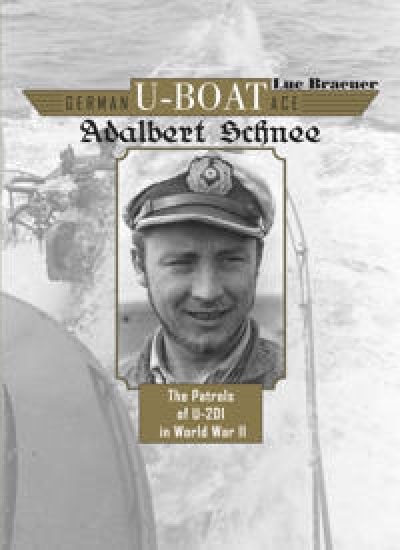
German U-Boat Ace Adalbert Schnee

German U-Boat Ace Adalbert Schnee

Luc Braeuer

Schiffer Publishing Ltd
2015
sidottu
Few commanders symbolize the evolution of the German U-boat arm during the Second World War as does Adalbert “Adi” Schnee. In 1940, Schnee successively commanded three Type II U-boats—U-6, U-60 and U-121— in which he registered his first successes in the Atlantic. From the beginning of 1941, he was appointed commander of U-201, the first Type VIIC U-boat allotted to I Flotilla. During seven patrols with this U-Boot, which would take him to the coasts of America and Africa, he would receive the Knight’s Cross with Oak Leaves. With 15 ships sunk in convoys in the mid-Atlantic, he became the specialist in this form of attack. Commanding U-2511 in May 1945, he alone carried out an actual combat mission in the Type XXI U-boat. With the aid of logbooks and the recent discovery of a considerable collection of images from a war correspondent on one of U-201’s missions, this book examines Schnee’s incredible combat career.
The German U-Boat Base at Lorient, France, Vol.1

The German U-Boat Base at Lorient, France, Vol.1

Luc Braeuer

Schiffer Publishing Ltd
2015
sidottu
The illustrated story of the U-boats and their crews in the port of Lorient, the most important U-boat base of World War II, from June 1940 to June 1941. This first volume (of a 4-volume series) on the German U-boats at Lorient, France, covers the period from June 1940 to June 1941, and reveals the evacuation of the port by the French navy and the subsequent takeover by the Kriegsmarine. Illustrated with over 600 photographs, it details the installation of the German navy at Lorient and the first year of the presence of the U-Boot arm in this port, as well as the major stages in the Battle of the Atlantic in which they participated. The U-boats that were docked at Lorient are presented in tabular form by type, flotilla, commander, as well as the date of commissioning. This book also allows the reader to experience the life of the crews ashore following the return of their boats, and the British naval and aerial actions against the port of Lorient.
The German U-Boat Base at Lorient, France, Vol. 2

The German U-Boat Base at Lorient, France, Vol. 2

Luc Braeuer

Schiffer Publishing Ltd
2015
sidottu
Volume two (of a four volume series) reveals the story of the seventy-eight German U-boats that passed through the port of Lorient from July 1941 to July 1942. The book explains the major phases in the Battle of the Atlantic in which U-boats were operating and particularly the surprise attacks on merchant traffic along the American coast. It details the Allied actions against the port of Lorient and their system of defense against the German U-boat arm. Also featured are unedited reminiscences of the U-boat crews' life ashore in Lorient during their patrol arrivals and departures. This work is illustrated with over 500 exceptional war-era photographs as well as maps and plans. A unique color section presents the remains, documents, and memories relating to the presence of the U-boats in Lorient.
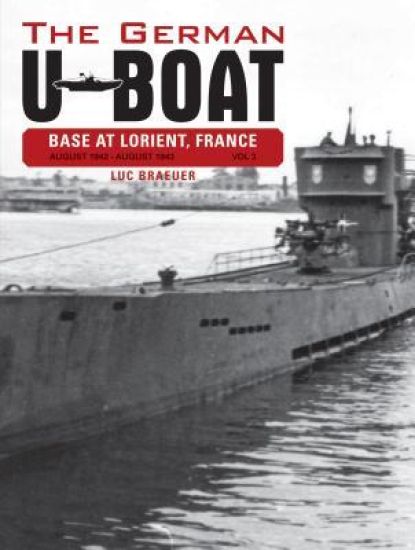
The German U-Boat Base at Lorient France: August 1942-August 1943
Volume three (of a four-volume series) reveals the fate of the ninety-two German U-boats that passed through Lorient from August 1942 to August 1943. From October 1942, Type IX U-boats left Lorient for distant seas beyond the South African Cape and succeeded in sinking three times as many ships as those that attacked the North Atlantic convoys! This book also details the terrible effects of the massive Allied bombardments on both the base and town during the following months and discusses Allied progress in anti-U-boat techniques and armaments that forced the U-boats to abandon the North Atlantic at the end of May 1943 and the Allied offensive seeking to destroy German U-boats in transit in the Gulf of Gascony. This work is illustrated with over 600 exceptional war-era photographs as well as maps and plans. A unique color section presents the remains, documents, and memories relating to the presence of the U-boats in Lorient.
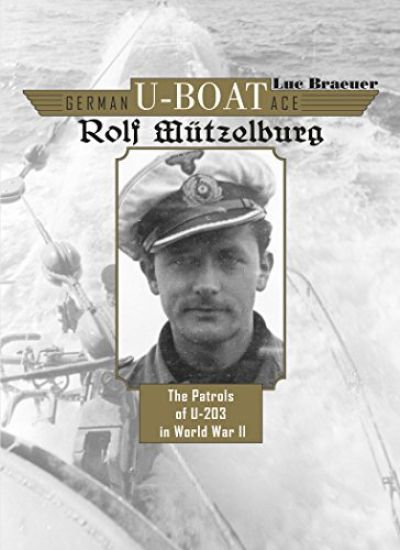
German U-Boat Ace Rolf Mützelburg

German U-Boat Ace Rolf Mützelburg

Luc Braeuer

Schiffer Publishing Ltd
2015
sidottu
German naval officer Rolf Mützelburg was one of the outstanding figures of the WWII German U-boat arm. After obtaining regular successes against the North Atlantic convoys during his first four missions, he found new victims directly along the shores of Canada. Mützelburg received the highest decorations of the period and became one of the top U-boat aces. Furthermore, he shared with Adalbert Schnee, Teddy Suhren, and Erich Topp, the rare privilege of being affectionately nicknamed by Admiral Dönitz as “The Four Aces.” The discovery of a photo album from a U-203 crew member, complemented by images sourced at the U-Boat Archive at Cuxhaven, allows us to illustrate the astonishing history of this U-boat with 240 photographs and documents. The eleven combat missions of U-203 are precisely described thanks to numerous maps and sketches and the complete translation of its logbook.
German U-Boat Ace Peter Cremer

German U-Boat Ace Peter Cremer

Luc Braeuer

Schiffer Publishing Ltd
2016
sidottu
The amazing story of legendary WWII U-boat commander, and Knight's Cross recipient, Peter Cremer. Peter Cremer was appointed commander of U-333, a type VIIC submarine with a close-knit crew. During his first North Atlantic patrol U-333 sank three ships; unfortunately, the third victim was actually a German blockade-runner. Cremer was acquitted before a court martial. During his second patrol, the U-333 was rammed by an Allied tanker before reaching American shores. His later patrols were equally amazing. In April 1945, Cremer was ordered to take command of a panzer unit, Marine-Panzer-Vernichtungsbataillon, that was credited with destroying twenty-four tanks. Cremer ended the war as head of Grossadmiral Dönitz’s security battalion. This biography details all WWII patrols by U-333 and features over 200 images and maps.
German U-Boat Ace Heinrich Lehmann-Willenbrock

German U-Boat Ace Heinrich Lehmann-Willenbrock

Luc Braeuer

Schiffer Publishing Ltd
2017
sidottu
With the international success of the classic film Das Boot, U-96 is arguably the most famous of all German U-boats. Here is the true story of U-96, and its legendary commander Heinrich Lehmann-Willenbrock. In continuous combat from September 1940 to March 1945, follow the crew of U-96 from their bases in Kiel, Germany, as well as Lorient and St. Nazaire on the west coast of France, to intense combat against Allied shipping. During eleven combat patrols in the North Atlantic under Lehmann-Willenbrock, U-96 sank twenty-four Allied ships, eventually earning its commander the Knight’s Cross with Oak Leaves. One of their patrols was documented by war correspondent Lothar-Günther Buchheim, which was later novelized and made into the film Das Boot. This biography of Heinrich Lehmann-Willenbrock, and history of U-96 is based on the WWII captain’s log as well as the recollections of crewmembers.
German U-boat Ace Carl Emmermann

German U-boat Ace Carl Emmermann

Luc Braeuer

Schiffer Publishing Ltd
2018
sidottu
Though he entered combat late in May 1942, Carl Emmermann sank twenty-six Allied ships in only four combat patrols while commanding U-172, becoming the thirteenth most successful U-boat commander of the war. U-172, a Type IXC U-boat, saw non-stop action throughout the Atlantic, during its four patrols under Emmermann. U-172’s third patrol to Cape Town would be its longest with 131 days at sea, where it added eight vessels to its list of successes in this sector; the first sinkings in this area for the U-boat service. On its sixth patrol under a different commander, U-172 would later be sunk in December 1943. Awarded the Knight’s Cross with Oak Leaves in 1944, Emmermann was ordered at St. Nazaire, France, to command the Kriegsmarine’s 6th U-boat Flotilla. Later in Germany, he became the new sub-specialist for the Type XXIII U-boat, and in the last months of the war, commanded a marine battalion in defense of Hamburg. This biography details all WWII patrols by U-172 and features over 230 images and maps.
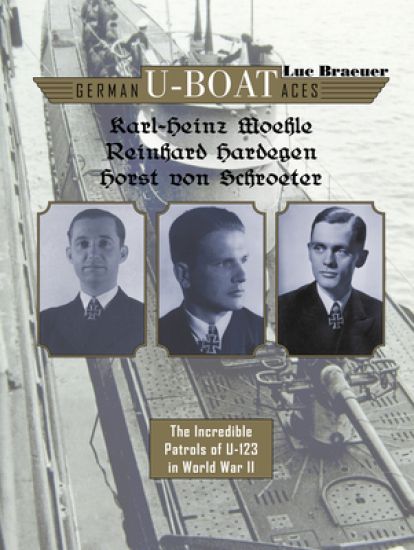
German U-boat Aces Karl-Heinz Moehle, Reinhard Hardegen & Horst von Schroeter
A rare and unprecedented look into the lives of German U- boat captains Karl-Heinz Moehle, Reinhard Hardegen, and Horst von Schroeter. This unique volume in the U-boat Aces series from Schiffer Military features the three German naval captains Karl-Heinz Moehle, Reinhard Hardegen, and Horst von Schroeter, who commanded the U-123, a type IXB U-boat. In 12 patrols and 720 days at sea during its four-year WWII combat career, U-123 sank an incredible 44 Allied merchant and warships, ranking it with the third-most U-boat sinkings. Moehle, the first commander of U-123, successfully conducted three patrols in the North Atlantic and was awarded the Knight’s Cross. Hardegen sank the first ship in US waters and was eventually awarded the Oak Leaves to his Knight’s Cross. Schroeter, appointed U-123’s commander in June 1942, also received the Knight's Cross after four combat patrols. All 12 of U-123's combat patrols are discussed in detail, as well as its participation in the wartime propaganda film U-boats Westward! The featured rare photography comes from the German U-boat Archive in Cuxhaven and former crew members.
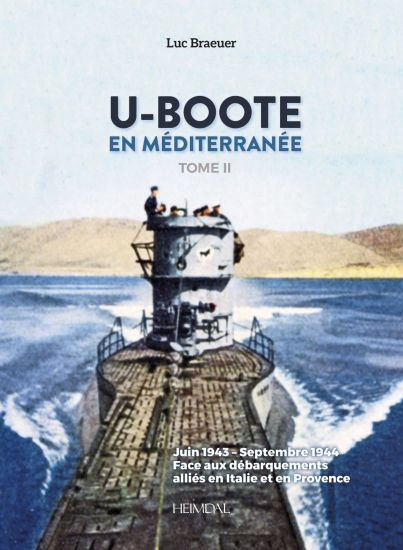
U-Boote En Mediterranee  Tome 2

U-Boote En Mediterranee Tome 2

Luc Braeuer

Editions Heimdal
2021
sidottu
Les Alliés s’étant rendus maîtres de toute l’Afrique du Nord en mai 1943, la mission des U-Boote en Méditerranée change. Désormais, ils doivent protéger la « forteresse Europe » face aux futurs débarquements alliés. Cinq sous-marins partent contre le débarquement allié en Sicile en juillet 1943, qui n’est cependant pas stoppé. Dans les arsenaux de Toulon et de Pola, les sous-marins reçoivent une nouvelle double-plateforme à l’arrière du kiosque afin d’augmenter leur armement antiaérien contre les avions, avec 8 canons de 20 mm. En septembre 1943, six commandants chevronnés appareillent pour tenter de stopper le débarquement allié à Salerne, des succès sont enregistrés. L’utilisation de torpilles acoustiques à partir de novembre leur permet également de couler davantage de navires de guerre ennemis. En décembre, les travaux de construction d’une base sous-marine à Marseille sont stoppés par un bombardement massif... Début 1944, les sous-marins de la Grande Bleue luttent contre les navires ravitaillant la tête de pont alliée d’Anzio, une 17e Croix de Chevalier « méditerranéenne » est décernée. Le 16 mai 1944, un 62e U-Boot passe encore le détroit de Gibraltar, ce sera le dernier renfort... Les submersibles, à découvert dans le port de Toulon en attente d’un schnorchel, sont progressivement mis hors service par des bombardements américains… Un seul appareille de Toulon face à l’armada alliée réunie pour le débarquement de Provence le 15 août. Trois U-Boote, équipés du schnorchel et réfugiés en Méditerranée orientale, survivent encore jusqu’en septembre 1944…