Kirjojen hintavertailu. Mukana 11 717 486 kirjaa ja 12 kauppaa.

Kirjahaku

Etsi kirjoja tekijän nimen, kirjan nimen tai ISBN:n perusteella.

7 kirjaa tekijältä Luca Massimo Barbero

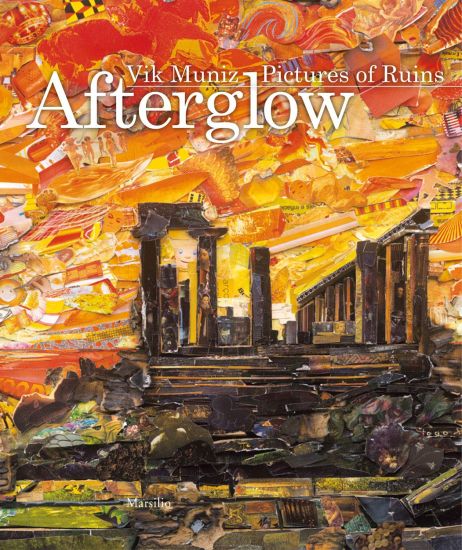
Vik Muniz

Vik Muniz

Luca Massimo Barbero

Marsilio
2018
sidottu
An homage to Venice, Muniz s project includes a series of completely new photos inspired by the old masters of the Cini Collection, paintings by the likes of Francesco Guardi, Dosso Dossi, and Canaletto. The artist revisits the theme of the capriccio in a contemporary key, simulating the brushstrokes with cuttings of illustrations from books on the history of art, carefully selected not only for their colors but also for the images they contain. Continuing the tradition of the artists of the 17th and 18th centuries, Muniz has rearranged these elements in a creative way, constructing new images that, through an interplay of allusions and quotations, intrigue and fascinate.
Franco Angeli

Franco Angeli

Luca Massimo Barbero

Marsilio
2018
nidottu
Franco Angeli was one of the leading figures in the Italian art of the post-war period. Often labelled superficially as Pop, he is revealed here, through new documents and studies, as an artist who took a surprising and unprecedented approach to his work. He made his debut in the fifties in a still little-known experimental Roman laboratory where the new generations encountered the masters of Italian art.This book reconstructs the stylistic and artistic reciprocities and the relations of Angeli with his friends and colleagues up until the sixties, a time when, with his attainment of an existential image that was at the same time deeply polemical and provocative, his work developed along versatile lines, in an original dialogue with the international context.
Dawn of a Nation

Dawn of a Nation

Luca Massimo Barbero

Marsilio
2018
nidottu
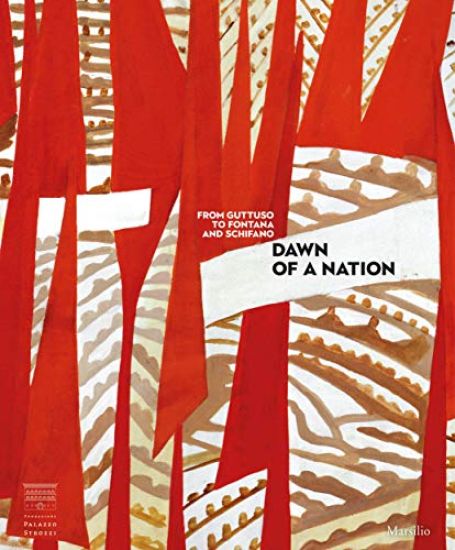
An extraordinary journey through art, politics, and society, with works by artists such as Renato Guttuso, Lucio Fontana, Alberto Burri, Mario Schifano, Mario Merz, and Michelangelo Pistoletto, recounting and reflecting on the contrasts, transformations and new artistic trends in Italy between the end of World War II and the years of protest, from the opposition between Realism and Abstraction in the post-war period to the triumph of Informal Art in the fifties, Pop Art, and Arte Povera and Conceptual Art in the sixties.
Art as Revelation

Art as Revelation

Luca Massimo Barbero

Silvana
2018
nidottu
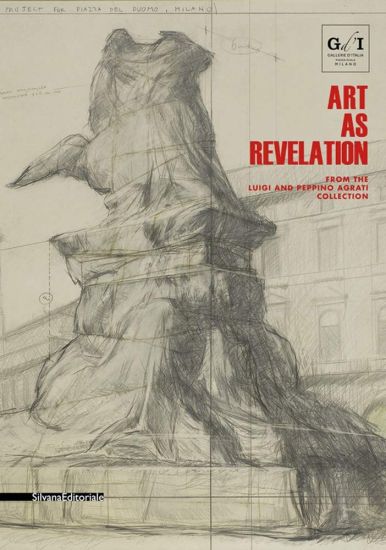
Published to accompany the first time the Luigi and Peppino Agrati Collection will be revealed to the public; the collection can be viewed between May and August 2018. During the Festival of Nouveau Realisme (New Realism) in Milan in November 1970, Christo removed the white cloth in which he had wrapped the Monument to Vittorio Emanuele II in the Piazza del Duomo and placed it over the Monument to Leonardo da Vinci in the Piazza della Scala. This is viewed today as a key event in the contemporary art scene in Milan, a moment that Luigi and Peppino Agrati experienced live. They immediately contacted the artist and commissioned him to create works for the garden of their villa. Wealthy entrepreneurs, the Agrati brothers shared subtle and sensitive insights into art that fostered a deep understanding of the images that shaped their era. This show is the first time their collection is being revealed to the public, through a representative selection of Italian and American works of art donated with generosity and foresight by Luigi Agrati to the Intesa Sanpaolo. From a nucleus of sculptures by Melotti to masterpieces by Fontana, Burri, and Klein, the exhibition provides an in-depth examination of Italian 'Nuova Figurazione' painting ('New Figurative Painting'), working its way to the roots of the new 'Arte Povera' ('Poor Art'). The discovery of American art coincides with the Agratis' acquisition of works by the principal exponents of Pop Art - including the iconic Andy Warhol and his monumental Triple Elvis - and by the Minimalists, of which Dan Flavin's large neon work dedicated to Peppino Agrati is emblematic. In a kind of multiple constellation side by side with examples of Italian art, the collection reveals extraordinary works by Robert Rauschenberg (acquired in large numbers from the end of the 1960s to the 1980s), Cy Twombly (the original mediator between American and Italian art), and conceptual artists like Bruce Nauman and Joseph Kosuth, whose experiments with language are displayed in a dialogue with those by Alighiero Boetti and Vincenzo Agnetti.
Spaziali/Nucleari

Spaziali/Nucleari

Luca Massimo Barbero

Forma Edizioni
2021
sidottu
Following WWII in Italy, the art movements Spatialism (founded by Lucio Fontana) and Nuclear Art (founded by Enrico Baj, Sergio Dangelo, and Gianni Bertini) represented a strongly original and alternative artistic vision to an art world divided between Realism and Abstraction. Based on the outstanding Luciano Lanfranchi Collection, this magisterial, groundbreaking, 2-volume publication traces the birth and development of these movements, and offers extensive contextual and critical essays by notable art historians, with full-page and partial-page illustrations and documents, exhibition histories, bibliographies, and interviews.
Venice 1948-1986

Venice 1948-1986

Luca Massimo Barbero

Skira
2006
sidottu
Art, history and culture from 1948 to 1986. Nine hundred extraordinary photographs recreate the atmosphere of the post-war international art scene in Venice. Featuring artists such as Léger, Ernst, Picasso, Mattisse, Dalí, Fontana, Beuys, Oldenberg, Lichtenstein and Rauschenberg.
Arnaldo Pomodoro 1956-65

Arnaldo Pomodoro 1956-65

Luca Massimo Barbero

Forma Edizioni
2019
sidottu
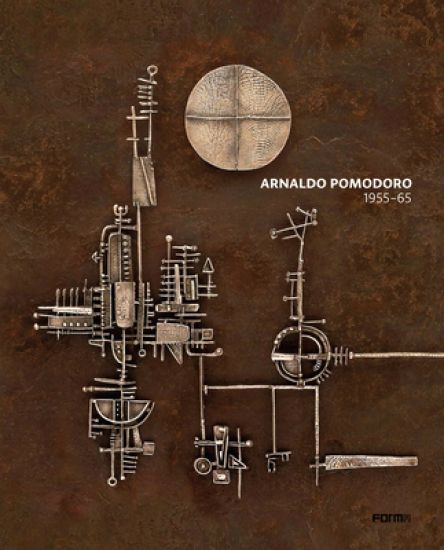
Tornabuoni art returns to the origins of sculptor Arnaldo Pomodoro's work (1926, Morciano di Romagna), specifically to the years 1956-1965, a pivotal period of the artist's production. His creations, initially derived from the goldsmithing produced side by side with the brothers Gio and Giorgio Perfetti, evolves towards small concrete and lead reliefs, then in large mural panels engraved with illegible glyphs, inspired by Mesopotamian tablets' cuneiform writing, Egyptian papyruses and Paul Klee's graphic style. In 1960, Pomodoro was among the founders of the group Continuità, next to Novelli, Consagra, Tancredi, Dorazio and Fontana, preaching an 'aesthetic of continuity', defined as 'the absence, the incertitude of limit' and attached to the formal aspects of artworks. He thus produced his first Sfere, adopting gilded polished bronze as his preferred material of work, and of which the creation marks the definitive transition to monumental scale of his career. Today, Pomodoro's creations can be found in prestigious museum collections such as the Guggenheim in New York and the Vatican Museums. Moreover, his monumental artworks are exhibited in more than 40 public squares in major cities around the world. The artist lives and works in Milan, Italy. Text in English and Italian.