Kirjojen hintavertailu. Mukana 11 699 587 kirjaa ja 12 kauppaa.

Kirjahaku

Etsi kirjoja tekijän nimen, kirjan nimen tai ISBN:n perusteella.

48 kirjaa tekijältä Luce Irigaray

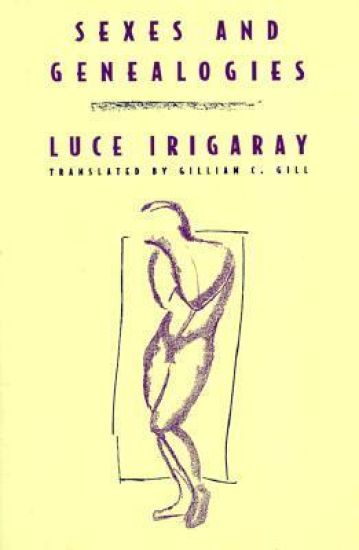
Sexes and Genealogies

Sexes and Genealogies

Luce Irigaray

Columbia University Press
1993
pokkari
In the tradition of Simone de Beauvoir and Julia Kristeva, Luce Irigaray is one of France's most versatile feminist critics. Sexes and Genealogies, a collection of lectures delivered throughout Canada and Europe, introduces her writing to a wider American audience. Irigaray's most famous work, Speculum of the Other Woman, prompted her expulsion from the Lacanin Ecole Freudienne because of its searing depiction of Platonic and Freudian representations of women. Now Sexes and Genealogies analyzes sexual difference according to what she terms the double dimension of gender and ideology. Irigaray covers major issues in religion, the law, psychoanalysis, and literature, such as: the continued neglect by psychoanalysts of the sexual and gender dimensions of therapy, the urgency of female divinity for contemporary feminist movements, and a reconsideration of women's relation to the market economy. Sexes and Genealogies also includes Irigaray's dazzling reading of the Oresteia, "Body Against Body: In Relation to the Mother," now acknowleged as a feminist classic.
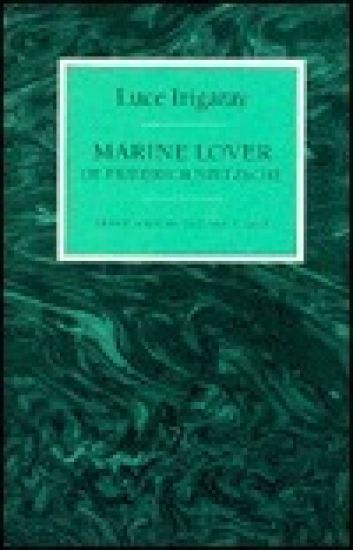
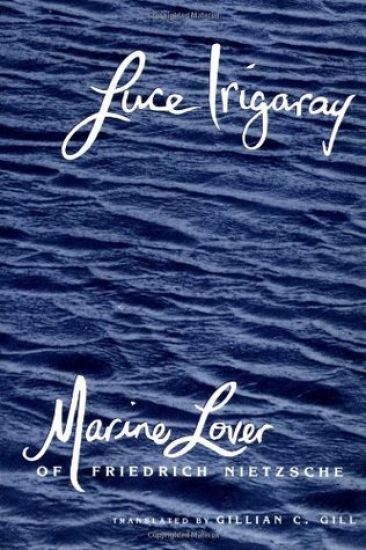
Marine Lover of Friedrich Nietzsche

Marine Lover of Friedrich Nietzsche

Luce Irigaray

Columbia University Press
1991
sidottu
Published in France in 1980, Marine Lover is the first in a trilogy in which Luce Irigaray links the interrogation of the feminine in post-Hegelian philosophy with a pre-Socratic investigation of the elements. Irigaray undertakes to interrogate Nietzche, the grandfather of poststructuralist philosophy, from the point of view of water. According to Irigaray, water is the element Nietzsche fears most. She uses this element in her narrative because for her there is a complex relationship between the feminine and the fluid. Irigaray's method is to engage in an amorous dialogue with the male philosopher. In this dialogue, she ruptures conventional discourse and writes in a lyrical style that defies distinction between theory, fiction, and philosophy.
Marine Lover of Friedrich Nietzsche

Marine Lover of Friedrich Nietzsche

Luce Irigaray

Columbia University Press
1991
pokkari
Published in France in 1980, Marine Lover is the first in a trilogy in which Luce Irigaray links the interrogation of the feminine in post-Hegelian philosophy with a pre-Socratic investigation of the elements. Irigaray undertakes to interrogate Nietzche, the grandfather of poststructuralist philosophy, from the point of view of water. According to Irigaray, water is the element Nietzsche fears most. She uses this element in her narrative because for her there is a complex relationship between the feminine and the fluid. Irigaray's method is to engage in an amorous dialogue with the male philosopher. In this dialogue, she ruptures conventional discourse and writes in a lyrical style that defies distinction between theory, fiction, and philosophy.
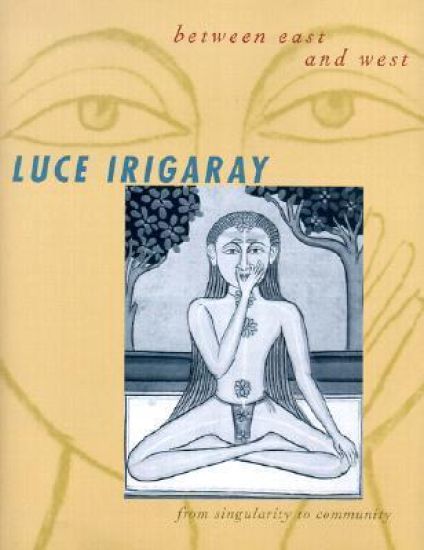
Between East and West

Between East and West

Luce Irigaray

Columbia University Press
2001
sidottu
With this book we see a philosopher well steeped in the Western tradition thinking through ancient Eastern disciplines, meditating on what it means to learn to breathe, and urging us all at the dawn of a new century to rediscover indigenous Asian cultures. Yogic tradition, according to Irigaray, can provide an invaluable means for restoring the vital link between the present and eternity-and for re-envisioning the patriarchal traditions of the West. Western, logocentric rationality tends to abstract the teachings of yoga from its everyday practice-most importantly, from the cultivation of breath. Lacking actual, personal experience with yoga or other Eastern spiritual practices, the Western philosophers who have tried to address Hindu and Buddhist teachings-particularly Schopenhauer-have frequently gone astray. Not so, Luce Irigaray. Incorporating her personal experience with yoga into her provocative philosophical thinking on sexual difference, Irigaray proposes a new way of understanding individuation and community in the contemporary world. She looks toward the indigenous, pre-Aryan cultures of India-which, she argues, have maintained an essentially creative ethic of sexual difference predicated on a respect for life, nature, and the feminine. Irigaray's focus on breath in this book is a natural outgrowth of the attention that she has given in previous books to the elements-air, water, and fire. By returning to fundamental human experiences-breathing and the fact of sexual difference-she finds a way out of the endless sociologizing abstractions of much contemporary thought to rethink questions of race, ethnicity, and globalization.
Between East and West

Between East and West

Luce Irigaray

Columbia University Press
2003
pokkari
With this book we see a philosopher well steeped in the Western tradition thinking through ancient Eastern disciplines, meditating on what it means to learn to breathe, and urging us all at the dawn of a new century to rediscover indigenous Asian cultures. Yogic tradition, according to Irigaray, can provide an invaluable means for restoring the vital link between the present and eternity-and for re-envisioning the patriarchal traditions of the West. Western, logocentric rationality tends to abstract the teachings of yoga from its everyday practice-most importantly, from the cultivation of breath. Lacking actual, personal experience with yoga or other Eastern spiritual practices, the Western philosophers who have tried to address Hindu and Buddhist teachings-particularly Schopenhauer-have frequently gone astray. Not so, Luce Irigaray. Incorporating her personal experience with yoga into her provocative philosophical thinking on sexual difference, Irigaray proposes a new way of understanding individuation and community in the contemporary world. She looks toward the indigenous, pre-Aryan cultures of India-which, she argues, have maintained an essentially creative ethic of sexual difference predicated on a respect for life, nature, and the feminine. Irigaray's focus on breath in this book is a natural outgrowth of the attention that she has given in previous books to the elements-air, water, and fire. By returning to fundamental human experiences-breathing and the fact of sexual difference-she finds a way out of the endless sociologizing abstractions of much contemporary thought to rethink questions of race, ethnicity, and globalization.
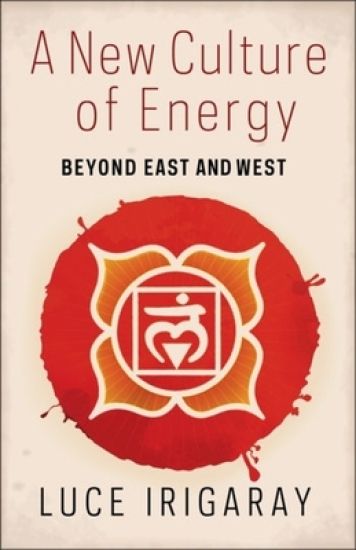
A New Culture of Energy

A New Culture of Energy

Luce Irigaray

Columbia University Press
2021
sidottu
In A New Culture of Energy, Luce Irigaray reflects on three critical concerns of our time: the cultivation of energy in its many forms, the integration of Asian and Western traditions, and the reenvisioning of religious figures for the contemporary world. A philosopher as well as a psychoanalyst, Irigaray draws deeply on her personal experience in addressing these questions. In her view, although psychoanalysis can succeed in releasing mental energy, it fails to support physical and spiritual well-being. In pursuit of an alternative, she took up the bodily practices of yoga and pranayama breathing, which she considers in light of her analysis of sexuate belonging and difference. Reflecting on these practices, Irigaray contrasts yoga’s approach to the natural world with how the Western tradition privileges mastery over nature. These varied sources provoke her to question how a tradition imagines transcendence and the divine. In the book’s final section, she reinterprets the figure of Mary through breath, self-affection, and touch, recalibrating her physicality within a natural world. A reflection on the liberation of human energy, this book urges us to cultivate an evolutionary culture in harmony with all living beings.
A New Culture of Energy

A New Culture of Energy

Luce Irigaray

Columbia University Press
2021
pokkari
In A New Culture of Energy, Luce Irigaray reflects on three critical concerns of our time: the cultivation of energy in its many forms, the integration of Asian and Western traditions, and the reenvisioning of religious figures for the contemporary world. A philosopher as well as a psychoanalyst, Irigaray draws deeply on her personal experience in addressing these questions. In her view, although psychoanalysis can succeed in releasing mental energy, it fails to support physical and spiritual well-being. In pursuit of an alternative, she took up the bodily practices of yoga and pranayama breathing, which she considers in light of her analysis of sexuate belonging and difference. Reflecting on these practices, Irigaray contrasts yoga’s approach to the natural world with how the Western tradition privileges mastery over nature. These varied sources provoke her to question how a tradition imagines transcendence and the divine. In the book’s final section, she reinterprets the figure of Mary through breath, self-affection, and touch, recalibrating her physicality within a natural world. A reflection on the liberation of human energy, this book urges us to cultivate an evolutionary culture in harmony with all living beings.
The Forgetting of Air in Martin Heidegger

The Forgetting of Air in Martin Heidegger

Luce Irigaray

University of Texas Press
1999
pokkari
French philosopher Luce Irigaray has become one of the twentieth century's most influential feminist thinkers. Among her many writings are three books (with a projected fourth) in which she challenges the Western tradition's construals of human beings' relations to the four elements-earth, air, fire, and water-and to nature. In answer to Heidegger's undoing of Western metaphysics as a "forgetting of Being," Irigaray seeks in this work to begin to think out the Being of sexedness and the sexedness of Being.This volume is the first English translation of L'oubli de l'air chez Martin Heidegger (1983). In this complex, lyrical, meditative engagement with the later work of the eminent German philosopher, Irigaray critiques Heidegger's emphasis on the element of earth as the ground of life and speech and his "oblivion" or forgetting of air.With the other volumes (Elemental Passions and Marine Lover of Friedrich Nietzsche, published elsewhere) in Irigaray's "elemental" series, The Forgetting of Air offers a fundamental rereading of basic tenets in Western metaphysics. And with its emphasis on dwelling and human habitation, it will be important reading not only in the humanities but also in architecture and the environmental sciences.
Je, Tu, Nous

Je, Tu, Nous

Luce Irigaray

Routledge
2007
nidottu
A passionate celebrator of "sexual difference," Luce Irigaray was never simply after the social equality that her generation so publicly demanded. She was seeking more fundamentally a society that celebrated the differences between the genders and their coming together in a union without hierarchy. As she formulates it in this compellingly readable introduction to her own thought, Irigaray is writing about how "I" and "You" become "We." Exploring along the way women’s experiences of motherhood, abortion, the AIDS crisis and the beauty industry, this book presents one of the most important thinkers of our day in her own words.
Je, Tu, Nous

Je, Tu, Nous

Luce Irigaray

Routledge
1992
nidottu
Irigaray offers the clearest available introduction to her own work. Focusing on power, women, gender and patriarchal mythologies, she lays out what for her has become the central problem for women in the modern world.
Elemental Passions

Elemental Passions

Luce Irigaray

Routledge
1992
nidottu
Elemental Passions explores the man/woman relaitonship in a series of meditations of the senses and the formal elements. Its form resembles a series of love letters in which, however, the identity-and even the reality-of the adressee are deliberately obscured.
I Love to You

I Love to You

Luce Irigaray

Routledge
1996
sidottu
In this book, one of the foremost contemporary scholars in the fields of feminist thought and linguistics, explores the possibility of a new liberating language and hence a new relationship between the sexes. In I Love to You, Luce Irigaray moves from the critique of patriarchy to an exploration of the ground for a possible inter-subjectivity between the two sexes. Continuing her rejection of demands for equality, Irigaray poses the question: how can we move to a new era of sexual difference in which women and men establish lasting relations with one another without reducing the other to the status of object?
I Love to You

I Love to You

Luce Irigaray

Routledge
1995
nidottu
In this book, one of the foremost contemporary scholars in the fields of feminist thought and linguistics, explores the possibility of a new liberating language and hence a new relationship between the sexes. In I Love to You, Luce Irigaray moves from the critique of patriarchy to an exploration of the ground for a possible inter-subjectivity between the two sexes. Continuing her rejection of demands for equality, Irigaray poses the question: how can we move to a new era of sexual difference in which women and men establish lasting relations with one another without reducing the other to the status of object?
Thinking the Difference

Thinking the Difference

Luce Irigaray

ROUTLEDGE
1994
nidottu
In Thinking The Difference, Luce Irigaray examines the ways in which women are failed by the cultural, political and legal institutions set up to protect and preserve, regardless of sex. Here Irigaray addresses the civil domain--where women's bodies, nature, space, symbolism and representation are appropriated by "the people of men"-- --and the need for concrete changes so that women may share in culture as women themselves, thereby gaining an as-yet-unfound full citizenship in the world.
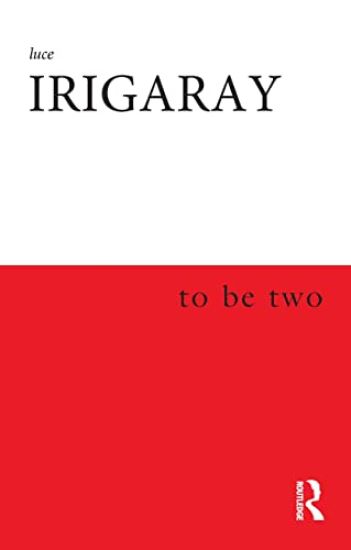
To Be Two

To Be Two

Luce Irigaray

ROUTLEDGE
2001
sidottu
In this major new work, French philosopher Luce Irigaray continues to explore the issue central to her thought: the feminist redefinition of Being and Identity. For Irigaray, the notion of the individual is twinned with a reconceived notion of difference, or alterity. What does it mean to be someone? How can identity be created, or discovered, in relation to others? In To Be Two Irigaray gives new clarity to her project, grounding it in relation to such major figures as Sartre, Levinas, and Merleau-Ponty. Yet at the same time, she enriches her discussion with an attempt to bring the elements--earth, fire, water--into philosophical discourse. Even the polarities of heaven and earth come to play in this ambitious and provocative text. At once political, philosophical, and poetic, To Be Two will become one of Irigarary's central works.
Thinking the Difference

Thinking the Difference

Luce Irigaray

Continuum International Publishing Group Ltd.
2000
sidottu
In these essays, the author discusses how language, religion, law, art science and technology have failed women and why. She goes beyond analysis and commentary to propose concrete changes tailored to women's specificity in all these fields - practical means of ensuring "our" culture is women's as well as men's. These changes, she argues, are crucial to the survival of humankind and the Earth itself. Irigary's other publications include "Elemental Passions" (1992), "The Ethics of Sexual Difference" (1993) and "Speech is Never Neuter" (1994).
Democracy Begins with Two

Democracy Begins with Two

Luce Irigaray

Continuum International Publishing Group Ltd.
2000
sidottu
In "Democracy Begins with Two" Luce Irigaray calls for a radical reconsideration of the so-called democratic bases of Western culture. In a series of essays covering the earlier 1990s she argues the urgent need for our society to grant full recognition to both the genders which contribute to its functioning. If we are to look on ourselves as fully democratic this recognition must take the form of specific civil rights guaranteeing women a separate civil identity of their own, equivalent to, though not simply the same as, that enjoyed by men. Ranging across topics as diverse as happiness, the family, the construction of the European Union, the transition from natural to civil existence and love, Irigaray exploits her resources as a writer - philosophical, linguistic, psychoanalytical, poetical -to their rhetorical limits. She interweaves her personal experience of an emotional and politico-professional partnership with her re-reading of History, past and present.
Elemental Passions

Elemental Passions

Luce Irigaray

Continuum International Publishing Group Ltd.
2000
pokkari
The importance of Irigaray's work lies n the fact that feminist and philosophical discourses are brought together in a feminist appropriation of Spinoza. The author draws on both philosophy and psychoanalysis in a rejection of traditional literary modes and thus frees literature from male dominance. "Elemental Passions" was first published in France in 1982. It explores the man/woman relationship in a series of lyrical meditations on the senses and the four elements. Its form resembles a series of love-letters, in which, however, the identity and reality of the addresses are deliberately obscured in order to escape from conventional, male-imposed conceptual patterns.