

Kirjahaku
Etsi kirjoja tekijän nimen, kirjan nimen tai ISBN:n perusteella.
19 kirjaa tekijältä Lucie Duff Gordon



'The fearless nineteenth century English Lady who lived on top of an Egyptian temple' TOBY WILKINSON, TELEGRAPH 'A lyrical, sharply observed, often humorous' KATHERINE FRANK In 1862, Lucie Duff Gordon, cousin of Harriet Martineau and friend of Caroline Norton, Meredith and Thackeray, embarked on a solo trip to Egypt in an effort to rid herself of consumption. The next seven years were spent in a ruined house above a temple in Luxor on the Nile. Feeling at home in this most foreign of lands, Lucie Duff Gordon integrated herself quickly in the locale, setting up a hospital from her home and welcoming the people of Luxor, be they officials or slaves into her house. The absorbing story told through her letters offers a wonderfully penetrating and sympathetic view of mid-nineteenth century Egypt as well as the personal story of this brave and generous woman.

Lucie Duff Gordon (1821–1869) was a translator and travel writer. Forced to leave England in 1851 due to tuberculosis, she went first to South Africa and then to Egypt. Her letters home were published, with considerable success. She writes with great feeling about the ordinary life of the Egyptians: her interest in and sympathy with them is clear, and her great affection for them led to criticism of the derogatory way in which many western visitors regarded them. But she was also highly critical of the effects of western influence on them, and her comments about the Suez Canal project and new railroads being achieved by forced labour and high taxes were not well received: some of her political opinions were removed from subsequent editions. This volume, first published in 1865, was edited by her mother, also a writer, and covers the years 1862–1865, including her voyage out.
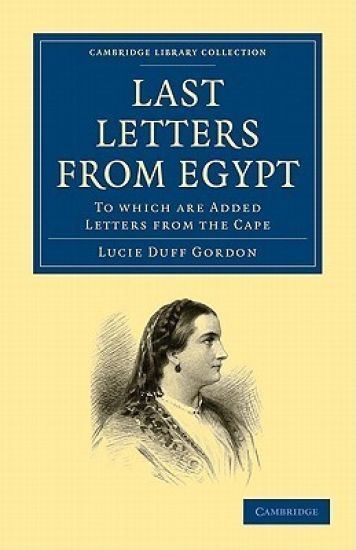
Lucie Duff Gordon (1821–1869) was a translator and travel writer. Forced to leave England in 1851 due to tuberculosis, she went first to South Africa and then to Egypt. Her letters home were published with considerable success. She writes with great feeling about the ordinary life of the Egyptians: her interest in and sympathy with them is clear, and her affection for them led her to criticise the derogatory way in which many western visitors regarded them. This second, posthumous volume (the first, Letters from Egypt, 1863-65, is also reissued in this series) contains not only the letters from the latter half of her time in Egypt, but also her letters from the Cape, and a memoir by her daughter, Janet Ross.


The following letters were written, as the reader will readily perceive, without the remotest view to publication. They convey in the most unreserved manner the fresh and vivid impressions of the moment, to the two persons with whom, of all others, the writer felt the least necessity for reserve in the expression of her thoughts, or care about the form in which those thoughts were conveyed. Such letters cannot be expected to be free from mistakes. The writer is misinformed; or her imagination, powerfully acted upon by new and strange objects, colours and magnifies, to a certain extent, what she sees. If these are valid objections, they are equally so to every description of a country that has not been corrected by long experience. It has been thought, however, that their obvious and absolute genuineness, and a certain frank and high-toned originality, hardly to be found in what is written for the public, would recommend them to the taste of many. But this was not the strongest motive to their publication.
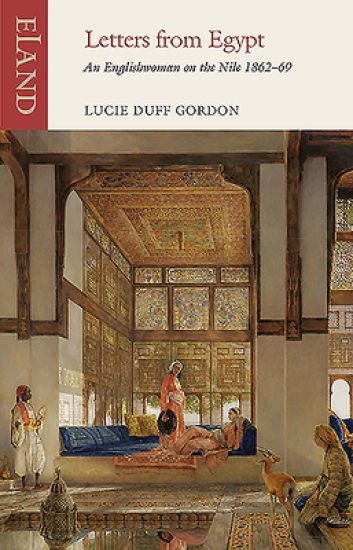
In 1862, Lucie Duff Gordon left her husband and three children in England and settled in Egypt, where she remained for the rest of her short life. Seeking respite from her tuberculosis in the dry air, she moved into a ramshackle house above a temple in Luxor, and soon became an indispensable member of the community. Setting up a hospital in her home, she welcomed all - from slaves to local leaders. Her humane, open-minded voice shines across the centuries through these letters - witty, life-affirming, joyous, self-deprecating and utterly enchanted by her Arab neighbours.
Lettres d'Egypte / par lady Lucie Duff Gordon; traduites par Mrs. RossDate de l'edition originale: 1879Ce livre est la reproduction fidele d'une oeuvre publiee avant 1920 et fait partie d'une collection de livres reimprimes a la demande editee par Hachette Livre, dans le cadre d'un partenariat avec la Bibliotheque nationale de France, offrant l'opportunite d'acceder a des ouvrages anciens et souvent rares issus des fonds patrimoniaux de la BnF.Les oeuvres faisant partie de cette collection ont ete numerisees par la BnF et sont presentes sur Gallica, sa bibliotheque numerique.En entreprenant de redonner vie a ces ouvrages au travers d'une collection de livres reimprimes a la demande, nous leur donnons la possibilite de rencontrer un public elargi et participons a la transmission de connaissances et de savoirs parfois difficilement accessibles.Nous avons cherche a concilier la reproduction fidele d'un livre ancien a partir de sa version numerisee avec le souci d'un confort de lecture optimal. Nous esperons que les ouvrages de cette nouvelle collection vous apporteront entiere satisfaction.Pour plus d'informations, rendez-vous sur www.hachettebnf.fr
Letters from Egypt, 1863-65 is an unchanged, high-quality reprint of the original edition of 1865. Hansebooks is editor of the literature on different topic areas such as research and science, travel and expeditions, cooking and nutrition, medicine, and other genres. As a publisher we focus on the preservation of historical literature. Many works of historical writers and scientists are available today as antiques only. Hansebooks newly publishes these books and contributes to the preservation of literature which has become rare and historical knowledge for the future.
Reprint of the original, first published in 1866.

Reprint of the original, first published in 1866.
Reprint of the original, first published in 1865.
Reprint of the original, first published in 1865.