Kirjojen hintavertailu. Mukana 11 244 527 kirjaa ja 12 kauppaa.

Kirjahaku

Etsi kirjoja tekijän nimen, kirjan nimen tai ISBN:n perusteella.

8 kirjaa tekijältä Luke Gibbons

Joyce's Ghosts

Joyce's Ghosts

Luke Gibbons

University of Chicago Press
2015
sidottu
For decades, James Joyce's modernism has overshadowed his Irishness, as his self-imposed exile and association with the high modernism of Europe's urban centers has led critics to see him almost exclusively as a cosmopolitan figure. In Joyce's Ghosts, Luke Gibbons mounts a powerful argument that this view is mistaken: Joyce's Irishness is intrinsic to his modernism, informing his most distinctive literary experiments. Ireland, Gibbons shows, is not just a source of subject matter or content for Joyce, but of form itself. Joyce's stylistic innovations can be traced at least as much to the tragedies of Irish history as to the shock of European modernity, as he explores the incomplete project of the inner life under colonialism. Joyce's language, Gibbons reveals, is haunted by ghosts, less concerned with the stream of consciousness than with a vernacular interior dialogue, the "shout in the street," that gives room to outside voices and shadowy presences, the disruptions of a late colonial culture in crisis. Showing us how memory under modernism breaks free of the nightmare of history, and how in doing so it gives birth to new forms, Gibbons forces us to think anew about Joyce's achievement and its foundations.
Joyce's Ghosts

Joyce's Ghosts

Luke Gibbons

University of Chicago Press
2017
nidottu
For decades, James Joyce's modernism has overshadowed his Irishness, as his self-imposed exile and association with the high modernism of Europe's urban centers has led critics to see him almost exclusively as a cosmopolitan figure. In Joyce's Ghosts, Luke Gibbons mounts a powerful argument that this view is mistaken: Joyce's Irishness is intrinsic to his modernism, informing his most distinctive literary experiments. Ireland, Gibbons shows, is not just a source of subject matter or content for Joyce, but of form itself. Joyce's stylistic innovations can be traced at least as much to the tragedies of Irish history as to the shock of European modernity, as he explores the incomplete project of inner life under colonialism. Joyce's language, Gibbons reveals, is haunted by ghosts, less concerned with the stream of consciousness than with a vernacular interior dialogue, the "shout in the street," that gives room to outside voices and shadowy presences, the disruptions of a late colonial culture in crisis. Showing us how memory under modernism breaks free of the nightmare of history, and how in doing so it gives birth to new forms, Gibbons forces us to think anew about Joyce's achievement and its foundations.
James Joyce and the Irish Revolution

James Joyce and the Irish Revolution

Luke Gibbons

THE UNIVERSITY OF CHICAGO PRESS
2023
sidottu
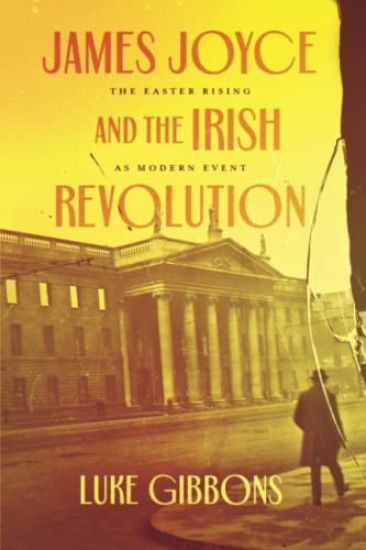
A provocative history of Ulysses and the Easter Rising as harbingers of decolonization. When revolutionaries seized Dublin during the 1916 Easter Rising, they looked back to unrequited pasts to point the way toward radical futures—transforming the Celtic Twilight into the electric light of modern Dublin in James Joyce’s Ulysses. For Luke Gibbons, the short-lived rebellion converted the Irish renaissance into the beginning of a global decolonial movement. James Joyce and the Irish Revolution maps connections between modernists and radicals, tracing not only Joyce’s projection of Ireland onto the world stage, but also how revolutionary leaders like Ernie O’Malley turned to Ulysses to make sense of their shattered worlds. Coinciding with the centenary of both Ulysses and Irish independence, this book challenges received narratives about the rebellion and the novel that left Ireland changed, changed utterly.
James Joyce and the Irish Revolution

James Joyce and the Irish Revolution

Luke Gibbons

THE UNIVERSITY OF CHICAGO PRESS
2023
nidottu
A provocative history of Ulysses and the Easter Rising as harbingers of decolonization. When revolutionaries seized Dublin during the 1916 Easter Rising, they looked back to unrequited pasts to point the way toward radical futures—transforming the Celtic Twilight into the electric light of modern Dublin in James Joyce’s Ulysses. For Luke Gibbons, the short-lived rebellion converted the Irish renaissance into the beginning of a global decolonial movement. James Joyce and the Irish Revolution maps connections between modernists and radicals, tracing not only Joyce’s projection of Ireland onto the world stage, but also how revolutionary leaders like Ernie O’Malley turned to Ulysses to make sense of their shattered worlds. Coinciding with the centenary of both Ulysses and Irish independence, this book challenges received narratives about the rebellion and the novel that left Ireland changed, changed utterly.
Edmund Burke and Ireland

Edmund Burke and Ireland

Luke Gibbons

Cambridge University Press
2009
pokkari
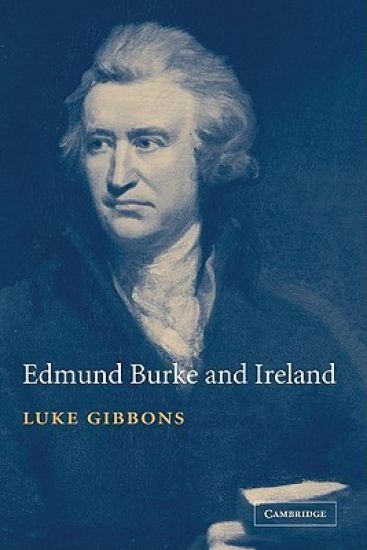
This pioneering study of Burke's engagement with Irish politics and culture argues that Burke's influential early writings on aesthetics are intimately connected to his lifelong political concerns. The concept of the sublime, which lay at the heart of his aesthetics, addressed itself primarily to the experience of terror, and it is this spectre that haunts Burke's political imagination throughout his career. Luke Gibbons argues that this found expression in his preoccupation with political terror, whether in colonial Ireland and India, or revolutionary America and France. Burke's preoccupation with violence, sympathy and pain allowed him to explore the dark side of the Enlightenment, but from a position no less committed to the plight of the oppressed, and to political emancipation. This major reassessment of a key political and cultural figure will appeal to Irish studies and Post-Colonial specialists, political theorists and Romanticists.
Edmund Burke and Ireland

Edmund Burke and Ireland

Luke Gibbons

Cambridge University Press
2003
sidottu
This pioneering study of Burke's engagement with Irish politics and culture argues that Burke's influential early writings on aesthetics are intimately connected to his lifelong political concerns. The concept of the sublime, which lay at the heart of his aesthetics, addressed itself primarily to the experience of terror, and it is this spectre that haunts Burke's political imagination throughout his career. Luke Gibbons argues that this found expression in his preoccupation with political terror, whether in colonial Ireland and India, or revolutionary America and France. Burke's preoccupation with violence, sympathy and pain allowed him to explore the dark side of the Enlightenment, but from a position no less committed to the plight of the oppressed, and to political emancipation. This major reassessment of a key political and cultural figure will appeal to Irish studies and Post-Colonial specialists, political theorists and Romanticists.
Limits of the Visible

Limits of the Visible

Luke Gibbons

Quinnipiac University Press
2015
nidottu
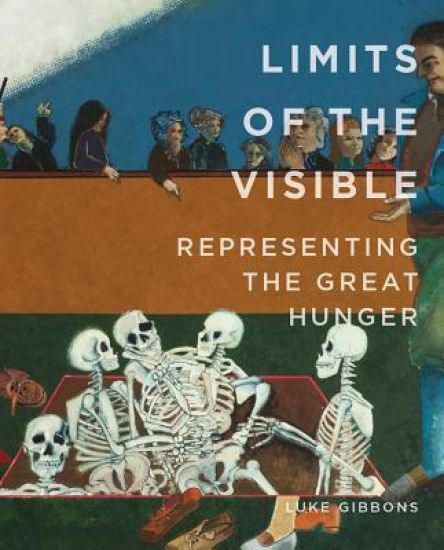
Ireland's Great Hunger Museum at Quinnipiac University publishes Famine Folios, a unique resource for students, scholars and researchers, as well as general readers, covering many aspects of the Famine in Ireland from 1845 - 1852 - the worst demographic catastrophe of nineteenth-century Europe. The essays are interdisciplinary in nature, and make available new research in Famine studies by internationally established scholars in history, art history, cultural theory, philosophy, media history, political economy, literature and music. This publications initiative is devised to augment the Museum experience, and is part of the Museum's commitment to making its collection accessible to audiences of all ages and levels of educational interest. The booklets are produced to the highest level, beautifully illustrated with works from the Museum and related collections. It ensures that audiences have access to the latest scholarship as it pertains to both the historical and contemporary dimensions of the collection.The absence of photographs of the Irish Famine has been attributed to the shortcomings of a medium then it its infancy, but it may also be due to certain limitations in the visible itself. Susan Sontag argued that images can evoke sentimental responses but cannot address wider political questions of obligation and justice. Luke Gibbons revisits representations of the Famine, particularly those in Ireland's Great Hunger Museum to argue that images can not only give visual pleasure but demand ethical interventions on the part of spectators. This fusing of sympathy and affective response with the right of redress is conveyed by a 'judicious obscurity,' a determination not to show all, which places an obligation on the spectator to complete what is beyond representation, or what is left to the imagination.
Gaelic Gothic

Gaelic Gothic

Luke Gibbons

Arlen House
2006
nidottu
Explores the complexities of the gothic genre, maintaining that, though originally a literary genre known for its popular or sensational appeal, the gothic grew to become part of everyday life. This is a thought-provoking study that recognises the relationship between racial theory and literary genre.