Kirjojen hintavertailu. Mukana 11 244 527 kirjaa ja 12 kauppaa.

Kirjahaku

Etsi kirjoja tekijän nimen, kirjan nimen tai ISBN:n perusteella.

31 kirjaa tekijältä Luke Timothy Johnson

The First and Second Letters to Timothy

The First and Second Letters to Timothy

Luke Timothy Johnson

Yale University Press
2001
sidottu
The letters of Paul to Timothy, one of his favorite delegates, often make for difficult reading in today's world. They contain much that make modern readers uncomfortable, and much that is controversial, including pronouncements on the place of women in the Church and on homosexuality, as well as polemics against the so-called "false teachers." They have also been of a source of questions within the scholarly community, where the prevailing opinion since the nineteenth century is that someone else wrote the letters and signed Paul's name in order to give them greater authority. Using the best of modern and ancient scholarship, Luke Timothy Johnson provides clear, accessible commentary that will help lay readers navigate the letters and better understand their place within the context Paul's teachings. Johnson's conclusion that they were indeed written by Paul himself ensures that this volume, like the other Anchor Bible Commentaries, will attract the attention of theologians and other scholars.
The Real Jesus

The Real Jesus

Luke Timothy Johnson

HarperOne
1997
nidottu
The Real Jesus -- the first book to challenge the findings of the Jesus Seminar, the controversial group of two hundred scholars who claim Jesus only said 18 percent of what the Gospels attribute to him -- "is at the center of the newest round in what has been called the Jesus Wars" (Peter Steinfels, New York Times). Drawing on the best biblical and historical scholarship, respected New Testament scholar Luke Timothy Johnson demonstratesd that the "real Jesus" is the one experienced in the present through faith rather than one found in speculative historical reconstructions. A new preface by the author presents his point of view on the most recent rounds of this lively debate.
Living Jesus

Living Jesus

Luke Timothy Johnson

HarperOne
2000
nidottu
Who is the real Jesus? How can we experience the mystery, compelxity, and richness of his spirituality and teachings in our lives today? In this gently instructive and inspiring guide, Luke Timothy Johnson leads us to a deeper understanding and practice of classic Christian spirituality and faith. Translating his biblical scholarship into simple, elegant language, he offers a compelling and wise reflection on the real Jesus--not the reconstructed historical figure but the resurrected Christ, a living savior we can encounter every day.Living Jesus elucidates the mystery of Jesus' resurrection and its central role in the Christian experience. It explores the diversity and fullness of the New Testament views of Christ, revealing how each book's perspective can deepen our understanding of Jesus. Profoundly insightful, Living Jesus offers valuable lessons on how we can accept the Gospels' powerful invitation to an authenic Christian spirituality.
The New Testament

The New Testament

Luke Timothy Johnson

Oxford University Press Inc
2010
nidottu
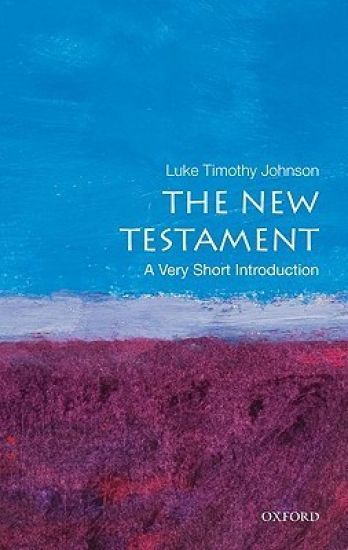
As part of the Christian Bible, the New Testament is at once widely influential and (especially among the young and the educated) increasingly unknown. Those who want to know the basics can find in this introduction the sort of information that locates these ancient writings in their historical and literary context. Those who want to learn why these compositions have had such impact can find here an appreciation for the religious experiences of the first Christians that forced them to reinterpret their Jewish and Greek heritage and reshape their symbolic world. In addition to providing the broad conceptual and factual framework for the New Testament --- including the process by which distinct compositions became a sacred book --- this introduction provides as well a more detailed examination of specific compositions that have had particularly strong influence, including Paul's letters to the Corinthians and Romans, the four Gospels, and the Book of Revelation. ABOUT THE SERIES: The Very Short Introductions series from Oxford University Press contains hundreds of titles in almost every subject area. These pocket-sized books are the perfect way to get ahead in a new subject quickly. Our expert authors combine facts, analysis, perspective, new ideas, and enthusiasm to make interesting and challenging topics highly readable.
The Creed

The Creed

Luke Timothy Johnson

Darton,Longman Todd Ltd
2003
nidottu
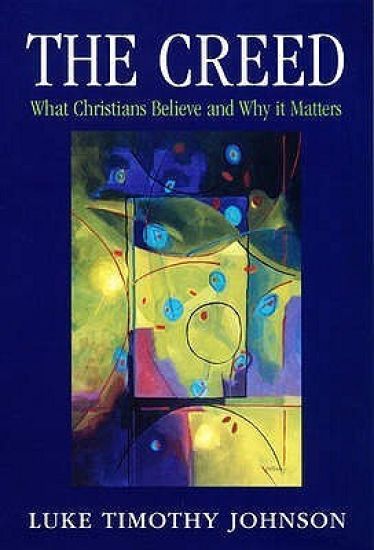
Authoritative, beautifully written and persuasively argued, this book challenges positions taken up by both liberals and conservatives, eloquently demonstrating that faith is a dynamic process not a static set of rules. It will be welcomed by members of every church community, students, clergy and lay people.
The Letter of James

The Letter of James

Luke Timothy Johnson

Yale University Press
2005
pokkari
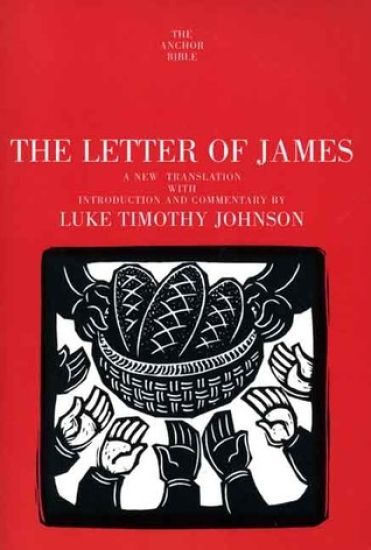
The Letter of James is one of the most significant, yet generally overlooked, New Testament books. Because Martin Luther, leader of the Protestant Reformation, disliked this letter for its emphasis on good deeds, the book has come to be viewed as being in opposition to Paul’s letters, which emphasize faith in God. To correct these and other misperceptions about James, Luke Timothy Johnson embarks on an unprecedented history of the interpretation of this pivotal letter, highlighting the vast appreciation for James over the centuries. Johnson boldly identifies the first-century author as none other than James, the brother of Jesus Christ. While modern skepticism casts doubt on this conclusion, early textual witnesses, as well as saints and scholars throughout the centuries, corroborate Johnson’s position. A thorough examination of the original-language texts and an explanation of the literary context of James help illuminate the original meaning of the letter. Johnson’s sensitivity to both the biblical text and the sensibilities of the modern reader, coupled with his convincing scholarly presentation, set this apart as one of the premier commentaries on James for present and future generations.
Hebrews

Hebrews

Luke Timothy Johnson

Westminster/John Knox Press,U.S.
2006
sidottu
This volume of the New Testament Library offers a thorough and careful commentary on the complicated book of Hebrews, showing its meaning within the context of ancient culture and the theological development of the early church. Written by one of the leading New Testament scholars of the present generation, this commentary offers remarkable insights into the Hellenistic, Roman, and Jewish contexts of the book of Hebrews.The New Testament Library offers authoritative commentary on every book and major aspect of the New Testament, as well as classic volumes of scholarship. The commentaries in this series provide fresh translations based on the best available ancient manuscripts, offer critical portrayals of the historical world in which the books were created, pay careful attention to their literary design, and present a theologically perceptive exposition of the text.
Miracles

Miracles

Luke Timothy Johnson

Westminster/John Knox Press,U.S.
2018
sidottu
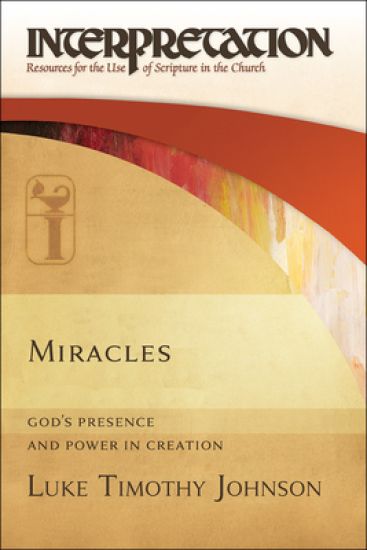
Miracles are not confined to the stories of Scripture; these signs of God's presence and power in creation are experienced throughout our daily existence. Yet cultural challenges and modernity's skepticism have marginalized belief in them as unreasonable and irrational, says Luke Timothy Johnson. In this excellent resource for church professionals, Johnson reclaims Christian belief in miracles as integral to recovering a proper and strong sense of creation, recognizing the validity of personal experience and narrative and asserting the truth-telling quality of myth. His analysis includes:a description of the competing symbolic worldviews that have framed the discussion on miracles, including secular debates and theological imagination;interpretation of miracles consonant with the biblical construction of reality in the Old and New Testaments; suggestions for four areas in the church's life&#8212teaching, preaching, prayer, and pastoral care&#8212that can work together to shape a symbolic world, within which believers can expect, perceive, and celebrate the miracles in everyday life.
Hebrews

Hebrews

Luke Timothy Johnson

Westminster/John Knox Press,U.S.
2012
nidottu
This volume of the New Testament Library offers a thorough and careful commentary on the complicated book of Hebrews, showing its meaning within the context of ancient culture and the theological development of the early church. Written by one of the leading New Testament scholars of the present generation, this commentary offers remarkable insights into the Hellenistic, Roman, and Jewish contexts of the book of Hebrews.The New Testament Library offers authoritative commentary on every book and major aspect of the New Testament, as well as classic volumes of scholarship. The commentaries in this series provide fresh translations based on the best available ancient manuscripts, offer critical portrayals of the historical world in which the books were created, pay careful attention to their literary design, and present a theologically perceptive exposition of the text.
Miracles

Miracles

Luke Timothy Johnson

WESTMINSTER/JOHN KNOX PRESS,U.S.
2018
nidottu
Miracles are not confined to the stories of Scripture; these signs of God's presence and power in creation are experienced throughout our daily existence. Yet cultural challenges and modernity's skepticism have marginalized belief in them as unreasonable and irrational, says Luke Timothy Johnson. In this excellent resource for church professionals, Johnson reclaims Christian belief in miracles as integral to recovering a proper and strong sense of creation, recognizing the validity of personal experience and narrative and asserting the truth-telling quality of myth. His analysis includes:a description of the competing symbolic worldviews that have framed the discussion on miracles, including secular debates and theological imagination;interpretation of miracles consonant with the biblical construction of reality in the Old and New Testaments; suggestions for four areas in the church's life&#8212teaching, preaching, prayer, and pastoral care&#8212that can work together to shape a symbolic world, within which believers can expect, perceive, and celebrate the miracles in everyday life.
Scripture & Discernment

Scripture & Discernment

Luke Timothy Johnson

Abingdon Press
1996
pokkari
Luke Timothy Johnson begins his study of the practical issue of how decisions are made in the church by admitting to a bias: that there ought to be a connection between what the church claims to be, and how it does things. Because the church claims to be a community of faith, it does not reach decisions simply on the basis of good management policy, or the analysis of market trends, or efficiency, or even ideological consistency, but in response to God's activity in the world that presses upon us and urges us to decision. Faced with how to respond to God's leading, the church decides what to do on the basis of two realities: Scripture and discernment. Because it calls the church into being Scripture is the fundamental authority in the church's life. Yet it is not enough for a congregation simply to turn to the Bible when a decision must be reached, for Scripture does not directly address all issues which face the church today, and those it does often reflect greatly differing historical and social contexts than our own. Thus, added to the authority of Scripture in the church's decision making is a process of discernment, in which the members of the community--under the guidance of the Holy Spirit--recall how God has worked in their lives as individuals and as a community and discern together God's direction for the future. Johnson argues that this very pattern of decision making can be found in Scripture itself, notably in one of the central events of the book of Acts. Beginning with the conversion of Cornelius and culminating in the Apostolic Council of Acts 15, we see how a string of smaller narratives combine to tell the story of God's movement within their midst, and how this narrative became the basis for the reinterpretation of Scripture and the inclusion of Gentiles into the fellowship of the church. Looking at a number of thorny issues facing the contemporary church, Johnson demonstrates how the interaction of Scripture and discernment can and must become the basis for how we respond to the decisions with which the church wrestles today.
Religious Experience in Earliest Christianity

Religious Experience in Earliest Christianity

Luke Timothy Johnson

Augsburg Fortress
1998
pokkari
Luke Johnson here issues a provocative call for a radically new direction in New Testament studies that can change the way we have viewed the entire phenomenon of early Christianity.Johnson is convinced that the dominant ways of studying early Christianity tend to miss its specifically religious character, because of a disjunction between formal religion and popular religion. He proposes in this book, by means of three case studies -- baptism, glossolalia, and meals -- to show how a more holistic, phenomenological approach can be made. This makes possible the inclusion in the study of early Christianity the world of healings and religious power, of ecstasy and spirit -- in short, the religious experience of real persons.It is this subtle yet real presence of religious experience that alters the discipline and practice of New Testament scholarship, as Johnson notes: This is neither history in the strict sense of the term, nor is it theology. That's the whole point: we need a new way of looking in order to see what we can't otherwise see. If I have succeeded at least in whetting an appetite for getting at what these chapters try to get at, I am content, for what they try to get at is important.Johnson concludes that there is still much to be learned about early Christianity as a religion, if we can find a way to get at the category of real experience. He maintains that early Christian texts reflect lives that are caught up by and defined by a power not in their control but controlled instead by the crucified and raised Messiah Jesus.
The Writings of the New Testament

The Writings of the New Testament

Luke Timothy Johnson

Augsburg Fortress
2010
pokkari
Johnson offers an interpretation of the New Testament as a witness to the rise of early faith in Jesus. Critically judicious and theologically attuned to the role of the New Testament in the life of the church, Johnson deftly guides his reader through a wealth of historical and literary description.
Prophetic Jesus, Prophetic Church

Prophetic Jesus, Prophetic Church

Luke Timothy Johnson

William B Eerdmans Publishing Co
2011
nidottu
In this and every age, the church desperately needs prophecy. It needs the bold proclamation of God's transforming vision to challenge its very human tendency toward expediency and self-interest -- to jolt it into new insight and energy. For Luke Timothy Johnson, the New Testament books Luke and Acts provide that much-needed jolt to conventional norms. To read Luke-Acts as a literary unit, he says, is to uncover a startling prophetic vision of Jesus and the church -- and an ongoing call for today's church to embody and proclaim God's vision for the world.
Sharing Possessions

Sharing Possessions

Luke Timothy Johnson

William B Eerdmans Publishing Co
2011
nidottu
Challenges Christians to change the way they regard their worldly goods-This book is written as an exercise in theological reflection on one of the knottiest questions imaginable: the connection between being a Christian and the way we own and use things. . . . When we turn to thinking about money and possessions, we find ourselves in murky waters. The things we own and use, like our sexuality, lie close to the bone of our individual and collective sense of identity.- So writes respected scholar Luke Timothy Johnson in his introduction to Sharing Possessions: What Faith Demands. Stepping purposefully into the -murky waters- of owning and sharing, Johnson endeavors to define the slippery concept of human possession -- especially in relation to God's divine ownership -- and to unpack the Bible's teaching on the mystery of human possessing and possessiveness. This second edition, reflecting thirty years of Johnson's further thinking on the subject, features chapters expanded with fresh insights, helpful new study questions for each chapter, and a substantial epilogue updating the work.
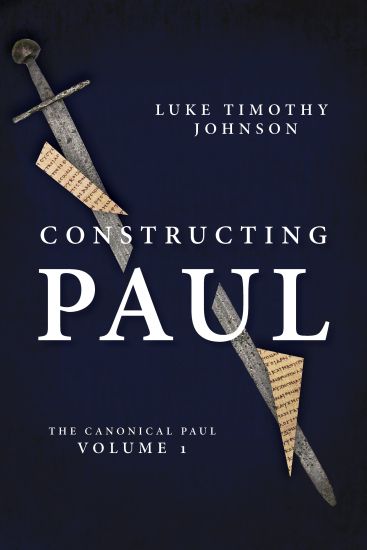
Constructing Paul: The Canonical Paul, Vol. 1

Constructing Paul: The Canonical Paul, Vol. 1

Luke Timothy Johnson

William B. Eerdmans Publishing Company
2020
sidottu
First of a two-volume work providing a framework for understanding the life and thought of the apostle PaulIn this methodological tour de force, Luke Timothy Johnson offers an articulate, clear, and thought-provoking portrait of the life and thought of the apostle Paul.Drawing upon recent developments in the study of Paul, Johnson offers readers an invitation to the Apostle Paul. Rather than focusing on a few of Paul's letters, Johnson lays out the materials necessary to envision the apostle from the thirteen canonical letters of Paul and the Acts of the Apostles. Constructing Paul thus provides a framework within which an engagement with Paul's letters can take place. Johnson demonstrates the possibility of doing responsible and creative work across the canonical collection without sacrificing literary or historical integrity.By bringing out the facets of the apostle from the canonical evidence, Johnson shows the possibilities for further and better inquiry into the life and thought of Paul. This first volume imagines a plausible biography for Paul and serves as an introduction to the studies in the second volume. Constructing Paul addresses all the pertinent questions related to the study of Paul. Johnson uses the canonical material as building blocks to make a case for why Paul ought to be heard today as a liberating rather than oppressing voice.
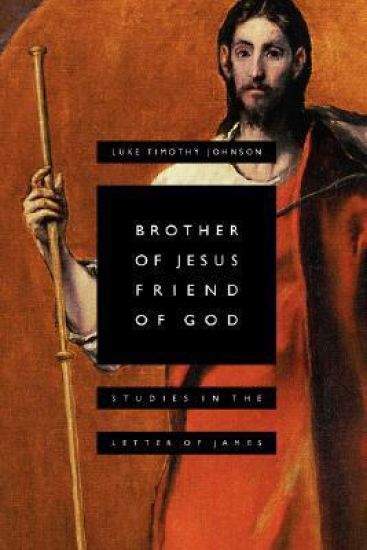
Brother of Jesus, Friend of God

Brother of Jesus, Friend of God

Luke Timothy Johnson

William B Eerdmans Publishing Co
2004
pokkari
The letter of James has enjoyed a colorful history, with its background and significance widely debated over the centuries. In this book an outstanding scholar of the New Testament offers new and selected studies of James that show its roots in antiquity and its importance for Christian history and theology. Luke Timothy Johnson explores the letter of James from a variety of perspectives. After a general introduction to James, he looks at its history of interpretation. Johnson then examines James's social and historical situation, its place within Scripture, and its use of the sayings of Jesus. Several exegetical studies take care to place James in the context of Hellenistic moral discourse. Two concluding essays look at the themes of friendship and gender in James. While seemingly of interest only to professionals, Johnson's Brother of Jesus, Friend of God will also be accessible to general readers serious about Bible study, and church groups will find this volume to be a fruitful entry into an important portion of the New Testament.
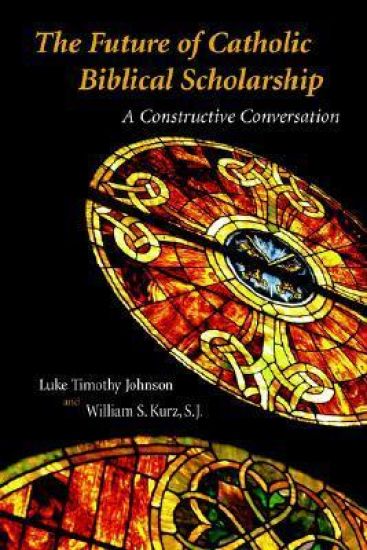
The Future of Catholic Biblical Scholarship: a Constructive Conversation

The Future of Catholic Biblical Scholarship: a Constructive Conversation

Luke Timothy Johnson

William B Eerdmans Publishing Co
2002
pokkari
This volume considers the current state of research, offering a critique of current approaches to Catholic Biblical scholarship from a Catholic viewpoint. The authors (they're both Catholic theologians: Johnson teaches at Emory U., Kurz at Marquette U.) have contributed five chapters each on their approaches to Biblical interpretation, chapters in which they respond to each other's work, and a co-written conclusion offering their views on the importance of maintaining a Catholic identity in Biblical scholarship.