Kirjojen hintavertailu. Mukana 11 627 067 kirjaa ja 12 kauppaa.

Kirjahaku

Etsi kirjoja tekijän nimen, kirjan nimen tai ISBN:n perusteella.

34 kirjaa tekijältä Lydia Davis

The Collected Stories of Lydia Davis

The Collected Stories of Lydia Davis

Lydia Davis

Penguin Books Ltd
2014
pokkari
The Collected Stories of Lydia Davis is the complete collection of short fiction from the world-renowned Lydia Davis.WINNER OF THE MAN BOOKER INTERNATIONAL PRIZE 2013.'Big rejoicing: Lydia Davis has won the Man Booker International prize. Never did a book award deliver such a true match-winning punch. Best of all, a new audience will read her now and find her wit, her vigour and rigour, her funniness, her thoughtfulness, and the precision of form, which mark Davis out as unique.Daring, excitingly intelligent and often wildly comic [she] reminds you, in a world that likes to bandy its words about, what words such as economy, precision and originality really mean. This is a writer as mighty as Kafka, as subtle as Flaubert and as epoch-making, in her own way, as Proust. A two-liner from Davis, or a seemingly throwaway paragraph, will haunt. What looks like a game will open to deep seriousness; what looks like philosophy will reveal playfulness, tragicomedy, ordinariness; what looks like ordinariness will ask you to look again at Davis's writing. In its acuteness, it always asks attentiveness, and it repays this by opening up to its reader like possibility, or like a bush covered in flowerheads.She's a joy. There's no writer quite like her' Ali Smith'What stories. Precise and piercing, extremely funny. Nearly all are unlike anything you've ever read' Metro'I loved these stories. They are so well-written, with such clarity of thought and precision of language. Excellent' William Leith, Evening Standard'Remarkable. Some of the most moving fiction - on death, marriage, children - of recent years. To read Collected Stories is to be reminded of the grand, echoing mind-chambers created by Sebald or recent Coetzee. A writer of vast intelligence and originality' Independent on Sunday'A body of work probably unique in American writing, in its combination of lucidity, aphoristic brevity, formal originality, sly comedy, metaphysical bleakness, philosophical pressure and human wisdom' New Yorker'Davis is a high priestess of the startling, telling detail. She can make the most ordinary things, such as couples talking, or someone watching television, bizarre, almost mythical. I felt I had encountered a most original and daring mind' Colm Toibin, Daily TelegraphLydia Davis is the author of one novel and seven story collections, the most recent of which was a finalist for the 2007 National Book Award. She is the recipient of a MacArthur Fellowship and was named a Chevalier of the Order of Arts and Letters by the French government for her fiction and her translations of modern writers including Maurice Blanchot, Michel Leiris and Marcel Proust.
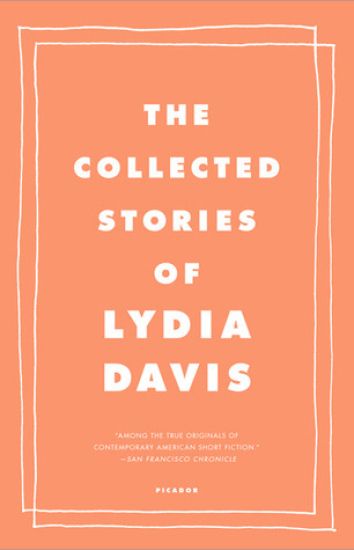
The Collected Stories of Lydia Davis
The Collected Stories of Lydia Davis is an event in American letters. Lydia Davis is one of our most original and influential writers. She has been called "an American virtuoso of the short story form" (Salon) and "one of the quiet giants . . . of American fiction" (Los Angeles Times Book Review). Now, for the first time, Davis's short stories are collected in one volume, from the groundbreaking Break It Down (1986) to the 2007 National Book Award nominee Varieties of Disturbance. "Among the true originals of contemporary American short fiction." --San Francisco Chronicle
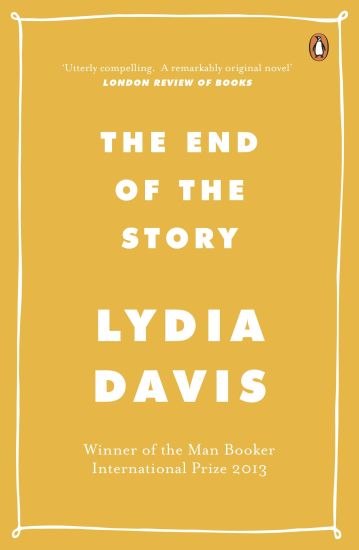
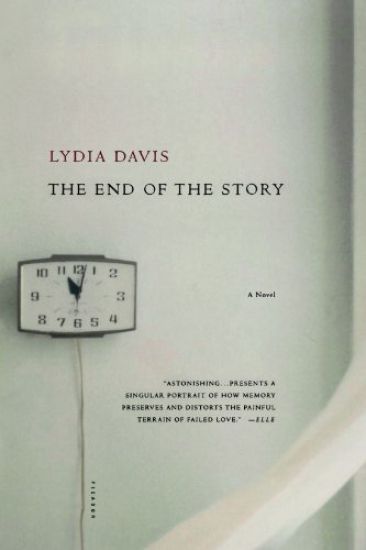
The End of the Story

The End of the Story

Lydia Davis

Penguin Books Ltd
2015
pokkari
The first and only novel by Lydia Davis, winner of the Man Booker International Prize 2013.'It surprised me, over and over, to find that I was with such a young man. He was twenty-two when I met him. He turned twenty-three while I knew him, but by the time I turned thirty-five I did not know where he was anymore.'Mislabelled boxes, confusing notes, wrong turnings - such are the obstacles in the way of the unnamed narrator of The End of the Story as she organises her memories of a love affair into a novel. With compassion, wit and what seems to be candour, she seeks to determine what she actually knows about herself and her past, but we begin to suspect, along with her, that given the elusiveness of memory and understanding, any tale retrieved from the past must be fictionBack in print at last, this is Lydia Davis's first - and so far only - novel. 'Extraordinary' Newsday'Brilliant' New Yorker'Breathtakingly elegant' Details'Beautifully written' Marie Claire'Astonishing' ElleLydia Davis is the author of Collected Stories, one novel and six short story collections, most recently Can't and Won't. She is the recipient of a MacArthur Fellowship and was named an Officer of the Order of Arts and Letters by the French government for her fiction and her translations of modern writers, including Gustave Flaubert and Marcel Proust. She won the Man Booker International Prize in 2013.
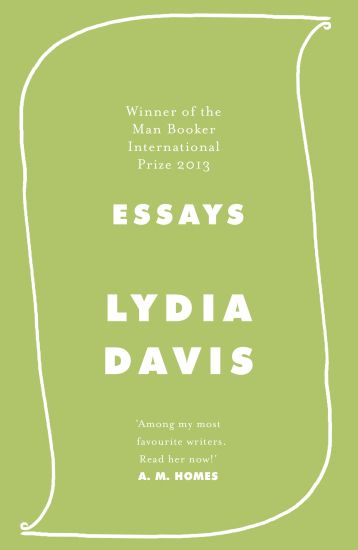
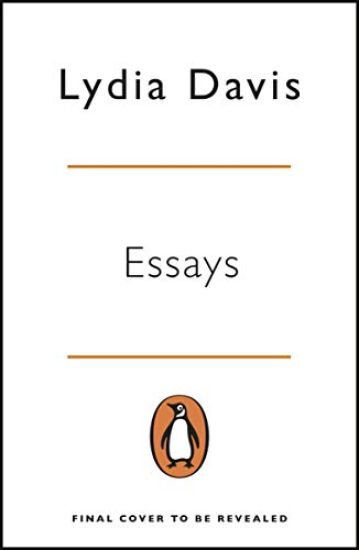
Essays

Essays

Lydia Davis

Hamish Hamilton Ltd
2019
sidottu
From the International Man Booker Prize-winning author of Can't and Won't and The End of the Story - a crystalline collection of literary essays for fans of Susan Sontag and Joan Didion'She's a joy. There's no writer quite like her' Ali Smith 'Among my most favourite writers. Read her now!' A. M. Homes The visionary, fearless Lydia Davis presents a dazzling collection of essays on reading and writing, exploring the full scope of possibility within existing forms of literature and considering how we might challenge and reinvent these forms.Through Thomas Pynchon, Michel Leiris, Maurice Blanchot, Lucia Berlin, Joan Mitchell and others, he author considers her many creative influences. And, through these lenses, she returns to her own writing process, her relationship to language and the written word. Beautifully formed, thought-provoking, playful and illuminating, these pieces are a masterclass in reading and writing.
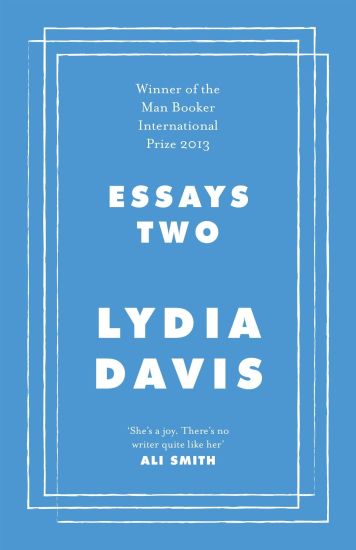
Essays Two

Essays Two

Lydia Davis

PENGUIN BOOKS LTD
2021
sidottu
Lydia Davis returns with a timeless collection of essays on literature and language.'Precise, concentrated, lyrical. No one writes like Lydia Davis, and everyone should read her' Hanif Kureishi'A writer as mighty as Kafka, as subtle as Flaubert, and as epoch-making, in her own way, as Proust' Ali SmithLydia Davis gathered a selection of her non-fiction writing for the first time in 2019 with Essays. Now, she continues the project with Essays Two, focusing on the art of translation, the learning of foreign languages through reading, and her experience of translating, amongst others, Flaubert and Proust, about whom she writes with an unmatched understanding of the nuances of their styles.Every essay in this book is a revelation.
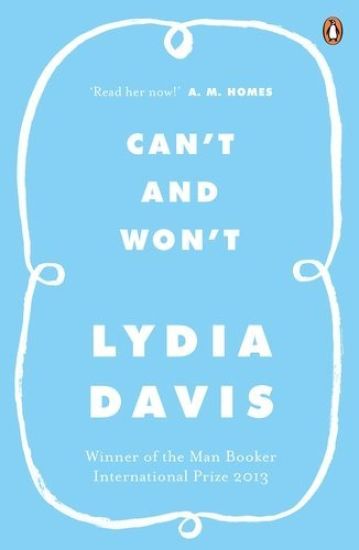
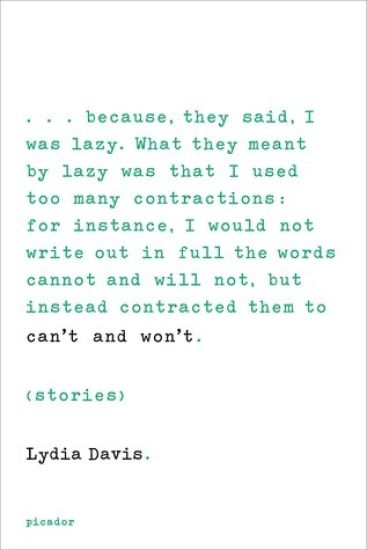
Can't and Won't

Can't and Won't

Lydia Davis

Penguin Books Ltd
2015
pokkari
Can't and Won't is the new collection from Lydia Davis, one of the greatest short story writers alive.WINNER OF THE MAN BOOKER INTERNATIONAL PRIZE 2013Lydia Davis has been universally acclaimed for the wit, insight and genre-defying formal inventiveness of her sparkling stories.With titles like 'A Story of Stolen Salamis', 'Letters to a Frozen Pea Manufacturer', 'A Small Story About a Small Box of Chocolates', and 'Can't and Won't', the stories in this new collection illuminate particular moments in ordinary lives and find in them the humorous, the ironic and the surprising.Above all the stories revel in and grapple with the joys and constraints of language - achieving always the extraordinary, unmatched precision which makes Lydia Davis one of the greatest contemporary writers on the international stage.Praise for Lydia Davis: 'What stories. Precise and piercing, extremely funny. Nearly all are unlike anything you've ever read' Metro'To read The Collected Stories of Lydia Davis is to be reminded of the grand, echoing mind-chambers created by Sebald or recent Coetzee. A writer of vast intelligence and originality' Independent on Sunday'Among my most favourite writers. Read her now!' A. M. HomesLydia Davis is the author of Collected Stories, one novel and six short story collections, the most recent of which was a finalist for the 2007 National Book Award. She is the recipient of a MacArthur Fellowship and was named an Officer of the Order of Arts and Letters by the French government for her fiction and her translations of modern writers, including Gustave Flaubert and Marcel Proust. She won the Man Booker International Prize in 2013.
Essays

Essays

Lydia Davis

Penguin Books Ltd
2026
pokkari
From the International Man Booker Prize-winning author of Can't and Won't and The End of the Story - a crystalline collection of literary essays for fans of Susan Sontag and Joan Didion'Among my most favourite writers. Read her now!' A. M. Homes The visionary, fearless Lydia Davis presents a dazzling collection of essays on reading and writing, exploring the full scope of possibility within existing forms of literature and considering how we might challenge and reinvent these forms.Through Thomas Pynchon, Michel Leiris, Maurice Blanchot, Lucia Berlin, Joan Mitchell and others, he author considers her many creative influences. And, through these lenses, she returns to her own writing process, her relationship to language and the written word. Beautifully formed, thought-provoking, playful and illuminating, these pieces are a masterclass in reading and writing.
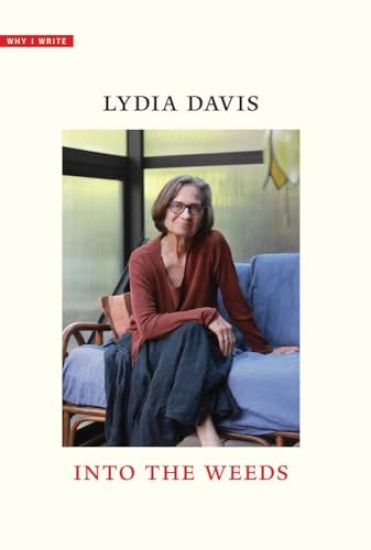
Into the Weeds

Into the Weeds

Lydia Davis

YALE UNIVERSITY PRESS
2026
sidottu
An illuminating reflection on the creative process from acclaimed fiction writer, essayist, and translator Lydia Davis When asked why she writes, Lydia Davis confesses that the question makes her uncomfortable. Maybe she would rather not know. Instead, Davis considers how she writes her stories, how other writers write, and what insights the how might provide into the why. In this free-ranging exploration, Davis discovers that one reason she writes is for pleasure: the pleasure of encountering something that demands to be treated in language, of handling and manipulating the language into the form it ought to take, and, finally, of seeing a story exist where it didn’t exist before. As she observes the processes of some of the authors who interest her the most, she finds that there seem to be as many reasons to write as there are writers: to relive an experience, to share an experience, to articulate something one has not quite comprehended. Reflecting on an eclectic mix of thinkers, including James Baldwin, Kate Briggs, Walter Raleigh, Christina Sharpe, Knut Hamsun, Grace Paley, Josep Pla, John Ashbery, and John Clare, Davis undertakes a clear-eyed, patient inquiry into the manifold reasons we choose to put pen to paper and begin something new.
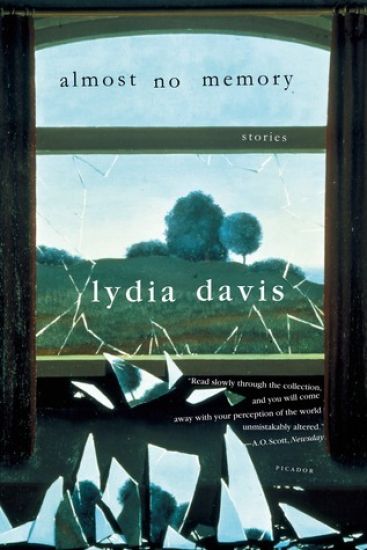
Almost No Memory

Almost No Memory

Lydia Davis

St Martin's Press
2001
pokkari
Philosophical inquiry, examinations of language, and involuted domestic disputes are the focus of Lydia Davis's inventive collection of short fiction, "Almost No Memory." In each of these stories, Davis reveals an empathic, sometimes shattering understanding of human relationships.
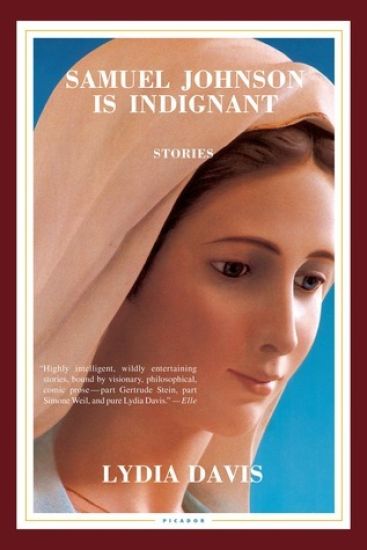
Samuel Johnson Is Indignant: Stories
The author of Almost No Memory presents an inventive collection of short fiction that explores the various ways in which human beings perceive each other and themselves, from a couple that suspects their friends think them boring to a funeral home that receives a letter rebuking it for linguistic errors. Reprint. 10,000 first printing.
The End of the Story

The End of the Story

Lydia Davis

Picador USA
2004
nidottu
Mislabeled boxes, problems with visiting nurses, confusing notes, an outing to the county fair--such are the obstacles in the way of the unnamed narrator of The End of the Story as she attempts to organize her memories of a love affair into a novel. With compassion, wit, and what appears to be candor she seeks to determine what she actually knows about herself and her past, but we begin to suspect, along with her, that given the elusiveness of memory and understanding, any tale retrieved from the past must be fiction.
Essays Two: On Proust, Translation, Foreign Languages, and the City of Arles
A collection of essays on translation, foreign languages, Proust, and one French city, from the master short-fiction writer and acclaimed translator Lydia Davis In Essays One, Lydia Davis, who has been called "a magician of self-consciousness" by Jonathan Franzen and "the best prose stylist in America" by Rick Moody, gathered a generous selection of her essays about best writing practices, representations of Jesus, early tourist photographs, and much more. Essays Two collects Davis's writings and talks on her second profession: the art of translation. The award-winning translator from the French reflects on her experience translating Proust ("A work of creation in its own right." --Claire Messud, Newsday), Madame Bovary (" Flaubert's] masterwork has been given the English translation it deserves." --Kathryn Harrison, The New York Times Book Review), and Michel Leiris ("Magnificent." --Tim Watson, Public Books). She also makes an extended visit to the French city of Arles, and writes about the varied adventures of learning Norwegian, Dutch, and Spanish through reading and translation. Davis, a 2003 MacArthur Fellow and the winner of the 2013 Man Booker International Prize for her fiction, here focuses her unique intelligence and idiosyncratic ways of understanding on the endlessly complex relations between languages. Together with Essays One, this provocative and delightful volume cements her status as one of our most original and beguiling writers.
Varieties of Disturbance: Stories

Varieties of Disturbance: Stories

Lydia Davis

Picador USA
2007
nidottu
Lydia Davis has been called "one of the quiet giants in the world of American fiction" (Los Angeles Times), "an American virtuoso of the short story form" (Salon), an innovator who attempts "to remake the model of the modern short story" (The New York Times Book Review). Her admirers include Grace Paley, Jonathan Franzen, and Zadie Smith; as Time magazine observed, her stories are "moving . . . and somehow inevitable, as if she has written what we were all on the verge of thinking." In Varieties of Disturbance, her fourth collection, Davis extends her reach as never before in stories that take every form from sociological studies to concise poems. Her subjects include the five senses, fourth-graders, good taste, and tropical storms. She offers a reinterpretation of insomnia and re-creates the ordeals of Kafka in the kitchen. She questions the lengths to which one should go to save the life of a caterpillar, proposes a clear account of the sexual act, rides the bus, probes the limits of marital fidelity, and unlocks the secret to a long and happy life. No two of these fictions are alike. And yet in each, Davis rearranges our view of the world by looking beyond our preconceptions to a bizarre truth, a source of delight and surprise. Varieties of Disturbance is a 2007 National Book Award Finalist for Fiction.
The Stripper, the Drug Dealer & the Bishop: Three Husbands, Same Spirit
The Stripper: I thought I found my Prince Charming. But he turned out to be a child molester who raped my 9-year-old baby girl. The Drug Dealer: I thought life is going to be easy, until someone walks in and puts a bullet into our worker's head. The Bishop: I'm on my way to heaven-or so I thought. I didn't realize I was about to walk through a living hell. This true story of my life will show how only God can deliver you out of any situation.
Can't and Won't: Stories

Can't and Won't: Stories

Lydia Davis

Picador USA
2015
nidottu
NATIONAL BESTSELLERThe New York Times - Los Angeles Times - The Boston GlobeHer stories may be literal one-liners: the entirety of "Bloomington" reads, "Now that I have been here for a little while, I can say with confidence that I have never been here before." Or they may be lengthier investigations of the havoc wreaked by the most mundane disruptions to routine: in "A Small Story About a Small Box of Chocolates," a professor receives a gift of thirty-two small chocolates and is paralyzed by the multitude of options she imagines for their consumption. The stories may appear in the form of letters of complaint; they may be extracted from Flaubert's correspondence; or they may be inspired by the author's own dreams, or the dreams of friends. What does not vary throughout Can't and Won't, Lydia Davis's fifth collection of stories, is the power of her finely honed prose. Davis is sharply observant; she is wry or witty or poignant. Above all, she is refreshing. Davis writes with bracing candor and sly humor about the quotidian, revealing the mysterious, the foreign, the alienating, and the pleasurable within the predictable patterns of daily life.
Essays One

Essays One

Lydia Davis

Picador USA
2020
nidottu
A selection of essays on writing and reading by the master short-fiction writer Lydia Davis Lydia Davis is a writer whose originality, influence, and wit are beyond compare. Jonathan Franzen has called her "a magician of self-consciousness," while Rick Moody hails her as "the best prose stylist in America." And for Claire Messud, "Davis's signal gift is to make us feel alive." Best known for her masterful short stories and translations, Davis's gifts extend equally to her nonfiction. In Essays One, Davis has, for the first time, gathered a selection of essays, commentaries, and lectures composed over the past five decades. In this first of two volumes, her subjects range from her earliest influences to her favorite short stories, from John Ashbery's translation of Rimbaud to Alan Cote's painting, and from the Shepherd's Psalm to early tourist photographs. On display is the development and range of one of the sharpest, most capacious minds writing today.
Essays Two: On Proust, Translation, Foreign Languages, and the City of Arles
A collection of essays on translation, foreign languages, Proust, and one French city, from the master short-fiction writer and acclaimed translator Lydia Davis In Essays One, Lydia Davis, who has been called "a magician of self-consciousness" by Jonathan Franzen and "the best prose stylist in America" by Rick Moody, gathered a generous selection of her essays about best writing practices, representations of Jesus, early tourist photographs, and much more. Essays Two collects Davis's writings and talks on her second profession: the art of translation. The award-winning translator from the French reflects on her experience translating Proust ("A work of creation in its own right." --Claire Messud, Newsday), Madame Bovary (" Flaubert's] masterwork has been given the English translation it deserves." --Kathryn Harrison, The New York Times Book Review), and Michel Leiris ("Magnificent." --Tim Watson, Public Books). She also makes an extended visit to the French city of Arles, and writes about the varied adventures of learning Norwegian, Dutch, and Spanish through reading and translation. Davis, a 2003 MacArthur Fellow and the winner of the 2013 Man Booker International Prize for her fiction, here focuses her unique intelligence and idiosyncratic ways of understanding on the endlessly complex relations between languages. Together with Essays One, this provocative and delightful volume cements her status as one of our most original and beguiling writers.
Chéri and The End of Chéri

Chéri and The End of Chéri

Lydia Davis

WW NORTON CO
2022
sidottu
Chéri and its sequel, The End of Chéri, mark Colette’s finest achievements in their brilliant, subtle, and frank investigations of love and power. Set in the Parisian demimonde in the last days of the Belle Époque, Chéri tells the story of Léa, a courtesan at the end of a successful career, and her lover, the beautiful but emotionally opaque Chéri. Chéri will soon enter into an arranged marriage, ending their six-year affair, which—they will each realize too late—has been the one real love of their lives. The End of Chéri picks up their story in the aftermath of the First World War. Chéri, now a decorated soldier, has returned from the trenches to a changed world. Emotionally estranged from his independent and unfaithful wife, a psychically wounded Chéri begins an inexorable descent—one that leads him back to a stunning encounter with Léa. As the acclaimed writer and translator Lydia Davis puts it in an illuminating foreword, Rachel Careau’s “brilliantly ingenious, close new translation” reveals Chéri and The End of Chéri as “the strangest of love stories.” Colette skillfully portrays her characters’ shifting inner lives and desires amid a clear-eyed depiction of interpersonal power dynamics. Careau’s lean, attentive translation restores to these classic novels their taut, remarkably modern style—the essence of Colette’s genius.
Chéri and The End of Chéri

Chéri and The End of Chéri

Lydia Davis

WW NORTON CO
2025
nidottu
Chéri and its sequel, The End of Chéri, mark Colette’s finest achievements in their brilliant, subtle, and frank investigations of love and power. Set in the Parisian demimonde in the last days of the Belle Époque, Chéri tells the story of Léa, a courtesan at the end of a successful career, and her lover, the beautiful but emotionally opaque Chéri. Chéri will soon enter into an arranged marriage, ending their six-year affair, which—they will each realize too late—has been the one real love of their lives. The End of Chéri picks up their story in the aftermath of the First World War. Chéri, now a decorated soldier, has returned from the trenches to a changed world. Emotionally estranged from his independent and unfaithful wife, a psychically wounded Chéri begins an inexorable descent—one that leads him back to a stunning encounter with Léa. As the acclaimed writer and translator Lydia Davis puts it in an illuminating foreword, Rachel Careau’s “brilliantly ingenious, close new translation” reveals Chéri and The End of Chéri as “the strangest of love stories.” Colette skillfully portrays her characters’ shifting inner lives and desires amid a clear-eyed depiction of interpersonal power dynamics. Careau’s lean, attentive translation restores to these classic novels their taut, remarkably modern style—the essence of Colette’s genius.