Kirjojen hintavertailu. Mukana 12 016 292 kirjaa ja 12 kauppaa.

Kirjahaku

Etsi kirjoja tekijän nimen, kirjan nimen tai ISBN:n perusteella.

5 kirjaa tekijältä Lydia Goehr

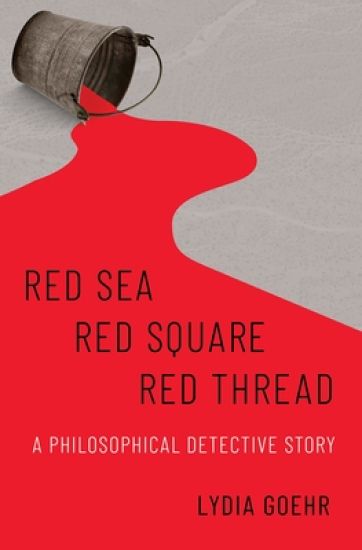
Red Sea-Red Square-Red Thread

Red Sea-Red Square-Red Thread

Lydia Goehr

OXFORD UNIVERSITY PRESS INC
2022
sidottu
A profoundly original philosophical detective story tracing the surprising history of an anecdote ranging across centuries of traditions, disciplines, and ideas Red Sea-Red Square-Red Thread is a work of passages taken, written, painted, and sung. It offers a genealogy of liberty through a micrology of wit. It follows the long history of a short anecdote. Commissioned to depict the biblical passage through the Red Sea, a painter covered over a surface with red paint, explaining thereafter that the Israelites had already crossed over and that the Egyptians were drowned. Clearly, not all you see is all you get. Who was the painter and who the first teller of the tale? Designed as a philosophical detective story, Red Sea-Red Square-Red Thread follows the extraordinary number of thinkers and artists who have used the Red Sea anecdote to make so much more than a merely anecdotal point. Leading the large cast are the philosophers, Arthur Danto and Søren Kierkegaard, the poet and playwright, Henri Murger, the opera composer, Giacomo Puccini, and the painter and print-maker, William Hogarth. Strange companions perhaps, until their use of the anecdote is shown as working its extraordinary passage through so many cosmopolitan cities of art and capital. What about the anecdote brings Danto's philosophy of art into conversation with Kierkegaard's stages on life's way, with Murger and Puccini's la vie de bohème, and with Hogarth's modern moral pictures? The book explores narratives of emancipation in philosophy, theology, politics, and the arts. What has the passage of the Israelites to do with the Egyptians who, by many gypsy names, came to be branded as bohemians when arriving in France from the German lands of Bohemia? What have Moses and monotheism to do with the history of monism and the monochrome? And what sort of thread connects a sea to a square when each is so purposefully named red?
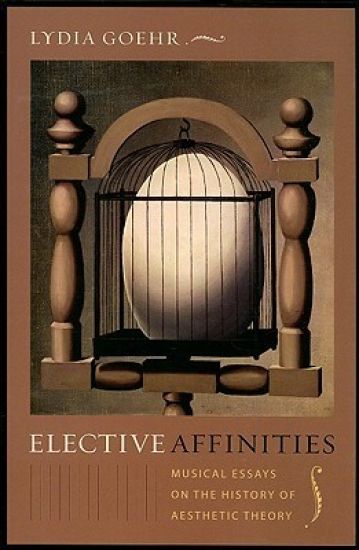
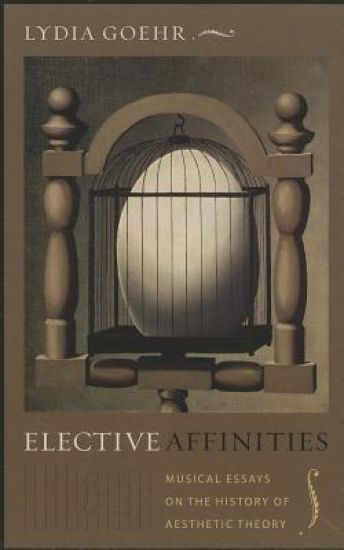
Elective Affinities

Elective Affinities

Lydia Goehr

Columbia University Press
2008
sidottu
As illustrated in Goethe's famous novel of the same name, elective affinities are powerful relationships that crystallize under changing conditions. In this new book, Lydia Goehr focuses on the history of elective affinities between philosophy and music from German classicism, romanticism, and idealism to the modernist aesthetic theory of Theodor W. Adorno and Arthur C. Danto. Aesthetic theory, she argues, depends on a dynamic philosophy of history centered on tendencies, yearnings, needs, and potentialities. With this in mind, she recasts the theses of Adorno and Danto regarding the death or end of philosophy, art, music, and human experience as arguments for continuation and survival. Elective Affinities tracks the migration of aesthetic and critical theory from Germany to the United States following the catastrophic period of the twentieth century marked by the Second World War.
Elective Affinities

Elective Affinities

Lydia Goehr

Columbia University Press
2011
pokkari
As illustrated in Goethe's famous novel of the same name, elective affinities are powerful relationships that crystallize under changing conditions. In this new book, Lydia Goehr focuses on the history of elective affinities between philosophy and music from German classicism, romanticism, and idealism to the modernist aesthetic theory of Theodor W. Adorno and Arthur C. Danto. Aesthetic theory, she argues, depends on a dynamic philosophy of history centered on tendencies, yearnings, needs, and potentialities. With this in mind, she recasts the theses of Adorno and Danto regarding the death or end of philosophy, art, music, and human experience as arguments for continuation and survival. Elective Affinities tracks the migration of aesthetic and critical theory from Germany to the United States following the catastrophic period of the twentieth century marked by the Second World War.
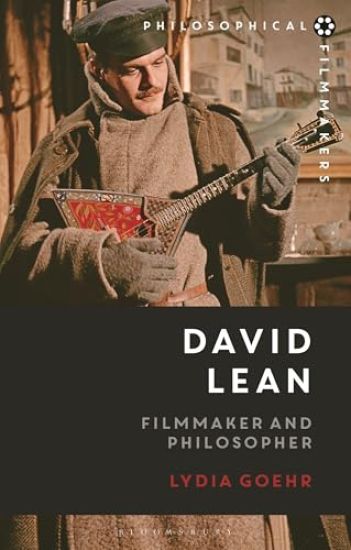
David Lean

David Lean

Lydia Goehr

BLOOMSBURY PUBLISHING PLC
2025
sidottu
David Lean’s extraordinary films enact themselves through the sights and sounds of the technologies of modernity: through trains, planes, ships, and automobiles – through the radio and the gramophone. His musical motifs are known worldwide: Lara’s theme in Zhivago; the Colonel Bogey March in Kwai; Estella’s motif in Great Expectations; Rosy’s motif in Ryan’s Daughter; Lawrence’s motif for his adventure in Arabia, and of course Rachmaninoff’s pounding chords in Brief Encounter. When, however, Lean described the process of cutting pictures as akin to the music flowing through them, what sort of music or musicality had he in mind: a classical or popular music, or a way of using musical form to mix up the meaning and material of his films? Lydia Goehr’s new book tracks the soundscape of Lean’s films not only through their musical scores, but also through the radios and gramophones that, at the start of Lean’s career, were becoming indispensable household commodities. The book begins and ends with a motif, running from the early domestic films situated in the English home, to the subsequent extensive epics of colony, commonwealth, and empire. The fidelities and infidelities of the domestic world are traced across to the loyalties and betrayals of nations in war and peace – dualities that are bound up in this book with the witty British filmmaker’s art itself
David Lean

David Lean

Lydia Goehr

BLOOMSBURY PUBLISHING PLC
2025
nidottu
David Lean’s extraordinary films work philosophically through the modern reproductive and transportive technologies of sight and sound: through trains, planes, ships, and automobiles, from one perspective, and through the modern technology of the radio and gramophone, from another.Lean’s musical motifs are known worldwide: Lara’s theme in Zhivago; the Colonel Bogey March in Kwai; Estella’s motif in Great Expectations; Rosy’s motif in Ryan’s Daughter; Lawrence’s motif for his adventure in Arabia, and of course Rachmaninoff’s pounding chords in Brief Encounter. When, however, Lean described his cutting of pictures as akin to how music flows through pictures, what sort of music or musicality had he in mind: a classical or popular music, or a way of using musical form to mix up the meaning and material of his films?Lydia Goehr’s new book tracks the soundscape in Lean’s films not only through the musical scores composed for the films, but also, and more, through the technology of radio and gramophone that, at the start of Lean’s career, were becoming indispensable household items for the home. The book begins and ends with a motif running from the early more domestic films locally situated in the English home to the later more extensive epics of colony, commonwealth, and empire. The fidelity-infidelity relationship defined by marriage extends to the loyalty-betrayal relationship regarding countries of war and peace—after which this relationship is extended to the witty British manner of making film as a perfected and not so perfected symphonic work of a great cutter’s art. Here, as few other books on Lean have emphasized, the influence of Noel Coward on Lean cannot be overestimated.