Kirjojen hintavertailu. Mukana 12 016 292 kirjaa ja 12 kauppaa.

Kirjahaku

Etsi kirjoja tekijän nimen, kirjan nimen tai ISBN:n perusteella.

14 kirjaa tekijältä Lydia Morris

The Moral Economy of Welfare and Migration

The Moral Economy of Welfare and Migration

Lydia Morris

McGill-Queen's University Press
2021
sidottu
Britain's coalition government of 2010–2015 ushered in an enduring age of austerity and a "moral mission" of welfare reform as part of a drive for deficit reduction. Stricter controls were applied to both domestic welfare and international migration and asylum, which were presented as two sides of the same coin. Policy in both areas has engaged a moral message of earned entitlement and invites a sociological approach that examines such policies in combination, alongside their underpinning moral economy.Exploring the idea of a moral economy – from its original focus on popular rebellion at the rising price of corn to more contemporary analysis of measures that seek to impose moral values from above – Lydia Morris examines Britain's reconfigured pattern of rights in the fields of domestic welfare and migration. Those in power have claimed that heightened conditions and sanctions for the benefit-dependent domestic population, both in and out of work, will promote labour market change and reduce demand for low-skilled migrant workers, often EU citizens, whose own access to benefits was curtailed prior to Brexit. Morris traces related political discourse through to the design and implementation of concrete policy measures and maps the diminished access to rights that has emerged, paying particular attention to the boundaries drawn in defining target groups, and the resistance this has provoked.The Moral Economy of Welfare and Migration considers the topology of the whole system to highlight cross-cutting devices of control that have far-reaching implications for how we are governed as a total population.
The Moral Economy of Welfare and Migration

The Moral Economy of Welfare and Migration

Lydia Morris

McGill-Queen's University Press
2021
nidottu
Britain's coalition government of 2010–2015 ushered in an enduring age of austerity and a "moral mission" of welfare reform as part of a drive for deficit reduction. Stricter controls were applied to both domestic welfare and international migration and asylum, which were presented as two sides of the same coin. Policy in both areas has engaged a moral message of earned entitlement and invites a sociological approach that examines such policies in combination, alongside their underpinning moral economy.Exploring the idea of a moral economy – from its original focus on popular rebellion at the rising price of corn to more contemporary analysis of measures that seek to impose moral values from above – Lydia Morris examines Britain's reconfigured pattern of rights in the fields of domestic welfare and migration. Those in power have claimed that heightened conditions and sanctions for the benefit-dependent domestic population, both in and out of work, will promote labour market change and reduce demand for low-skilled migrant workers, often EU citizens, whose own access to benefits was curtailed prior to Brexit. Morris traces related political discourse through to the design and implementation of concrete policy measures and maps the diminished access to rights that has emerged, paying particular attention to the boundaries drawn in defining target groups, and the resistance this has provoked.The Moral Economy of Welfare and Migration considers the topology of the whole system to highlight cross-cutting devices of control that have far-reaching implications for how we are governed as a total population.
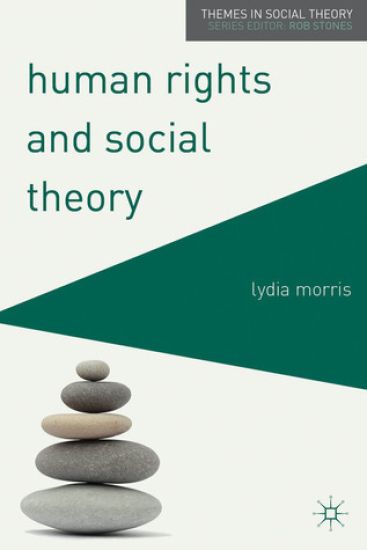
Human Rights and Social Theory

Human Rights and Social Theory

Lydia Morris

Red Globe Press
2013
sidottu
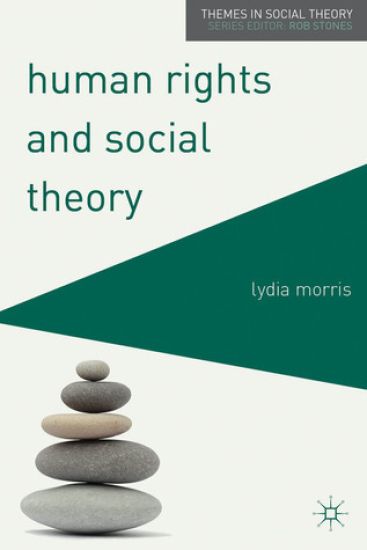
This book examines the contribution social theory can make to understanding different human rights which operate in a variety of settings. Including an introduction to the theoretical issues raised by the study of rights, it covers a range of individual and collective rights, illuminating the relationship between social theory and human rights.
Human Rights and Social Theory

Human Rights and Social Theory

Lydia Morris

Red Globe Press
2013
nidottu
This book examines the contribution social theory can make to understanding different human rights which operate in a variety of settings. Including an introduction to the theoretical issues raised by the study of rights, it covers a range of individual and collective rights, illuminating the relationship between social theory and human rights.
Dangerous Classes

Dangerous Classes

Lydia Morris

Routledge
1994
sidottu
This book provides an authoritative and much needed critical review of British and American debates about the underclass, set in the context of historical material and policy developments. The idea of an underclass is based on a notion of social exclusion, be it cultural or structural in nature. It strikes a contrast with the idea of social citizenship. In accepted definitions of the underclass state dependence had come to be seen as a badge of exclusion rather than a guarantee of inclusion. There has been a gradual shift of emphasis in recent commentary from concern with social rights to anxiety about social obligations, much of which relates to the enforcement of the work ethic. Implicit in much of the literature is an inconclusive examination of gender roles, and particularly the failure of single mother to fulfil their social duties. The ambiguities and contradictions of this postion are uncovered. So too is the neglected issue of migrant labour and its use as a source of labour on terms not acceptable to the native population. The implications of this phenomenon for questions of social inclusion and the definition of the underclass are then considered in the wider context of the social construction of the labour market. The book has emerged from the author's long standing interest and research in unemployment, labour market change, gender relations and social policy. It will be of interest to students and researchers in all of these fields.
Managing Migration

Managing Migration

Lydia Morris

Routledge
2002
sidottu
Nation States now increasingly have to cope with large numbers of non-citizens living within their borders. This has largely been understood in terms of the decline of the nation state or of increasing globalisation, but in Managing Migration Lydia Morris argues that it throws up more complex questions. In the context of the European Union the terms of debate about immigration, legislation governing entry, and the practice of regulation reveal a set of competing concerns, including: *anxiety about the political affiliation of migrants *a clash between commitment to equal treatment and the desire to protect national resources *human rights obligations alongside restrictions on entry. The outcome of these clashes is presented in terms of an increasingly complex system of civic stratification. The book then moves on to examine the way in which abstract notions of rights map on to lived experiences when filtered through other forms of difference such as race and gender. This book will be essential reading for students and researchers working in the areas of migration and the study of the European Union.Lydia Morris is Professor of Sociology at the University of Essex.
Managing Migration

Managing Migration

Lydia Morris

Routledge
2002
nidottu
Nation States now increasingly have to cope with large numbers of non-citizens living within their borders. This has largely been understood in terms of the decline of the nation state or of increasing globalisation, but in Managing Migration Lydia Morris argues that it throws up more complex questions. In the context of the European Union the terms of debate about immigration, legislation governing entry, and the practice of regulation reveal a set of competing concerns, including: *anxiety about the political affiliation of migrants *a clash between commitment to equal treatment and the desire to protect national resources *human rights obligations alongside restrictions on entry. The outcome of these clashes is presented in terms of an increasingly complex system of civic stratification. The book then moves on to examine the way in which abstract notions of rights map on to lived experiences when filtered through other forms of difference such as race and gender. This book will be essential reading for students and researchers working in the areas of migration and the study of the European Union.Lydia Morris is Professor of Sociology at the University of Essex.
Asylum, Welfare and the Cosmopolitan Ideal

Asylum, Welfare and the Cosmopolitan Ideal

Lydia Morris

Routledge Cavendish
2010
sidottu
Asylum, Welfare and the Cosmopolitan Ideal: A Sociology of Rights puts forward the argument that rights must be understood as part of a social process: a terrain for strategies of inclusion and exclusion but also of contestation and negotiation. Engaging debate about how ‘cosmopolitan’ principles and practices may be transforming national sovereignty, Lydia Morris explores this premise through a case study of legal activism, civil society mobilisation, and judicial decision-making. The book documents government attempts to use destitution as a deterrent to control asylum numbers, and examines a series of legal challenges to this policy, spanning a period both before and after the Human Rights Act. Lydia Morris shows how human rights can be used as a tool for radical change, and in so doing proposes a multi-layered 'model' for understanding rights. This incorporates political strategy, public policy, civil society mobilisation, judicial decision-making, and their public impact, and advances a dynamic understanding of rights as part of the recurrent encounter between principles and politics. Rights are therefore seen as both a social product and a social force.
Asylum, Welfare and the Cosmopolitan Ideal

Asylum, Welfare and the Cosmopolitan Ideal

Lydia Morris

Routledge Cavendish
2010
nidottu
Asylum, Welfare and the Cosmopolitan Ideal: A Sociology of Rights puts forward the argument that rights must be understood as part of a social process: a terrain for strategies of inclusion and exclusion but also of contestation and negotiation. Engaging debate about how ‘cosmopolitan’ principles and practices may be transforming national sovereignty, Lydia Morris explores this premise through a case study of legal activism, civil society mobilisation, and judicial decision-making. The book documents government attempts to use destitution as a deterrent to control asylum numbers, and examines a series of legal challenges to this policy, spanning a period both before and after the Human Rights Act. Lydia Morris shows how human rights can be used as a tool for radical change, and in so doing proposes a multi-layered 'model' for understanding rights. This incorporates political strategy, public policy, civil society mobilisation, judicial decision-making, and their public impact, and advances a dynamic understanding of rights as part of the recurrent encounter between principles and politics. Rights are therefore seen as both a social product and a social force.
Dangerous Classes

Dangerous Classes

Lydia Morris

Routledge
2015
nidottu
This book provides an authoritative and much needed critical review of British and American debates about the underclass, set in the context of historical material and policy developments. The idea of an underclass is based on a notion of social exclusion, be it cultural or structural in nature. It strikes a contrast with the idea of social citizenship. In accepted definitions of the underclass state dependence had come to be seen as a badge of exclusion rather than a guarantee of inclusion. There has been a gradual shift of emphasis in recent commentary from concern with social rights to anxiety about social obligations, much of which relates to the enforcement of the work ethic. Implicit in much of the literature is an inconclusive examination of gender roles, and particularly the failure of single mother to fulfil their social duties. The ambiguities and contradictions of this postion are uncovered. So too is the neglected issue of migrant labour and its use as a source of labour on terms not acceptable to the native population. The implications of this phenomenon for questions of social inclusion and the definition of the underclass are then considered in the wider context of the social construction of the labour market. The book has emerged from the author's long standing interest and research in unemployment, labour market change, gender relations and social policy. It will be of interest to students and researchers in all of these fields.
The Workings of the Household

The Workings of the Household

Lydia Morris

Polity Press
1990
nidottu
This book examines the organization of domestic life in the context of recent economic change. Lydia Morris argues that relationships within the household can only be understood with reference to the social and economic environment in which it is located. Through an analysis of economic changes in post-war Britain and the United States, the author examines the structure of labour markets, systems of welfare and local social networks. She charts the theoretical positions which have been developed with respect to the connection between the household and the labour market. Aspects of this link include male unemployment, the significance of female employment, the significance of role reversal, the organization of domestic labour, the management of household finance and the position of young people in the household. Finally, the author examines welfare provision and access to employment generally in order to assess their effects on the organization of the household. This highly original work offers a new approach to the study of the 'household', shedding new light on gender relations and the structure and processes of the labour market.
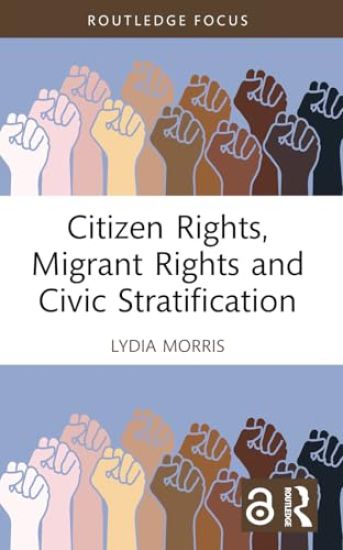
Citizen Rights, Migrant Rights and Civic Stratification
This book explores the concept of civic stratification and examines its contemporary relevance for analysis and understanding of the functioning of rights in society.David Lockwood’s (1996) concept of civic stratification outlines the way in which the rights associated with citizenship can be a source of inequality by virtue of their formal granting or denial by the state, or by informal impediments to their full realisation. The purpose of this book is to explore the meaning and significance of this concept, and elaborate its potential in offering a framework for understanding the dynamic nature of rights. Lockwood’s model reverses Marshall’s (1950) view of citizenship as guaranteed inclusion in society and is linked to the way that the differential entitlement and the qualifying conditions associated with certain rights can be harnessed as a means of control. While both Marshall and Lockwood were principally concerned with the rights attaching to citizenship, this book extends the insights of these two authors to show how such controls apply in various ways to both citizens and non-citizens alike. Building on Lockwood’s conception of ‘moral resources’ the book set out a theoretical framework and empirical illustration of how the position of different groups within society is subject to shifting perceptions of social worth and is engaged both in claims to fuller access to rights and in justifications of their denial or removal.This book will appeal to scholars and higher-level students with relevant interests in sociolegal studies, sociology, social policy and politics.The Open Access version of this book, available at www.taylorfrancis.com, has been made available under a Creative Commons Attribution-NoDerivatives (CC-BY-ND) 4.0 license. This publication was supported by the University of Essex’s open access fund.
Citizen Rights, Migrant Rights and Civic Stratification
This book explores the concept of civic stratification and examines its contemporary relevance for analysis and understanding of the functioning of rights in society. David Lockwood’s (1996) concept of civic stratification outlines the way in which the rights associated with citizenship can be a source of inequality by virtue of their formal granting or denial by the state, or by informal impediments to their full realisation. The purpose of this book is to explore the meaning and significance of this concept, and elaborate its potential in offering a framework for understanding the dynamic nature of rights. Lockwood’s model reverses Marshall’s (1950) view of citizenship as guaranteed inclusion in society and is linked to the way that the differential entitlement and the qualifying conditions associated with certain rights can be harnessed as a means of control. While both Marshall and Lockwood were principally concerned with the rights attaching to citizenship, this book extends the insights of these two authors to show how such controls apply in various ways to both citizens and non-citizens alike. Building on Lockwood’s conception of ‘moral resources’ the book set out a theoretical framework and empirical illustration of how the position of different groups within society is subject to shifting perceptions of social worth and is engaged both in claims to fuller access to rights and in justifications of their denial or removal. This book will appeal to scholars and higher-level students with relevant interests in sociolegal studies, sociology, social policy and politics. The Open Access version of this book, available at www.taylorfrancis.com, has been made available under a Creative Commons Attribution-NoDerivatives (CC-BY-ND) 4.0 license. This publication was supported by the University of Essex’s open access fund.
Social Divisions

Social Divisions

Lydia Morris

Routledge
1995
nidottu
First published in 1995. Social Divisions uses a case-study approach to explore the implications of economic decline for social relations, and uncovers the mechanisms by which individuals become vulnerable to job loss and unemployment. It examines the impact of economic change on gender roles and relations, on the structure of work and on the employment prospects for both men and women. This revealing study will be essential reading for undergraduate and postgraduate students of social change and inequality, gender relations and social policy. It will also be of interest to policy makers and practitioners in related fields.