Kirjojen hintavertailu. Mukana 11 699 587 kirjaa ja 12 kauppaa.

Kirjahaku

Etsi kirjoja tekijän nimen, kirjan nimen tai ISBN:n perusteella.

4 kirjaa tekijältä Lydia Murdoch

Daily Life of Victorian Women

Daily Life of Victorian Women

Lydia Murdoch

Greenwood Press
2013
sidottu
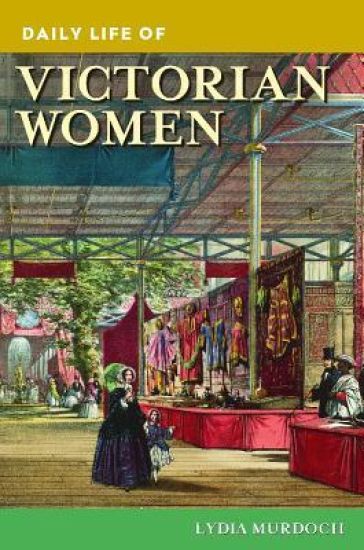
Explores the complexities of the lived experiences of Victorian women in the home, the workplace, and the empire as well as the ideals of womanhood and femininity that developed during the 19th century.Contrary to popular misconception, many Victorian women performed manual labor for wages directly alongside men, had political voice before women's suffrage, and otherwise contributed significantly to society outside of the domestic sphere. Daily Life of Victorian Women documents the varied realities of the lives of Victorian women; provides in-depth comparative analysis of the experiences of women from all classes, especially the working class; and addresses changes in their lives and society over time. The book covers key social, intellectual, and geographical aspects of women's lives, with main chapters on gender and ideals of womanhood, the state, religion, home and family, the body, childhood and youth, paid labor and professional work, urban life, and imperialism.
Imagined Orphans

Imagined Orphans

Lydia Murdoch

Rutgers University Press
2006
sidottu
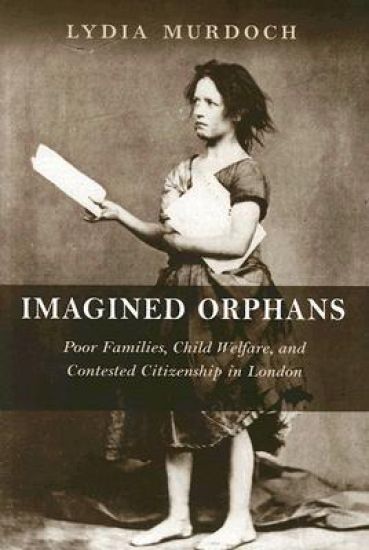
With his dirty, tattered clothes and hollowed-out face, Oliver Twist is the enduring symbol of the young indigent spilling out of orphanages and haunting the streets of late-nineteenth-century London. Although poor children were often portrayed as real-life Oliver Twists—either orphaned or abandoned by unworthy parents—they in fact frequently maintained contact and were eventually reunited with their families.In Imagined Orphans, Lydia Murdoch focuses on this discrepancy between the representation and the reality of children’s experiences within welfare institutions—a discrepancy that she argues stems from conflicts over middle- and working-class notions of citizenship that arose in the 1870s and persisted until the First World War. Reformers’ efforts to depict poor children as either orphaned or endangered by abusive or “no-good” parents fed upon the poor’s increasing exclusion from the Victorian social body. Reformers used the public’s growing distrust and pitiless attitude toward poor adults to increase charity and state aid to the children.With a critical eye to social issues of the period, Murdoch urges readers to reconsider the complex situations of families living in poverty. While reformers’ motivations seem well intentioned, she shows how their methods solidified the public’s antipoor sentiment and justified a minimalist welfare state that engendered a cycle of poverty. As they worked to fashion model citizens, reformers’ efforts to protect and care for children took on an increasingly imperial cast that would continue into the twentieth century.
What We Mourn

What We Mourn

Lydia Murdoch

UNIVERSITY OF VIRGINIA PRESS
2025
sidottu
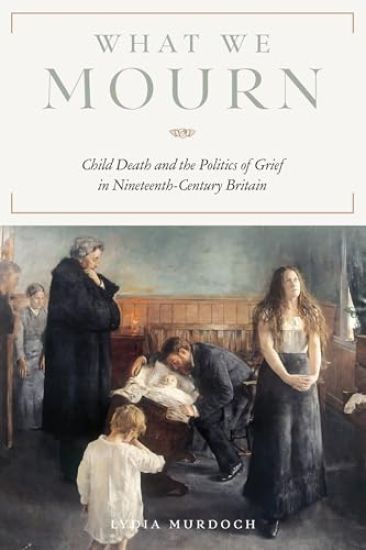
How a new culture of bereavement changed the relationship of the Victorian state to its most vulnerable subjects When the Tory Member of Parliament Michael Sadler argued in 1832 for state intervention on behalf of Britain's dying child factory workers, he elicited smirks and ridicule from his Liberal adversaries - a response that would have been unimaginable by the century's end. What We Mourn traces the changing understandings of child death within British, imperial, and transatlantic contexts and reveals the importance of youth and emotion to constructions of the modern state. As childhood took on new meanings over the course of the long nineteenth century, public mourning for the premature deaths of children emerged as a way of asserting and even redefining British rights and citizenship. Factory hands and abolitionists, sanitation reformers and suffragists democratized and politicized their grief as they called upon the state to recognize their lives as part of a new, reimagined political order. As Lydia Murdoch shows, carrying their own and others' private grief into the public sphere - with petitions and marches, public lectures and poetry - allowed marginalized members of society to assert their claim to rights. What We Mourn explores both the power and the limitations of a new politics founded on grief and the protection of child life.
What We Mourn

What We Mourn

Lydia Murdoch

UNIVERSITY OF VIRGINIA PRESS
2025
pokkari
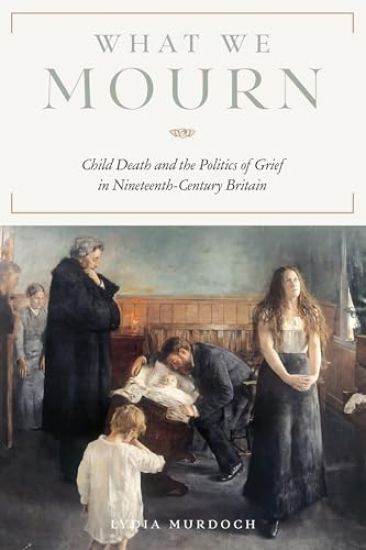
How a new culture of bereavement changed the relationship of the Victorian state to its most vulnerable subjects When the Tory Member of Parliament Michael Sadler argued in 1832 for state intervention on behalf of Britain's dying child factory workers, he elicited smirks and ridicule from his Liberal adversaries - a response that would have been unimaginable by the century's end. What We Mourn traces the changing understandings of child death within British, imperial, and transatlantic contexts and reveals the importance of youth and emotion to constructions of the modern state. As childhood took on new meanings over the course of the long nineteenth century, public mourning for the premature deaths of children emerged as a way of asserting and even redefining British rights and citizenship. Factory hands and abolitionists, sanitation reformers and suffragists democratized and politicized their grief as they called upon the state to recognize their lives as part of a new, reimagined political order. As Lydia Murdoch shows, carrying their own and others' private grief into the public sphere - with petitions and marches, public lectures and poetry - allowed marginalized members of society to assert their claim to rights. What We Mourn explores both the power and the limitations of a new politics founded on grief and the protection of child life.