Kirjojen hintavertailu. Mukana 12 016 292 kirjaa ja 12 kauppaa.

Kirjahaku

Etsi kirjoja tekijän nimen, kirjan nimen tai ISBN:n perusteella.

2 kirjaa tekijältä Lydia Willsky-Ciollo

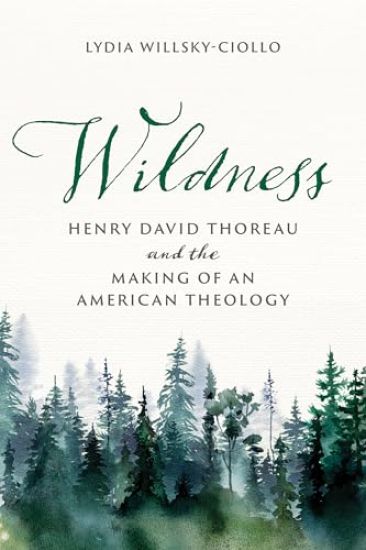
Wildness

Wildness

Lydia Willsky-Ciollo

UNIVERSITY OF NOTRE DAME PRESS
2026
sidottu
In and through his experience of nature, Henry David Thoreau imagined and developed a distinctly American theology of the wild. In Wildness: Henry David Thoreau and the Making of an American Theology, Lydia Willsky-Ciollo articulates how Thoreau was enmeshed in a decades-spanning project of crafting a theology of wildness. During Thoreau's post-college years and his time at Walden Pond, he evolved from hopeful writer to observant theologian, whose primary work as a surveyor enabled his theological vocation. Willsky-Ciollo skillfully guides readers through Thoreau's writings and life as his theology emerges and evolves. The focus of Thoreau's theology - wildness itself - centers on the divinity extant in every person and in every molecule of creation. Definitively American in its ethos, Thoreau's theology reflects a distinctly American set of tensions: progress and tradition, wilderness and civilization, the destructive and the generative nature of work, the individual and the society, the local and the universal, and the Christian and the pluralist. While remaining critical of dogmatism and institutional rigidity, he formed his theological vision in conversation with the Christianity of his own time and place. Ultimately, theology is an active process, and interpreting the wild experience of divine revelation is the purview of all. Thoreau left the door open to his readers, who he hoped would pick up the pen where he left off and write their own theologies of wildness.
American Unitarianism and the Protestant Dilemma

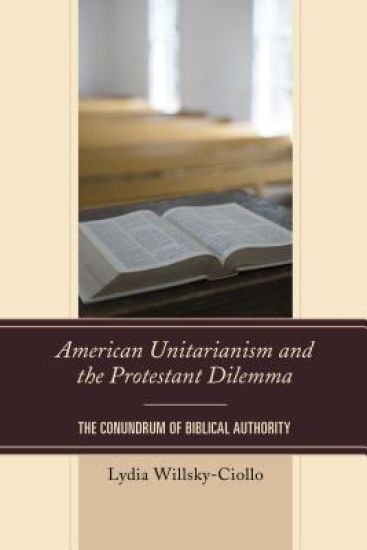
American Unitarianism and the Protestant Dilemma

Lydia Willsky-Ciollo

Lexington Books
2015
sidottu
American Unitarians were not onlookers to the drama of Protestantism in the nineteenth century, but active participants in its central conundrum: biblical authority. Unitarians sought what other Protestants sought, which was to establish the Bible as the primary authority, only to find that the task was not so simple as they had hoped. This book revisits the story of nineteenth century American Unitarianism, proposing that Unitarianism was founded and shaped by the twin hopes of maintaining biblical authority and committing to total free inquiry. This story fits into the larger narrative of Protestantism, which, this book argues, has been defined by a deep devotion to the singular authority of the Bible (sola scriptura) and, conversely, a troubling ambivalence as to how such authority should function. How, in other words, can a book serve as a source of authority? This work traces the greater narrative of biblical authority in Protestantism through the story of four main Unitarian figures: William Ellery Channing, Andrews Norton, Theodore Parker, and Frederic Henry Hedge. All four individuals played a central role, at different times, in shaping Unitarianism, and in determining how exactly religious authority functioned in their nascent denomination. Besides these central figures, the book goes both backward, examining the evolution of biblical authority from the late medieval period in Europe to the early nineteenth century in America, and forward, exploring the period of Unitarian experimentation of religious authority in the late nineteenth century. The book also brings the book firmly into the present, exploring how questions about the Bible and religious authority are being answered today by contemporary Unitarian Universalists. Overall, this book aims to bring the American Unitarians firmly back into the historical and historiographical conversation, not as outliers, but as religious people deeply committed to solving the Protestant dilemma of religious authority.