Kirjojen hintavertailu. Mukana 11 342 296 kirjaa ja 12 kauppaa.

Kirjahaku

Etsi kirjoja tekijän nimen, kirjan nimen tai ISBN:n perusteella.

8 kirjaa tekijältä Lyn Pykett

Wilkie Collins

Wilkie Collins

Lyn Pykett

Red Globe Press
1998
sidottu
This selection of eleven essays charts the most important aspects of the developing debate about Collins's fiction in the last twenty years. Employing a range of theoretical and methodological approaches - including reader response theory, narratology, psychoanalysis, deconstruction, cultural materialism and a range of feminisms - these essays examine Collins's fiction from several perspectives: historical, psychological, structural, generic and political (including gender politics). They focus on an author preoccupied with the production of social and psychological identity, and with issues of class, gender and power. If there is a single issue which permeates this collection, it is the question of the subversiveness of Collins's fiction or, alternatively, its retreat from and/or containment of a radical social critique or subversive impulses. The pros and cons of this debate are explored further in Lyn Pykett's detailed and wide-ranging introduction.
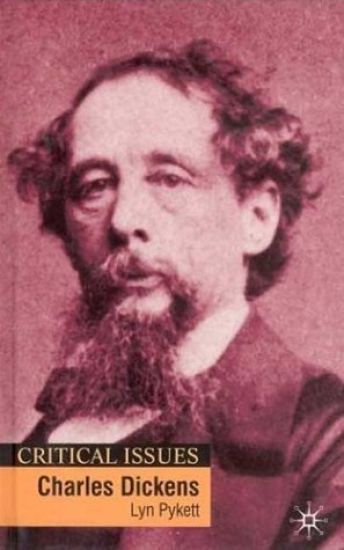
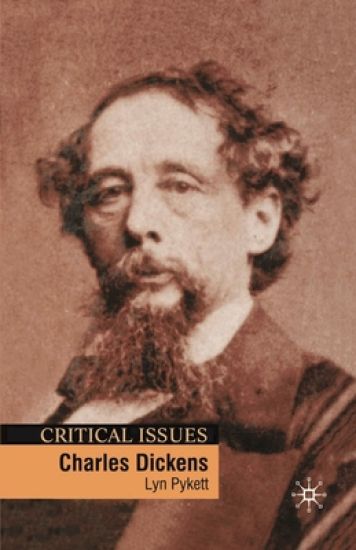
Charles Dickens

Charles Dickens

Lyn Pykett

Red Globe Press
2002
sidottu
To many of his contemporaries, Charles Dickens was the greatest writer of his age; a one-man fiction industry who produced fourteen massive novels, and numerous sketches, essays and stories, many of which appeared in the two magazines which he founded and edited. Today the work of one of the first and most successful mass-circulation authors continues to enthrall readers around the world.This wide-ranging book examines the writings of Dickens, not only in his time but also in ours. it looks at the author as a Victorian 'man of letters', and explores his cultural and critical impact both on the definition of the novel in the nineteenth century and the subsequent development of the form in the twentieth. Lyn Pykett focuses on Dickens as journalist, literary entrepreneur, the conductor of magazines, the shaper of the serial novel, the manipulator of the multiple plot, and the creator of eccentric characters. She also assesses the modernity of the writer's alienated protagonists and their social environments, as well as reassessing his representations of the vivid, bleak and at times menacing spectacle of the metropolis, from the late modern/postmodern perspective of the twenty first century.Each chapter of this text analyses the work of a particular decade in Dickens's career, providing a lively contextual study which places his writings in relation to the worlds that made him, and the literary worlds which he made. It is essential reading for all those with an interest in one of the most popular, and enduring, British novelists of all time.
Charles Dickens

Charles Dickens

Lyn Pykett

Red Globe Press
2002
nidottu
To many of his contemporaries, Charles Dickens was the greatest writer of his age; a one-man fiction industry who produced fourteen massive novels, and numerous sketches, essays and stories, many of which appeared in the two magazines which he founded and edited. Today the work of one of the first and most successful mass-circulation authors continues to enthrall readers around the world.This wide-ranging book examines the writings of Dickens, not only in his time but also in ours. it looks at the author as a Victorian 'man of letters', and explores his cultural and critical impact both on the definition of the novel in the nineteenth century and the subsequent development of the form in the twentieth. Lyn Pykett focuses on Dickens as journalist, literary entrepreneur, the conductor of magazines, the shaper of the serial novel, the manipulator of the multiple plot, and the creator of eccentric characters. She also assesses the modernity of the writer's alienated protagonists and their social environments, as well as reassessing his representations of the vivid, bleak and at times menacing spectacle of the metropolis, from the late modern/postmodern perspective of the twenty first century.Each chapter of this text analyses the work of a particular decade in Dickens's career, providing a lively contextual study which places his writings in relation to the worlds that made him, and the literary worlds which he made. It is essential reading for all those with an interest in one of the most popular, and enduring, British novelists of all time.
Engendering Fictions

Engendering Fictions

Lyn Pykett

Hodder Arnold
1995
nidottu
Why did turn-of-the-century England produce the kind of writing it did? That deceptively simple question is at the heart of Lyn Pykett's enquiry. She re-examines the beginning of the age of modernism, exploring its origins in nineteenth-century discourses: particularly discourses about women and gender. 'Engendering Fictions' challenges the claims that modernism represents a complete break with the past. The history of modernism has been a story of the removal of the 'great works' of modernist writing from the immediate material and historical circumstances of their origin, and their insertion into the timeless ideal order of the 'modern tradition'. Focusing on a wide range of authors, but particularly Woolf and Lawrence, Lyn Pykett takes issue with this representation of modernism and shows how traditional views offer an impoverished response to the writing of the early twentieth century.
Emily Bronte

Emily Bronte

Lyn Pykett

Rowman Littlefield
1989
sidottu
Emily BrontÎ's writings explore, expand, and transgress limited nineteenth-century ideas of the nature of the female lot and of women's creativity. This study offers an extensive rereading of the poems which focuses on Emily BrontÎ's problematic relationship to the Romantic tradition in which they were produced, and to the critical tradition in which they have been reproduced. Using recent feminist work on gender and genre Lyn Pykett throws fresh light on the complexities of Wuthering Heights, and suggests that much of this novel's distinctiveness may be attributed to the particular ways in which it both combines and explores Female Gothic and the emerging realist domestic novel, a genre also widely used and read by women. Contents: Emily BrontÎ: A Life Hidden from History; The Writings of Ellis Bell; "Not at all like the poetry women generally write" Emily BrontÎ and the Problem of the Woman Poet; Death Dreams and Prison Songs; Gender and Genre in^R Wuthering Heights; Changing the Names: The Two Catherines; Nelly Dean: Memoirs of a Survivor; The Male Part of the Poem; Reading Women's Writing: Emily BrontÎ and the Critics
The 'Improper' Feminine

The 'Improper' Feminine

Lyn Pykett

Routledge
1992
sidottu
The women's sensation novel of the 1860s and the New Woman fiction of the 1890s were two major examples of a perceived feminine invasion of fiction which caused a critical furore in their day. Both genres, with their shocking, `fast' heroines, fired the popular imagination by putting female sexuality on the literary agenda and undermining the `proper feminine' ideal to which nineteenth-century women and fictional heroines were supposed to aspire. By exploring in impressive depth and breadth the material and discursive conditions in which these novels were produced, The `Improper' Feminine draws attention to key gendered interrelationships within the literary and wider cultures of the mid-Victorian and fin-de-diècle periods.
The 'Improper' Feminine

The 'Improper' Feminine

Lyn Pykett

Routledge
2013
nidottu
The women's sensation novel of the 1860s and the New Woman fiction of the 1890s were two major examples of a perceived feminine invasion of fiction which caused a critical furore in their day. Both genres, with their shocking, `fast' heroines, fired the popular imagination by putting female sexuality on the literary agenda and undermining the `proper feminine' ideal to which nineteenth-century women and fictional heroines were supposed to aspire. By exploring in impressive depth and breadth the material and discursive conditions in which these novels were produced, The `Improper' Feminine draws attention to key gendered interrelationships within the literary and wider cultures of the mid-Victorian and fin-de-diècle periods.
Reading Fin de Siècle Fictions
The fin de siècle, the period 1880-1914, long associated with decadence and with the literary movements of aestheticism and symbolism, has received renewed critical interest recently. The essays in this volume form a valuable introduction to fin de siècle cultural studies and provide a commentary on important aspects of current critical debate and the place of culture in society.