Critiques of Knowing explores what happens to science and computing when we think of them as texts. Lynette Hunter elegantly weaves together vast areas of thought: rhetoric, politics, AI, computing, feminism, science studies, aesthetics and epistemology.Critiques of Knowing shows us that what we need is a radical shake-up of approaches to the arts if the critiques of science and computing are to come to any fruition.
Critiques of Knowing explores what happens to science and computing when we think of them as texts. Lynette Hunter elegantly weaves together vast areas of thought: rhetoric, politics, AI, computing, feminism, science studies, aesthetics and epistemology.Critiques of Knowing shows us that what we need is a radical shake-up of approaches to the arts if the critiques of science and computing are to come to any fruition.
Aesthetics is a field still rooted in an understanding of a unified process where small numbers of people produce, commodify, and consume objects called "art." Disunified Aesthetics deconstructs the literary object by invoking the critic's stance toward the written works with which they engage. Lynette Hunter's performative explorations provide a distinctly different way of understanding contemporary creative processes. Disunified Aesthetics takes up twenty-first-century aesthetics through an investigation of recent Canadian writing. The book is both a series of insights into literature and poetics of the last two decades and a story about moving from a traditional view of the relation between the artist, art, and its reception, to a more radically democratic view of aesthetics and ethics. Hunter addresses a range of Canadian women's writing, as well as close studies of the work of Robert Kroetsch, Lee Maracle, Nicole Brossard, Frank Davey, Alice Munro, Daphne Marlatt, and bpNichol. Disunified Aesthetics is a creative, challenging, and original investigation of textuality, performance, and aesthetics by a leading and innovative scholar.
Aesthetics is a field still rooted in an understanding of a unified process where small numbers of people produce, commodify, and consume objects called "art." Disunified Aesthetics deconstructs the literary object by invoking the critic's stance toward the written works with which they engage. Lynette Hunter's performative explorations provide a distinctly different way of understanding contemporary creative processes. Disunified Aesthetics takes up twenty-first-century aesthetics through an investigation of recent Canadian writing. The book is both a series of insights into literature and poetics of the last two decades and a story about moving from a traditional view of the relation between the artist, art, and its reception, to a more radically democratic view of aesthetics and ethics. Hunter addresses a range of Canadian women's writing, as well as close studies of the work of Robert Kroetsch, Lee Maracle, Nicole Brossard, Frank Davey, Alice Munro, Daphne Marlatt, and bpNichol. Disunified Aesthetics is a creative, challenging, and original investigation of textuality, performance, and aesthetics by a leading and innovative scholar.
How does an "outsider" feminist read a contemporary Canadian literature that is profoundly inscribed with the contradictions of late 20th-century capitalism, nationalism and globalism, and with vigorous class, race and gender struggles for access to power and representation? What does "literature" become when its own strategies variously place history, genre, legitimacy and literariness into question? Through readings of such diverse Canadian writers as Dionne Brand, Alice Munro, Jacqueline Dumas, Frank Davey, Claire Harris, Michael Ondaatje, Elly Danica, Robert Kroetsch, Nourbese Philip, bpNichol, Beatrice Culleton, Margaret Atwood, Rose Dorion, George Bowering, Lola Lemire Tostevin and Daphne Marlatt, Outsider Notes offers tough-minded reappraisals of canonictiy, modernism, postmodernism, marginality, and postcoloniality and opens a challenge to write and read "past the ideology of the nation state."
This book offers an interdisciplinary approach to concepts of the self associated with the development of humanism in England, and to strategies for both inclusion and exclusion in structuring the early modern nation state. It addresses writings about rhetoric and behavior from 1495–1660, beginning with Erasmus’ work on sermo or the conversational rhetoric between friends, which considers the reader as an ‘absent audience’, and following the transference of this stance to a politics whose broadening democratic constituency needed a legitimate structure for governance-at-a-distance. Unusually, the book brings together the impact on behavior of these new concepts about rhetoric, with the growth of the publishing industry, and the emergence of capitalism and of modern medicine. It explores the effects on the formation of the ‘subject’ and political legitimation of the early liberal nation state. It also lays new ground for scholarship concerned with what is left out of both selfhood and politics by that state, studying examples of a parallel development of the ‘self’ defined by friendship not only from educated male writers, but also from women writers and writers concerned with socially ‘middling’ and laboring people and the poor.
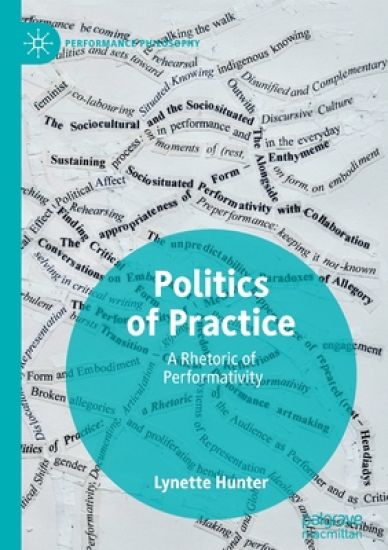
This book discusses affective practices in performance through the study of four contemporary performers – Keith Hennessy, Ilya Noé, Caro Novella, and duskin drum – to suggest a tentative rhetoric of performativity generating political affect and permeating attempts at social justice that are often alterior to discourse. The first part of the book makes a case for the political work done alongside discourse by performers practising with materials that are not-known, in ways that are directly relevant to people carrying out their daily lives. In the second part of the book, four case study chapters circle around figures of irresolvable paradox – hendiadys, enthymeme, anecdote, allegory – that gesture to what is not-known, to study strategies for processes of becoming, knowing and valuing. These figures also shape some elements of these performances that make up a suggested rhetorical stance for performativity.
This book discusses affective practices in performance through the study of four contemporary performers – Keith Hennessy, Ilya Noé, Caro Novella, and duskin drum – to suggest a tentative rhetoric of performativity generating political affect and permeating attempts at social justice that are often alterior to discourse. The first part of the book makes a case for the political work done alongside discourse by performers practising with materials that are not-known, in ways that are directly relevant to people carrying out their daily lives. In the second part of the book, four case study chapters circle around figures of irresolvable paradox – hendiadys, enthymeme, anecdote, allegory – that gesture to what is not-known, to study strategies for processes of becoming, knowing and valuing. These figures also shape some elements of these performances that make up a suggested rhetorical stance for performativity.
This new scholarly edition 'Romeo and Juliet' is edited with theatre productions in mind, and how theatre has an impact on how we read and play Shakespeare's works. The editors bring a wealth of experience in theatre, textual editing and literary criticism to the play, and renew it as a comic tragedy that establishes many of the modern world's obsessions. The edition restores much of the early text that is traditionally cut out and offers insight into how to play difficult passages. This great romance becomes an early commentary on identity, sexuality, the family and the law, creating some of the first fully-rounded female characters in the English theatre, and providing a dry-run for 'Hamlet'.
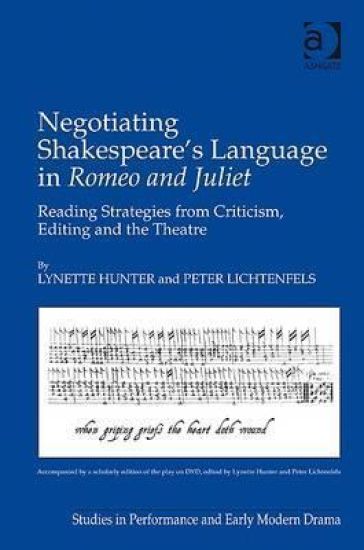
Through exciting and unconventional approaches, including critical/historical, printing/publishing and performance studies, this study mines Shakespeare's Romeo and Juliet to produce new insights into the early modern family, the individual, and society in the context of early modern capitalism. Inspired by recent work in cultural materialism and the material book, it also foregrounds the ways in which the contexts and the text itself become available to the reader today. The opening material on critical/historical approaches focuses on the way that readers have frequently read and played the text to explore issues that cluster around the family, marriage, gender and sexuality. Chapter two, on the ways that actors today inhabit character and create behaviour, provides intertextual comment on acting in the early modern period, and the connections between acting and social behaviour that inform self-image and the performance of identity both then and now. The third chapter on printing/publishing approaches to the text offers a detective story about the differences between Quarto One and Quarto Two, that focuses on the curious appearance in Quarto Two of material related to the law at word, phrase, line and scene level. The next three chapters integrate a close study of the language of the play to negotiate its potential significance for the present in the areas of: Family, Marriage, Gender and Sexuality; Identity, Individualism and Humanism; and the Law, Religion and Medicine. Among the startling aspects of this book are that it: - takes the part of Juliet far more seriously than other criticism has tended to do, attributing to her agency and aspects of character that develop the part suddenly from girl to woman; - recognizes the way the play explores early modern identity, becoming a handbook for individualism and humanism in the private domestic setting of early capitalism; and - brings to light the least recognized element in the play at the moment, its demonstration of the emerging structures of state power, governance by law, the introduction of surveillance, detection and witness, and the formation of what we now call the 'subject'. The volume includes on DVD a scholarly edition with commentary of the text of Romeo & Juliet, which re-instates many of the original early modern versions of the play.
Through exciting and unconventional approaches, including critical/historical, printing/publishing and performance studies, this study mines Shakespeare's Romeo and Juliet to produce new insights into the early modern family, the individual, and society in the context of early modern capitalism. Inspired by recent work in cultural materialism and the material book, it also foregrounds the ways in which the contexts and the text itself become available to the reader today. The opening material on critical/historical approaches focuses on the way that readers have frequently read and played the text to explore issues that cluster around the family, marriage, gender and sexuality. Chapter two, on the ways that actors today inhabit character and create behaviour, provides intertextual comment on acting in the early modern period, and the connections between acting and social behaviour that inform self-image and the performance of identity both then and now. The third chapter on printing/publishing approaches to the text offers a detective story about the differences between Quarto One and Quarto Two, that focuses on the curious appearance in Quarto Two of material related to the law at word, phrase, line and scene level. The next three chapters integrate a close study of the language of the play to negotiate its potential significance for the present in the areas of: Family, Marriage, Gender and Sexuality; Identity, Individualism and Humanism; and the Law, Religion and Medicine. Among the startling aspects of this book are that it: - takes the part of Juliet far more seriously than other criticism has tended to do, attributing to her agency and aspects of character that develop the part suddenly from girl to woman; - recognizes the way the play explores early modern identity, becoming a handbook for individualism and humanism in the private domestic setting of early capitalism; and - brings to light the least recognized element in the play at the moment, its demonstration of the emerging structures of state power, governance by law, the introduction of surveillance, detection and witness, and the formation of what we now call the 'subject'. The volume includes on DVD a scholarly edition with commentary of the text of Romeo & Juliet, which re-instates many of the original early modern versions of the play.
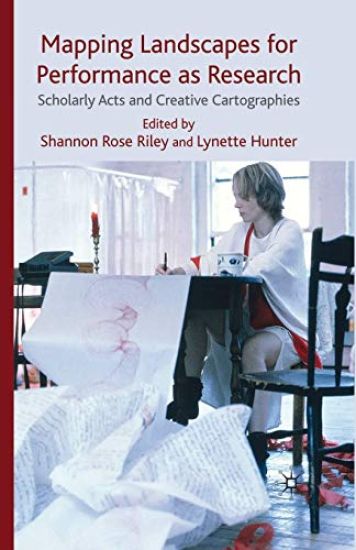
Although the sciences have long understood the value of practice-based research, the arts and humanities have tended to structure a gap between practice and analysis. This book examines differences and similarities between Performance as Research practices in various community and national contexts, mapping out the landscape of this new field.
Although the sciences have long understood the value of practice-based research, the arts and humanities have tended to structure a gap between practice and analysis. This book examines differences and similarities between Performance as Research practices in various community and national contexts, mapping out the landscape of this new field.