Kirjojen hintavertailu. Mukana 11 627 220 kirjaa ja 12 kauppaa.

Kirjahaku

Etsi kirjoja tekijän nimen, kirjan nimen tai ISBN:n perusteella.

5 kirjaa tekijältä Lynette Mitchell

Cyrus the Great

Cyrus the Great

Lynette Mitchell

TAYLOR FRANCIS LTD
2024
nidottu
Cyrus the Great was a celebrity of the ancient world, the founder of one of the first world empires in the ancient Near East, whose life and deeds were celebrated through the many stories told about him, then and for millennia.This book offers an analysis of these stories, locating them within the rich storytelling cultures of the ancient Mediterranean and the Near East. Although there are few fixed points in Cyrus’ career, it is possible to see through these narratives the way his kingship developed so he became not just the instrument of the gods, but also their companion. Mitchell explores what these stories reveal about the different societies and cultures who engaged with the mythology surrounding Cyrus in order to examine their own conceptions of great men, leadership, kingship, and power. Such was his celebrity in antiquity that the stories about his kingship have remained influential over the course of two and a half thousand years into the modern era.Cyrus the Great: A Biography of Kingship is of interest to students and scholars studying the Achaemenids and ancient kingship, particularly as it is depicted in the literary and historical traditions of the ancient Near East, as well as those working on the Near Eastern world more generally. Scholars of Greek history in this period will also find much to interest them.
Cyrus the Great

Cyrus the Great

Lynette Mitchell

Routledge
2023
sidottu
Cyrus the Great was a celebrity of the ancient world, the founder of one of the first world empires in the ancient Near East, whose life and deeds were celebrated through the many stories told about him, then and for millennia.This book offers an analysis of these stories, locating them within the rich storytelling cultures of the ancient Mediterranean and the Near East. Although there are few fixed points in Cyrus’ career, it is possible to see through these narratives the way his kingship developed so he became not just the instrument of the gods, but also their companion. Mitchell explores what these stories reveal about the different societies and cultures who engaged with the mythology surrounding Cyrus in order to examine their own conceptions of great men, leadership, kingship, and power. Such was his celebrity in antiquity that the stories about his kingship have remained influential over the course of two and a half thousand years into the modern era.Cyrus the Great: A Biography of Kingship is of interest to students and scholars studying the Achaemenids and ancient kingship, particularly as it is depicted in the literary and historical traditions of the ancient Near East, as well as those working on the Near Eastern world more generally. Scholars of Greek history in this period will also find much to interest them.
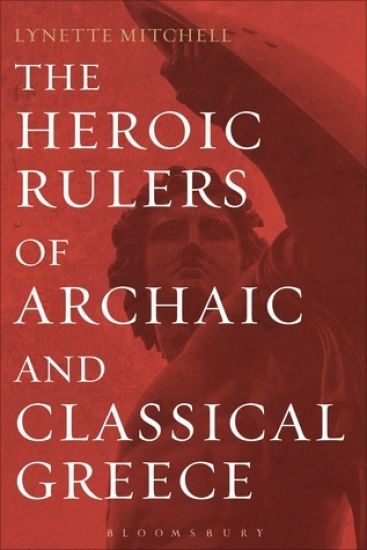
The Heroic Rulers of Archaic and Classical Greece

The Heroic Rulers of Archaic and Classical Greece

Lynette Mitchell

Bloomsbury Academic
2013
sidottu
With an in-depth exploration of rule by a single man and how this was seen as heroic activity, the title challenges orthodox views of ruling in the ancient world and breaks down traditional ideas about the relationship between so-called hereditary rule and tyranny. It looks at how a common heroic ideology among rulers was based upon excellence, or arete, and also surveys dynastic ruling, where rule was in some sense shared within the family or clan. Heroic Rulers examines reasons why both personal and clan-based rule was particularly unstable and its core tension with the competitive nature of Greek society, so that the question of who had the most arete was an issue of debate both from within the ruling family and from other heroic aspirants. Probing into ancient perspectives on the legitimacy and legality of rule, the title also explores the relationship between ruling and law. Law, personified as 'king' (nomos basileus), came to be seen as the ultimate source of sovereignty especially as expressed through the constitutional machinery of the city, and became an important balance and constraint for personal rule. Finally, Heroic Rulers demonstrates that monarchy, which is generally thought to have disappeared before the end of the archaic period, remained a valid political option from the Early Iron Age through to the Hellenistic period.
The Heroic Rulers of Archaic and Classical Greece

The Heroic Rulers of Archaic and Classical Greece

Lynette Mitchell

Bloomsbury Academic
2013
nidottu
With an in-depth exploration of rule by a single man and how this was seen as heroic activity, the title challenges orthodox views of ruling in the ancient world and breaks down traditional ideas about the relationship between so-called hereditary rule and tyranny. It looks at how a common heroic ideology among rulers was based upon excellence, or arete, and also surveys dynastic ruling, where rule was in some sense shared within the family or clan. Heroic Rulers examines reasons why both personal and clan-based rule was particularly unstable and its core tension with the competitive nature of Greek society, so that the question of who had the most arete was an issue of debate both from within the ruling family and from other heroic aspirants. Probing into ancient perspectives on the legitimacy and legality of rule, the title also explores the relationship between ruling and law. Law, personified as 'king' (nomos basileus), came to be seen as the ultimate source of sovereignty especially as expressed through the constitutional machinery of the city, and became an important balance and constraint for personal rule. Finally, Heroic Rulers demonstrates that monarchy, which is generally thought to have disappeared before the end of the archaic period, remained a valid political option from the Early Iron Age through to the Hellenistic period.
Panhellenism and the Barbarian in Archaic and Classical Greece
This is the first book in English to provide a systematic treatment of Panhellenism. The author argues that in archaic and classical Greece Panhellenism defined the community of the Hellenes and gave it political substance. Panhellenism also responded to other needs of the community, in particular serving to locate the Hellenes in time and space. One of the chief Panhellenic narratives, the war against the barbarian, provided the conceptual framework in which Alexander the Great could imagine his Asian campaign.